
From a pathologic complete response in a rare neuroendocrine carcinoma to long-term remission after immunotherapy toxicity, five recently published cases highlight the evolving possibilities and clinical challenges of immune checkpoint blockade.
Immune checkpoint inhibitors have changed the treatment landscape across multiple cancers, but some of the most interesting clinical questions emerge from individual patient experiences. Exceptional responses in rare malignancies, prolonged remission after treatment discontinuation, and successful treatment strategies following resistance continue to challenge conventional expectations and expand our understanding of antitumor immunity.
Recent case reports published in 2026 illustrate how molecular profiling, individualized treatment decisions, and multidisciplinary care can influence outcomes in complex clinical situations. Although these observations cannot establish new standards of care, they provide valuable insights into the opportunities and limitations of immunotherapy in everyday oncology practice.
Here are five notable immunotherapy case reports from 2026, each highlighting a different clinical challenge.
1. Pembrolizumab Achieves Pathologic Complete Response in Stage IV Duodenal Neuroendocrine Carcinoma
A 27-year-old man with stage IV duodenal neuroendocrine carcinoma experienced disease progression following platinum-based chemotherapy. Given the aggressive nature of this rare malignancy and the limited established options after chemotherapy failure, comprehensive genomic profiling was performed using FoundationOne CDx. Testing identified microsatellite instability-high (MSI-H) status, high tumor mutational burden (TMB-high), and a pathogenic MSH2 frameshift variant, providing a molecular rationale for treatment with the PD-1 inhibitor pembrolizumab.
Pembrolizumab was initiated as second-line therapy and produced marked tumor regression, allowing the patient to undergo pancreaticoduodenectomy. Pathological examination of the resected primary tumor and lymph nodes revealed no viable malignant cells, confirming a pathologic complete response. The patient remained recurrence-free for three years following treatment, representing an exceptional outcome in advanced duodenal neuroendocrine carcinoma.
Further germline testing confirmed the MSH2 variant and established a diagnosis of Lynch syndrome. Importantly, cascade genetic testing identified four relatives carrying the same variant and enabled the early detection of gastric cancer in a 24-year-old family member.
This case demonstrates how comprehensive genomic profiling can influence both treatment selection and hereditary cancer assessment. Beyond the exceptional response to pembrolizumab, it highlights the importance of investigating actionable molecular features even in rare, aggressive malignancies where immunotherapy is not routinely selected on the basis of histology alone.
Clinical question: Could routine molecular profiling identify more patients with rare neuroendocrine carcinomas who may achieve exceptional responses to checkpoint blockade?
2. Durable Complete Response After Pembrolizumab Discontinuation for Severe Mucositis
A 77-year-old man with recurrent or metastatic head and neck squamous cell carcinoma and a PD-L1 combined positive score (CPS) of 95 received pembrolizumab. After six months of treatment, he developed severe grade 3 oral mucositis. Histopathological examination confirmed findings compatible with immune-mediated lichenoid mucositis, an uncommon but potentially serious complication of PD-1 blockade.
Systemic corticosteroids achieved complete resolution of the mucosal toxicity, allowing clinicians to attempt pembrolizumab rechallenge. However, the mucositis recurred after treatment was restarted, ultimately requiring permanent discontinuation. Despite stopping immunotherapy, subsequent imaging documented a complete radiological response, which persisted for more than one year after pembrolizumab cessation.
This case highlights two important aspects of immunotherapy management. First, severe immune-related mucosal toxicity may recur following rechallenge, even after successful initial treatment with corticosteroids. Second, antitumor immune control can persist after checkpoint inhibitor discontinuation, raising questions about the optimal duration of therapy in patients who achieve deep responses.
Although the case does not establish that severe toxicity predicts better treatment outcomes, it illustrates how the decision to discontinue immunotherapy may be compatible with prolonged disease control in selected patients. It also reinforces the importance of balancing treatment benefit against the risk of recurrent immune-related adverse events.
Clinical question: When a patient achieves a deep response but develops severe immune-related toxicity, how should clinicians balance the risks of rechallenge against the possibility of durable remission without further treatment?
3. More Than Five Years of Remission After Tislelizumab-Based Treatment and Rechallenge Following Myocardial Infarction
A 39-year-old woman with FIGO stage IVB cervical squamous cell carcinoma and proficient mismatch repair (pMMR) status received first-line treatment with nab-paclitaxel, cisplatin, bevacizumab, and the PD-1 inhibitor tislelizumab. Despite having advanced disease and comorbid type 2 diabetes and hypertension, she achieved a complete tumor response after six cycles of systemic treatment. Subsequent maintenance immunotherapy and pelvic radiotherapy contributed to sustained disease control.
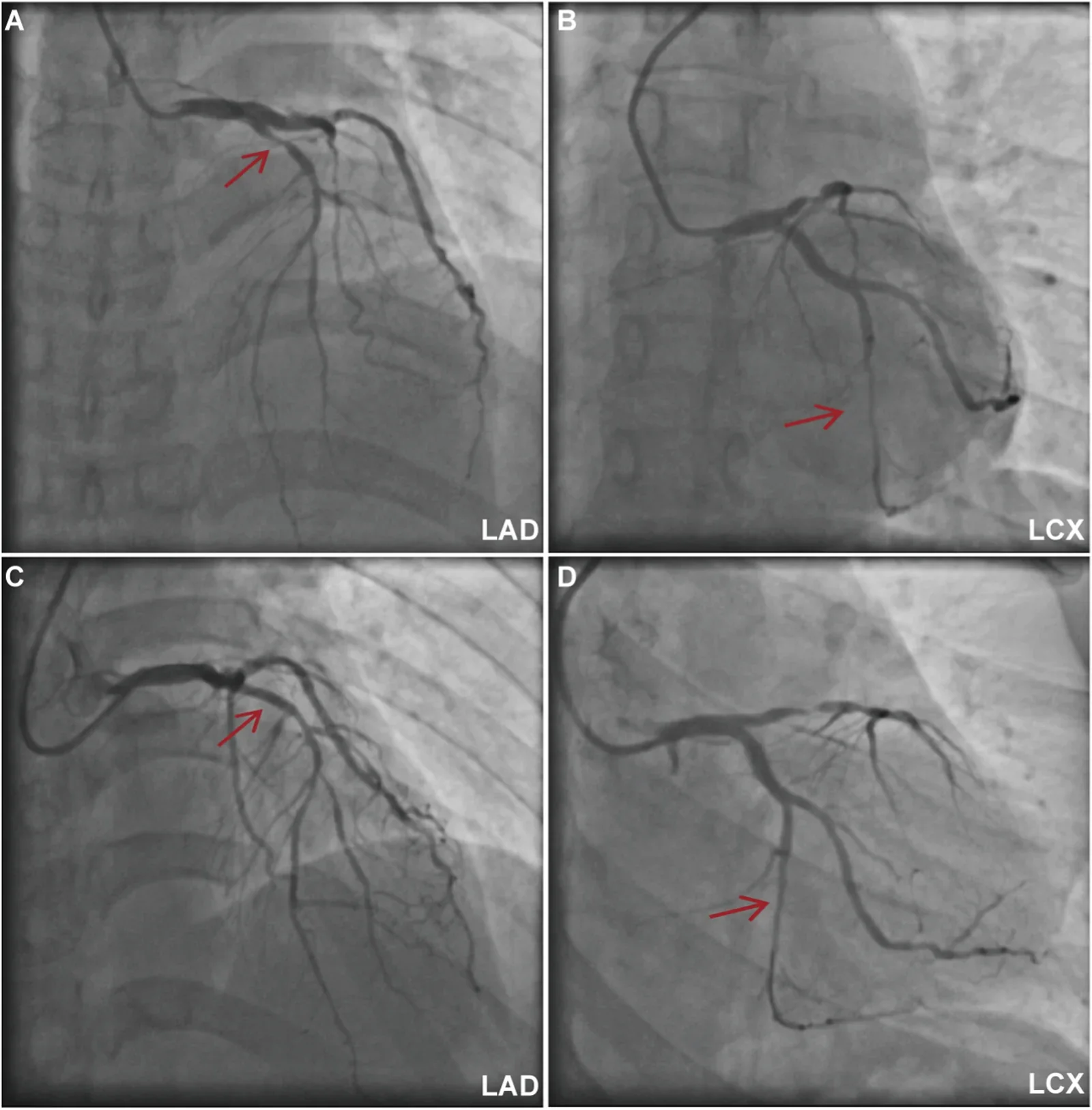
Approximately two years after transitioning to single-agent tislelizumab maintenance, the patient experienced a non-ST-elevation myocardial infarction (NSTEMI). Coronary angiography revealed severe obstructive coronary artery disease, including 90% stenosis of the proximal left anterior descending artery and 70–80% stenosis of the distal left circumflex artery. She underwent successful percutaneous coronary intervention, after which her cardiac condition stabilized.
The authors considered the possibility that immune checkpoint inhibition had contributed to accelerated atherosclerosis, although the patient had established cardiovascular risk factors, and a direct causal relationship could not be confirmed. The clinical presentation was more consistent with ischemic myocardial injury than overt ICI-associated myocarditis. However, cardiac magnetic resonance imaging and endomyocardial biopsy were not performed, so an additional immune-mediated component could not be completely excluded.
Following multidisciplinary assessment involving oncology and cardiovascular specialists, tislelizumab was restarted in March 2023 and continued until August 2024. At the latest follow-up in June 2026, the patient maintained a complete response, with overall survival exceeding 71 months and no recurrent major cardiovascular events.
This case illustrates the complexity of managing patients who develop serious cardiovascular complications during prolonged immunotherapy. It emphasizes the importance of distinguishing ischemic coronary events from immune-mediated myocarditis, optimizing cardiovascular risk factors, and making individualized decisions about treatment resumption. The successful rechallenge in this patient is encouraging but does not establish the safety of restarting checkpoint inhibitors after myocardial infarction in other patients.
Clinical question: Can immunotherapy be safely resumed after a serious cardiovascular event when the potential oncological benefit remains substantial?
4. Low-Dose Radiotherapy Combined With Chemo-Immunotherapy in Resistant SMARCA4-Deficient Lung Cancer
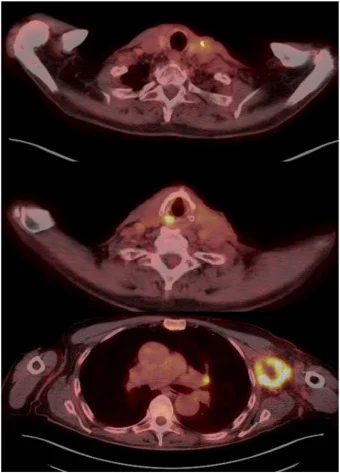
SMARCA4-deficient non-small cell lung cancer is an aggressive molecular subtype associated with challenging treatment outcomes. A case report published in Frontiers in Oncology described a 61-year-old man with SMARCA4-deficient lung cancer who developed resistance to immunotherapy, prompting the use of a multimodal salvage strategy incorporating low-dose radiotherapy, chemotherapy, and immune checkpoint inhibition.
The patient received serplulimab, a PD-1 inhibitor, in combination with etoposide and cisplatin. Low-dose radiotherapy was delivered to cervical and mediastinal lesions using 5 Gy in 10 fractions, followed by additional low-dose radiation courses targeting metastatic cervical and submandibular lymph nodes. Following two cycles of chemo-immunotherapy and local radiotherapy, imaging in April 2025 demonstrated substantial regression of the right submandibular mass.
As treatment continued, the patient underwent additional radiotherapy sessions, ultimately receiving eight courses of low-dose radiotherapy during the clinical course. Following a favorable response to the initial multimodal regimen, treatment was de-escalated to serplulimab maintenance with periodic radiotherapy. Subsequent assessments documented further disease control, including imaging described by the authors as showing no measurable residual disease. At the June 2026 follow-up, the patient’s clinical condition remained stable.
The case is particularly interesting because low-dose radiotherapy is being investigated for its potential immunomodulatory effects. Rather than acting exclusively through direct tumor-cell destruction, radiation may alter the tumor microenvironment, influence immune-cell recruitment, and potentially improve sensitivity to checkpoint blockade.
However, the response in this patient occurred during combined chemotherapy, immunotherapy, and radiotherapy. Consequently, the contribution of low-dose radiotherapy cannot be separated from the effects of the other treatments. The case therefore provides a rationale for further investigation rather than proof that low-dose radiation can reverse immunotherapy resistance.
Clinical question: Could low-dose radiotherapy become a useful component of combination strategies for overcoming immunotherapy resistance in aggressive lung cancer subtypes?
Read the case report.
5. Long-Term Disease Control With Ipilimumab and Nivolumab in Rare TFEB-Amplified Renal Cell Carcinoma
A 67-year-old patient with TFEB-amplified renal cell carcinoma developed recurrent disease involving the inferior vena cava and regional lymph nodes following partial nephrectomy. TFEB-amplified renal cell carcinoma is an uncommon molecular subtype with limited clinical evidence guiding systemic treatment, particularly in patients with aggressive or recurrent disease.
The patient received a perioperative treatment strategy incorporating ipilimumab and nivolumab, combining CTLA-4 and PD-1 blockade. Treatment was associated with a favorable clinical response, and the patient remained without evidence of further recurrence for 29 months following initiation of systemic therapy.
Although nivolumab plus ipilimumab is an established treatment option for selected patients with advanced clear-cell renal cell carcinoma, its effectiveness in rare non-clear-cell molecular subtypes remains less clearly defined. The biological and clinical diversity of these tumors makes treatment selection challenging, particularly when prospective trials include only small numbers of patients with uncommon histologies.
This case suggests that dual checkpoint blockade may offer meaningful disease control in selected patients with TFEB-amplified renal cell carcinoma. However, the contribution of immunotherapy within the perioperative treatment strategy and the generalizability of the response remain uncertain. The report reinforces the importance of accurate molecular classification and further clinical research focused on rare renal cancer subtypes.
Clinical question: Can molecularly defined rare renal cancers benefit from dual checkpoint blockade, even when prospective evidence is limited?
What These Cases Reveal About the Future of Immunotherapy
These five cases illustrate how immunotherapy continues to challenge established expectations across different clinical settings. The exceptional response in MSI-H duodenal neuroendocrine carcinoma demonstrates the value of molecular profiling in rare malignancies, while the durable remission after pembrolizumab discontinuation raises questions about treatment duration and immune memory. The cervical cancer case emphasizes the importance of multidisciplinary decision-making after serious cardiovascular complications, and the SMARCA4-deficient lung cancer report highlights the potential of multimodal approaches in treatment-resistant disease. Finally, the TFEB-amplified renal cancer case suggests that checkpoint blockade may provide meaningful disease control in selected rare molecular subtypes.
Despite their encouraging outcomes, these reports remain individual observations. They cannot establish comparative treatment efficacy, predict which patients will respond, or independently justify changes to standard clinical practice. Their greatest value lies in identifying questions that deserve further investigation through prospective clinical studies.
As immunotherapy becomes increasingly personalized, these cases remind us that understanding why an individual patient responds, develops resistance, or maintains long-term remission may be just as important as identifying the next treatment combination.