
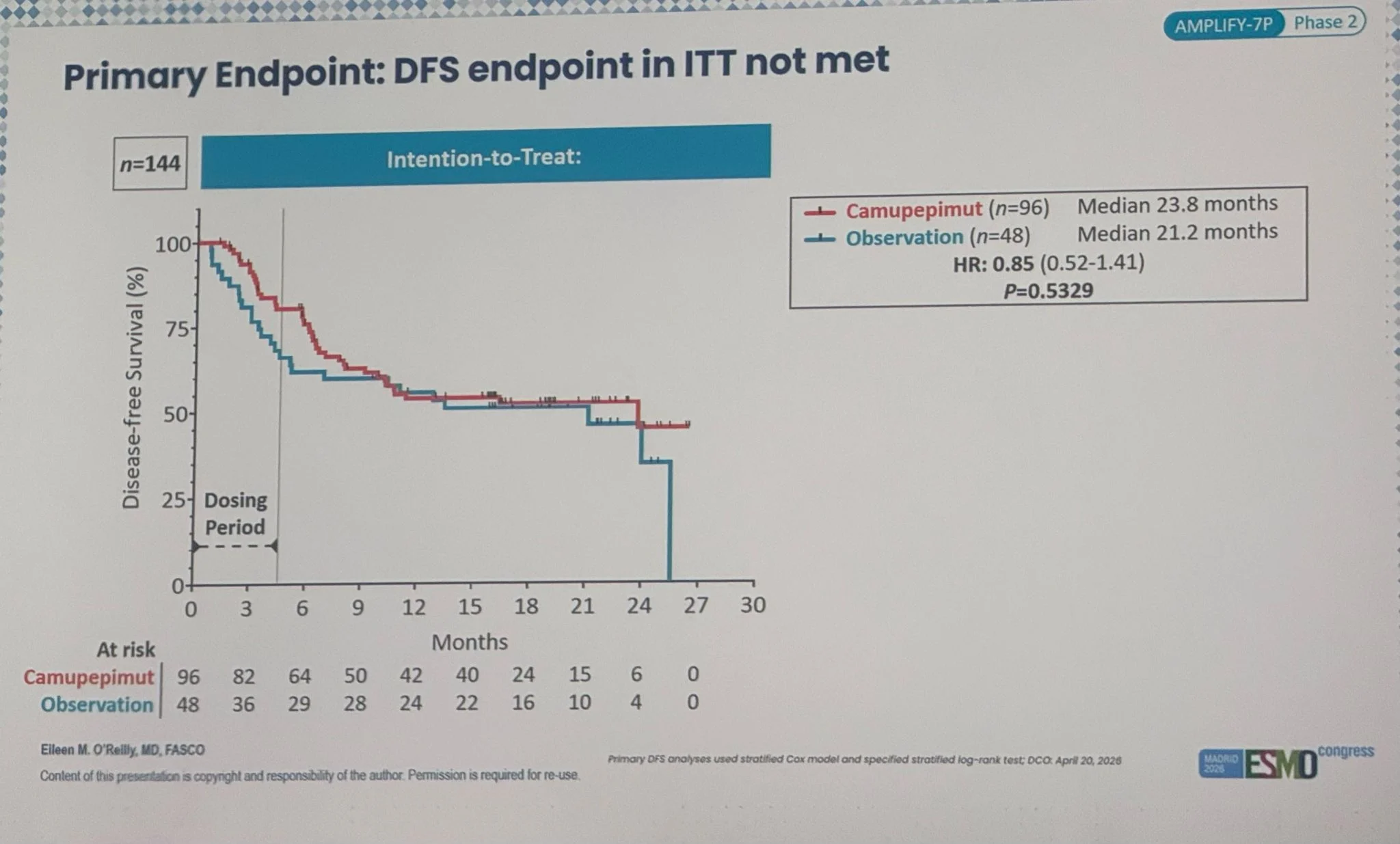
The randomized phase II AMPLIFY-7P study did not meet its primary disease-free survival (DFS) endpoint with camupepimut (ELI-002 7P) versus observation in patients with resected, KRAS-mutated pancreatic ductal adenocarcinoma (PDAC). In the intention-to-treat population, median DFS was 23.8 months with camupepimut versus 21.2 months with observation (HR 0.85; P = 0.5329).
The ESMO 2026 presentation by Eileen M. O’Reilly (abstract LBA83) also examined additional clinical and immune-response analyses.
Methods and Study Design
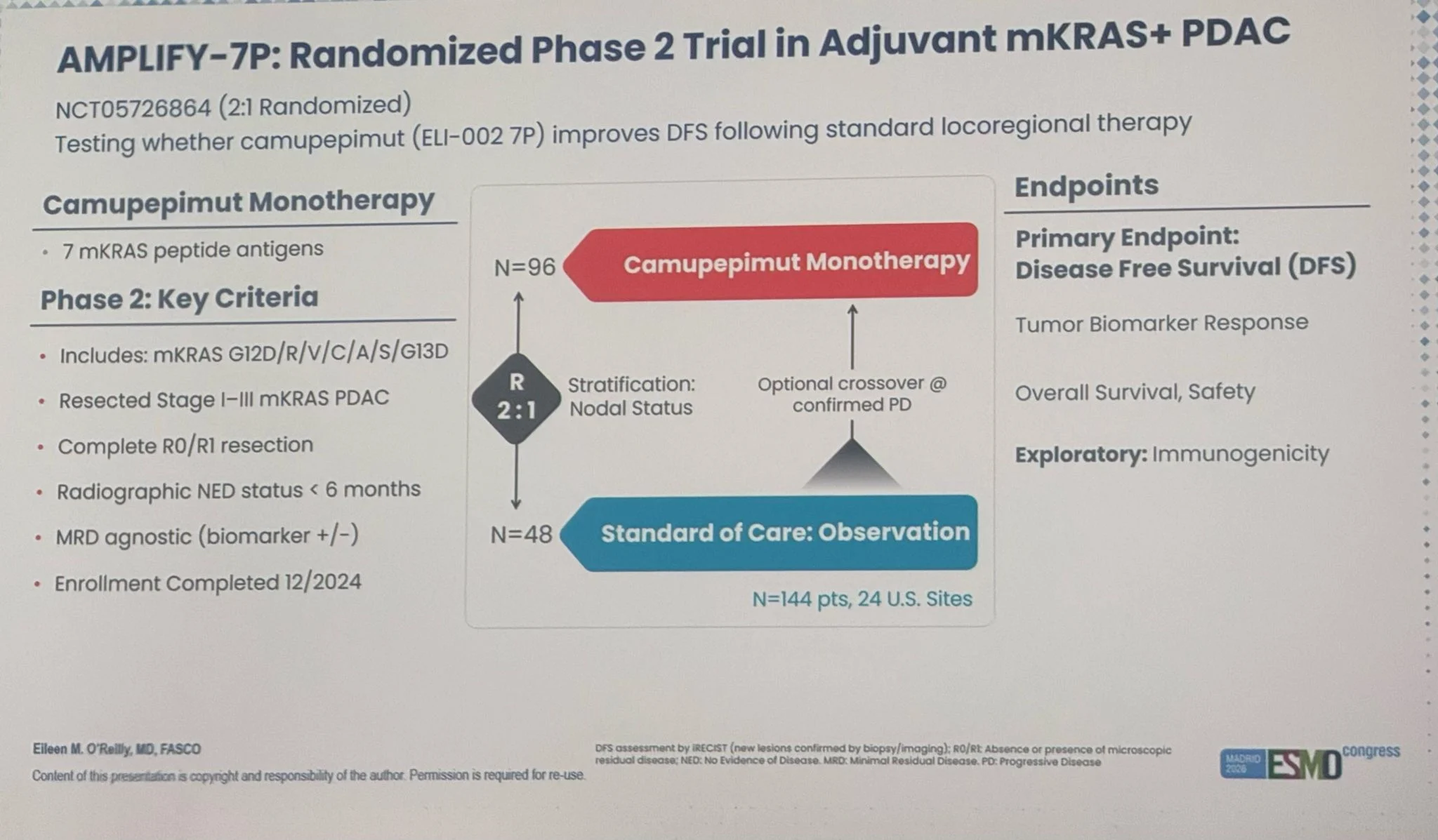
AMPLIFY-7P (NCT05726864) was a randomized phase II trial evaluating camupepimut after standard locoregional treatment in patients with resected stage I–III KRAS-mutated PDAC.
The study enrolled 144 patients at 24 US sites. Patients were randomized 2:1 to camupepimut (n = 96) or observation (n = 48), with stratification by nodal status. Eligible patients had undergone R0 or R1 resection and had radiographic no evidence of disease. Enrollment was permitted regardless of molecular residual disease status.
The primary endpoint was DFS. Additional endpoints included tumor biomarker response, overall survival, and safety; immunogenicity was exploratory. Optional crossover from observation to camupepimut was permitted following confirmed progression.
Primary DFS Results
- Primary endpoint: The intention-to-treat analysis did not demonstrate a statistically significant DFS improvement with camupepimut (HR 0.85; reported CI 0.52–1.41; P = 0.5329).
- Median DFS: Median DFS was 23.8 months with camupepimut versus 21.2 months with observation.
Conclusion
AMPLIFY-7P did not meet its primary DFS endpoint in the intention-to-treat population. Additional subgroup and immune-response findings should be interpreted as exploratory and do not override the negative primary analysis.