Key takeaways
- Chemotherapy-induced alopecia is a common and highly visible side effect that can significantly affect body image, self-esteem, emotional wellbeing, and social life.
- Hair loss occurs because chemotherapy damages rapidly dividing cells in hair follicles, usually causing diffuse shedding within the first weeks of treatment.
- The risk depends on the drug, dose, schedule, and combination used, with taxanes and anthracyclines among the treatments most strongly associated with severe alopecia.
- Scalp cooling can reduce hair loss in some patients, while gentle hair care, scalp protection, counselling, and cosmetic support can improve comfort and preparedness.
- Hair usually regrows after chemotherapy, although persistent alopecia can occur, particularly after some taxane-based regimens, and medical evaluation may be needed when regrowth is delayed.
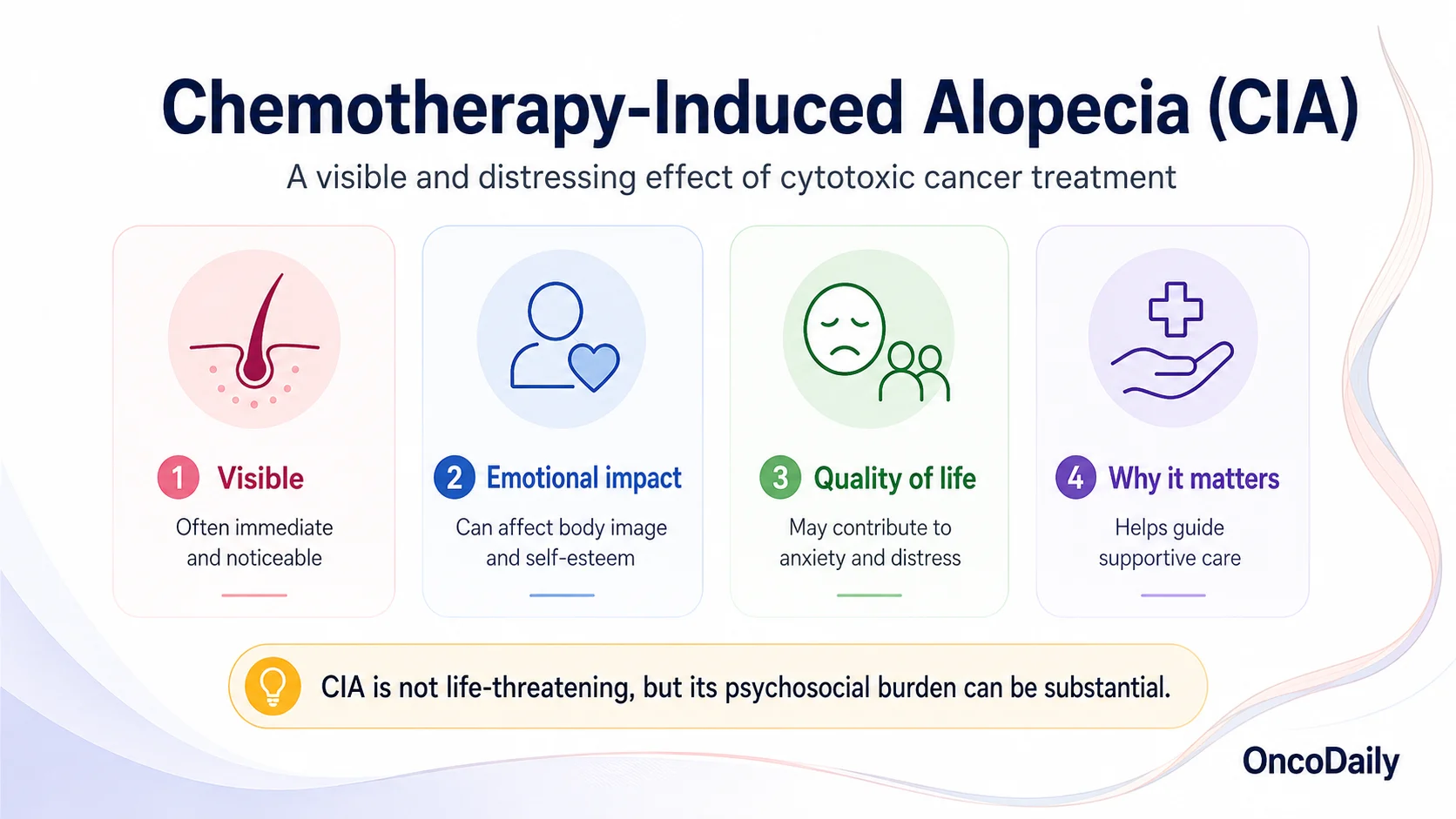
Chemotherapy‑induced alopecia (CIA) is one of the most visible and psychologically distressing side effects of cytotoxic (harmful or toxic to cells, often causing cell damage or cell death) cancer treatment. Unlike many other toxicities that are internal or intermittent, hair loss is immediately apparent, often dramatic, and strongly linked to changes in body image, self‑esteem, and social functioning. Although it is typically non‑life‑threatening, CIA is frequently described by patients as one of the most traumatic aspects of therapy, and it can contribute to treatment anxiety, social withdrawal, and reduced quality of life. Understanding the pathophysiology, prevalence, and management options for CIA is essential for oncologists, nurses, and allied health professionals who aim to support patients through both the disease and its treatment.
Mechanism and Pathophysiology
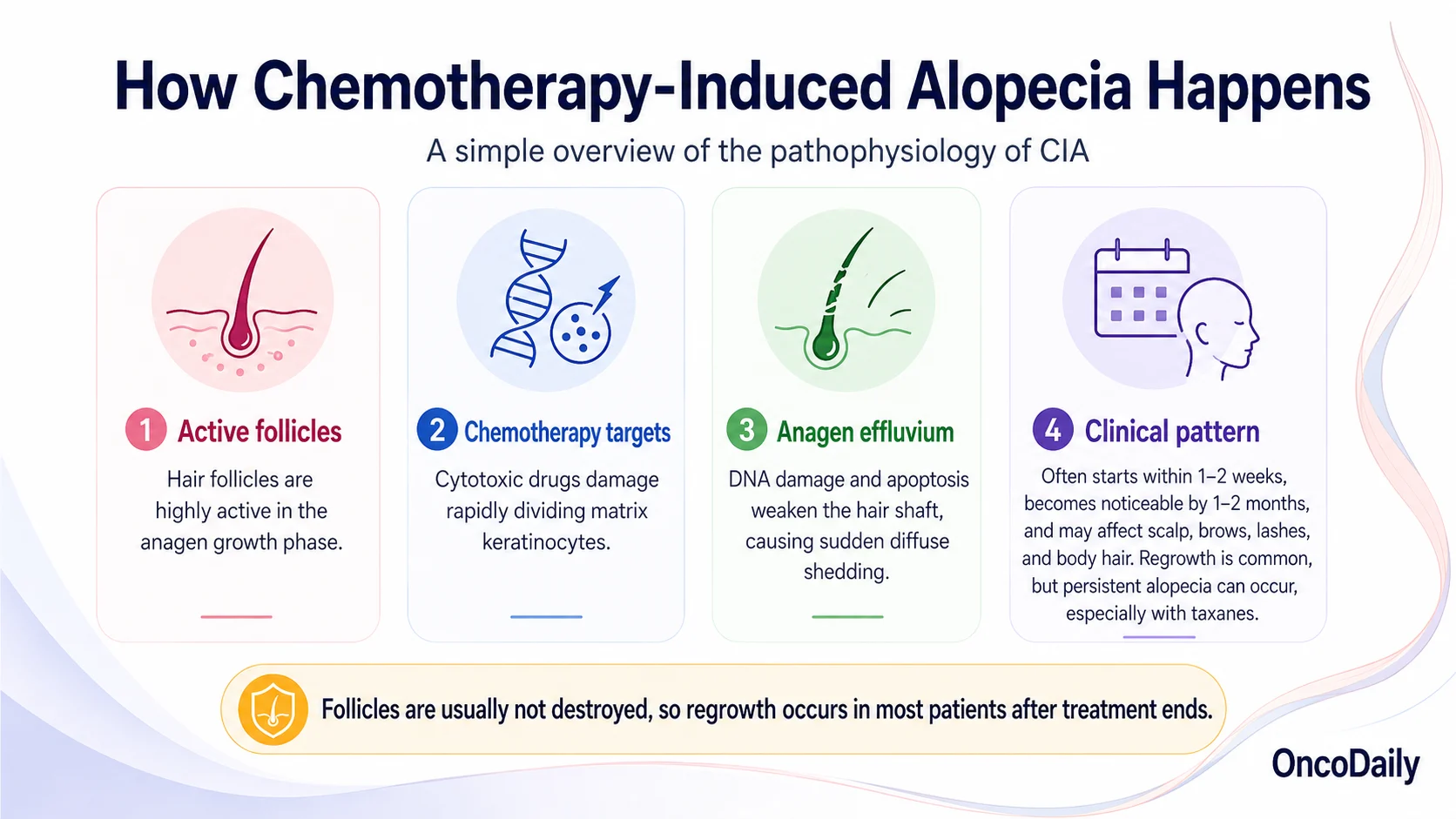
Hair follicles are metabolically most active structures in the body, with rapidly dividing matrix keratinocytes in the anagen (growth) phase. Most cytotoxic chemotherapies target the DNA synthesis or cell division, and hair follicle cells are particularly vulnerable because they are continuously proliferating. The predominant mechanism of CIA is anagen effluvium (sudden, widespread hair loss occurs when toxic agents, such as chemotherapy, abruptly interrupt the normal growth (anagen) phase of hair follicles).
In anagen effluvium, chemotherapeutic agents damage DNA and disrupt replication in matrix cells, triggering apoptosis and structural weakening of the hair shaft. As the weakened shaft cannot sustain normal tensile strength, it fractures near the follicle, resulting in sudden, diffuse hair loss. This process typically begins within 1–2 weeks after initiation of chemotherapy and becomes most noticeable 1–2 months later. Approximately 10% of follicles may be in non‑anagen phases at the start of therapy and thus initially spared, but with continued treatment, total or near‑total scalp hair loss often occurs.
In addition to the scalp, CIA can affect eyebrows, eyelashes, and body hair, depending on the drug, dose, and regimen. According to Garza‑Rodríguez et al., 2026 the pattern of loss is generally diffuse rather than patchy, and follicles are usually not destroyed, which allows for regrowth after treatment ends in most cases. However, in some patients particularly those receiving taxane‑based regimens persistent or even permanent alopecia may occur, indicating that long‑term structural or functional damage to follicles can happen in a subset of patients, as reported in contemporary clinical studies.
You can also read Why Radiation Can Cause Hair Loss? Hair loss (Alopecia) and Radiotherapy by OncoDaily.
Which Drugs Cause Hair Loss and How Common Is It?
The risk and severity of chemotherapy‑induced alopecia (CIA) vary significantly by drug class, dose, and regimen. In a systematic review, Wani et al., 2018 report that approximately 65% of patients receiving classic chemotherapy experience some degree of hair loss, with incidence ranging from mild thinning to complete alopecia depending on the agents used. Population‑based and single‑center cohort studies by You et al. and others estimate that 60–85% of individuals receiving chemotherapy experience some degree of CIA, with higher rates seen with myelosuppressive and DNA‑damaging agents. The severity increases with cumulative cycles of therapy, similar to other myelosuppressive effects, as noted in cohort analyses and clinical observations.
High‑Risk Chemotherapy Agents and Regimens
Following drugs are the ones with the highest risks:
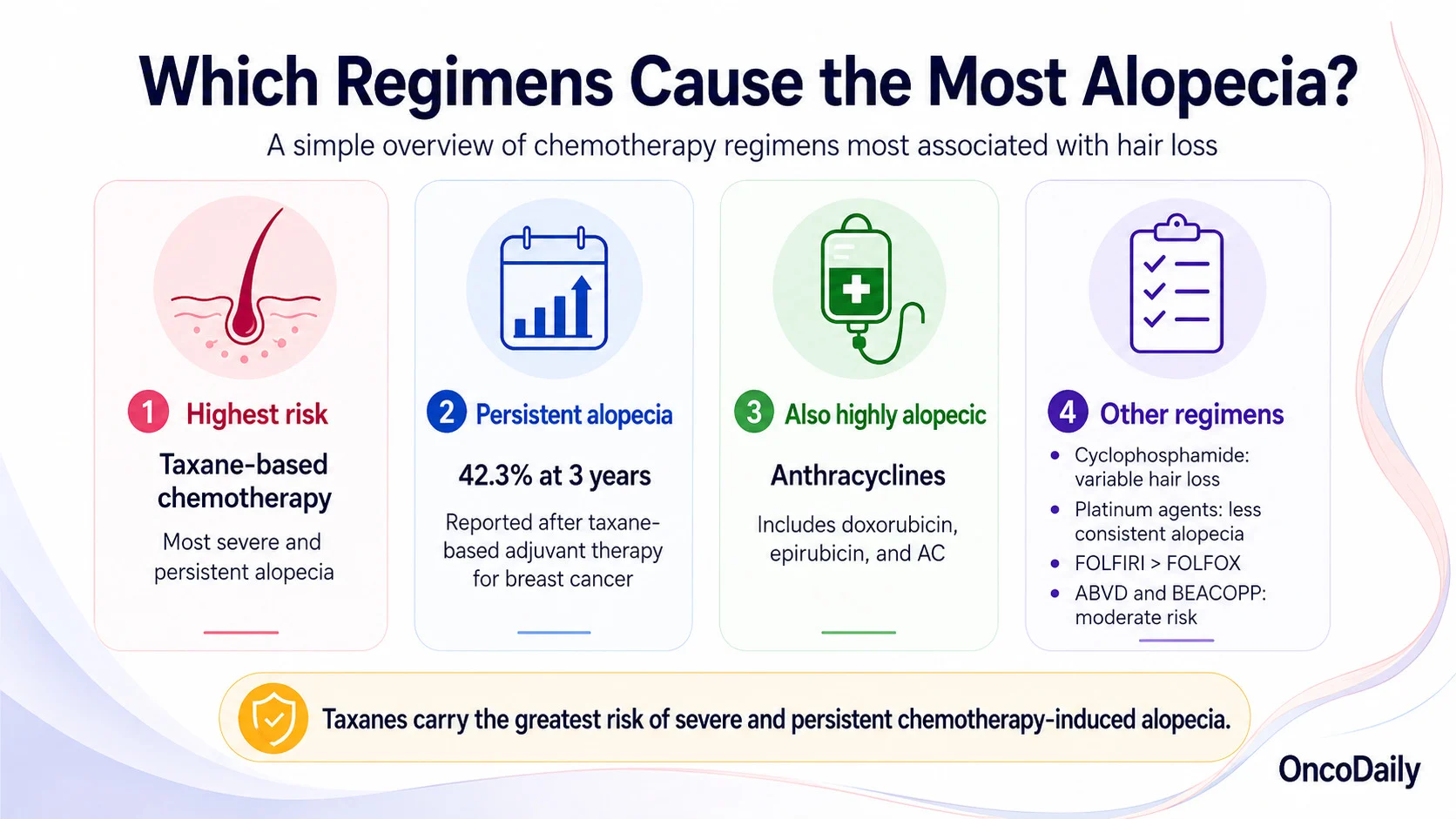
- Taxane-based chemotherapy carries one of the highest risks of severe and persistent alopecia, particularly with docetaxel and paclitaxel (Howell et al., 2021; Gaumond et al., 2025).
- Anthracyclines, including doxorubicin and epirubicin, are also highly alopecic, especially in regimens such as AC. Cyclophosphamide causes variable hair loss, while platinum agents generally cause less consistent alopecia.
- Among gastrointestinal regimens, FOLFIRI causes more clinically significant alopecia than FOLFOX, largely because it contains irinotecan (Tournigand et al., 2004).
- ABVD and BEACOPP are both associated with clinically significant hair loss, with escalated BEACOPP carrying a higher risk of severe alopecia than ABVD (von Tresckow et al., 2012).
Cumulative Effects and Dose Dependence
Hair loss may become more pronounced with each treatment cycle. Higher cumulative doses, dose-dense schedules, and combinations of multiple alopecic agents particularly anthracyclines followed by taxanes are associated with more extensive hair loss and a greater risk of persistent alopecia.
Patient Impact: Psychological, Social, and Functional Consequences
Chemotherapy-induced alopecia (CIA) is often considered one of the most distressing dermatologic side effects of treatment. Although hair loss does not directly affect physical health, it can lead to reduced self-esteem, body image changes, anxiety, depression, social withdrawal, and concerns about attractiveness or intimacy (Lemieux et al., 2004).
Patients’ expectations may also influence how strongly hair loss is experienced. Those who anticipate severe alopecia may report greater treatment-related distress, while fear of visible illness and stigma can intensify its psychological impact (Devlin et al., 2017).
For many patients, hair loss makes cancer visible to others, creating feelings of vulnerability, loss of control, and altered identity. These effects may be especially significant for women and younger patients who view hair as an important part of their appearance and self-expression (Sharma et al., 2019).
In some cases, severe distress related to hair loss may even influence treatment decisions, particularly when supportive options are limited.
Prevention and Management Strategies
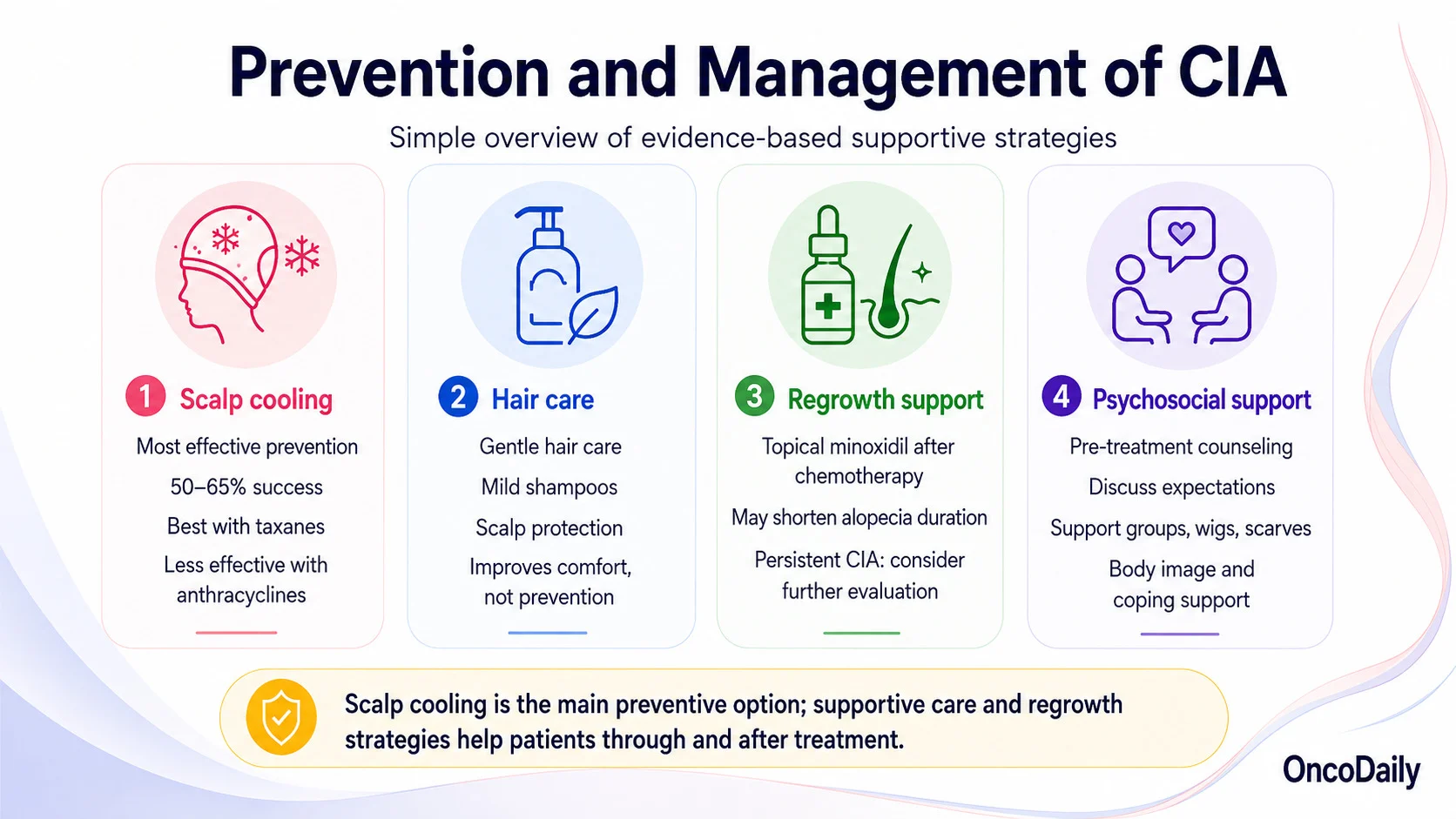
According to current clinical evidence, a comprehensive approach to prevention and management of chemotherapy‑induced alopecia including scalp cooling, gentle hair care, pharmacologic support for regrowth, and psychosocial interventions is supported by clinical guidelines and studies (Rossi et al., 2017).
Scalp Cooling
Scalp cooling may be used before, during, and after chemotherapy infusions to reduce the amount of medicine reaching the hair follicles. It may lessen hair loss in some patients, although results vary by treatment.
Gentle hair care, mild shampoos, moisturisers, sun protection, and comfortable head coverings can also protect the scalp. These measures do not prevent alopecia but may reduce irritation and additional damage.
Hair Care
Hair may become dry and fragile during chemotherapy. Mild shampoo, lukewarm water, gentle drying, and minimal brushing can help reduce breakage.
Heat styling, bleaching, chemical treatments, tight hairstyles, and extensions should be avoided. Sunscreen, hats, or scarves can protect an exposed scalp from sunlight and cold.
Pharmacologic Support for Regrowth
Hair usually begins to regrow after chemotherapy ends. Topical minoxidil may support regrowth and shorten the duration of alopecia, although it does not prevent hair loss during treatment (Duvic et al., 1996).
Topical or oral minoxidil may also help some patients with persistent alopecia under medical supervision. Supplements such as biotin have limited evidence and are not standard treatment. Doctors may also check thyroid function, vitamin D, zinc, and ferritin levels when regrowth is delayed.
Psychological and Social Interventions
Counselling before treatment can help patients understand when hair loss may begin, how severe it may be, and whether scalp cooling is suitable.
Support may include counselling, peer groups, social services, wigs, scarves, hats, and cosmetic resources. These options can help patients feel more prepared, confident, and in control.
Finding the Right Wig During Chemotherapy
A wig can help some patients feel more comfortable and confident during chemotherapy-related hair loss. The best choice depends on comfort, appearance, lifestyle, and budget.
Choosing a Wig During Chemotherapy
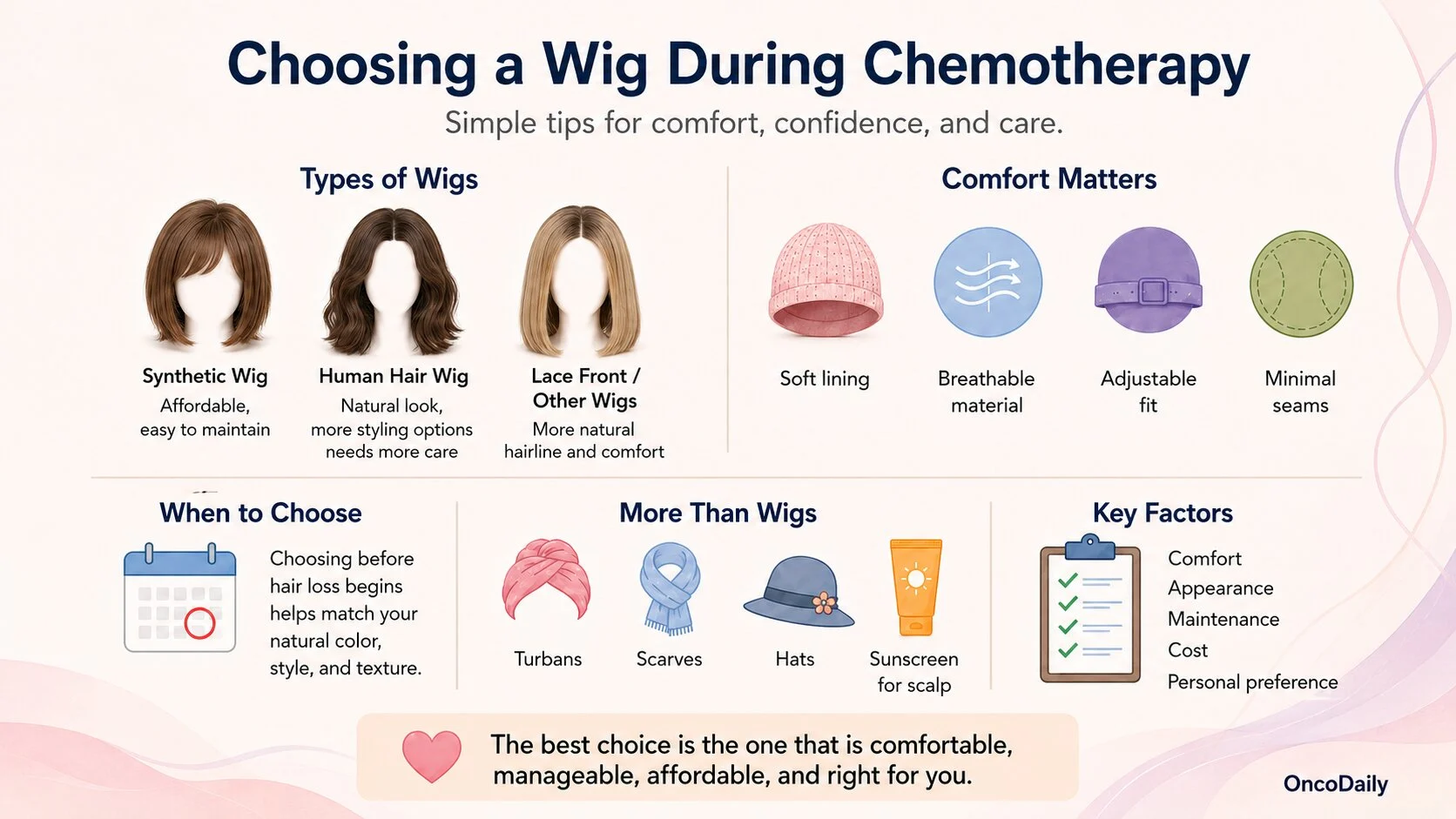
Choose a lightweight wig with a soft lining, breathable material, adjustable straps, and minimal seams, especially if the scalp is sensitive.
Synthetic wigs are usually affordable, easy to maintain, and hold their shape well. Human-hair wigs often look more natural and can be styled, but they cost more and require greater care. Lace-front, monofilament, hand-tied, and medical wigs may offer a more natural appearance or comfortable fit.
When possible, choose a wig before significant hair loss begins to help match the natural colour, texture, and style. Some patients may prefer to try a completely new look.
Scarves, turbans, silk-lined caps, and hats are also good alternatives. When the scalp is uncovered, use sunscreen or a protective hat outdoors.
How to Buy and Choose a Wig During Chemotherapy
Wigs are available from specialist shops, selected salons, hospital services, cancer charities, online retailers, and wig banks. The oncology team may be able to recommend trusted suppliers.
The wig should fit securely without causing pressure, itching, or headaches. Ask about fitting, washing, storage, alterations, and return policies before buying.
Synthetic wigs may cost around US$50–$500, while human-hair wigs often cost US$1,000 or more. Patients can also ask about insurance coverage, discounts, vouchers, or free wig programmes.
Written by Marine Marachlian, MD
FAQ
Why does chemotherapy cause hair loss?
Chemotherapy damages rapidly dividing cells in hair follicles, leading to hair shaft fracture and loss.
Will I lose all my hair with chemotherapy?
Many patients lose most or all scalp hair, and sometimes hair from eyebrows, eyelashes, and body.
Will my hair grow back after chemotherapy?
Yes; hair usually starts regrowing 1–3 months after treatment ends.
Can chemotherapy hair loss be permanent?
Mostly temporary, but some patients (especially with taxanes) may have persistent or permanent alopecia.
Are there ways to prevent hair loss during chemotherapy?
Scalp cooling is the most effective method; still depends on the type of chemotherapy.
How is chemotherapy hair loss different from radiation hair loss?
Chemotherapy causes diffuse whole‑body hair loss; radiation causes localized loss only in the treated area.
When does hair loss typically start after chemotherapy begins?
Hair loss often starts 1–2 weeks after the first dose and worsens over the next 1–2 months.
Can scalp cooling reduce long‑term hair loss after chemotherapy?
It may lower the risk of persistent alopecia, but again it depends on the type of chemotherapy.
Will my hair be the same when it grows back?
It may be different in texture, thickness, or color initially, but often improves over time.
What can I do to cope with hair loss during chemotherapy?
Use gentle scalp care, protective clothing, wigs or scarves, and consider counseling or support groups.