Key takeaways
- The first chemotherapy session is often longer than later appointments because the team must review test results, confirm the treatment plan, prepare the medicines, and monitor the patient’s initial response.
- Before treatment, patients should understand why chemotherapy is being given, which medicines they will receive, how the treatment will be administered, and which side effects are expected.
- Blood counts, liver and kidney function, vital signs, current medicines, supplements, allergies, and recent health changes are reviewed to ensure treatment can be given safely.
- Comfortable clothing, hydration, light snacks when permitted, entertainment, important documents, and transportation home can make the first treatment day more manageable.
- Fever, breathing difficulty, chest pain, severe vomiting or diarrhoea, heavy bleeding, allergic reactions, or redness and swelling around an intravenous line or port require immediate contact with the oncology team.
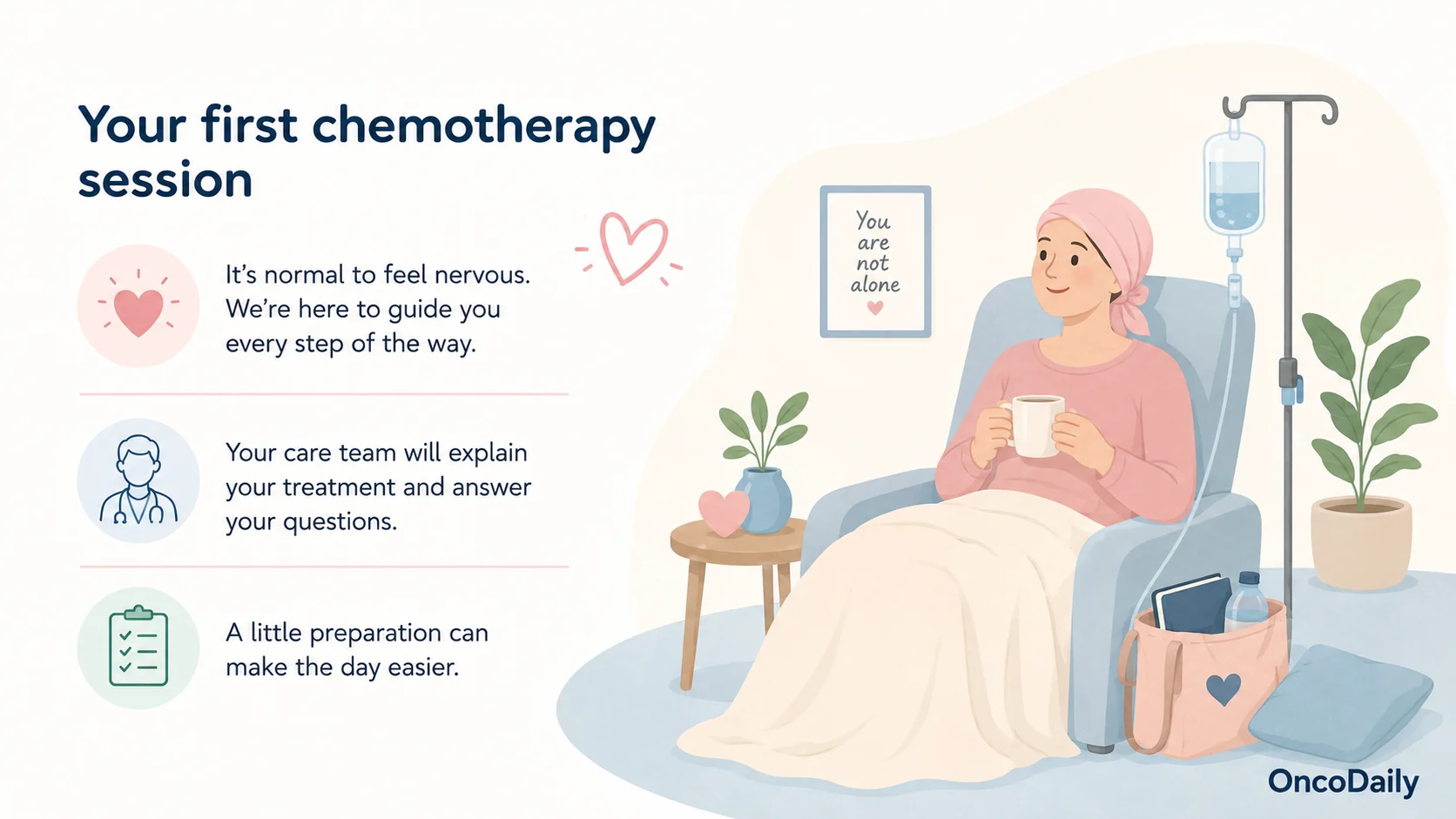
First chemotherapy session can feel overwhelming, especially when you do not know what the first appointment will involve. You may have questions about the treatment, the possible side effects, how long the session will take, and what you should bring with you.
Knowing what to expect can make the experience feel more manageable. Before treatment begins, your healthcare team will explain why chemotherapy has been recommended, how it will be given, and what you can do to prepare.
Why Chemotherapy Is Given
Chemotherapy uses powerful medicines to destroy cancer cells, slow their growth, or stop them from dividing. Depending on the cancer type and stage, it may be used as the main treatment or combined with surgery, radiation therapy, immunotherapy, or other treatments.
Chemotherapy may be given before surgery to shrink a tumor and make it easier to remove. This is called neoadjuvant chemotherapy. It may also be given after surgery to destroy microscopic cancer cells that could remain in the body. This is called adjuvant chemotherapy.
According to Cancer Research UK, the decision to use chemotherapy depends on factors such as the cancer type, the size of the tumor, whether the cancer has spread, and the patient’s general health.
In breast cancer, for example, It was found that chemotherapy given before surgery may increase the possibility of breast-conserving surgery by reducing the size of the tumor. The study did not find a reduction in overall survival compared with chemotherapy given after surgery. (Hage et al., 2007)
Chemotherapy may also be used when cancer cells are believed to be present in the body even though they are too small to appear on scans. Treating these hidden cells may lower the risk of the cancer returning or spreading.
You can also read How Chemotherapy Affects Cancer and Normal Cells: Mechanisms, Side Effects and Long-Term Risks by OncoDaily.
Meeting Your Chemotherapy Team
Before your first session, you will usually meet with a medical oncologist. This is the doctor who plans and supervises chemotherapy and other cancer medicines.
Other members of your care team may include:
- An oncology nurse
- A surgeon
- A radiation oncologist
- An oncology pharmacist
- A dietitian
- A social worker
- A patient navigator or case manager
Each person has a different role in helping you through treatment. Your oncology nurse will often explain what will happen during the infusion, which side effects may occur, and when you should contact the clinic.
The American Cancer Society recommends asking questions whenever something about the treatment plan is unclear. You may find it helpful to write down your questions before the appointment or bring a family member or friend who can take notes.
Watch more on OncoDaily TV.
Questions to Ask Before Treatment
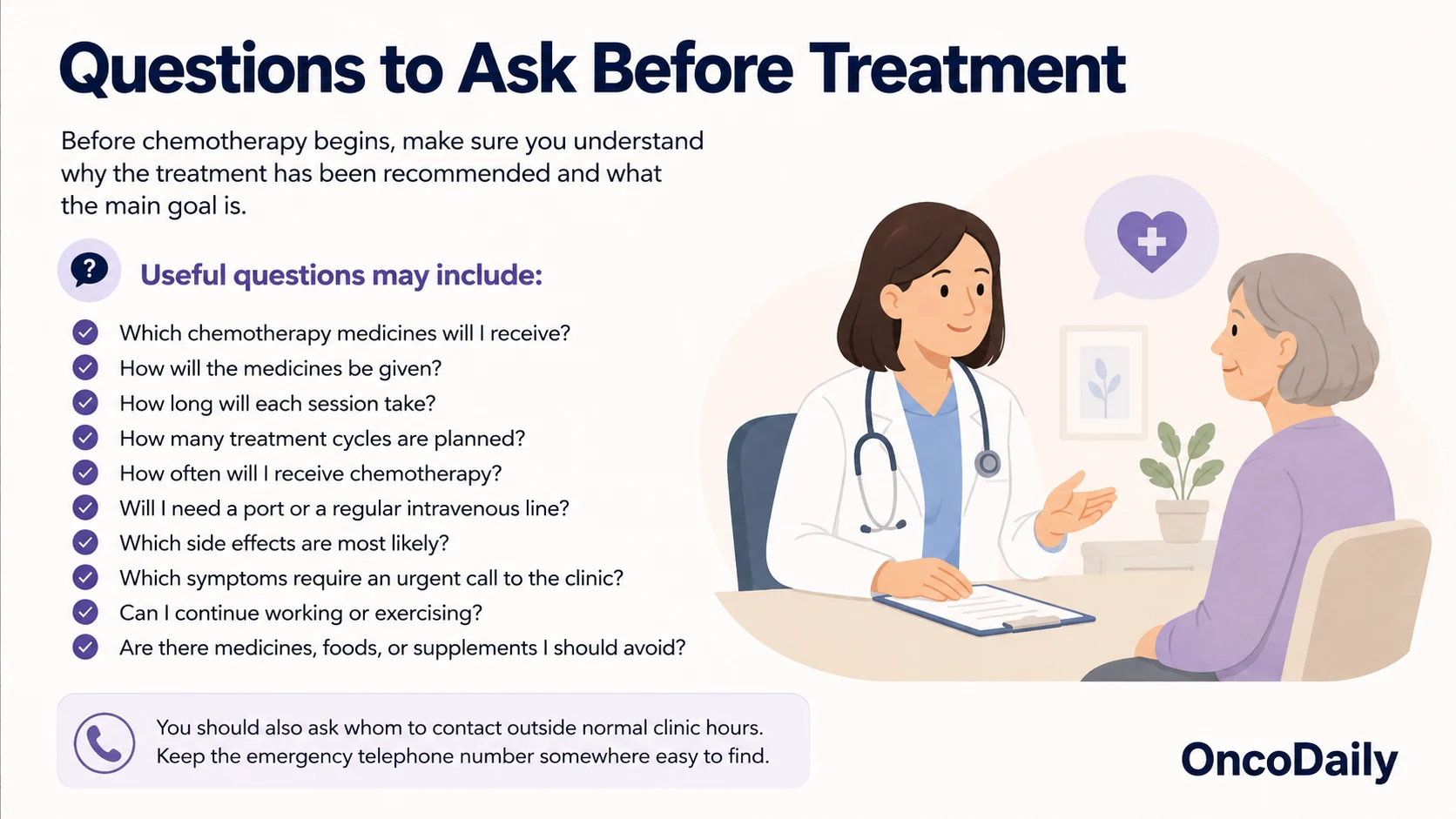
Before chemotherapy begins, it is important to understand why the treatment has been recommended and what the main goal is. Your oncology team should explain which chemotherapy medicines you will receive, how they will be given, how long each session may take, and how many treatment cycles are planned. You should also know how often treatment will be scheduled and whether you will need a port, a regular intravenous line, or another type of access.
Ask which side effects are most likely with your specific treatment and which symptoms require an urgent call to the clinic. It can also be helpful to discuss whether you can continue working, exercising, driving, or carrying out your usual daily activities during treatment. Some medicines, foods, vitamins, herbal products, and supplements may interfere with chemotherapy, so tell your care team about everything you are taking and ask whether anything should be stopped or avoided.
Make sure you know whom to contact if you have concerns outside normal clinic hours. Keep the emergency telephone number in an easy-to-find place and share it with a family member or caregiver who may be supporting you during treatment.
Tests Before Your First Session
Before receiving chemotherapy, you will usually have blood tests. These tests help the healthcare team determine whether your body is ready for treatment.
Blood tests may be used to check:
- White blood cell levels
- Red blood cell levels
- Platelet levels
- Kidney function
- Liver function
- Electrolyte levels
Your weight, blood pressure, temperature, pulse, and oxygen level may also be checked. Your chemotherapy dose may be calculated partly according to your height and weight.
If your blood counts are too low or there are concerns about your liver or kidney function, treatment may be delayed or the dose may be adjusted. This does not necessarily mean that the chemotherapy is not working. Dose changes are often made to keep treatment as safe as possible.
Depending on the medicine you will receive, your doctor may also request heart tests, lung tests, pregnancy testing, or additional scans.
Tell Your Team About All Medicines and Supplements
Before your first chemotherapy session, give your healthcare team a complete list of everything you take.
This includes:
- Prescription medicines
- Over-the-counter medicines
- Vitamins
- Herbal products
- Nutritional supplements
- Pain medicines
- Traditional remedies
Some medicines and supplements may interact with chemotherapy. They can affect how the treatment works or increase the risk of bleeding, infection, liver problems, or other complications.
Do not stop taking a prescribed medicine without speaking with your doctor. Your oncology team will tell you which medicines are safe to continue and which should be changed or temporarily stopped.
You should also tell the team about any allergies, previous reactions to medicines, recent infections, fever, major weight loss, or existing heart, kidney, or liver problems.
Will You Need a Port?
Some chemotherapy medicines are given through a regular intravenous line placed in a vein in the arm. Other patients may need a central venous catheter or an implanted port.
A port is a small device placed under the skin, usually in the upper chest. It connects to a larger vein and can be used to give chemotherapy, fluids, and other medicines. Blood samples may also be taken through it.
A port can reduce the need for repeated needle placement in the arms. It may be recommended when treatment will continue for several months, when medicines must be given through a large vein, or when the veins are difficult to access.
Your healthcare team will explain how the port is inserted, how to care for it, and whether you need any restrictions after the procedure.
Preparing for the Treatment Day
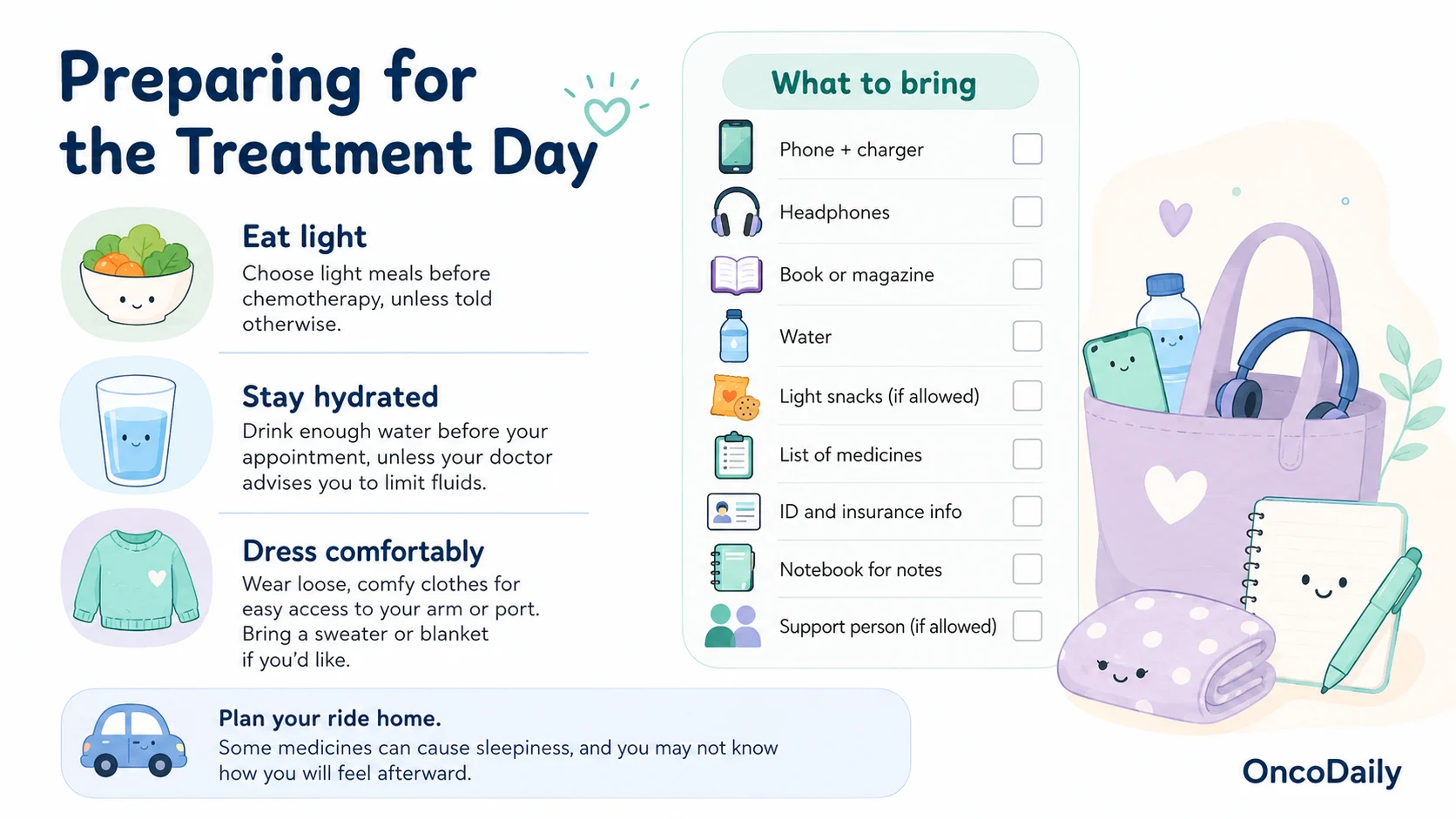
Before your chemotherapy appointment, ask your care team whether you can eat. In many cases, a light meal is allowed unless you have received different instructions. Try to drink enough water beforehand unless your doctor has advised you to limit fluids. Good hydration may make it easier to place an intravenous line and can help you feel more comfortable during treatment.
Wear loose, comfortable clothing that provides easy access to your arm or implanted port. Infusion rooms may feel cool, so consider bringing a sweater, blanket, or warm socks. It can also be helpful to bring your telephone and charger, headphones, a book or magazine, water, and light snacks if they are permitted. Keep your medicine list, identification, insurance information, and a notebook for recording instructions with you. A family member or friend may accompany you if the treatment centre allows it.
Consider arranging transportation home after your first session. Some medicines given before chemotherapy can cause drowsiness, dizziness, or reduced concentration, and you may not know how the treatment will affect you until the session is complete.
What Happens When You Arrive
The first chemotherapy appointment is often longer than later sessions. The team must review your blood results, confirm your treatment plan, prepare the medicines, and make sure it is safe to proceed.
Your nurse may check your temperature, blood pressure, pulse, breathing, weight, and current symptoms. You will be asked whether you have experienced fever, infection, vomiting, diarrhea, new pain, or any other health changes.
Once the treatment is approved, the pharmacy prepares the chemotherapy specifically for you. This process can take time because the medicines must be prepared carefully and checked before they are given.
An intravenous line will then be placed, or your port will be accessed.
Before chemotherapy starts, you may receive fluids and supportive medicines. According to the American Cancer Society, these may include anti-nausea medicines, allergy medicines, steroids, or medicines that help you feel more relaxed.
What the Infusion May Feel Like
Many people do not feel the chemotherapy medicine entering their body. You may feel a brief pinch when the intravenous line or port needle is placed.
Some medicines are given slowly, while others can be given more quickly. Your nurse will monitor you throughout the treatment and may regularly check your blood pressure, pulse, and temperature.
Tell the nurse immediately if you experience:
- Burning, pain, redness, or swelling around the intravenous line
- Difficulty breathing
- Tightness in the chest
- Sudden itching or rash
- Dizziness
- Chills
- Facial swelling
- Back pain
- A sudden feeling that something is wrong
These symptoms may indicate an infusion reaction. If this happens, the healthcare team can stop the medicine and provide treatment immediately. Many reactions can be managed, and chemotherapy may sometimes be restarted more slowly.
The first session allows the team to observe how your body responds to the medicines. Hage et al., 2007 also noted that chemotherapy given before surgery can help doctors assess chemosensitivity, meaning how well a tumor responds to a particular treatment.
How Long the First Session Takes
The length of the first chemotherapy session varies considerably. Some infusions take less than an hour, while others take several hours.
The appointment may include:
- Registration
- Blood tests
- A consultation with the doctor or nurse
- Waiting for the treatment to be approved
- Pharmacy preparation
- Pre-treatment medicines
- Hydration
- The chemotherapy infusion
- Observation afterward
According to the American Cancer Society, some treatment days may last between eight and ten hours when several medicines, extended hydration, or additional monitoring are required.
The infusion itself may not be the longest part of the appointment. Waiting for blood results and pharmacy preparation can also take time.
Plan for the appointment to last longer than expected, especially during your first cycle.
Side Effects After the First Session
Not everyone experiences the same side effects. The symptoms you develop will depend on the medicines, doses, treatment schedule, and your individual response.
Some people feel relatively well immediately after chemotherapy. Others may feel tired or sleepy because of the supportive medicines given before treatment.
Possible early side effects include:
- Fatigue
- Nausea
- Reduced appetite
- Changes in taste
- Headache
- Constipation
- Diarrhea
- Mild dizziness
- Difficulty sleeping.
Some effects may begin later the same day, while others appear over the next few days.
Hair loss usually does not begin immediately after the first session. When it occurs, it often starts several weeks after treatment begins. The risk and amount of hair loss depend on the specific chemotherapy medicine.
Nausea, vomiting, alopecia, and serious infection among the adverse effects evaluated in studies of preoperative chemotherapy. (Hage et al., 2007)
Your healthcare team may prescribe medicines to prevent or manage nausea, constipation, diarrhea, pain, or other symptoms. Take these medicines according to the instructions rather than waiting until symptoms become severe.
Symptoms That Need Immediate Attention
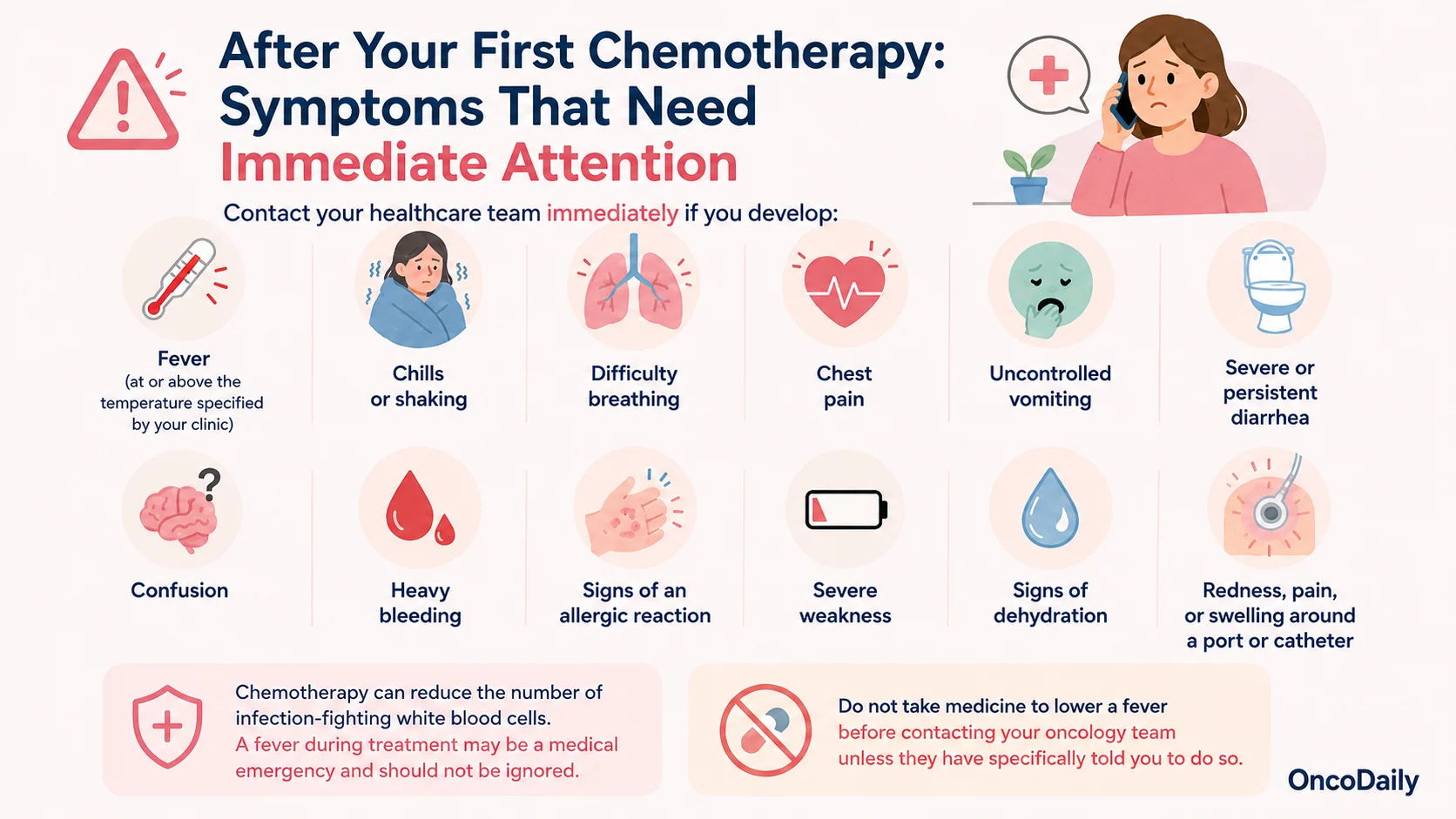
Contact your healthcare team immediately if you develop a fever at or above the temperature specified by your clinic, chills, shaking, difficulty breathing, chest pain, uncontrolled vomiting, severe or persistent diarrhoea, confusion, heavy bleeding, severe weakness, signs of dehydration, or symptoms of an allergic reaction. Redness, pain, swelling, or discharge around a port or catheter should also be reported promptly.
Chemotherapy can lower the number of white blood cells that protect the body against infection. As a result, even a mild fever during treatment may be a sign of a serious infection and can require urgent medical assessment. Do not wait for the fever to improve on its own.
Unless your oncology team has specifically instructed you otherwise, do not take paracetamol, ibuprofen, or another medicine to lower the fever before contacting the clinic. These medicines can reduce the temperature and make it harder for the care team to assess the situation accurately.
What to Remember
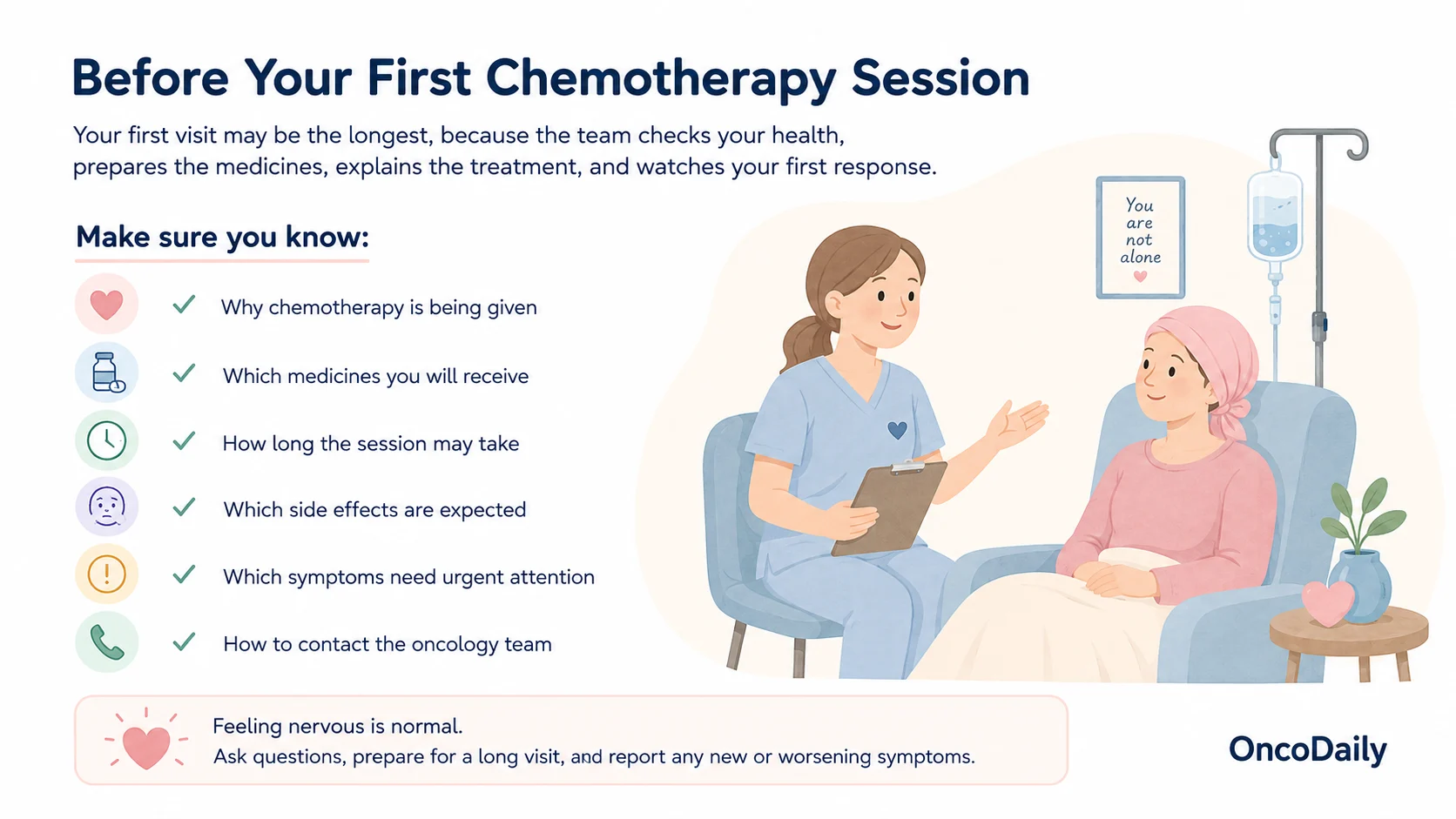
The first chemotherapy session may take longer than later appointments because the healthcare team needs time to review your health, prepare the medicines, explain each stage of treatment, and monitor how you respond. Before the appointment, make sure you understand why chemotherapy has been recommended, which medicines you will receive, how long the session is expected to take, and which side effects are most likely. You should also know which symptoms require urgent attention and how to contact the oncology team during and outside normal clinic hours.
Feeling nervous before the first treatment is completely understandable. Knowing what to expect, preparing for a longer appointment, and asking questions can help you feel more comfortable and confident.
Your healthcare team does not expect you to remember every detail at once. Continue asking questions throughout treatment and report any new, unusual, or worsening symptoms. Clear communication allows the team to manage side effects early, adjust supportive care when needed, and guide you through each stage of chemotherapy.
Written by Marine Marachlian, MD.
FAQ
How long does the first chemotherapy session take?
It may take several hours because the team checks your health, prepares the medicines, and explains the treatment.
Can I eat before chemotherapy?
Many patients can eat a light meal, but always follow the instructions from your care team.
What should I bring with me to my chemotherapy session?
Bring water, light snacks if allowed, a phone charger, headphones, a book, your medicine list, and identification.
Will chemotherapy hurt?
You may feel a small pinch when the intravenous line or port is accessed, but the infusion itself is usually not painful.
Will I feel sick immediately after my first chemotherapy?
Some people feel tired or nauseous afterward, while others feel well. Side effects can begin later that day or over the next few days.
Can someone come with me to my chemotherapy session?
Many treatment centers allow a support person, but you should check the clinic’s rules before your appointment.
Can I drive home after chemotherapy?
It may be safer to arrange transportation after the first session because some medicines can cause tiredness or sleepiness.
When will hair loss begin after chemotherapy?
Hair loss usually does not happen immediately. When it occurs, it often begins a few weeks after treatment starts. Then again depends on the type of chemotherapy.
When should I contact my healthcare team after chemotherapy?
Call immediately for fever, breathing problems, chest pain, severe vomiting, heavy bleeding, confusion, or an allergic reaction.
Is it normal to feel nervous before my first chemotherapy session?
Yes. Feeling nervous before the first session is very common. Asking questions and knowing what to expect can help you feel more prepared.