European Cancer Summit 2026European Cancer Summit 2026 dedicated its second plenary to cancer prevention and screening in Europe. The session followed the full prevention pathway, from tobacco control to organised screening and AI-supported, risk-based approaches. It was co-chaired by Luis Seijo and Thomas Seufferlein, Co-Chairs of the European Cancer Organisation’s (ECO) Prevention, Early Detection and Screening Network.
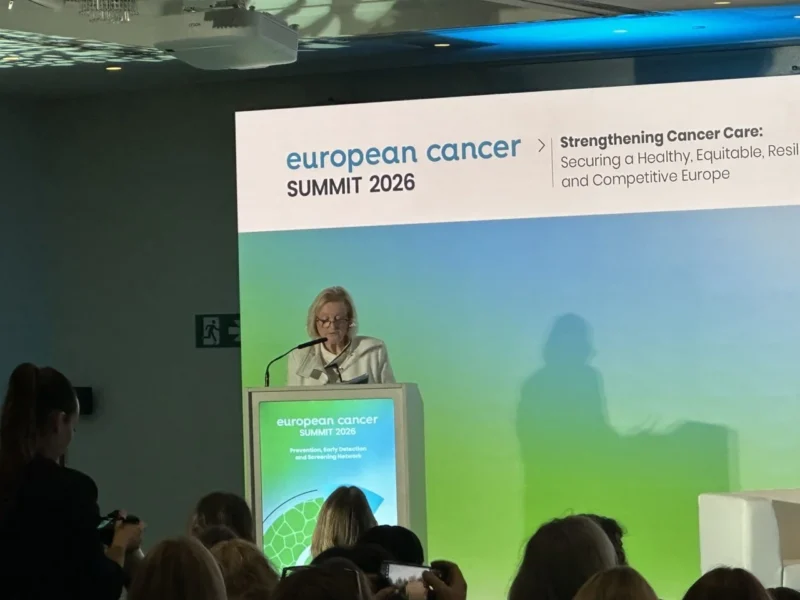
Seufferlein opened by stressing that prevention, early detection and screening are not isolated interventions or simply matters of individual choice. They form a connected value chain, and it only works when regulators, policymakers, data systems, researchers, technology and patients cooperate.
Tobacco Control: “We Have the Recipe. Few Countries Use It.”
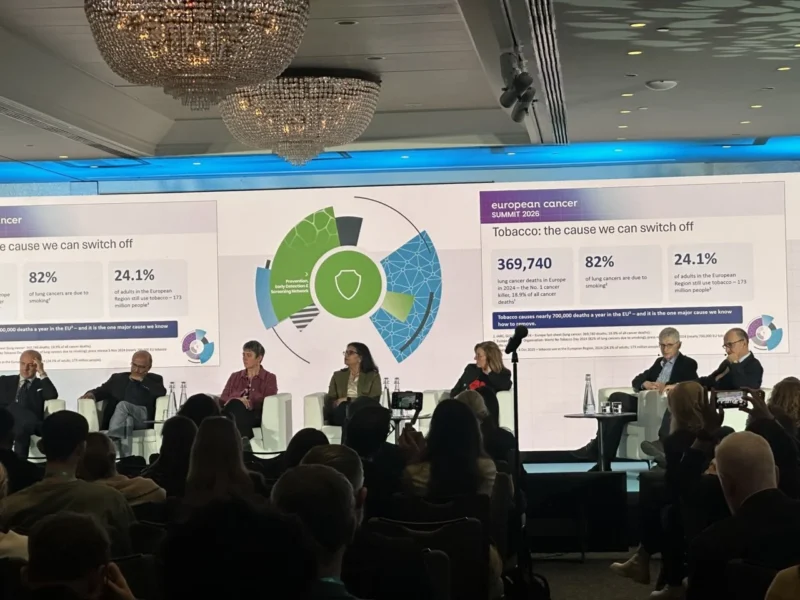
Debra Montague, President of Lung Cancer Europe (LuCE) and Chair of ALK Positive UK, began with one number: 369,740 people in Europe died of lung cancer in 2024, more than 1,000 every day. She then shared her own story. She has never smoked and has no family history of cancer, yet she was diagnosed with lung cancer in October 2016 and told she might have three years. This month marks ten years since her diagnosis.
“I’m not here to make a speech about blame. I’m here to make a speech about prevention,” she said. According to ECO, 82% of lung cancers are caused by smoking, and tobacco causes nearly 700,000 deaths in the EU every year. Adult tobacco use in the WHO European Region has fallen from almost 35% in 2000 to 24% in 2024, but the region still has the highest rate of tobacco use in the world. The figures for young people are especially worrying: 8.4% of 13–15-year-olds smoke cigarettes and 14.3% use e-cigarettes.
Daily tobacco use in the EU ranges from 9.5% in the Netherlands to 26% in Bulgaria. “Same continent, same science, but different outcomes. That difference is policy,” she said.
She argued that the tools that work are already well known:
- Taxation. Only 28 of the 53 countries in the region meet the WHO benchmark of taxes making up at least 75% of the retail price.
- Regulation. Comprehensive smoke-free laws and advertising bans are still in place in only a minority of countries.
- Support to quit. “Telling people to quit without helping them is not a policy.”
She gave Ireland’s 2004 workplace smoking ban and the UK’s new Tobacco and Vapes Act as examples of policies that change social norms. She also cited a European modelling study estimating that scaling up tobacco control could prevent one in four lung cancers, about 1.65 million cases over 20 years.
She then turned to early detection. In England, around 65% of people diagnosed with stage I lung cancer are alive after five years, compared with about 5% of those diagnosed at stage IV. In the NELSON trial, low-dose CT screening reduced lung cancer deaths by 24% in men and 33% in women. Because former smokers can remain at high risk for up to 25 years, she asked clinicians and policymakers to always offer two things together: help to quit and a place in lung cancer screening. Invitations should be free of judgement, she added, because “the thing that stops people coming forward is not ignorance. It is shame.”
The European Commission’s Screening Agenda
Antonio Parenti, Director for Public Health, Cancer and Health Security at the European Commission, said that participation in breast, cervical and colorectal screening still varies widely between and within member states. The European Cancer Inequalities Registry now makes these gaps visible.
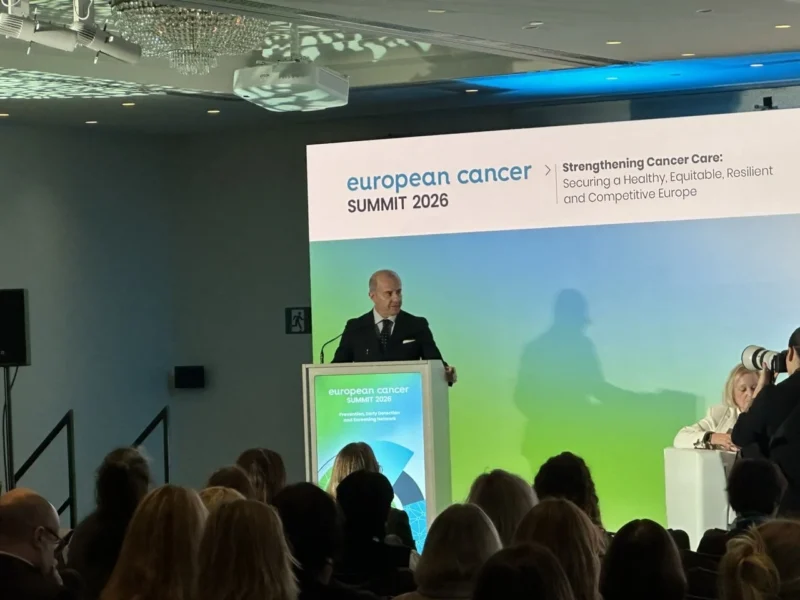
Since the 2022 Council Recommendation on cancer screening, funding has been mobilised to support implementation. This includes the €31 million EUCanScreen Joint Action, which brings together 25 member states and is now halfway through its four-year term. The Recommendation added lung, prostate and gastric cancer for the first time. The SOLACE, PRAISE-U and TOGAS projects, which address these three cancers, have now concluded, and follow-up projects launched this autumn. The European Commission Initiatives on cancer screening and care are developing guidelines and quality assurance schemes, with lung and gastric cancer initiatives launched this year. “This is work in progress, but it’s also work progressing,” Parenti said.
Where Europe Stands: The Third European Screening Report
Partha Basu, Head of the Early Detection, Prevention and Infections Branch at IARC, previewed the upcoming third European cancer screening report, for which data were collected from all 27 EU member states. Rollout is considered complete when at least 90% of the eligible population has received an invitation. By that measure:
- Breast screening. Rollout is complete in 23 of 27 member states. Screening is free everywhere, but treatment is free in only 85% of them.
- Cervical screening. Rollout is complete in 17 member states. Opportunistic screening is still widespread, and many countries do not invite people systematically.
- Colorectal screening. Rollout is complete in 18 member states, up from 11 in 2017. FIT has become the most common test.
- Lung screening. Only two member states are rolling out programmes. Almost all programmes are linked to smoking cessation services.
Across all cancers, the biggest gaps are weak follow-up of people with positive results and missing links between screening registries and cancer registries. The report will be shared with countries shortly and submitted to the Commission by January. Experts are now ranking the quality criteria so that countries know where to invest first.
Seufferlein added that access must come before participation targets, and that high-risk groups, such as families with a history of colorectal cancer, need more intensive screening.
Personalised Screening: From Equality to Equity
Mireille Broeders, Professor of Personalised Cancer Screening at Radboud University, explained that current programmes define their target population mainly by age. Risk stratification could instead offer more intensive screening to people at higher risk and less burdensome screening to those at lower risk. She described this as a shift “from equality to equity.” In breast screening, AI could estimate risk directly from the mammogram, without the need for extra questionnaires. She also cautioned that quality assurance frameworks must cover AI tools as well as machines, data and professionals.
A systematic review found that about 80% of both the public and health professionals accept risk-based screening. However, telling someone their risk is low and they need less screening is a much harder message to deliver. “We should frame personalised screening as doing better for everyone, not taking something away,” she said.
The session also featured Tilly Metz MEP, Vice-Chair of the European Parliament’s Committee on Public Health, and Moitreyee Chatterjee-Kishore, Head of Oncology Development at Astellas. Their contributions added the policymaker’s and the industry perspective to the discussion on how Europe can turn prevention and early detection commitments into results across the cancer pathway.
Key Takeaway
The session’s message was that prevention is a continuous pathway, from stopping people from starting to smoke, through helping them quit, to detecting cancer early with screening programmes that are well organised, equitable and free of stigma.