Key takeaways
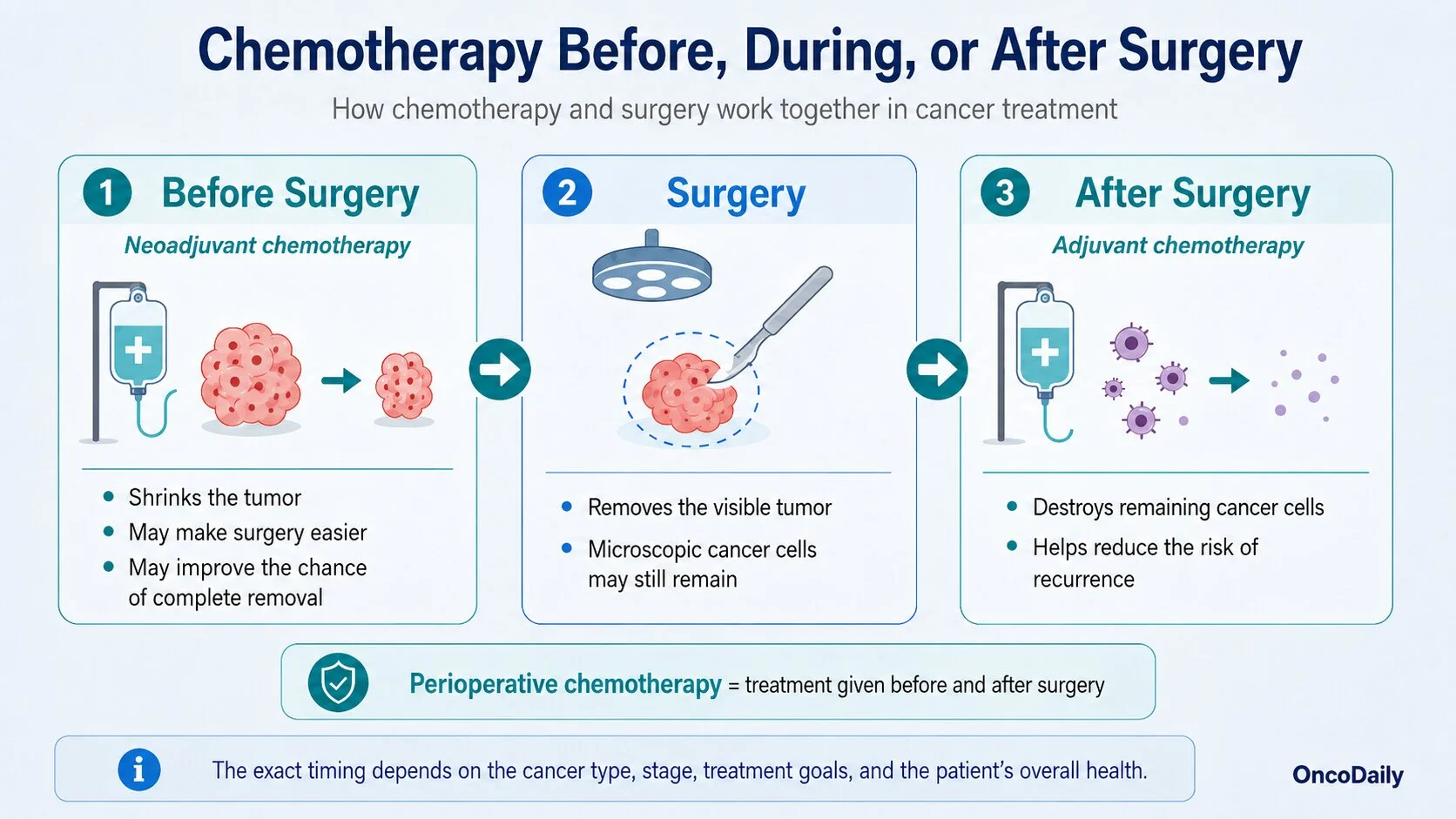
- Chemotherapy may be given before, during, after, or both before and after surgery, depending on the cancer type and treatment goals.
- Neoadjuvant chemotherapy can shrink tumors, improve surgical options, and help show how well the cancer responds to treatment.
- Intraoperative chemotherapy, including HIPEC, is a specialized approach used only in selected cancers and experienced centres.
- Adjuvant chemotherapy aims to destroy microscopic cancer cells left after surgery and reduce the risk of recurrence.
- The treatment sequence is individualized according to tumor size, stage, pathology findings, surgical feasibility, recovery, and overall health.
Chemotherapy and surgery often work together as part of a carefully planned cancer treatment strategy. Chemotherapy may be given before surgery, after surgery, both before and after the operation, or, in selected cases, directly during the surgical procedure. Before surgery, it can help shrink the tumor and make it easier to remove. After surgery, it may destroy microscopic cancer cells that could remain in the body and reduce the risk of recurrence. When used at different stages around an operation, chemotherapy can improve disease control and support the overall effectiveness of treatment. The exact timing depends on the type and stage of cancer, whether the tumor can be removed safely, the goals of treatment, and the patient’s overall health.
Chemotherapy Before Surgery
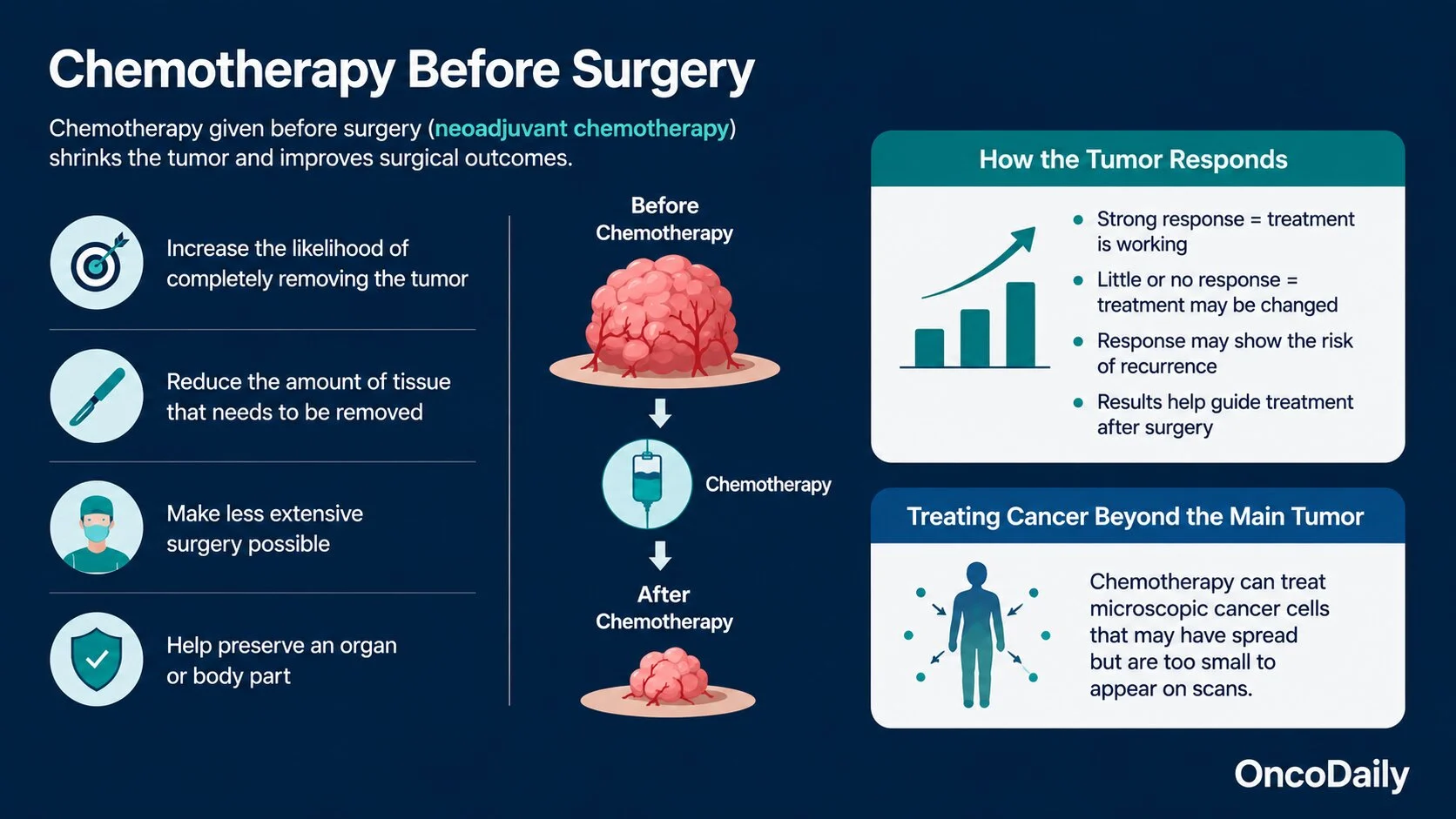
Chemotherapy given before surgery, known as neoadjuvant chemotherapy, is used to shrink a tumor before it is removed. This approach may:
- Increase the likelihood of completely removing the tumor
- Reduce the amount of tissue that needs to be removed
- Make less extensive surgery possible
- Help preserve an organ or body part
- It is particularly useful when a tumor is large, located in a difficult area, or would otherwise require extensive surgery.
In breast cancer, for example, chemotherapy before surgery may shrink the tumor enough to make breast-conserving surgery possible instead of mastectomy. Preoperative chemotherapy is an established treatment approach in operable breast cancer, particularly for patients with locally advanced disease. It was noted that neoadjuvant treatment may expand surgical options while providing valuable information that can guide further therapy. (Hage et al., 2007)
How the Tumor Responds
The tumor’s response to chemotherapy can help doctors understand how sensitive the cancer is to the selected drugs.
- A strong response may indicate that the treatment is working effectively.
- Little or no response may lead doctors to reconsider the treatment plan.
- The degree of response may provide information about the risk of recurrence.
- The results may help guide treatment decisions after surgery.
Preoperative chemotherapy is also used in cancers of the stomach and gastroesophageal junction. Perioperative chemotherapy is a useful option for selected patients because it may improve the likelihood of completely removing the tumor and reduce the risk of the cancer returning. (Seshadri et al., 2025)
You can also read When Surgery Is Not an Option: Gastric Cancer Treatment Choices by OncoDaily.
Treating Cancer Beyond the Main Tumor
Another important advantage is that chemotherapy can begin treating microscopic cancer cells that may have already spread beyond the primary tumor but are still too small to appear on imaging tests.
Surgery removes the visible tumor and nearby tissue, while chemotherapy travels through the bloodstream and may act on cancer cells elsewhere in the body. For this reason, chemotherapy before surgery is often considered when there is a significant risk of hidden or early metastatic disease.
Chemotherapy During Surgery
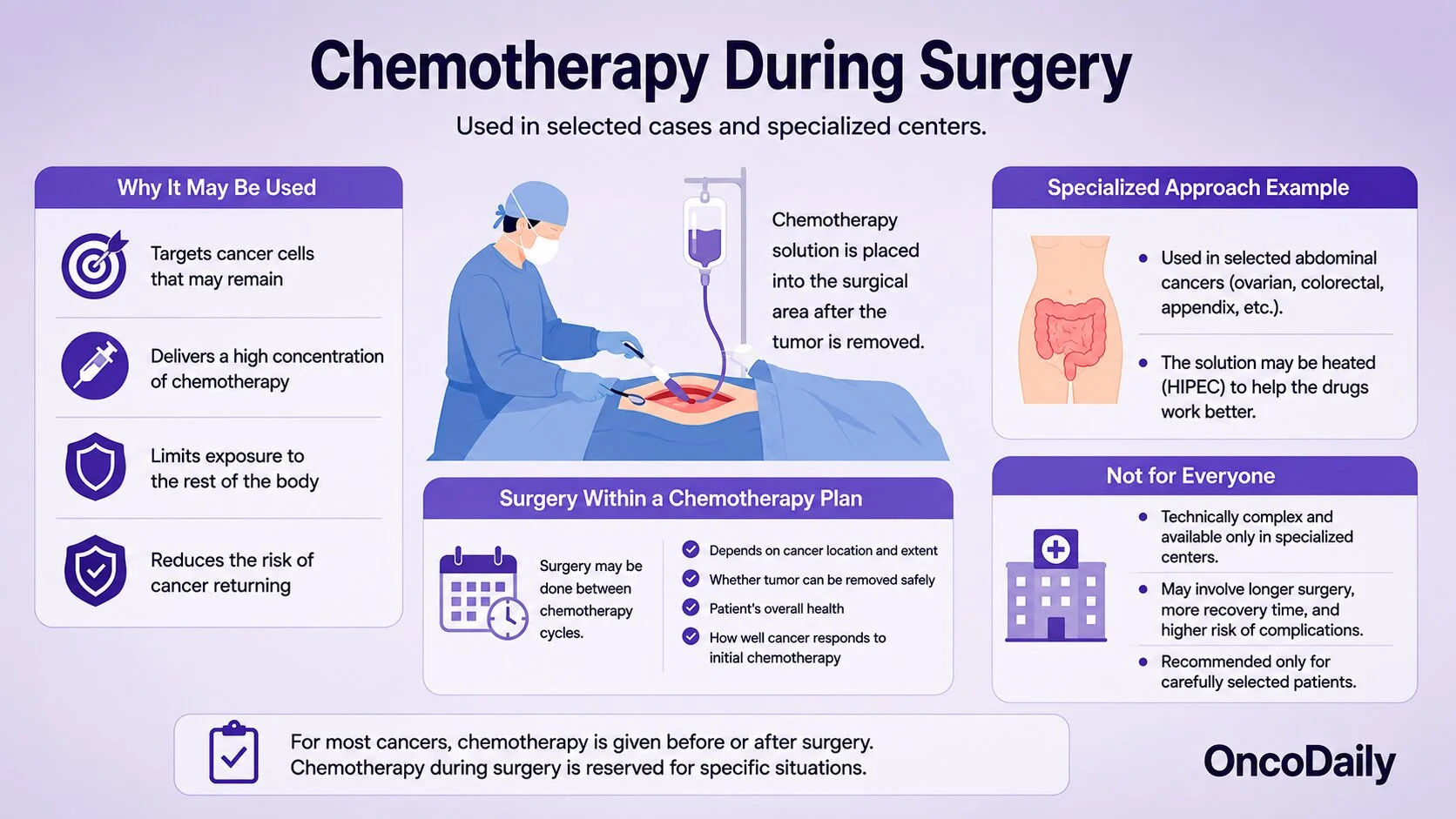
Chemotherapy given during surgery, also called intraoperative chemotherapy, is not part of most routine cancer treatment plans. The phrase is sometimes used loosely to describe chemotherapy given as part of a perioperative treatment plan, meaning treatment delivered before and after surgery rather than literally during the operation.
In selected cancers, however, chemotherapy may be administered directly into the surgical area immediately after the visible tumor has been removed. This approach may be used to:
- Target cancer cells that may remain after surgery
- Deliver a high concentration of chemotherapy to a specific area
- Limit exposure to the rest of the body
- Reduce the risk of cancer returning within the treated region
Because it is a highly specialized treatment, intraoperative chemotherapy is used only for selected patients and in experienced cancer centres.
Specialized Treatment Approaches
One example is chemotherapy delivered directly into the abdominal cavity during surgery. This may be considered in selected patients with cancers that have spread within the abdomen, such as certain ovarian, colorectal, or appendix cancers.
The chemotherapy solution is placed into the abdomen after the surgeon removes as much visible cancer as possible. In some procedures, the solution is heated, which may help the drugs penetrate tissues more effectively. This technique is often referred to as hyperthermic intraperitoneal chemotherapy, or HIPEC.
Surgery Within a Chemotherapy Plan
In some cancer types, the term “during chemotherapy” may refer to surgery being performed between courses of chemotherapy rather than chemotherapy being administered during the operation. For example, in advanced ovarian cancer, chemotherapy may be given first, followed by surgery and then additional chemotherapy.
Studies have examined whether surgery should be performed before chemotherapy or after several treatment cycles. The best sequence depends on factors such as:
- The location and extent of the cancer
- Whether the tumor can be removed safely
- The patient’s overall health
- How well the cancer responds to initial chemotherapy
This treatment sequence is carefully planned by a multidisciplinary team to achieve the best possible balance between tumor control, surgical safety, and recovery.
Not Suitable for Every Patient
Intraoperative chemotherapy is technically complex and is available only in specialized treatment centers. It may involve longer surgery, additional recovery time, and a higher risk of complications. It is therefore recommended only for carefully selected patients.
For most cancers, chemotherapy is still given before or after surgery. Chemotherapy delivered during an operation is reserved for specific situations and should always be discussed using the exact procedure and cancer type involved.
Chemotherapy After Surgery
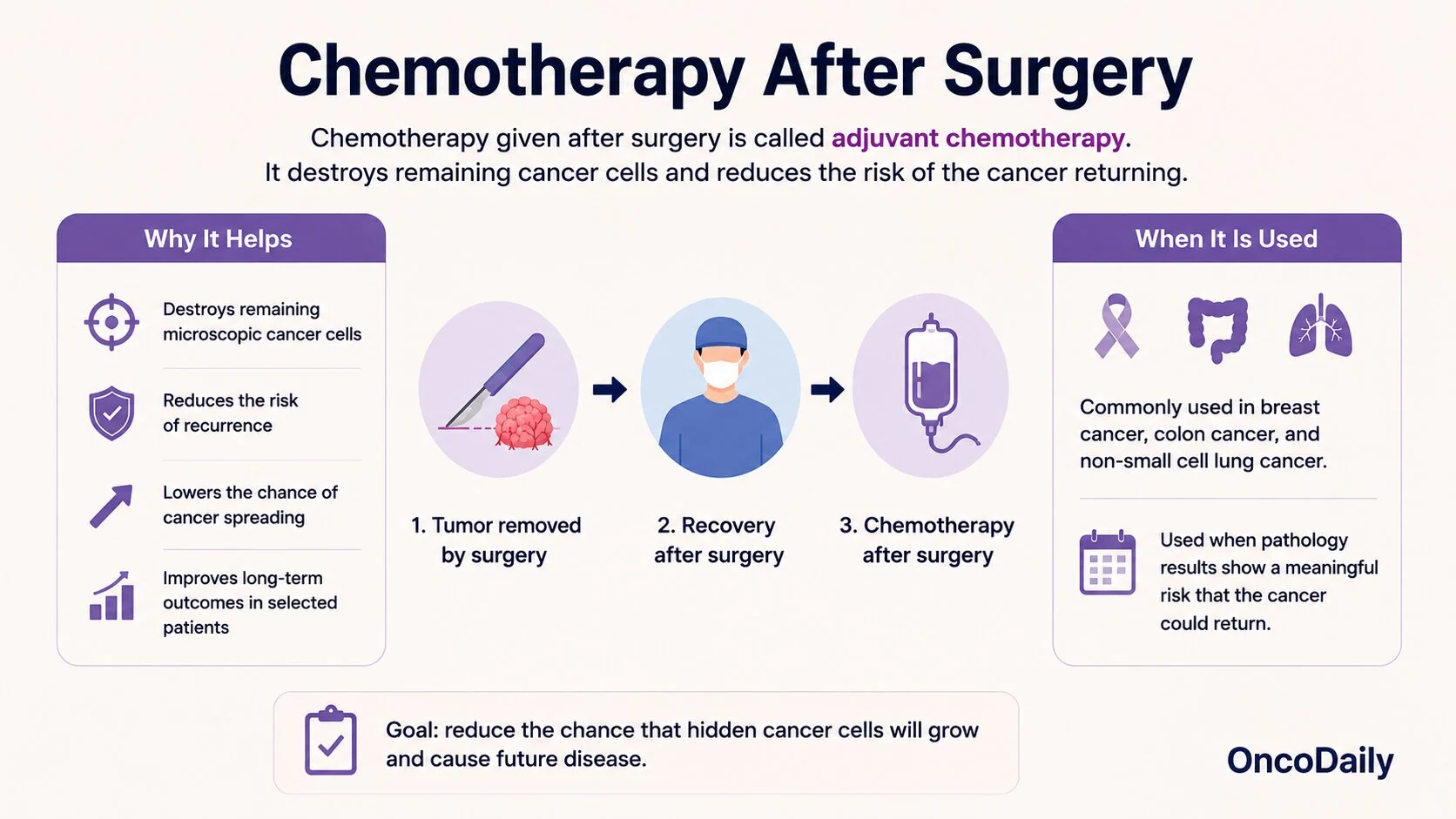
Chemotherapy given after surgery is called adjuvant chemotherapy. Its purpose is to destroy cancer cells that may remain in the body after the visible tumor has been removed. Even when surgery appears successful, microscopic cancer cells may still be present and could later cause the disease to return.
Adjuvant chemotherapy may help to:
- Destroy remaining microscopic cancer cells
- Reduce the risk of recurrence
- Lower the chance of cancer spreading to other parts of the body
- Improve long-term outcomes in selected patients
When Is Adjuvant Chemotherapy Used?
Chemotherapy after surgery is commonly used in several cancers, including breast cancer, colon cancer, and non-small cell lung cancer. It is usually considered when the pathology results suggest a meaningful risk that the cancer could return.
In early-stage non-small cell lung cancer, postoperative chemotherapy has been shown to improve outcomes in selected patients. It was found that combining chemotherapy with surgery was more effective than surgery alone in appropriate cases. Adjuvant chemotherapy is also an established treatment option for many patients with breast or colon cancer when the risk of recurrence is considered high. (Pignon et al., 2006)
How the Pathology Report Guides Treatment
One important advantage of giving chemotherapy after surgery is that doctors can review the complete pathology report from the removed tumor. This provides detailed information that may include:
- The size and type of the tumor
- Whether cancer has reached the lymph nodes
- Whether the surgical margins are clear
- The grade and biological features of the cancer
- Signs that the cancer may be more likely to return
These findings help the healthcare team decide whether chemotherapy is necessary and which treatment plan is most appropriate.
Starting Chemotherapy After Recovery
Chemotherapy does not usually begin immediately after surgery because the body needs time to heal. The treatment start date depends on the type and extent of the operation, the cancer being treated, the patient’s general health, and how smoothly recovery progresses.
Before chemotherapy begins, the medical team usually checks that the surgical wound is healing properly, any infection is under control, and the patient is strong enough to tolerate treatment. Some patients can start chemotherapy according to the original plan, while others need additional recovery time because of infection, delayed wound healing, weakness, poor nutrition, or other postoperative complications.
Doctors carefully balance these factors: starting chemotherapy too early could interfere with recovery, while an unnecessary delay could reduce the benefit of treatment in certain cancers. The recommended timing is not identical for every patient or cancer type. In an early breast cancer study, adjuvant chemotherapy was generally started within 4–8 weeks after surgery, while delays beyond 12 weeks were associated with concern about reduced disease-free survival (Salner et al., 2018). Research involving patients with resected stage II–III colon cancer also found that beginning chemotherapy within approximately six weeks was associated with better survival than starting later (Ganenko et al., 2018).
These findings do not mean that every patient must begin treatment within exactly the same number of weeks. The oncology and surgical teams determine the safest and most appropriate start date based on recovery, pathology results, cancer-related risk factors, and the expected benefit of chemotherapy.
Reducing the Risk of Future Recurrence
Chemotherapy given after surgery is called adjuvant chemotherapy. It may be recommended when surgery has removed all visible cancer but there is still a possibility that microscopic cancer cells remain elsewhere in the body. These cells are too small to be detected on routine scans or during surgery but could later grow and cause the cancer to return.
Adjuvant chemotherapy may be considered when:
- Cancer cells are found in the lymph nodes
- The tumor is large or has aggressive biological features
- Cancer cells are found at or close to the surgical margin
- The cancer type or stage has a higher risk of recurrence
- Biomarker, genomic, or pathology results suggest possible microscopic spread
The purpose of adjuvant chemotherapy is not to remove the original tumor, because surgery has already addressed it. Instead, treatment circulates through the body to destroy remaining cancer cells and reduce the risk of local recurrence or metastatic disease. Evidence from early breast cancer and stage II–III colon cancer supports the role of appropriately timed postoperative chemotherapy in reducing recurrence risk and improving clinical outcomes in selected patients (Salner et al., 2018; Ganenko et al., 2018).
The decision to recommend adjuvant chemotherapy is individualized. Doctors consider the expected treatment benefit alongside possible side effects, recovery from surgery, other medical conditions, and the patient’s preferences.
When Each Approach Is Used
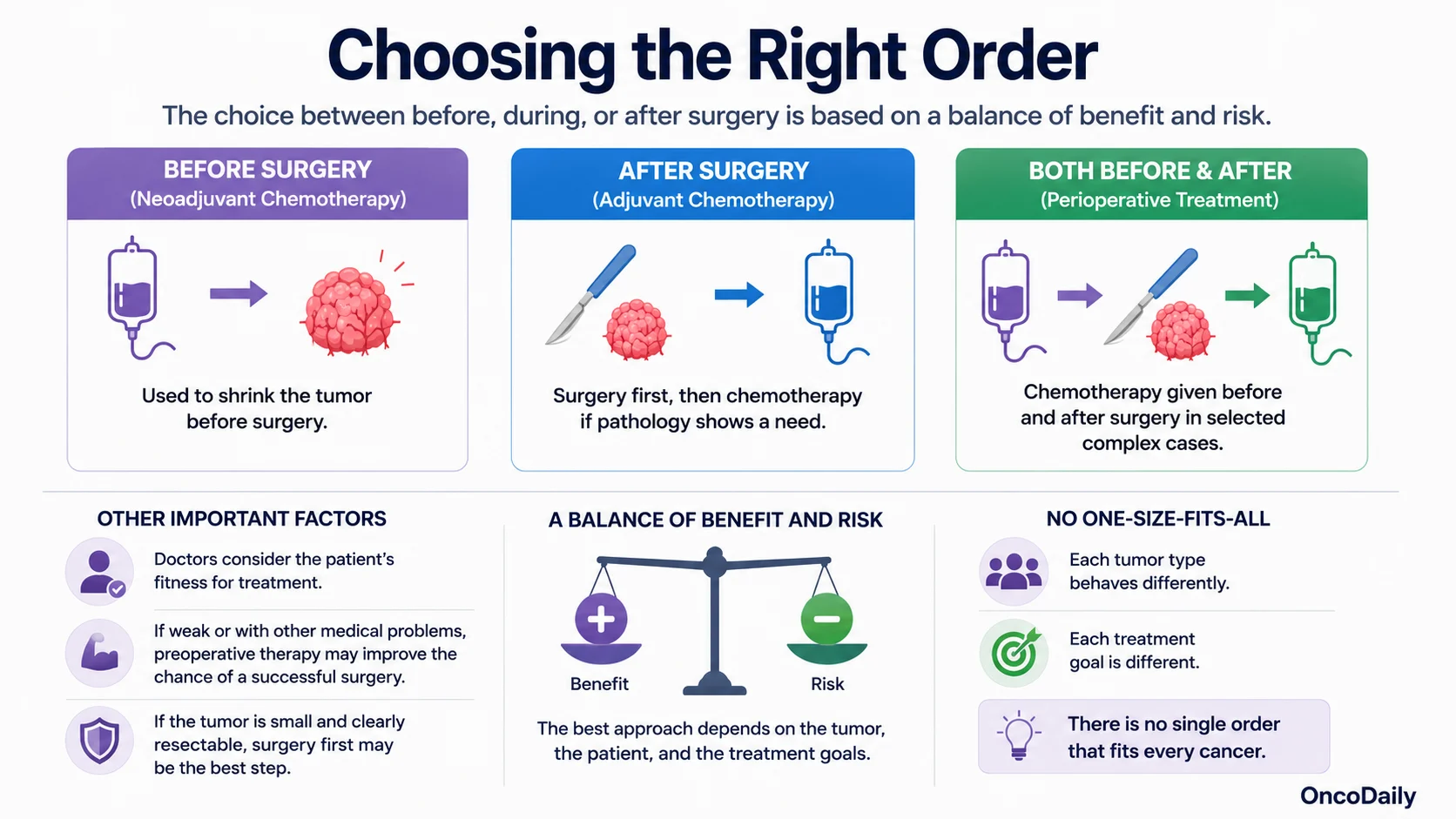
The choice between before, during, or after surgery is based on a balance of benefit and risk. If the tumor needs to be shrunk first, neoadjuvant chemotherapy is often preferred. If the tumor can be removed safely right away, surgery may come first, followed by adjuvant chemotherapy if the pathology shows a need for more treatment. In selected complex cases, perioperative treatment is planned in both directions, with chemotherapy before and after surgery.
Doctors also consider the patient’s fitness for treatment. If someone is weak, has other medical problems, or may not tolerate a major operation well, preoperative therapy may help improve the chance of a successful surgery. On the other hand, if the tumor is already small and clearly resectable, surgery first may be the best step. The evidence shows that there is no single order that fits every cancer, because each tumor type behaves differently and each treatment goal is different.
How Is Treatment Response Measured Using RECIST?
Treatment response is often evaluated using the Response Evaluation Criteria in Solid Tumors (RECIST), a standardized method that helps doctors and researchers describe how a solid tumor changes during treatment. Using CT or MRI scans, radiologists measure selected tumors, called target lesions, and compare their size with earlier scans. The response is then classified as a complete response, when measurable signs of the selected tumors disappear; a partial response, when tumors become smaller; stable disease, when there is no major change; or progressive disease, when tumors grow or new lesions appear. RECIST 1.1 is commonly used in clinical trials involving conventional cancer treatments. A related system called iRECIST is used in immunotherapy studies because tumors can occasionally appear larger before they begin to shrink, a pattern known as pseudoprogression. RECIST provides a consistent way to evaluate treatment effectiveness, but scan results are considered alongside symptoms, laboratory findings, side effects, and the patient’s overall health when planning ongoing care.
You can also read FDA Approves Perioperative Pembrolizumab Plus Enfortumab Vedotin for Muscle-Invasive Bladder Cancer by OncoDaily.
Written by Marine Marachlian, MD
FAQ
Is chemotherapy or surgery usually given first?
It depends on the cancer type, stage, tumor size, and treatment goals.
Why is chemotherapy given before surgery?
It can shrink the tumor and make surgery easier or less extensive.
Does chemotherapy before surgery mean the cancer is advanced?
Not always. It may also be used for operable cancers to improve surgical results.
What if the tumor does not shrink?
Doctors may change treatment, continue to surgery, or consider another approach.
Why is chemotherapy given after surgery?
It helps destroy microscopic cancer cells and reduce the risk of recurrence.
How do doctors decide if chemotherapy is needed after surgery?
They review the pathology results, lymph nodes, tumor features, and recurrence risk.
How soon can chemotherapy start after surgery?
It begins once the patient has recovered enough and the surgical wound is healing well.
Can chemotherapy be given during surgery?
Yes, in selected cases. One example is HIPEC, used for certain abdominal cancers.
What is perioperative chemotherapy?
It means chemotherapy is given both before and after surgery.
How do doctors know if chemotherapy is working?
They use scans, blood tests, symptoms, and sometimes the surgical pathology results.