
Key takeaways
- Chemotherapy itself is usually not painful to receive, apart from brief discomfort during needle insertion or port access.
- Burning, pain, redness, or swelling around the intravenous site is not normal and should be reported immediately.
- Painful side effects can develop after treatment, including neuropathy, mouth sores, muscle or joint pain, bone pain, and digestive discomfort.
- The type and severity of pain depend on the chemotherapy drugs, dose, treatment schedule, number of cycles, and the patient’s overall health.
- Severe, worsening, or persistent pain should be discussed with the oncology team, as treatment and supportive care can often provide relief.
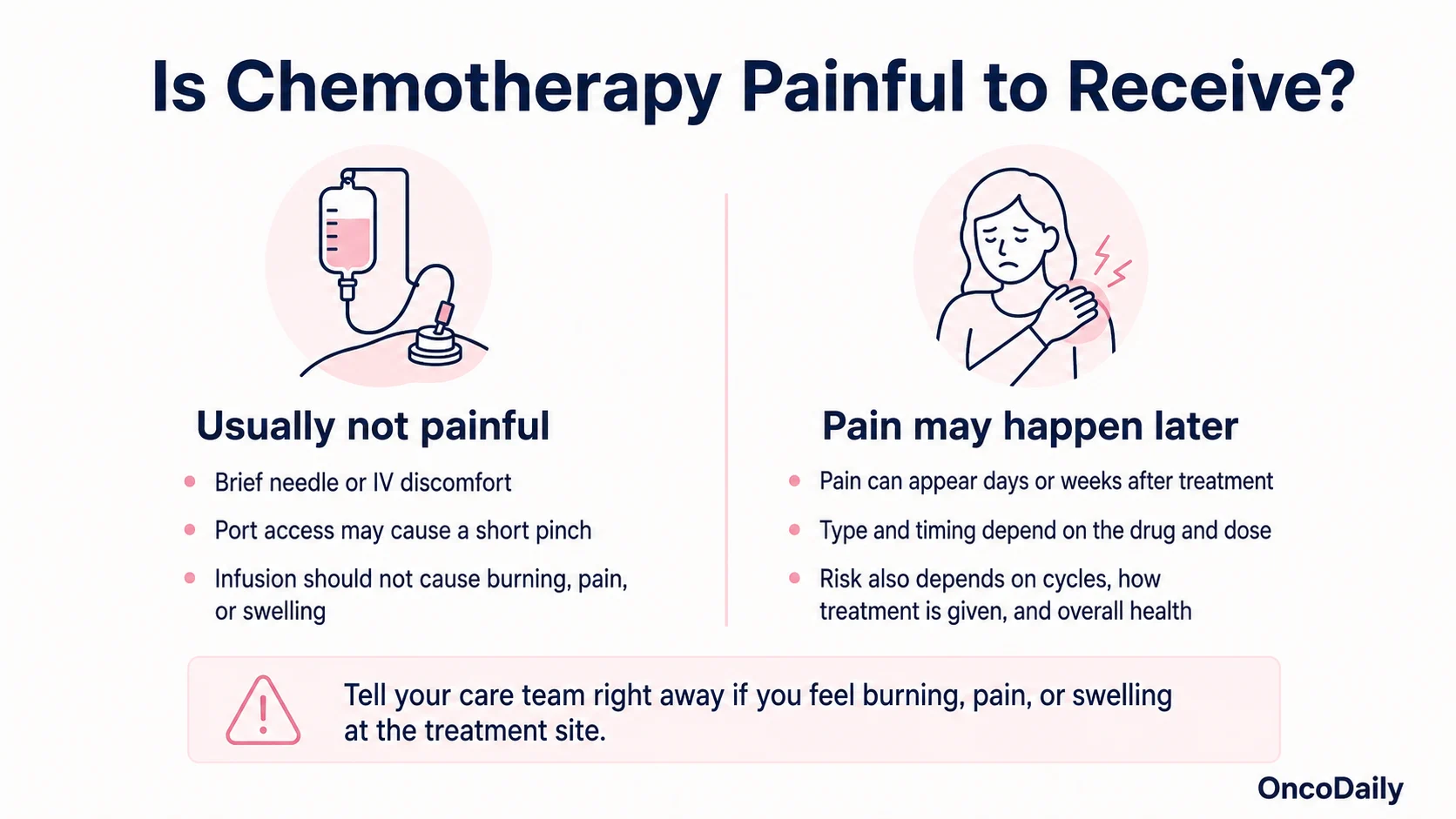
Chemotherapy itself is usually not painful to receive. Most patients experience only brief discomfort from a needle stick, intravenous catheter, or port access. Once the chemotherapy infusion begins, the medicine should not normally cause burning, pain, or swelling at the treatment site.
However, chemotherapy can produce painful side effects during the days or weeks after treatment. The type, severity, and timing of pain depend on the chemotherapy drugs used, the dose, the number of treatment cycles, the method of administration, and the patient’s overall health.
Does Chemotherapy Hurt During Treatment?
When chemotherapy is given through a vein, the most common discomfort is the brief sting or pressure caused by inserting the needle or intravenous catheter. Patients with an implanted port may also feel a short pinching sensation when the port is accessed.
After the intravenous line is in place, the chemotherapy solution should usually flow without pain. Oral chemotherapy is generally painless to take, although the medicine may later cause side effects such as nausea, abdominal discomfort, or mouth soreness.
Pain, burning, redness, tightness, or swelling around the intravenous site is not considered normal and should be reported immediately. These symptoms may indicate extravasation, which occurs when chemotherapy leaks from the vein into the surrounding tissue. Some chemotherapy drugs can cause significant tissue injury if this is not treated promptly.
Why Can Pain Develop After Chemotherapy?
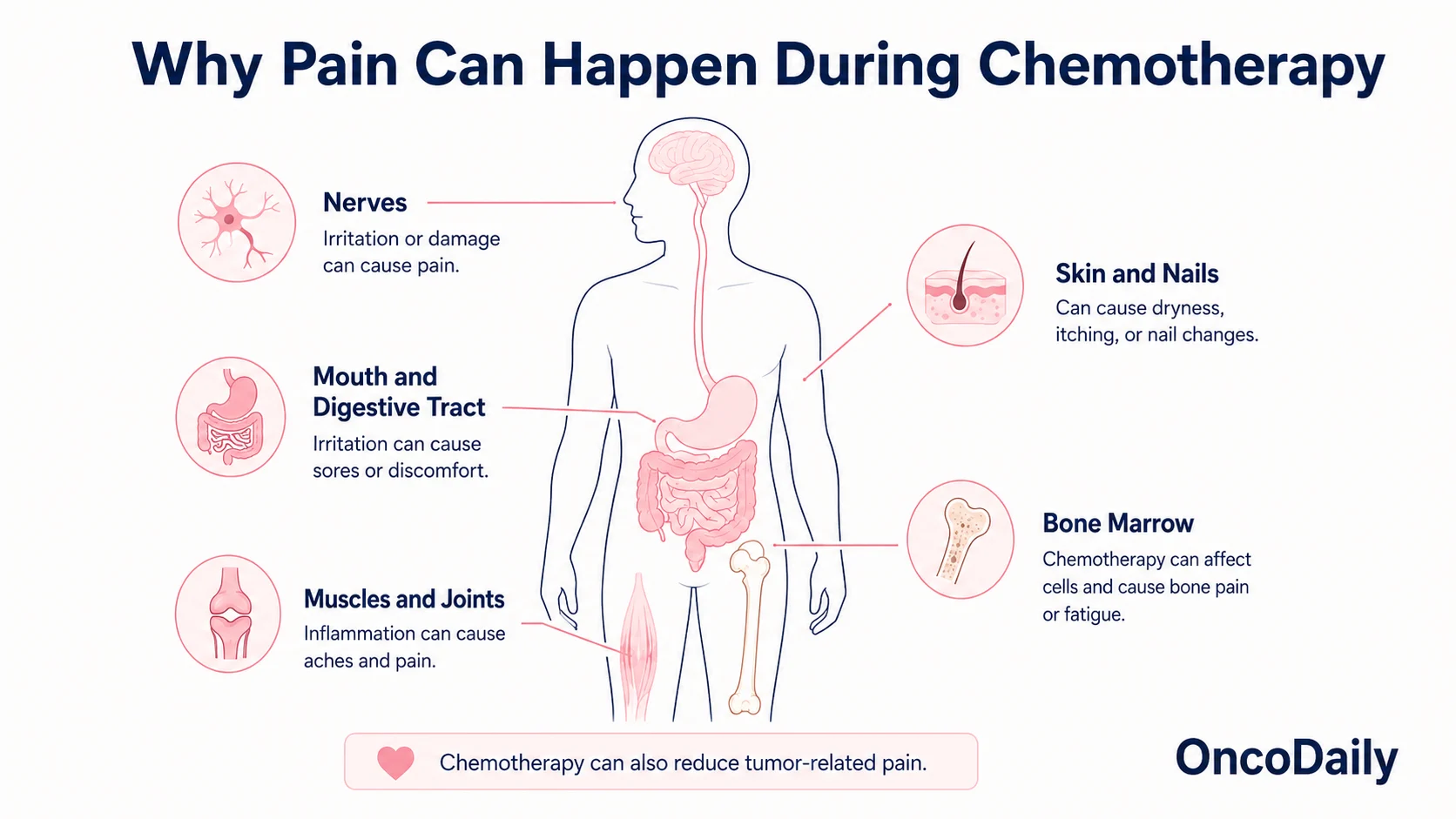
Chemotherapy works by targeting and damaging rapidly dividing cancer cells, but it can also affect some healthy tissues in the body. As a result, patients may experience pain or discomfort in areas such as the nerves, the lining of the mouth and digestive tract, the muscles and joints, the skin, and the bone marrow.
Pain during chemotherapy may develop for several reasons. It can be caused by nerve irritation or damage, inflammation in the mouth or digestive system, muscle or joint inflammation, skin or nail reactions, headaches, or the supportive medicines used alongside chemotherapy. In some cases, the cancer itself or complications related to the disease may also contribute to pain.
Chemotherapy-Induced Peripheral Neuropathy
Chemotherapy-induced peripheral neuropathy is an important and sometimes painful side effect of treatment. It develops when certain chemotherapy medicines damage the peripheral nerves, particularly those in the hands and feet.
Patients may notice tingling, burning, numbness, shooting or electric-like pain, or increased sensitivity to touch and temperature. Some may also experience weakness, balance problems, or difficulty with everyday tasks such as buttoning clothes, writing, or walking.
Neuropathy is more common with taxanes, platinum-based medicines, vinca alkaloids, and several other anticancer treatments. Symptoms may become more noticeable as the total chemotherapy dose increases.
Early reporting is important because neuropathy can interfere with daily activities and may continue after treatment ends. When symptoms become significant, the oncology team may adjust the dose, change the treatment schedule, or recommend supportive measures.
You can also read Understanding Chemotherapy-Induced Neuropathy:What Every Patient Should Know by OncoDaily.
Mouth and Throat Pain
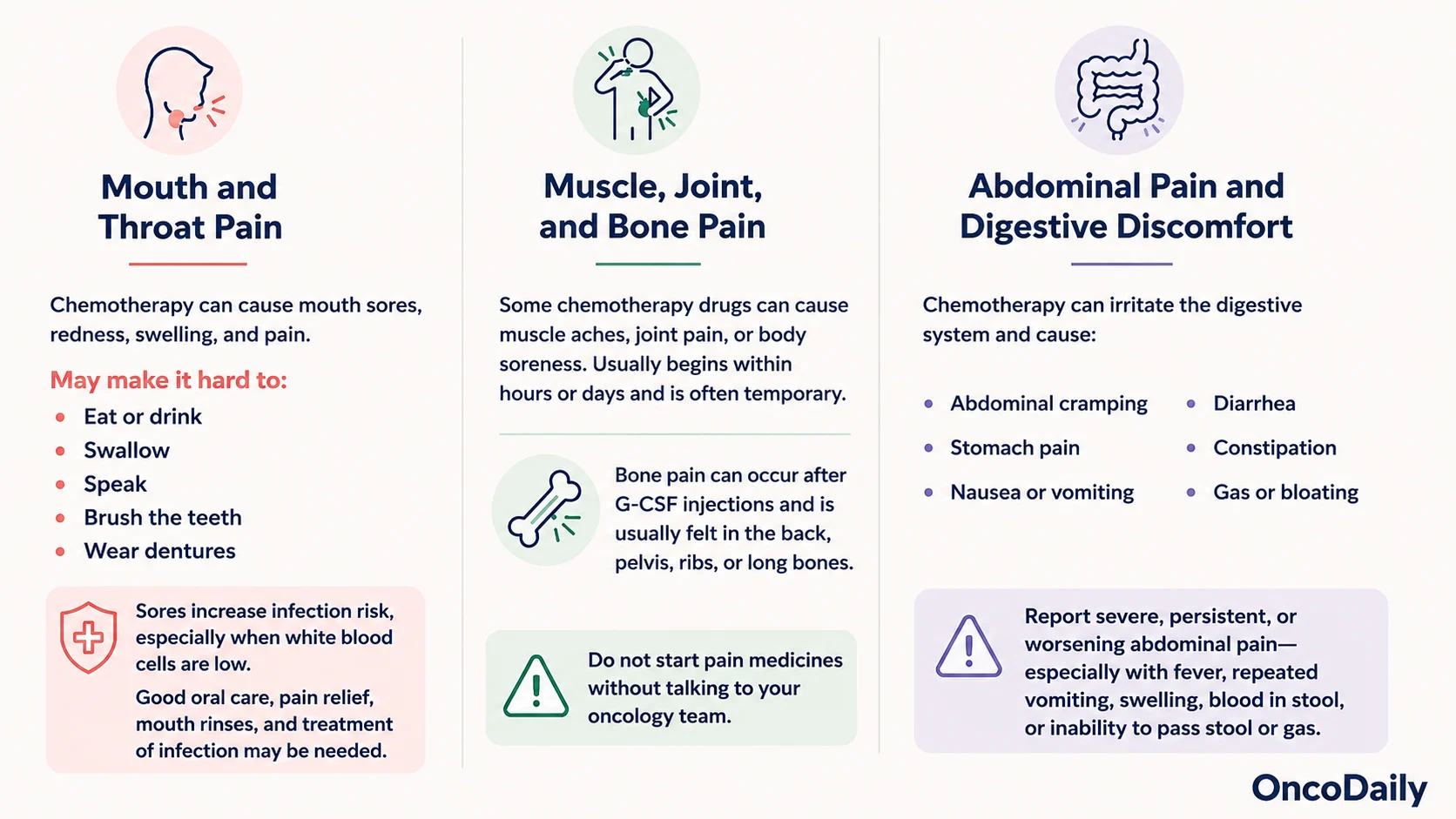
Chemotherapy can damage the rapidly renewing cells that line the mouth and throat, leading to oral mucositis. This may cause redness, swelling, ulcers, and pain.
Mouth soreness can make eating, drinking, swallowing, speaking, brushing the teeth, or wearing dentures uncomfortable. Painful sores may also increase the risk of infection, especially when white blood cell levels are low.
Management may include gentle oral care, prescribed mouth rinses, pain relief, and treatment for infection when needed.
Muscle, Joint, and Bone Pain
Some chemotherapy drugs can cause muscle aches, joint pain, or a general feeling of body soreness. These symptoms may begin within hours or days after treatment and are often temporary.
Bone pain may also occur after injections of granulocyte colony-stimulating factor, or G-CSF. These medicines stimulate the bone marrow to produce more infection-fighting white blood cells. The resulting bone discomfort is commonly felt in the back, pelvis, ribs, or long bones.
Patients should not begin pain medicines without discussing them with the oncology team, because some medicines may affect bleeding risk, kidney function, or other aspects of treatment.
Abdominal Pain and Digestive Discomfort
Chemotherapy can irritate the digestive system, causing abdominal cramps, stomach pain, nausea, vomiting, diarrhoea, constipation, gas, or bloating.
However, abdominal pain may also be related to supportive medicines, dehydration, infection, bowel obstruction, or the cancer itself, so the cause should be assessed carefully.
Severe, persistent, or worsening pain should be reported promptly, especially if it occurs with fever, repeated vomiting, abdominal swelling, blood in the stool, or difficulty passing stool or gas.
When Can Pain Begin?
The timing of chemotherapy-related pain can vary widely from person to person. Some symptoms may begin during the infusion itself, while others appear within hours, several days later, after repeated treatment cycles, or even after treatment has ended.
Muscle aches, headaches, and digestive symptoms often develop soon after treatment. Mouth sores usually appear several days after chemotherapy and may become more noticeable with each cycle. Neuropathy tends to develop more gradually as the cumulative dose increases, although it can sometimes start earlier.
Symptoms during the first cycle do not always predict what will happen later. For that reason, healthcare professionals usually assess pain and other side effects before every treatment cycle.
How Common Is Pain During Chemotherapy?
Pain is a recognized side effect of chemotherapy, but it does not occur in every patient. Some people experience little or no pain, while others develop moderate or severe symptoms.
The likelihood depends on:
- The specific chemotherapy medicine
- The dose and treatment schedule
- The total number of cycles
- Whether several drugs are combined
- Existing nerve, joint, or pain conditions
- Kidney, liver, or nutritional health
- Other medicines given during treatment
It is therefore more accurate to say that chemotherapy is usually not painful to receive, but it may cause painful side effects in some patients.
You can also read Paracetamol and Chemotherapy: Safety, Risks, and Clinical Evidence by OncoDaily.
When Should Pain Be Reported Immediately?
Contact the healthcare team right away if the pain is sudden, severe, or getting worse quickly. Urgent help is also needed if pain comes with fever or chills, shortness of breath, chest pain, repeated vomiting, severe abdominal swelling, or if it makes it hard to eat, drink, walk, or sleep.
You should also report pain immediately if it happens around the intravenous site during treatment, especially if there is redness, swelling, blistering, or any skin damage. New weakness, trouble with balance, or severe numbness should also be checked quickly, as should pain that is not relieved by the prescribed medicines.
Pain at the infusion site should always be reported immediately while chemotherapy is being given.
How Is Chemotherapy-Related Pain Managed?
Treatment depends on what is causing the pain, and the oncology team may suggest different options based on the situation. These can include prescription or over-the-counter pain medicines, medicines for nerve pain, mouth rinses and oral care, anti-nausea or bowel medicines, hydration and nutritional support, treatment for infection, physical or occupational therapy, a dose reduction, a treatment delay, or a change in the chemotherapy medicine.
In some cases, the patient may also be referred to a pain specialist, neurologist, dentist, or supportive-care team. Pain management should always be individualized, and patients should not be expected to endure significant pain without help.
Written by Marine Marachlian, MD
FAQ
Is chemotherapy painful to receive?
Usually not. Most patients feel only a brief needle or port-access sting.
Should chemotherapy burn during an infusion?
No. Burning, pain, redness, or swelling at the IV site should be reported immediately.
Can chemotherapy cause pain afterward?
Yes. Painful side effects may appear hours, days, or weeks after treatment.
What types of pain can chemotherapy cause?
Possible symptoms include nerve pain, mouth sores, headaches, body aches, joint pain, bone pain, and abdominal discomfort. Depending on the type.
What does chemotherapy-related nerve pain feel like?
It may cause tingling, burning, numbness, sensitivity, or electric-like pain in the hands and feet.
Why can chemotherapy cause mouth and throat pain?
It may damage the cells lining the mouth and throat, causing redness, swelling, ulcers, and soreness.
Can supportive injections cause bone pain?
Yes. G-CSF injections may temporarily cause pain in the back, pelvis, ribs, or long bones.
When should abdominal pain be reported urgently?
Seek medical advice for severe or worsening pain, fever, repeated vomiting, swelling, blood in the stool, or inability to pass stool or gas.
Can chemotherapy reduce cancer-related pain?
Yes. By shrinking the tumor, chemotherapy may relieve pressure and reduce pain caused by the cancer. Depending on the type of cancer and chemotherapy.
How is chemotherapy-related pain managed?
Treatment may include pain medicines, mouth care, symptom-control medicines, hydration, dose adjustments, or specialist support. Always discuss pain medicines with the oncology team.