Immunotherapy has produced major advances in triple-negative breast cancer, but its role in estrogen receptor-positive, HER2-negative disease remains considerably less defined. One reason is biological: ER-positive/HER2-negative tumors generally have lower immune infiltration and lower PD-L1 expression, creating a comparatively immune-cold tumor microenvironment.
The randomized Phase 2 Neo-CheckRay trial, published in Nature Medicine in 2026, investigated whether radiation could alter that environment and increase sensitivity to immune checkpoint inhibition.
Alex De Caluwé and colleagues evaluated neoadjuvant immune-modulating stereotactic body radiation therapy, or iSBRT, alongside chemotherapy, with or without the PD-L1 inhibitor durvalumab and the CD73 inhibitor oleclumab, in women with high-risk ER-positive/HER2-negative early breast cancer.
The study did not meet its primary endpoint of significantly improving residual cancer burden 0/1. However, the biological and pathologic response findings reveal a more nuanced signal: the largest apparent benefit from adding checkpoint inhibition was observed in PD-L1-negative tumors, a subgroup conventionally considered less likely to respond to immunotherapy (De Caluwé et al., 2026).
Why Combine Radiation With Immunotherapy in ER+/HER2− Breast Cancer?
High-risk ER-positive/HER2-negative breast cancer presents a difficult immunotherapy setting.
Previous Phase 3 trials, including KEYNOTE-756 and CheckMate 7FL, demonstrated that adding PD-1/PD-L1 blockade to neoadjuvant chemotherapy can increase pCR rates in this population. However, the magnitude of benefit is smaller than that seen in triple-negative breast cancer, and immune checkpoint inhibitors have generally appeared more active in tumors with an already inflamed immune microenvironment (Cardoso et al., 2025; Loi et al., 2025).
Neo-CheckRay approached the problem differently.
Instead of treating baseline immune status as fixed, the investigators tested whether radiotherapy could modify the tumor microenvironment itself.
Radiation can induce tumor-cell death, antigen release, inflammatory signaling and increased immune recognition. At the same time, radiation can also activate immunosuppressive mechanisms. One of these involves CD73, an ectoenzyme that converts extracellular ATP into immunosuppressive adenosine.
The Neo-CheckRay strategy therefore combined several mechanisms: chemotherapy to reduce tumor burden, iSBRT to induce local immune modulation, durvalumab to block PD-L1-mediated immune suppression, and, in one experimental arm, oleclumab to inhibit CD73-mediated adenosine signaling (De Caluwé et al., 2026).
How Was Neo-CheckRay Designed?
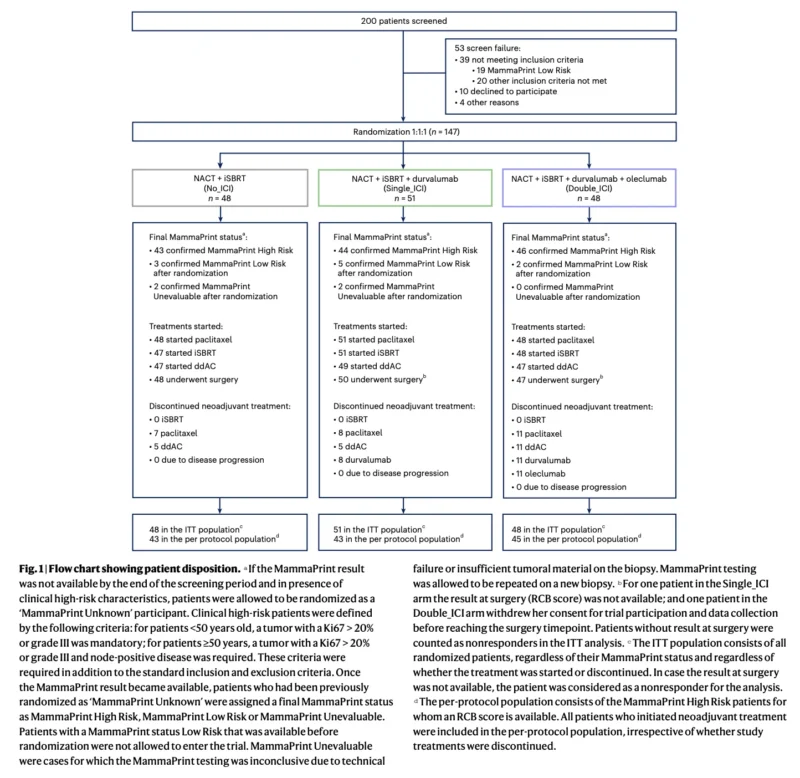
Neo-CheckRay was a prospective, randomized, multicenter, open-label Phase 2 study conducted across seven centers in Belgium and France.
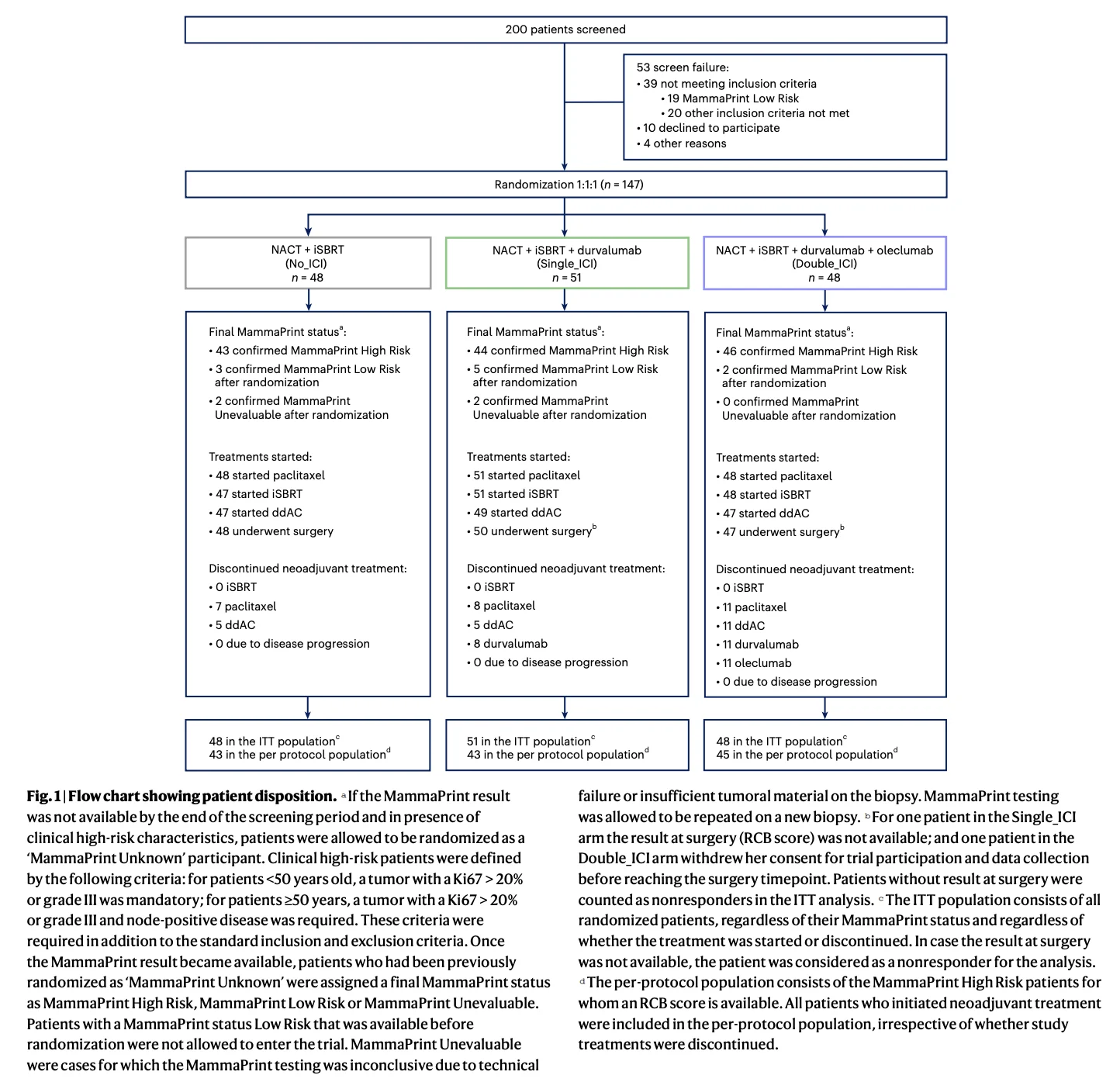
Between June 2021 and March 2024, 200 patients were screened and 147 were randomized 1:1:1.
All patients had previously untreated, high-risk ER-positive/HER2-negative early breast cancer. Most were selected according to MammaPrint High Risk status, with predefined clinical criteria allowing temporary enrollment while genomic results were pending.
Patients were assigned to three groups.
The control group received neoadjuvant chemotherapy plus iSBRT. A second group received the same treatment with durvalumab, while the third received durvalumab plus oleclumab.
Chemotherapy consisted of weekly paclitaxel followed by dose-dense doxorubicin and cyclophosphamide.
iSBRT was delivered exclusively to the primary breast tumor as 24 Gy in three 8-Gy fractions, administered on three consecutive days near the end of week 4.
Importantly, the radiation field deliberately avoided the uninvolved breast and nodal regions, including in patients with node-positive disease. This was intended to preserve tumor-draining lymph nodes and the immune priming occurring within them.
The primary endpoint was RCB 0/1 at surgery, while pCR was a secondary endpoint (De Caluwé et al., 2026).
The Primary Endpoint Was Not Met
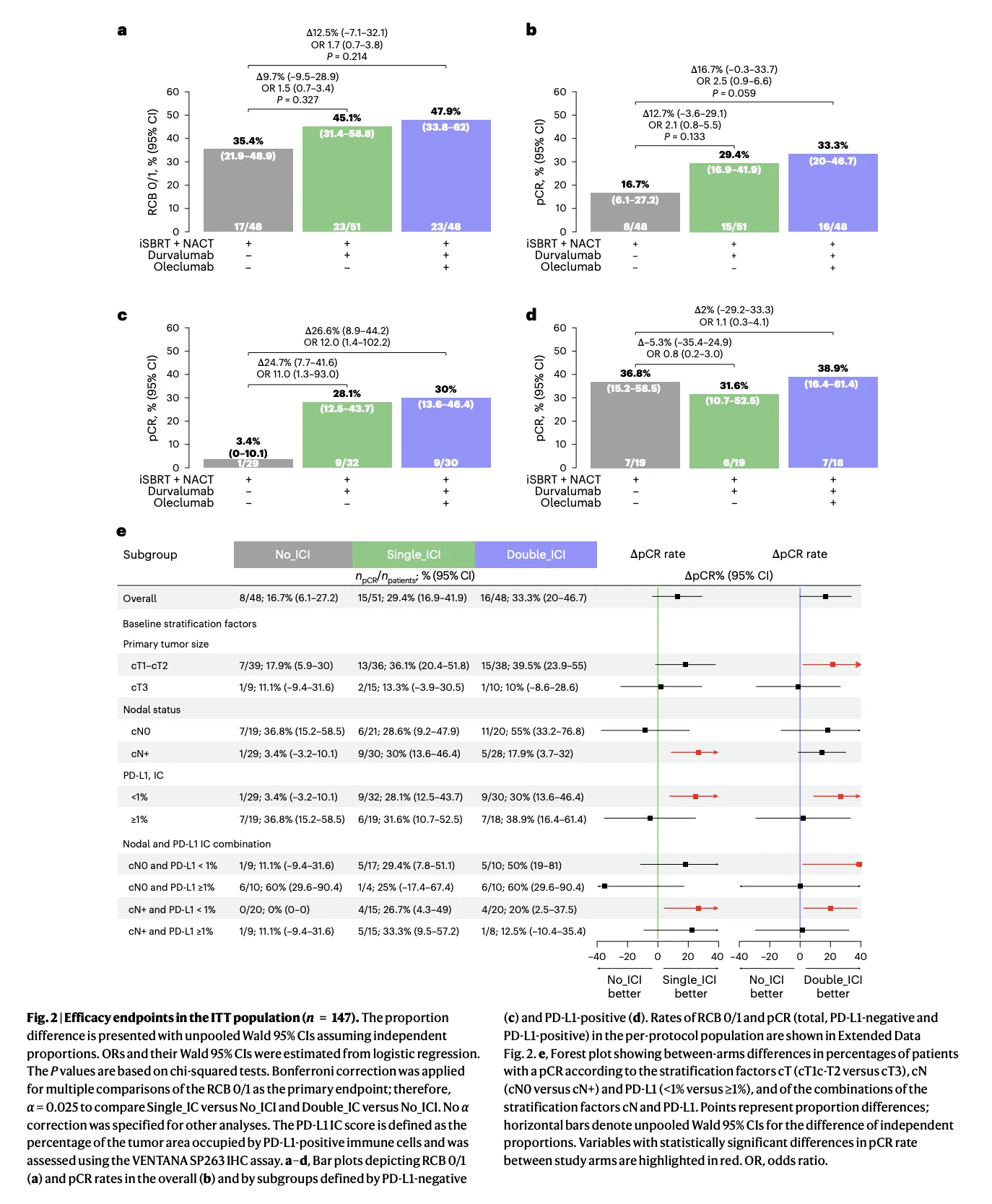
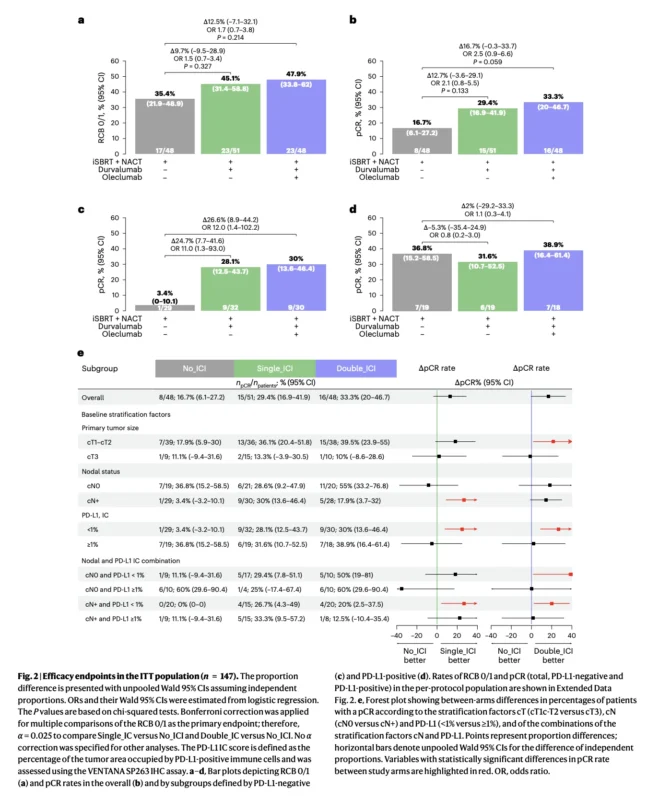
In the intention-to-treat population, RCB 0/1 was achieved in:
- 35.4% with chemotherapy plus iSBRT,
- 45.1% with chemotherapy, iSBRT and durvalumab,
- 47.9% with chemotherapy, iSBRT, durvalumab and oleclumab.
The comparison between the control and double-immunotherapy arm was not statistically significant, with P = 0.21.
This result is central to interpreting Neo-CheckRay.
The study should therefore not be described as a positive trial based on its primary endpoint.
However, secondary and exploratory analyses generated biologically important signals that may help define how radiation and checkpoint inhibition interact in luminal breast cancer (De Caluwé et al., 2026).
Pathologic Complete Response Increased With Checkpoint Inhibition
In the intention-to-treat population, pCR was achieved in 16.7% of patients receiving chemotherapy plus iSBRT.
The rate increased to 29.4% with durvalumab and to 33.3% with durvalumab plus oleclumab.
The comparison between the control and double-ICI arms approached, but did not reach, conventional statistical significance:
- P = 0.059.
The predefined per-protocol population included 131 patients confirmed as MammaPrint High Risk.
Within this group, pCR rates were 16.3%, 32.6% and 35.6%, respectively, and the comparison between the control and double-ICI arms reached statistical significance:
- P = 0.040 (De Caluwé et al., 2026).
Although these findings support antitumor activity from adding immunotherapy, they remain secondary analyses within a Phase 2 study whose primary endpoint was negative.
PD-L1–Negative Tumors Showed the Most Striking Signal
The most unusual finding emerged when patients were stratified by baseline PD-L1 status.
Among 91 patients with PD-L1-negative tumors, defined as an immune-cell score below 1%, pCR rates were:
- 3.4% with chemotherapy plus iSBRT,
- 28.1% with the addition of durvalumab,
- 30.0% with durvalumab plus oleclumab.
By contrast, among patients whose tumors were PD-L1-positive at baseline, pCR rates were 36.8%, 31.6% and 38.9%, with no clear improvement from adding checkpoint inhibition (De Caluwé et al., 2026).
This pattern differs from KEYNOTE-756 and CheckMate 7FL, where the greatest relative immunotherapy activity was observed in more immune-inflamed disease.
The Neo-CheckRay investigators propose that iSBRT may help explain the difference.
Rather than simply identifying tumors already likely to respond to immunotherapy, radiation may have changed the biological state of initially immune-cold tumors.
Radiation Appeared to Reprogram the Tumor Microenvironment
The translational component of Neo-CheckRay is one of its most important features.
Tumor biopsies were obtained at baseline and again at week 6, approximately one week after iSBRT. This allowed investigators to examine molecular and immune changes occurring long before surgery.
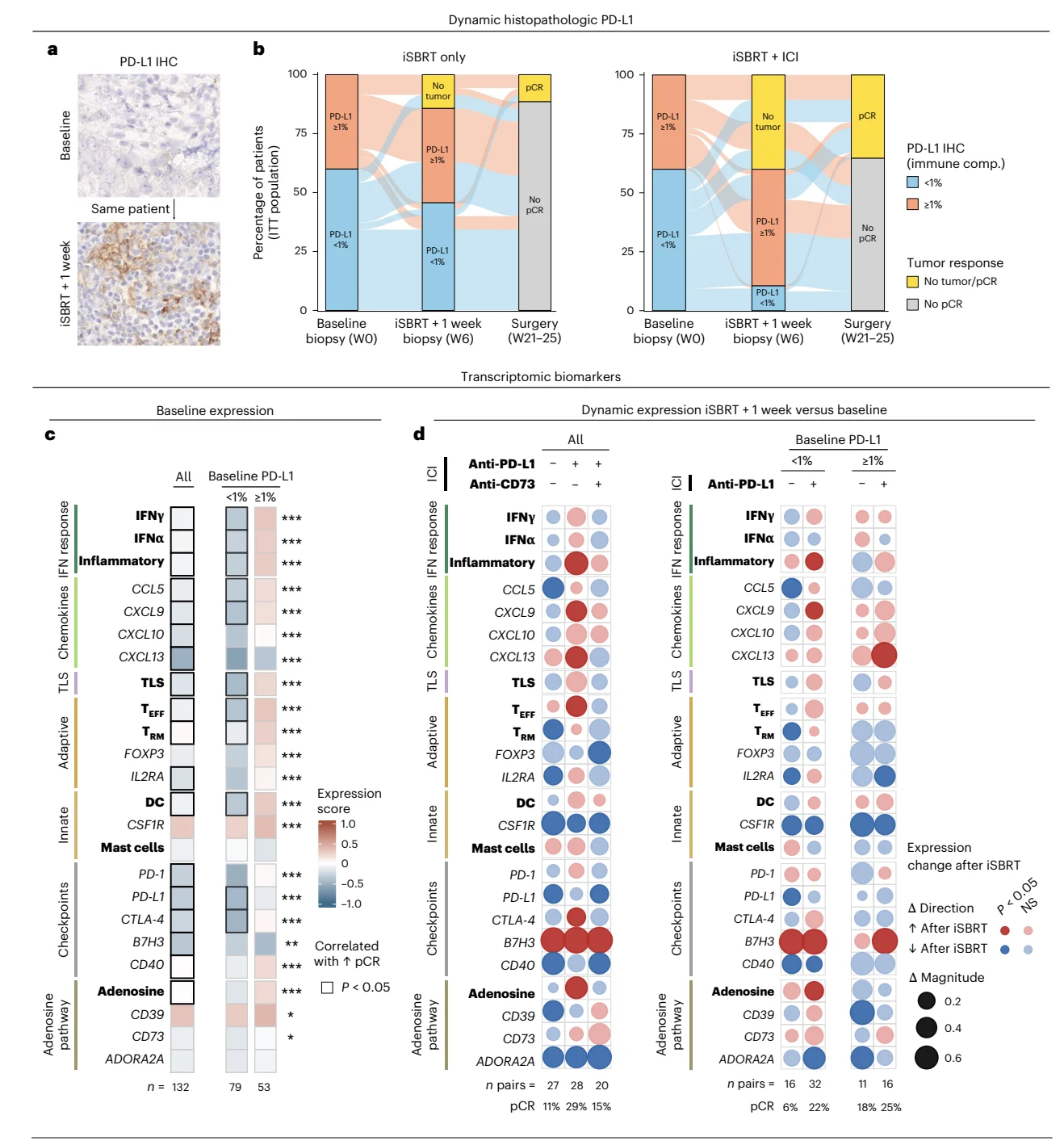
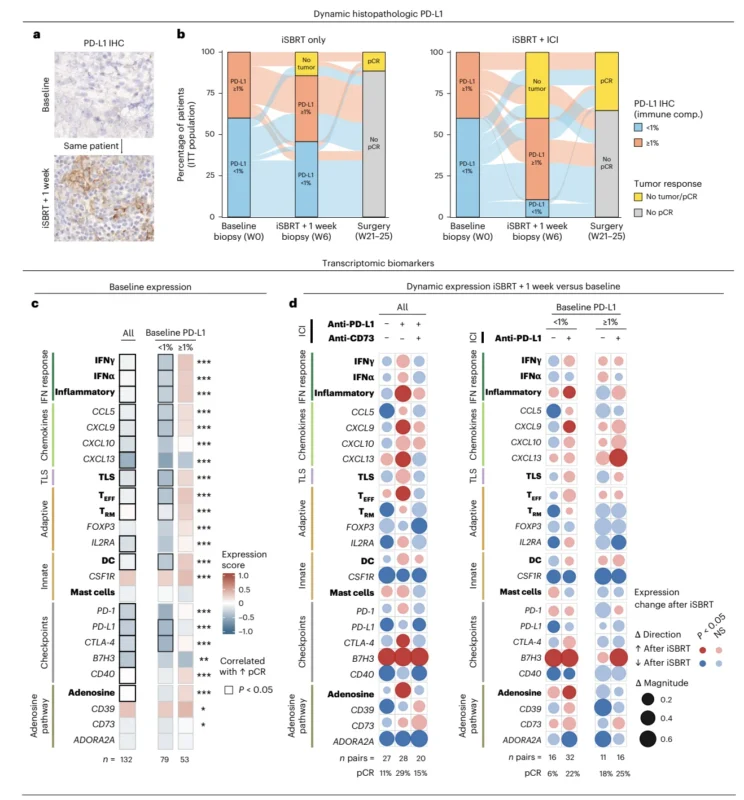
At baseline, PD-L1-negative tumors demonstrated lower expression of multiple immune-associated signals, including interferon-response programs, chemokines, tertiary lymphoid structure signatures, adaptive immune-cell populations, dendritic-cell signatures and immune checkpoints.
In other words, molecular profiling confirmed that these tumors were genuinely more immune cold.
After treatment, however, PD-L1-negative tumors exposed to iSBRT plus checkpoint inhibition showed coordinated activation of inflammatory pathways.
RNA sequencing demonstrated increases in inflammatory response signatures, interferon signaling, CXCL9, CXCL13, effector T-cell markers and CTLA-4, among other immune-associated features.
The dynamic transcriptomic data presented in Figure 4 of the paper show that this immune activation was concentrated particularly in baseline PD-L1-negative tumors receiving iSBRT plus anti-PD-L1 therapy.
These observations support the hypothesis that local radiation can alter the immune state of an initially noninflamed breast tumor.
PD-L1 Expression Also Changed During Treatment
The effect was also visible by immunohistochemistry.
Among tumors that were PD-L1-negative at baseline, conversion to PD-L1-positive status at the week-6 biopsy occurred more frequently in the iSBRT plus ICI group than with iSBRT alone:
- 55.2% versus 30.0%.
The increase in PD-L1 expression occurred predominantly in immune cells rather than tumor cells.
Importantly, increasing PD-L1 expression after treatment was associated with higher pCR rates among initially PD-L1-negative tumors exposed to checkpoint inhibition.
The finding suggests that PD-L1 may not function only as a static pretreatment biomarker.
In a strategy intended to actively modify the tumor microenvironment, dynamic biomarker change may become as relevant as baseline biomarker status (De Caluwé et al., 2026).
MHC-I May Be Another Marker of Radiation-Induced Immune Sensitization
The investigators also assessed major histocompatibility complex class I, which is essential for presentation of tumor antigens to cytotoxic T cells.
Low MHC-I expression can allow tumors to escape immune recognition.
Patients whose tumors had lower baseline MHC-I expression appeared to derive greater benefit from adding checkpoint inhibition to iSBRT.
More importantly, increases in MHC-I expression after treatment in both tumor and stromal compartments were associated with higher pCR rates among patients receiving ICI.
Together with the PD-L1 and transcriptomic findings, this supports a model in which radiation may make previously immune-resistant tumors more recognizable to the immune system.
Tumor-Draining Lymph Nodes May Need to Be Protected From Radiation
One of the most provocative exploratory findings concerned radiation exposure to the axilla.
Neo-CheckRay deliberately targeted the primary tumor while minimizing radiation exposure to regional lymph nodes.
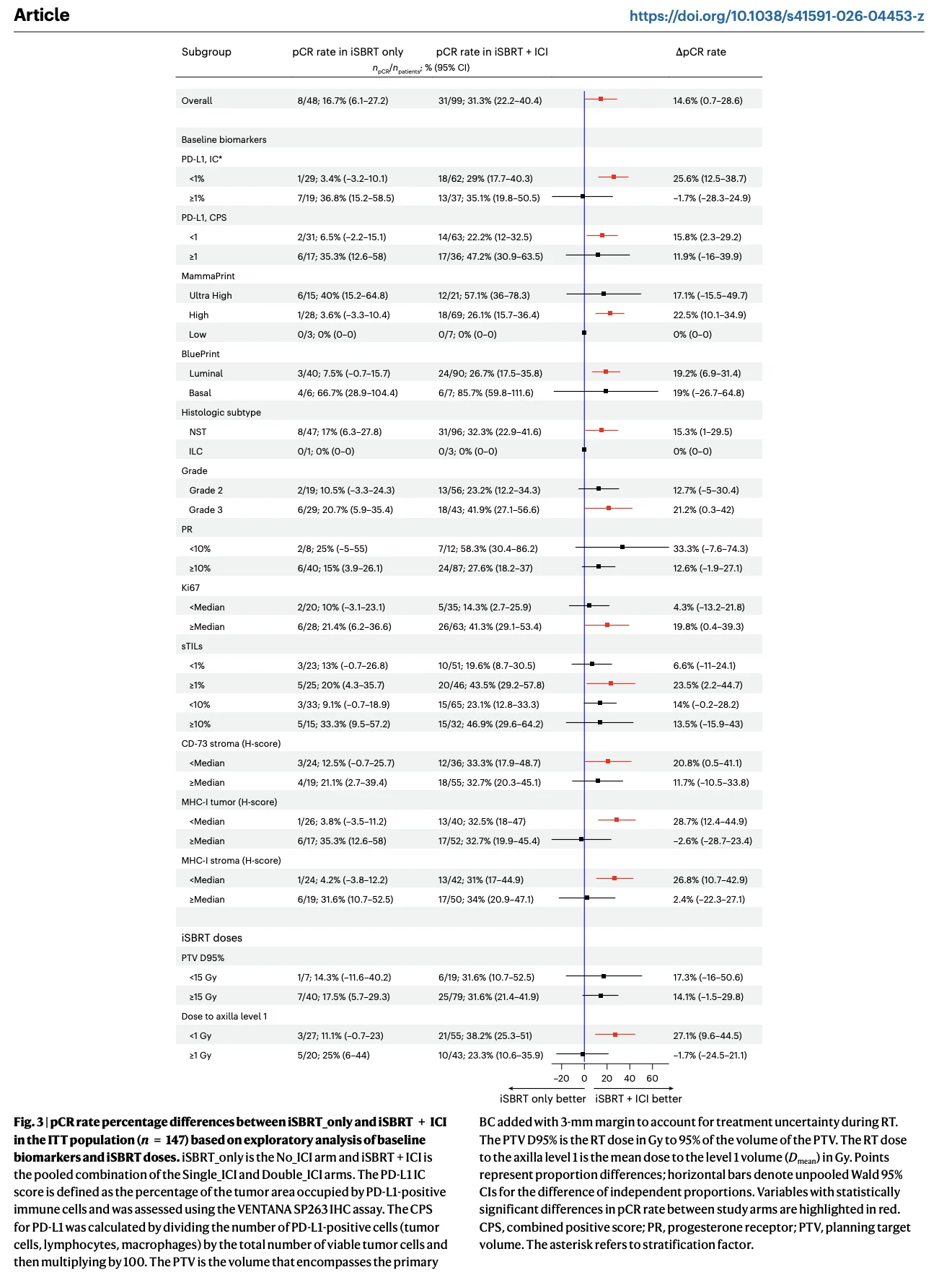
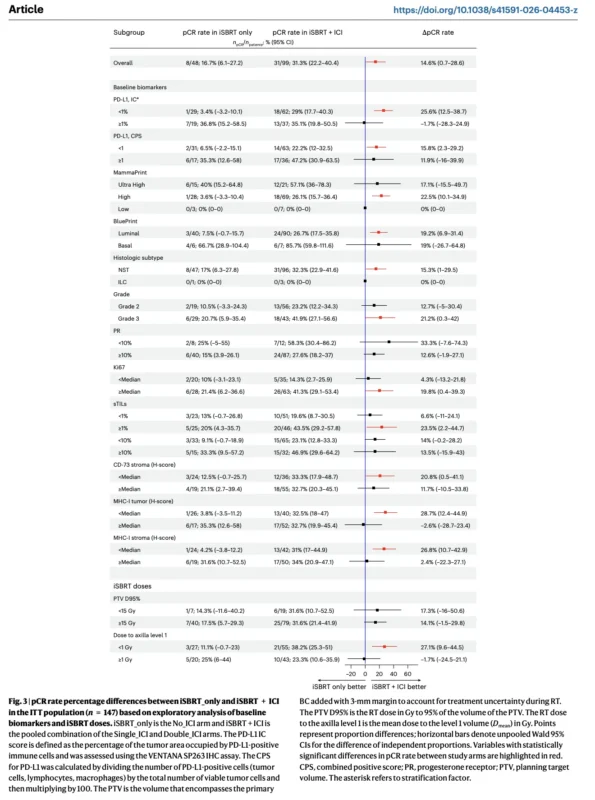
Among patients whose axillary level I region received less than 1 Gy, adding ICI to iSBRT was associated with a 27.1-percentage-point increase in pCR.
In patients whose axilla received more than 1 Gy, no corresponding benefit was observed.
The investigators connect this observation with preclinical evidence suggesting that irradiation of tumor-draining lymph nodes can impair immune priming and reduce synergy between radiotherapy and checkpoint inhibition.
This could have practical implications for future immunoradiotherapy trial design.
Radiation used as an immune-modulating intervention may require different planning principles from radiation used purely for local tumor control.
However, this was an exploratory subgroup analysis and cannot establish a radiation dose threshold for clinical practice.
Did CD73 Blockade Add Anything?
The biological rationale for oleclumab was strong.
Radiation-induced tumor-cell death releases extracellular ATP. CD73 can convert downstream nucleotides into adenosine, which suppresses multiple components of antitumor immunity.
Blocking CD73 could therefore theoretically prevent an adaptive immunosuppressive response to radiation.
In Neo-CheckRay, however, adding oleclumab to durvalumab did not produce a clear additional pathologic response advantage.
The pCR rate was 29.4% with durvalumab and 33.3% with durvalumab plus oleclumab in the ITT population.
The study was not designed for a formal statistical comparison between the Single_ICI and Double_ICI groups, so definitive conclusions regarding oleclumab cannot be drawn.
Nevertheless, the results do not currently demonstrate a clear incremental benefit from CD73 blockade in this regimen (De Caluwé et al., 2026).
Early Tumor Disappearance May Carry Biological Information
Another intriguing observation came from the week-6 biopsies.
A substantial proportion of patients had no detectable tumor cells in their biopsy only several weeks into treatment.
This occurred more frequently in the immunotherapy groups.
Absence of tumor on the week-6 biopsy was strongly associated with subsequent pCR at surgery:
- OR 4.25; 95% CI, 1.88–9.82.
The result raises the possibility that very early tissue response could eventually provide information about treatment sensitivity before completion of the full neoadjuvant regimen.
However, it also complicated the translational analysis. Patients with the most rapid tumor clearance could not contribute residual tumor tissue for paired RNA sequencing, potentially introducing selection bias into analyses of the week-6 tumor microenvironment.
What Did MammaPrint Show?
Neo-CheckRay prospectively focused on biologically high-risk disease, predominantly defined by the MammaPrint 70-gene signature.
Higher genomic risk was associated with greater probability of pCR.
Tumors classified as MammaPrint Ultra-High, or MP2, demonstrated particularly high response rates, whereas none of the ten patients ultimately classified as MammaPrint Low Risk achieved pCR.
However, MammaPrint Ultra-High status did not clearly identify patients deriving a greater relative benefit from adding ICI to iSBRT than the standard MammaPrint High Risk category.
The findings therefore reinforce the prognostic and treatment-sensitivity information provided by MammaPrint without establishing it as a specific predictive biomarker for the radiation-immunotherapy interaction.
The Pathologic Signal Came With Greater Toxicity
The increased pCR rates with immunotherapy were accompanied by substantially more high-grade treatment-related toxicity.
Grade 3 or 4 treatment-related adverse events occurred in:
- 29.2% with chemotherapy plus iSBRT,
- 64.7% with the addition of durvalumab,
- 70.8% with durvalumab plus oleclumab.
Immune-mediated adverse events of any grade occurred in 6.3%, 49.0% and 43.7%, respectively.
Grade 3 or 4 immune-mediated events occurred in 0%, 11.8% and 8.3%.
The most frequent immune-mediated toxicities involved thyroid dysfunction. Hyperthyroidism occurred in 13.7% of patients receiving durvalumab alone and 4.2% receiving durvalumab plus oleclumab, while hypothyroidism or thyroiditis occurred in 11.8% and 8.3%, respectively.
There were no treatment-related deaths.
Importantly for the radiation component, there were no Grade 3 or higher adverse events attributed to iSBRT, and the addition of preoperative radiation did not appear to prevent subsequent breast surgery (De Caluwé et al., 2026).
Does a Higher pCR Rate Mean Better Long-Term Outcomes?
That remains unknown.
At a median follow-up of approximately 34 months, very few events had occurred.
Three events were reported in the control group, none in the durvalumab group and one in the durvalumab plus oleclumab group.
Three-year EFS estimates were 90.6%, 100% and 97.9%, respectively.
No deaths had occurred, and estimated 3-year overall survival remained 100% across all three groups.
These numbers are not sufficiently mature to determine whether the higher pCR rate observed with immunotherapy translates into an event-free or overall survival advantage.
The investigators plan longer follow-up.
This is particularly important in ER-positive/HER2-negative breast cancer, where recurrence can occur many years after diagnosis and pCR is a less established surrogate for long-term outcome than in more aggressive breast cancer subtypes.
How Does Neo-CheckRay Compare With KEYNOTE-756 and CheckMate 7FL?
The comparison is scientifically interesting but must remain indirect.
KEYNOTE-756 increased pCR from approximately 15.6% to 24.3% with pembrolizumab added to neoadjuvant chemotherapy.
CheckMate 7FL increased pCR from approximately 13.8% to 24.5% with nivolumab.
In Neo-CheckRay, pooling the two ICI-containing groups produced a pCR rate of 31.3% compared with 16.7% with iSBRT plus chemotherapy alone, corresponding to an absolute increase of 14.6 percentage points.
More strikingly, the largest benefit appeared among PD-L1-negative tumors.
But Neo-CheckRay cannot establish that radiation caused the difference between these studies.
iSBRT was included in all three Neo-CheckRay arms, and there was no chemotherapy-only group without radiation. The individual contribution of iSBRT therefore cannot be separated from chemotherapy and checkpoint inhibition.
The comparisons also involve different studies, populations and treatment regimens.
The appropriate conclusion is therefore not that radiation has proven superior as an immunotherapy sensitizer, but that Neo-CheckRay provides clinical and translational evidence supporting that hypothesis.
Why Neo-CheckRay Matters
The most important contribution of Neo-CheckRay may be conceptual rather than immediately practice-changing.
Biomarkers such as PD-L1 are commonly treated as static characteristics of a tumor.
Neo-CheckRay suggests another possibility: the tumor microenvironment itself might be therapeutically reprogrammed.
An immune-cold tumor at baseline may not necessarily remain immune cold throughout treatment.
In this study, PD-L1-negative tumors started with lower immune-gene expression. After iSBRT and checkpoint inhibition, some developed stronger interferon signaling, effector T-cell programs, MHC-I expression and PD-L1 expression, accompanied by substantially higher pCR rates.
That raises a different immunotherapy question for ER-positive/HER2-negative breast cancer.
Rather than asking only which tumors are already immune responsive, future research may ask which tumors can be made immune responsive, and how.
Radiation dose, fractionation, timing, treatment sequence and preservation of tumor-draining lymph nodes may all become important components of that strategy.
Current Limitations
Neo-CheckRay remains an exploratory Phase 2 study with 147 randomized patients.
Its primary RCB 0/1 endpoint was negative.
The pCR improvement in the full ITT population did not reach conventional statistical significance for the prespecified double-ICI comparison, although the MammaPrint High Risk per-protocol analysis did.
Multiple subgroup and translational analyses were exploratory, and several contained small numbers of patients.
The use of iSBRT in every study arm is another major limitation because it prevents determination of the independent effect of radiation.
The follow-up is also too short to establish whether the observed pathologic responses translate into improved EFS or OS.
These limitations mean that the regimen should not currently alter routine treatment standards.
The Bottom Line
Neo-CheckRay provides an unusual signal in high-risk ER-positive/HER2-negative early breast cancer.
The trial did not meet its primary RCB 0/1 endpoint, but the addition of durvalumab to chemotherapy and iSBRT was associated with higher pCR rates, with the strongest signal occurring in tumors that were PD-L1-negative at baseline.
pCR increased from 3.4% with chemotherapy plus iSBRT to approximately 28%-30% when checkpoint inhibition was added in this immune-cold subgroup.
Paired biopsies provided a potential biological explanation.
Initially PD-L1-negative tumors demonstrated low immune activity at baseline, but after iSBRT plus checkpoint inhibition, investigators observed increased inflammatory and interferon signaling, greater MHC-I expression and frequent conversion toward PD-L1-positive immune phenotypes.
The study therefore raises the possibility that radiotherapy could play a role beyond local tumor control: as an immune-modulating intervention capable of altering treatment sensitivity.
But this remains a hypothesis requiring larger prospective validation.
The next question is not simply whether immunotherapy can increase pCR in high-risk luminal breast cancer. It is whether precisely designed radiation can reliably convert immune-cold disease into immune-responsive disease, and whether that biological transformation ultimately reduces recurrence.
References
- De Caluwé A, Desmoulins I, Cao K, Remouchamps V, Baten A, Longton E, Peignaux K, Joaquin Garcia A, Venet D, Arecco L, Agostinetto E, Nader-Marta G, Denis Z, Dhont J, Kristanto P, Catteau X, Larsimont D, Salgado R, Poortmans P, Stagg J, Sotiriou C, Piccart M, Ignatiadis M, Romano E, Buisseret L. Neoadjuvant stereotactic body radiation therapy with durvalumab and oleclumab in ER-positive/HER2-negative breast cancer: a randomized phase 2 trial. Nature Medicine. 2026;32:2461-2472. doi:10.1038/s41591-026-04453-z.
- Cardoso F, et al. Pembrolizumab and chemotherapy in high-risk, early-stage ER-positive/HER2-negative breast cancer: a randomized phase 3 trial. Nature Medicine. 2025;31:442-448.
- Loi S, et al. Neoadjuvant nivolumab and chemotherapy in early estrogen receptor-positive breast cancer: a randomized phase 3 trial. Nature Medicine. 2025;31:433-441.
- De Caluwé A, et al. Neo-CheckRay: radiation therapy and adenosine pathway blockade to increase benefit of immuno-chemotherapy in early stage luminal B breast cancer, a randomized phase II trial. BMC Cancer. 2021;21:899.
- Ho AY, et al. PEARL: a phase Ib/II biomarker study of adding radiation therapy to pembrolizumab before neoadjuvant chemotherapy in HER2-negative breast cancer. Journal of Clinical Oncology. 2024;42:4282-4293.
- Lynch C, Pitroda SP, Weichselbaum RR. Radiotherapy, immunity, and immune checkpoint inhibitors. Lancet Oncology. 2024;25:e352-e362.