Neoadjuvant therapy has changed more than the timing of systemic treatment in early breast cancer.
It provides an opportunity to observe tumor sensitivity in vivo, and the amount of residual disease identified at surgery has become an increasingly important determinant of prognosis and post-neoadjuvant treatment. Pathologic complete response, particularly in triple-negative and HER2-positive breast cancer, remains one of the most clinically informative markers of treatment sensitivity.
Yet pCR has an inherent limitation. It is a retrospective measure of response.
Clinicians learn whether a patient achieved pCR only after systemic treatment has been completed and surgery has taken place. During the months of neoadjuvant therapy, treatment response is assessed primarily through clinical examination and imaging, approaches that may not fully capture the biological response occurring at the molecular level.
Circulating tumor DNA could potentially add that missing dimension.
A prospective pilot study published in JCO Oncology Advances investigated whether serial tumor-informed ctDNA measurement during neoadjuvant therapy could identify response earlier and refine postoperative relapse risk in patients with stage II–III triple-negative or HER2-positive breast cancer.
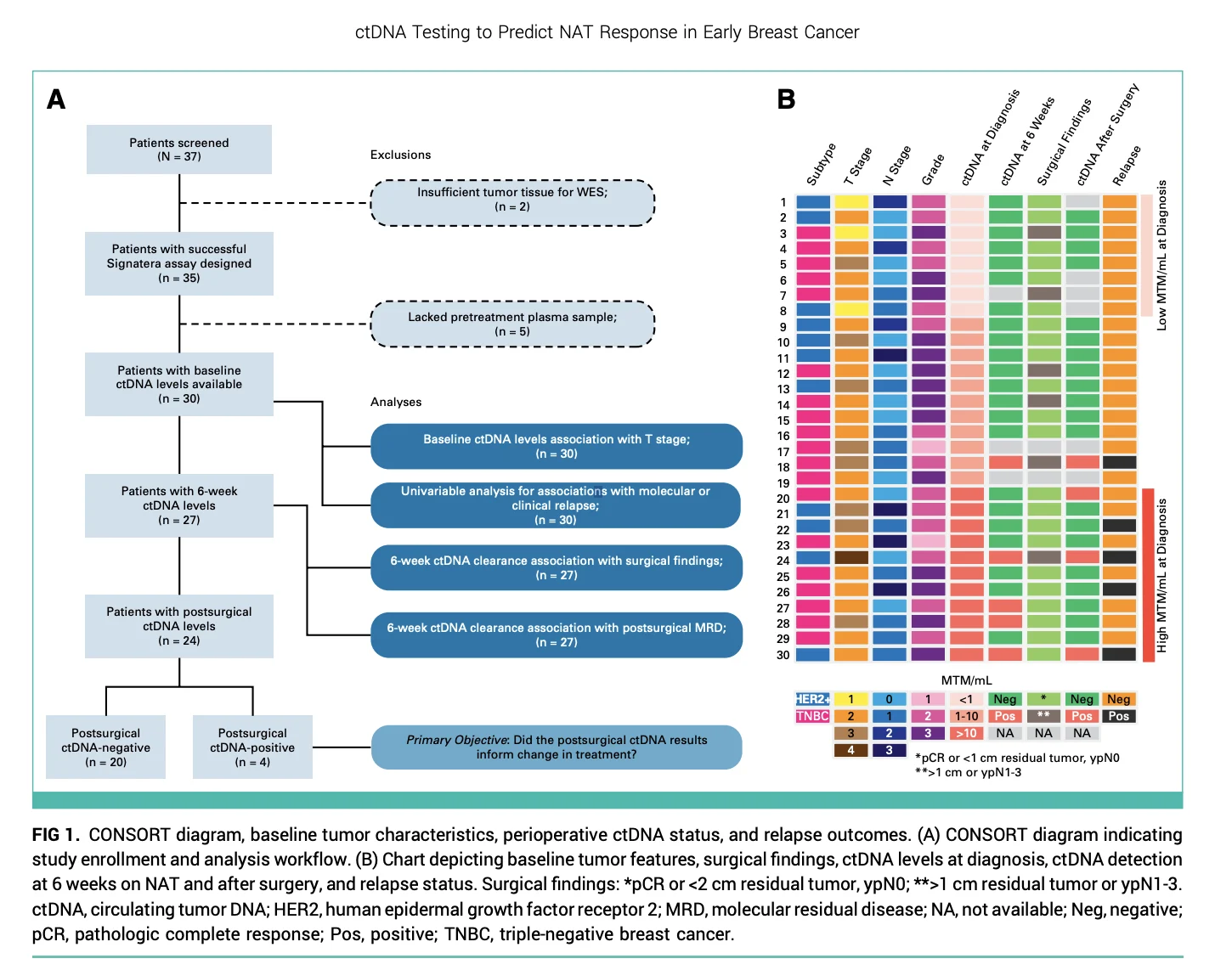
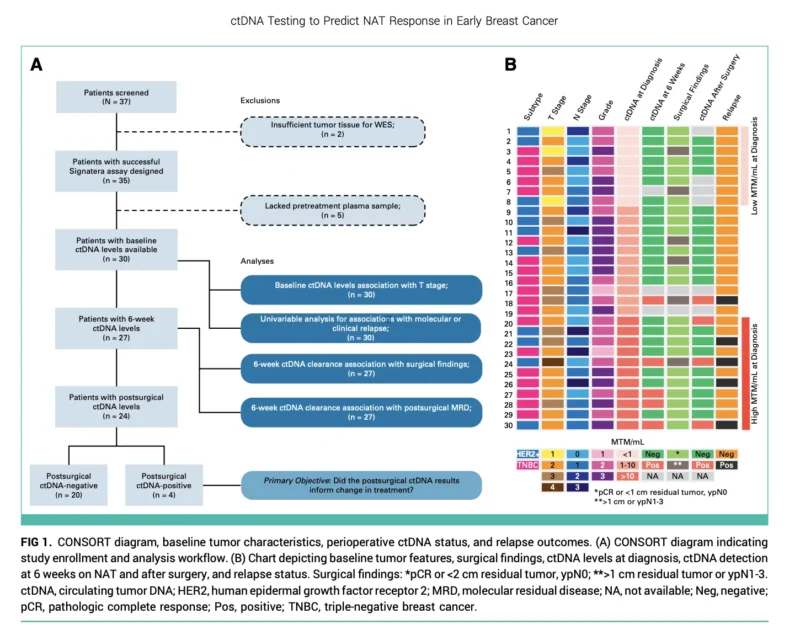
The CIPHER study enrolled 37 patients receiving standard-of-care neoadjuvant treatment. Thirty had evaluable baseline ctDNA and were included in the principal analysis. Using a personalized tumor-informed Signatera assay, investigators measured ctDNA before treatment, every three weeks during neoadjuvant therapy and after surgery.
Although the study is small and exploratory, its central finding is clinically compelling:
The trajectory of ctDNA during treatment may matter as much as its presence at diagnosis.
Copyright © 2026 American Society of Clinical Oncology. All rights reserved.
From a Static Biomarker to a Dynamic Measure of Treatment Response
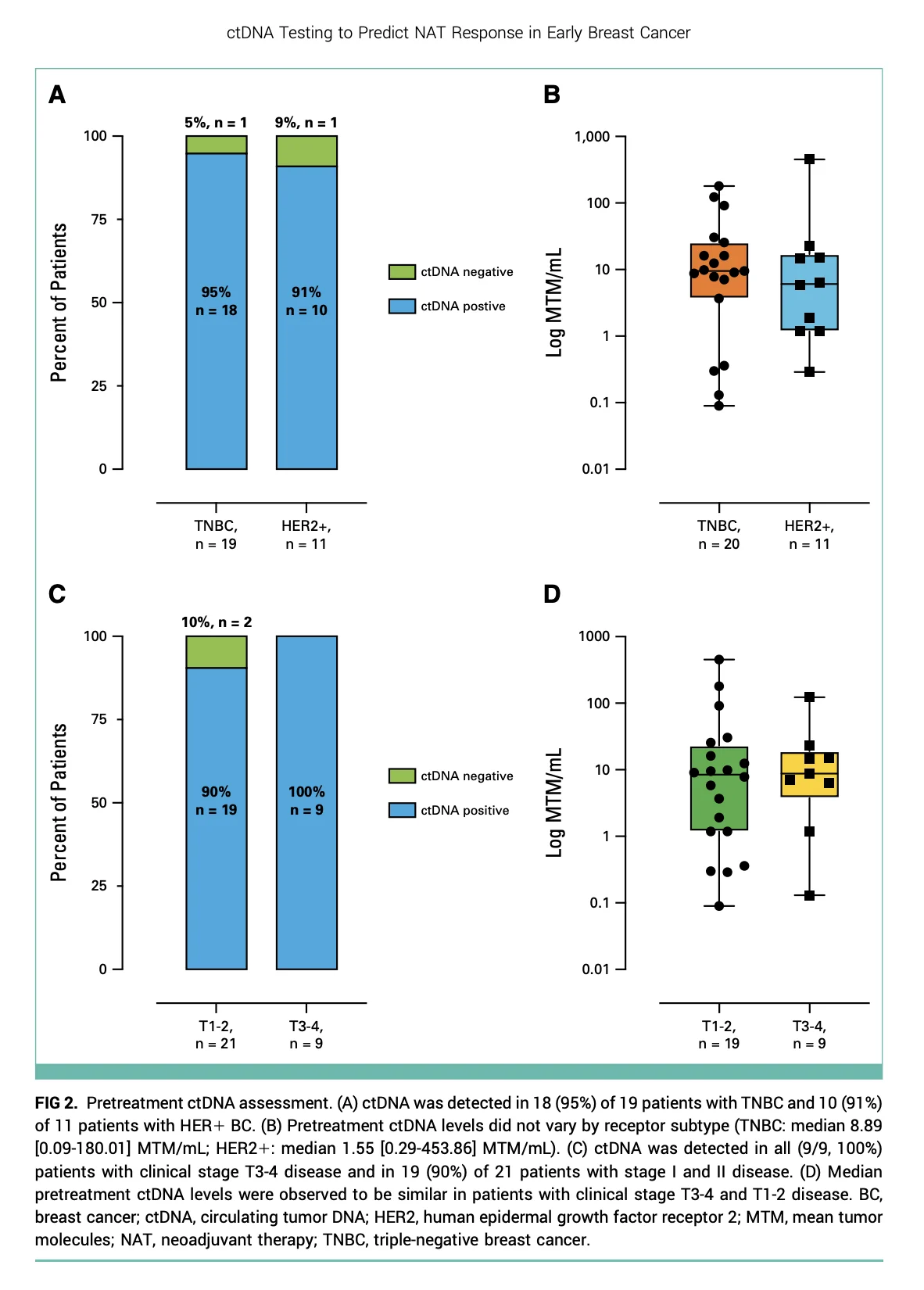
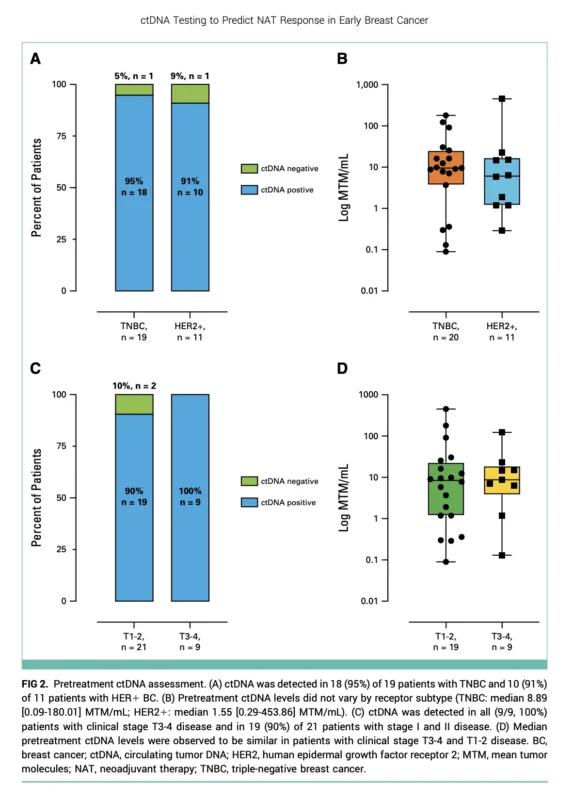
ctDNA was detectable before therapy in almost all evaluable patients. Baseline ctDNA was found in 95% of patients with TNBC and 91% of those with HER2-positive disease. Detection was also high across clinical tumor stages, including 90% of patients with T1–T2 tumors and all patients with T3–T4 disease.
These high detection rates are important because the clinical value of longitudinal ctDNA monitoring depends on having a measurable molecular signal before treatment begins.
But baseline detection itself was not the most interesting part of CIPHER. The more informative signal emerged from how rapidly ctDNA disappeared after treatment started.
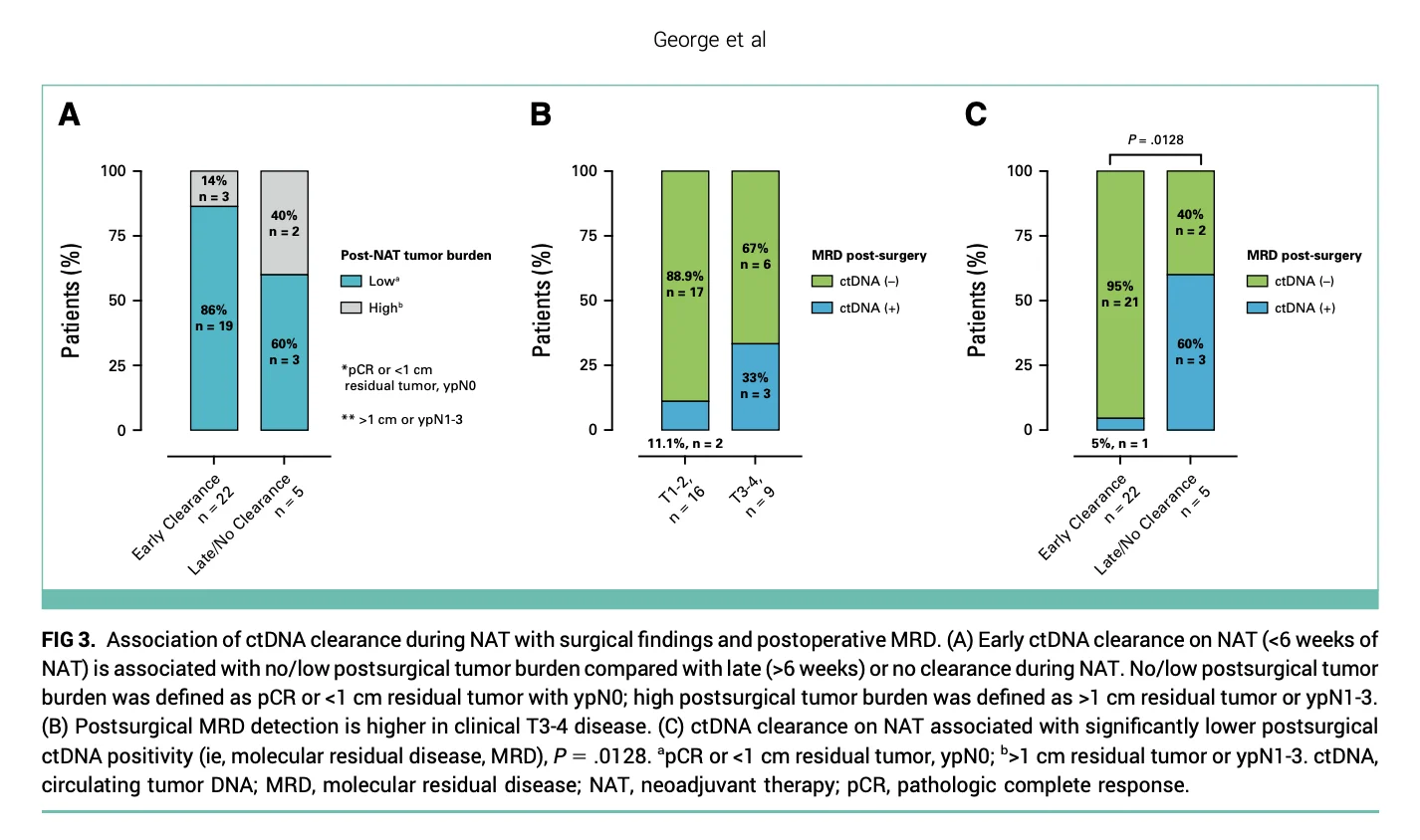
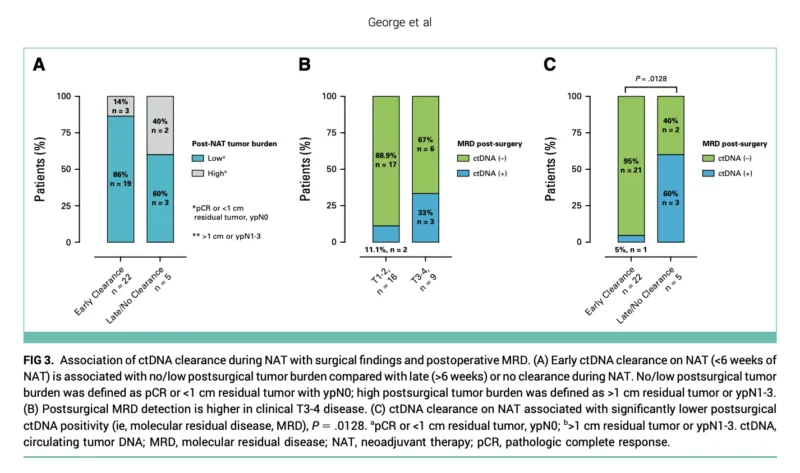
Patients who cleared ctDNA within six weeks of neoadjuvant therapy were more likely to have favorable surgical findings than patients with late or persistent ctDNA detection.
Among early-clearance patients, 86% ultimately had either pCR or less than 1 cm of residual invasive tumor with ypN0 disease, compared with 60% among patients with late or no clearance.
The distinction is conceptually important. Pretreatment biomarkers describe the cancer before therapy. Dynamic ctDNA potentially describes what the cancer is doing in response to therapy. That could make serial ctDNA fundamentally different from conventional baseline prognostic factors.
Molecular Clearance During Therapy Predicted Postoperative MRD
The association became even stronger when investigators examined ctDNA after surgery. Among patients who achieved early molecular clearance during neoadjuvant treatment, only 5% remained ctDNA-positive after surgery.
Among patients with late or no clearance, postoperative ctDNA positivity reached 60%. The association was statistically significant at P = .0128.
The figure on page 6 illustrates the separation particularly clearly: 95% of early-clearance patients were postoperative MRD-negative compared with only 40% of patients with delayed or absent clearance.
This raises the possibility that molecular response during neoadjuvant therapy could forecast not only the pathological result at surgery but also the probability of residual systemic disease afterward.
That distinction matters because pathology and ctDNA interrogate different compartments. Surgical pathology tells us what remains in the breast and regional lymph nodes.
ctDNA may provide information about whether malignant material remains somewhere beyond what was surgically removed. In that sense, the two approaches may ultimately prove complementary rather than competing.
Baseline ctDNA Burden May Add Another Layer of Prognostic Information
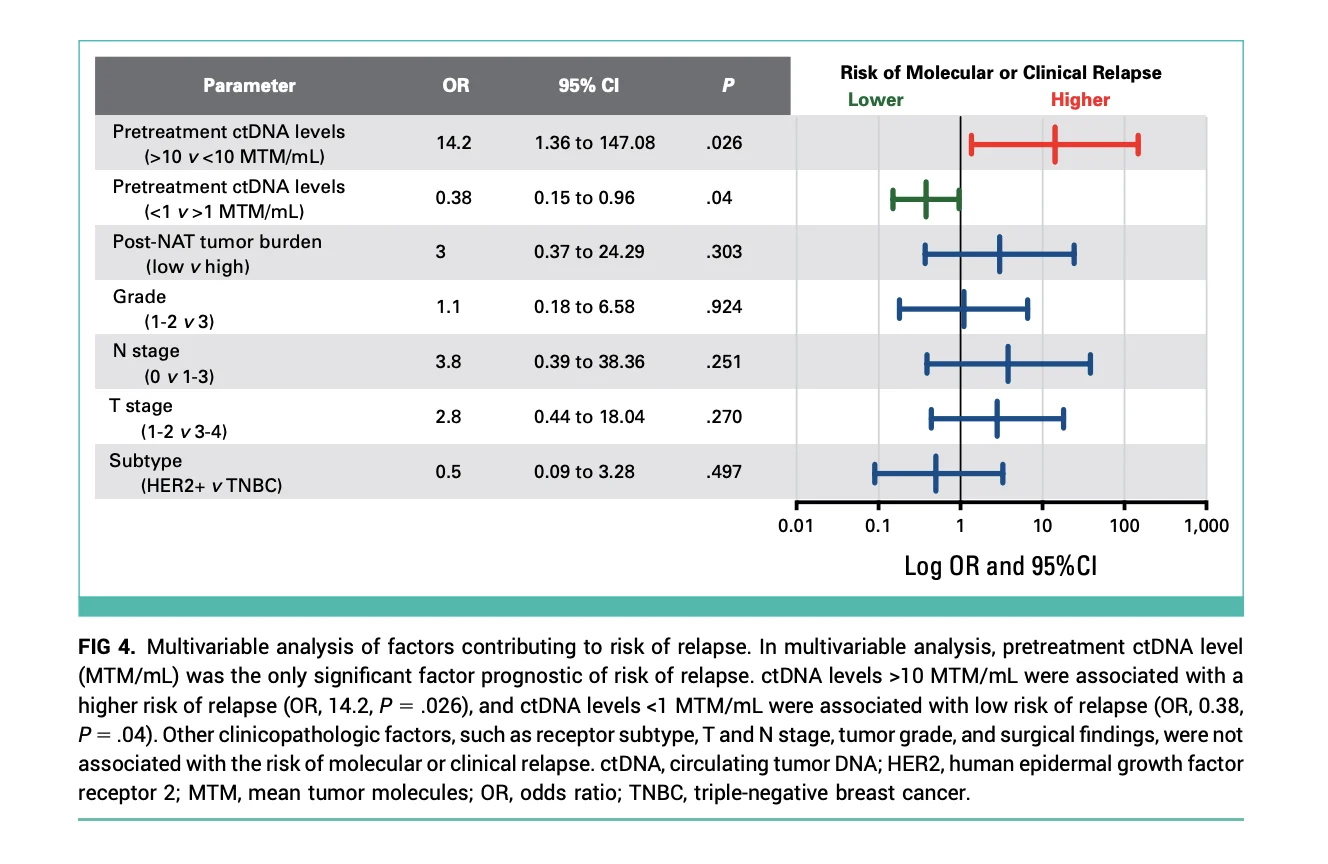
CIPHER also suggests that the quantitative burden of ctDNA before therapy may carry prognostic information. Pretreatment ctDNA levels above 10 mean tumor molecules per mL (MTM/mL) were associated with substantially greater odds of molecular or clinical relapse:
- OR 14.2; 95% CI, 1.36–147.08; P = .026.
Conversely, baseline ctDNA below 1 MTM/mL was associated with lower relapse risk:
- OR 0.38; 95% CI, 0.15–0.96; P = .04.
In the reported analysis, pretreatment ctDNA was the only variable significantly associated with molecular or clinical relapse, whereas receptor subtype, T stage, nodal status, tumor grade and postoperative tumor burden were not statistically significant.
This finding is intriguing but should be interpreted cautiously. The confidence interval surrounding the 14.2 odds ratio is extremely wide, reflecting the small number of patients and relapse events. The study therefore does not validate 10 MTM/mL as a clinical cut-off.
It does, however, raise an important biological question:
Could future risk models distinguish patients not simply by whether ctDNA is detectable, but by how much molecular disease is present before therapy and how quickly that burden falls after treatment begins?
That would move ctDNA assessment beyond binary positive-versus-negative testing.
Copyright © 2026 American Society of Clinical Oncology. All rights reserved.
Can Molecular Response Add Information Beyond pCR?
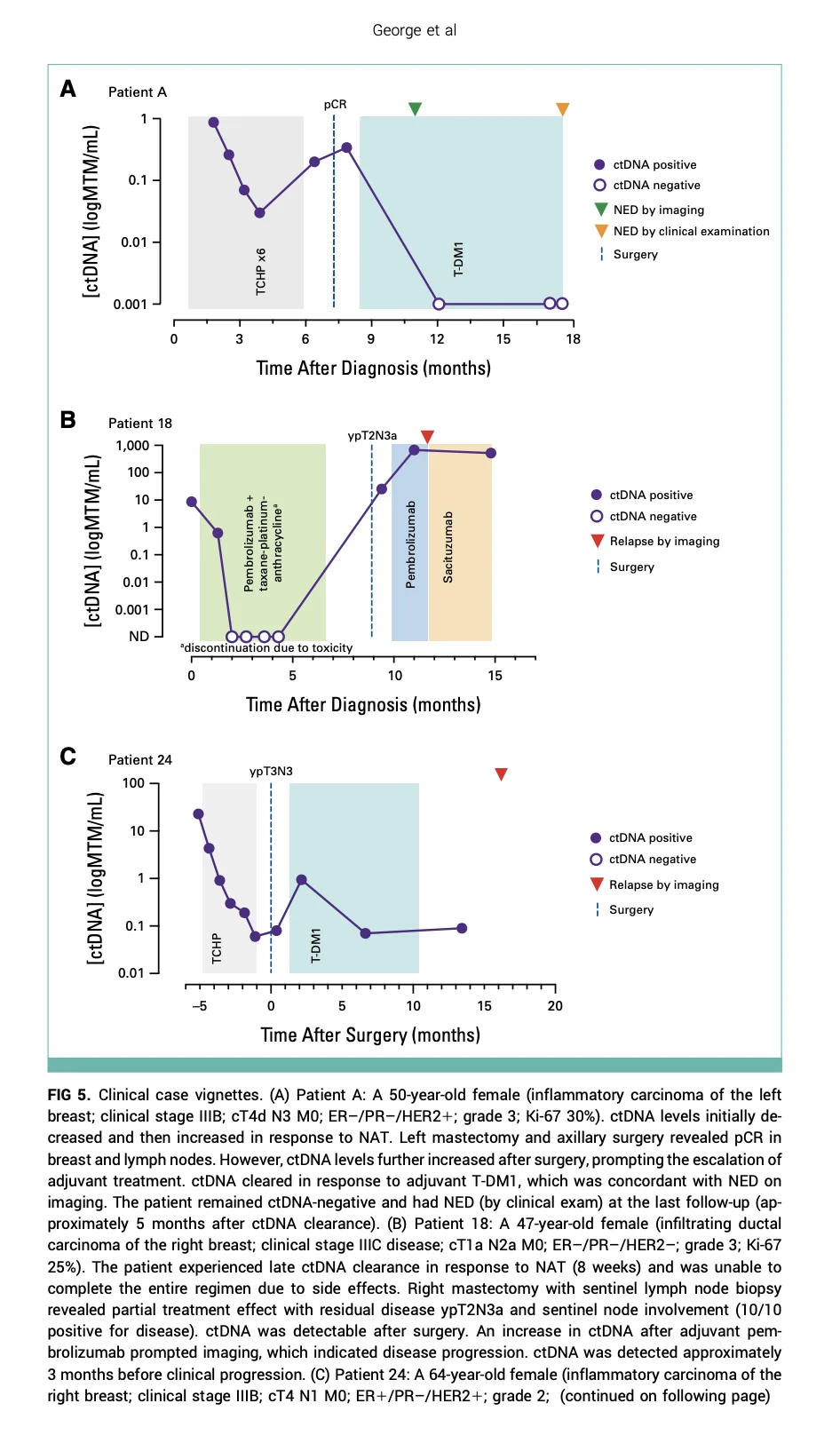
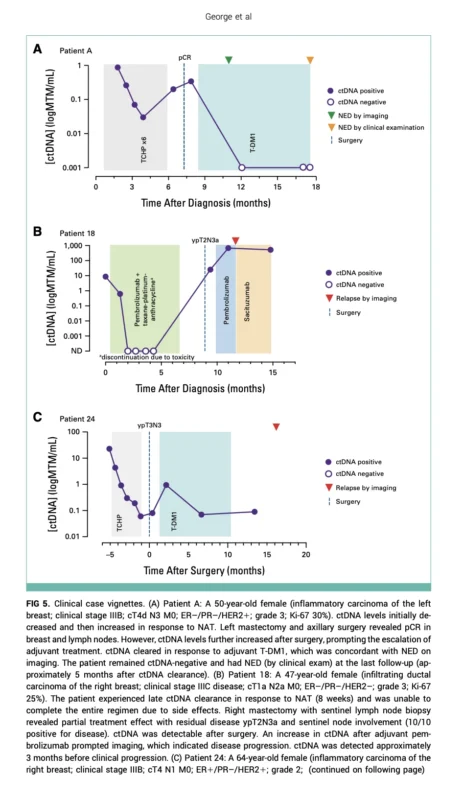
One of the most clinically provocative observations comes from the individual patient trajectories. A patient with HER2-positive inflammatory breast cancer achieved pCR in both the breast and lymph nodes after neoadjuvant therapy.
By conventional pathology, this would represent an excellent treatment response. Yet ctDNA increased after surgery. The molecular finding contributed to escalation with T-DM1, after which ctDNA became undetectable and imaging continued to show no evidence of disease.
This is only one patient, and it cannot demonstrate that ctDNA-guided escalation improved outcome. But it illustrates why ctDNA is potentially attractive. pCR measures local-regional eradication of invasive cancer.
It does not necessarily prove eradication of microscopic systemic disease. A future model incorporating both pathology and MRD could therefore distinguish between patients who are pathologically disease-free and molecularly disease-free, versus those who have achieved pCR but still show evidence of molecular residual disease.
Whether that distinction should change treatment remains unknown. But it is precisely the type of question that deserves prospective study.
Molecular Relapse May Precede Clinical Relapse
Another patient-level case illustrates the potential role of ctDNA after surgery. A patient with TNBC had substantial residual disease after neoadjuvant treatment and remained ctDNA-positive postoperatively.
During adjuvant pembrolizumab, ctDNA levels increased. This prompted imaging, which subsequently demonstrated chest-wall recurrence. In that patient, the molecular signal preceded clinical progression by approximately three months.
Previous breast cancer studies have similarly shown that molecular relapse can precede radiographic recurrence. But this creates an important distinction between analytical utility and clinical utility. Detecting recurrence earlier is not automatically beneficial.
The clinically relevant question is whether intervening during this molecular-relapse window can prevent or delay clinically apparent metastatic disease and ultimately improve survival.
Until that is demonstrated, ctDNA should be considered a promising prognostic tool rather than an established trigger for systemic therapy.
Postoperative ctDNA Is Already Influencing Clinical Decisions
CIPHER also directly examined whether ctDNA results affected management. Among 24 patients with postoperative testing in the main analytic cohort, four had detectable MRD.
When all five postoperative ctDNA-positive cases evaluated for management were considered, including one patient without an evaluable baseline sample, the ctDNA result either changed or reinforced clinical management in 60% of cases.
Interventions included additional imaging and modification of systemic therapy. This finding highlights both the promise and the challenge of clinical ctDNA testing. Once a clinician knows that a patient is MRD-positive after curative-intent treatment, doing nothing becomes psychologically and clinically difficult.
But a test that changes decisions is not necessarily a test that improves outcomes. That is why interventional trials are essential.
The next generation of ctDNA studies must move beyond asking:
- Does MRD predict recurrence?
They need to ask:
- Does changing treatment because of MRD improve recurrence-free or overall survival?
Copyright © 2026 American Society of Clinical Oncology. All rights reserved.
Toward Molecularly Response-Adaptive Neoadjuvant Therapy
If validated in larger studies, the most transformative application of ctDNA may actually occur before surgery. Current neoadjuvant treatment largely follows a predefined regimen.
Treatment begins, response is monitored clinically, and systemic therapy is generally completed before definitive pathological assessment. Serial ctDNA creates the possibility of a different model. A patient who rapidly clears ctDNA could be identified as having molecularly sensitive disease.
A patient with persistent or rising ctDNA could potentially be identified as a poor responder while treatment is still ongoing. That could eventually support prospective strategies examining early switching of ineffective treatment, therapy escalation for persistent molecular disease, or perhaps carefully studied de-escalation among patients with exceptionally rapid and durable molecular clearance.
This would represent an important evolution of neoadjuvant therapy. Instead of treatment being determined almost entirely by pretreatment phenotype, it could begin adapting to on-treatment biological response.
ctDNA Is Unlikely to Replace Pathology
The excitement around MRD should not obscure the continued importance of surgical pathology. pCR has extensive prognostic validation, and post-neoadjuvant treatment decisions in TNBC and HER2-positive disease are already linked to residual pathological disease.
The current study should therefore not be interpreted as showing that ctDNA can replace pCR. A more realistic future is that molecular and pathological response are integrated. Pathology could quantify local residual disease.
ctDNA could estimate systemic molecular residual disease. Imaging could continue to assess anatomical disease. Together, these approaches could provide a much richer picture than any single modality alone.
Important Limitations Prevent Immediate Clinical Adoption
CIPHER remains a pilot study. Only 37 patients were enrolled, and only 30 had evaluable baseline ctDNA. The cohort combined biologically distinct TNBC and HER2-positive tumors. Median follow-up was only seven months, and only five clinical relapse events occurred.
These limitations make the estimates imprecise and prevent firm conclusions about relapse prediction. The study was also not designed to determine whether ctDNA-directed treatment modifications improve survival.
Another clinically relevant limitation involves the CNS. Among three patients who developed brain-only recurrence, plasma ctDNA detected only one. The authors note that restricted shedding across the blood-brain barrier may limit sensitivity for isolated intracranial disease.
This is particularly relevant in HER2-positive breast cancer, where the CNS remains an important site of recurrence. ctDNA surveillance therefore cannot currently be considered a replacement for appropriate clinical and radiographic assessment.
Copyright © 2026 American Society of Clinical Oncology. All rights reserved.
The Bottom Line
The CIPHER study provides preliminary evidence that ctDNA kinetics during neoadjuvant treatment may offer clinically meaningful information before surgery occurs. Early ctDNA clearance was associated with lower postoperative tumor burden and substantially lower postoperative MRD detection.
Baseline ctDNA burden also appeared prognostic: levels above 10 MTM/mL were associated with higher relapse risk, although this threshold requires validation in much larger cohorts. Perhaps the most important implication is conceptual. Pathologic response tells clinicians how the tumor responded after treatment has finished.
Serial ctDNA could potentially reveal that response while treatment is happening. If prospective interventional trials demonstrate that changing therapy according to molecular response improves outcomes, ctDNA could become more than a marker of prognosis.
It could become a tool for real-time, response-adapted neoadjuvant therapy. For now, however, these findings should generate prospective trials rather than alter routine treatment. The question is no longer simply whether ctDNA can predict recurrence. The more consequential question is whether acting on that information can prevent it.
Reference
- George M, Omene C, Meghal T, et al. Predicting Response to Neoadjuvant Therapy in Patients With Early-Stage Breast Cancer Using Circulating Tumor DNA Testing. JCO Oncology Advances. 2026;3:e2600022. Published August 24, 2026. doi:10.1200/OA-26-00022.