ASCO Breakthrough 2026 – Day 1 Highlights
Innovation, collaboration, and implementation set the tone on the opening day of the 2026 ASCO Breakthrough Meeting, as leaders from around the world gathered to discuss how the next generation of oncology advances can be translated into meaningful improvements in patient care.
From the opening sessions, a central message emerged: the future of oncology will depend not only on scientific discovery, but also on ensuring that innovation reaches patients equitably across diverse healthcare systems.
Several sessions highlighted the rapidly expanding role of artificial intelligence in oncology, with discussions focusing on how AI can enhance clinical decision-making, optimize workflows, improve diagnostics, and expand access to clinical trials. Speakers emphasized that successful implementation will require careful governance, clinician oversight, and rigorous prospective validation.
Precision oncology also remained a dominant theme throughout the day, with presentations exploring how molecular biomarkers continue to refine patient selection and treatment strategies. Advances in translational science demonstrated how integrating genomic, pathologic, and clinical data is bringing personalized medicine closer to routine practice.
Global oncology and health equity were equally prominent throughout the meeting. Experts discussed innovative approaches to overcoming disparities in cancer care through international collaboration, regional partnerships, and implementation science, recognizing that scientific breakthroughs alone are insufficient unless they can be delivered to all patients regardless of geography or available resources.
The opening day reinforced why ASCO Breakthrough has become a premier forum for emerging innovations in oncology—bringing together investigators, clinicians, and healthcare leaders committed to accelerating the translation of scientific discovery into better patient outcomes.
ASCO Breakthrough 2026 – Day 2 Highlights
Artificial intelligence and molecular response assessment took center stage on Day 2 of the 2026 ASCO Breakthrough Meeting, where standing-room-only sessions reflected the rapidly growing interest in implementing these technologies across oncology practice.
One of the day’s most highly attended sessions, moderated by Dr. Melvin Chua, examined the expanding role of AI throughout the cancer care continuum. Experts discussed how AI can streamline multidisciplinary tumor boards, integrate radiologic, pathologic, genomic, and clinical data, accelerate translational research, and improve clinical trial matching. Particular attention was given to the emergence of agentic AI systems capable of coordinating multiple specialized models while emphasizing the need for robust governance and clinical validation.
Clinical trial access also emerged as a major focus. Presentations demonstrated how AI integrated within electronic medical records could automatically identify eligible patients for clinical trials, potentially reducing missed enrollment opportunities and expanding research access, particularly in resource-limited settings.
Artificial intelligence is also beginning to transform cancer diagnostics. Speakers highlighted how multimodal AI combining radiology and pathology may improve biomarker detection and diagnostic accuracy, further advancing precision oncology.
Beyond AI, minimal residual disease (MRD) represented another defining topic throughout the day. Discussions centered on whether MRD should evolve from a prognostic biomarker into a therapeutic decision-making tool capable of guiding treatment escalation or de-escalation. Complementary presentations highlighted the growing role of circulating tumor DNA (ctDNA) in MRD-guided clinical trials, illustrating how molecular response assessment may allow increasingly individualized treatment strategies.
Global oncology remained a recurring theme. Sessions led by Dr. Neal Palafox emphasized regional collaboration across Pacific Island nations to address disparities in cancer care through coordinated partnerships and shared infrastructure. Dr. Bishal Gyawali challenged conventional assumptions by highlighting that greater cancer care spending does not necessarily translate into lower mortality, underscoring the importance of value-based, equitable implementation.
Taken together, Day 2 demonstrated that oncology is entering a new era in which artificial intelligence, molecular biomarkers, and global collaboration are converging to deliver more personalized, efficient, and equitable cancer care.
The final day of the 2026 ASCO Breakthrough Meeting
The final day of the 2026 ASCO Breakthrough Meeting reinforced a message that resonated throughout the conference: the future of oncology will be defined not by a single breakthrough, but by the convergence of artificial intelligence, molecular diagnostics, precision therapeutics, and global collaboration.
A highlight of the closing day was the keynote lecture by Prof. Y.M. Dennis Lo, whose pioneering work has transformed the field of cell-free DNA. Through compelling analogies and engaging storytelling, Lo traced the evolution of liquid biopsy technologies from scientific discovery to clinical application. His presentation showcased the expanding role of cell-free DNA in cancer detection, monitoring treatment response, identifying minimal residual disease, and enabling increasingly personalized approaches to cancer care.
Another standout session featured Dr. Elizabeth Steinberg, who provided a practical overview of how biomarkers are reshaping modern oncology. As the number of targeted therapies and immunotherapies continues to grow, biomarker testing has become central to selecting the most effective treatment for individual patients. The discussion highlighted how molecular profiling is no longer an adjunct to care—it is becoming a cornerstone of precision oncology.
Conclution
Across the three-day meeting, ASCO Breakthrough 2026 highlighted the convergence of artificial intelligence, molecular biomarkers, and global implementation science in oncology. AI discussions focused on responsible integration across tumor boards, pathology, radiology, clinical trial matching, and clinical decision support, with strong emphasis on prospective validation and physician oversight. MRD and ctDNA were presented as emerging tools that may help guide treatment escalation or de-escalation, while global oncology sessions stressed that innovation must be matched by equitable access, regional partnerships, and value-based care.
As the meeting concluded in Singapore, the central message was clear: progress in cancer care will depend not only on new technologies, but on integrating them thoughtfully into routine practice so that more patients can benefit worldwide.
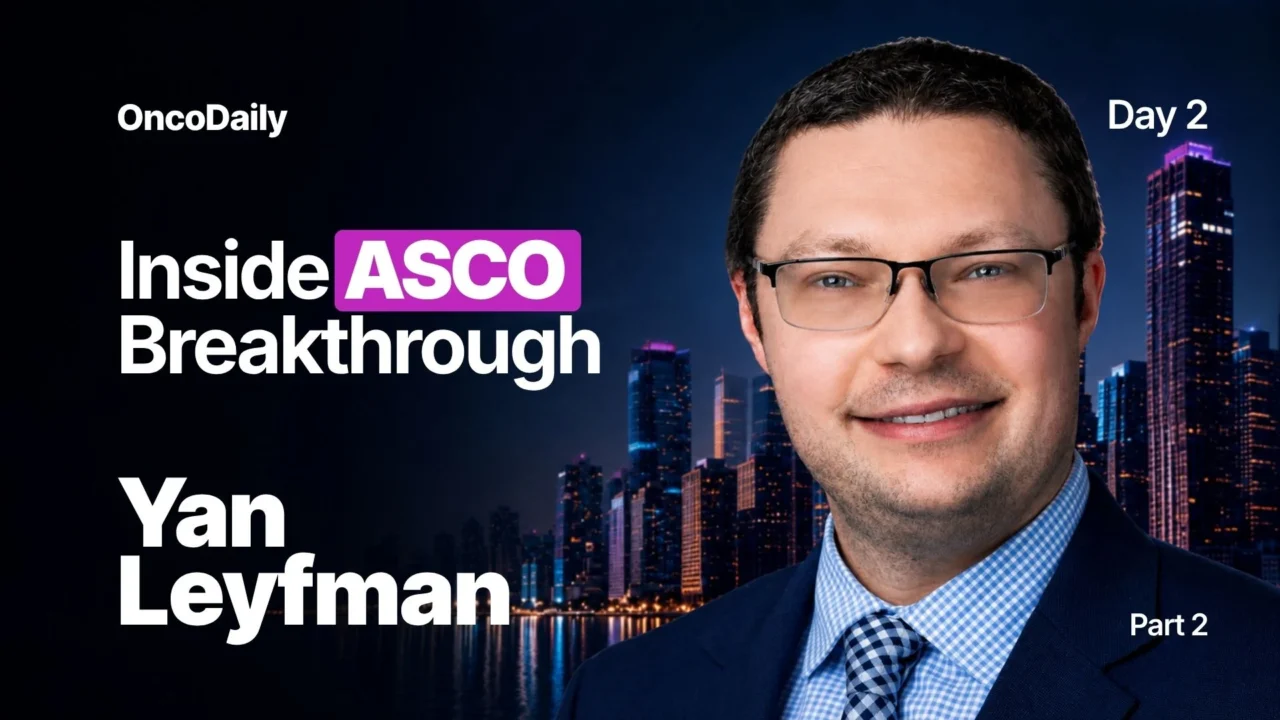
Written by Yan Leyfman