The U.S. Food and Drug Administration has launched the final version of its Expedited Investigational New Drug (IND) Pilot Program, opening applications for an initiative designed to shorten the pathway from drug development to first-in-human clinical trials in the United States.
Announced on September 15, 2026, the program is part of the Trump Administration’s broader effort to accelerate clinical research, strengthen domestic drug development and maintain U.S. leadership in biomedical innovation.
According to the FDA, accelerating clinical trial timelines and reducing regulatory hurdles is a core priority of the Trump Administration. The agency said the pilot was developed following a directive from President Donald Trump and forms part of the U.S. Department of Health and Human Services’ Operation TrialBlazer, a department-wide initiative aimed at modernizing clinical research.
Applications for the initial Expedited IND Pilot cohort are now open and will be accepted through October 30, 2026.
From Proposal to Active FDA Pilot
The launch follows a consultation process that began earlier this year, when the FDA proposed creating a new pathway to make first-in-human development faster and more collaborative.
OncoDaily previously covered the proposed program and how it could reshape early-stage clinical development in the United States: FDA Proposes Expedited IND Pilot to Accelerate Early Clinical Development in the United States
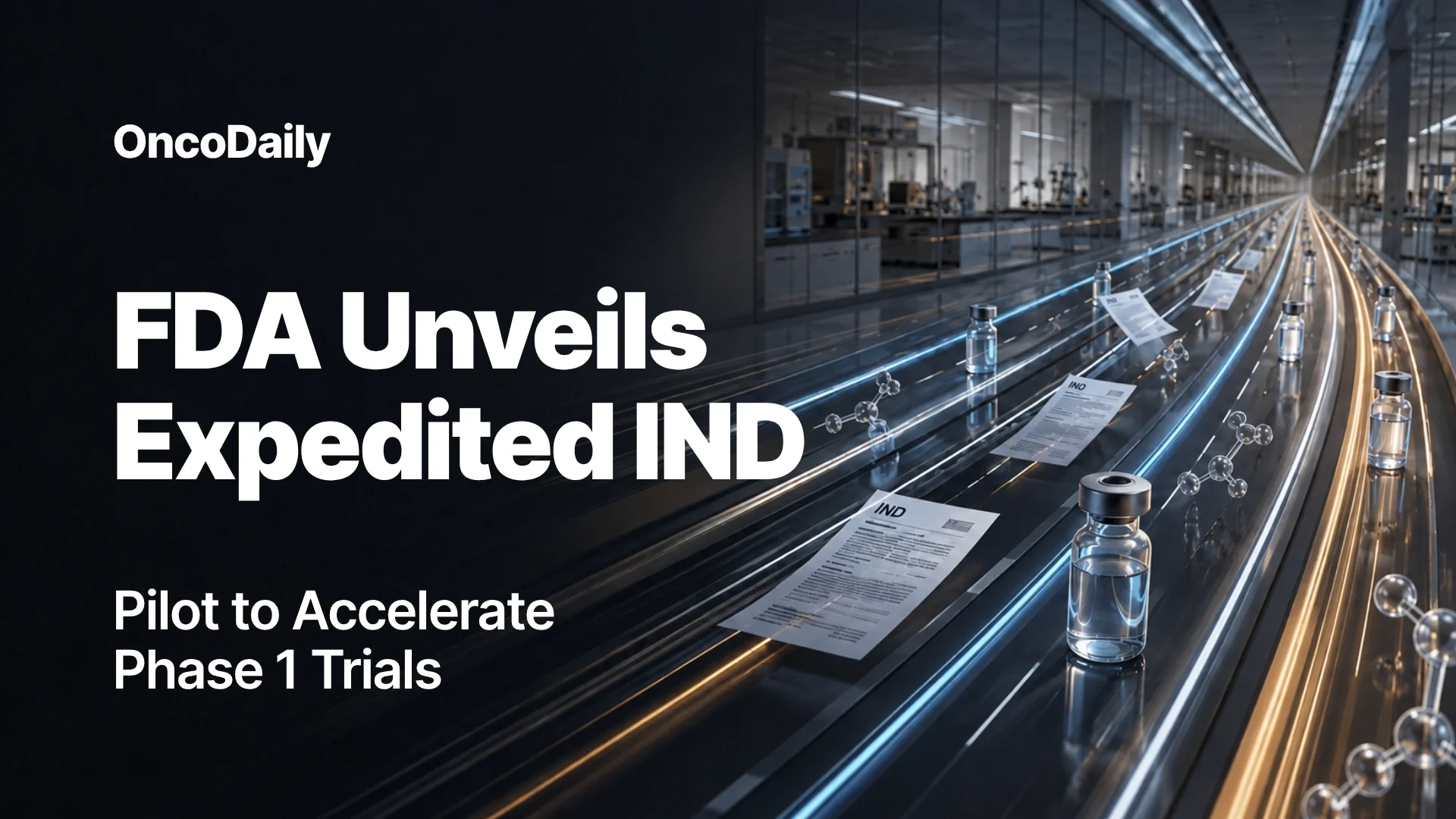
Following public feedback, the FDA has now finalized the structure of the pilot and begun accepting applications.
Under the new model, drug sponsors will partner with Qualified Research Institutions (QRIs) that can provide scientific expertise during preparation of the IND application.
These organizations may include academic medical centers, health systems, contract research organizations, regulatory advisers, and other research institutions capable of contributing expertise in areas including pharmacology and toxicology, clinical development, and chemistry, manufacturing, and controls.
Rolling FDA Review Before the Full IND Is Complete
One of the most significant elements of the pilot is the introduction of a rolling review model during the pre-IND phase.
Rather than waiting until every component of an IND application is complete before reviewing the submission, the FDA will be able to review individual sections as they become ready.
The approach is intended to allow regulatory or scientific problems to be identified earlier in development rather than during the formal IND review period.
By resolving questions in real time, the FDA hopes to improve submission quality, reduce the risk of clinical holds, and make the pathway to first-in-human testing more predictable.
Importantly, the program does not change FDA safety standards or regulatory authority. The agency will continue to determine whether a clinical investigation can proceed and whether a clinical hold is necessary.
Oncology Programs Are Included
The new program may be particularly relevant for oncology drug development.
The FDA states that it will prioritize novel product candidates expected to fall under the review jurisdiction of the Center for Drug Evaluation and Research Office of New Drugs, the Center for Biologics Evaluation and Research Office of Therapeutic Products, or the FDA Oncology Center of Excellence.
Eligible programs must be targeting a Phase 1 first-in-human IND submission and involve an investigational product without previous clinical experience.
The planned first-in-human study must also be conducted in the United States.
When selecting participants, FDA will consider factors including the complexity of the IND, stage of development, public health impact, and unmet medical need. The agency also plans to build a diverse cohort spanning therapeutic areas, product modalities, sponsor sizes and QRI types.
Programs involving rare diseases, pediatric indications, novel modalities and underrepresented therapeutic areas may also contribute to the diversity of the selected cohort.
These criteria could make the pilot relevant to developers of new anticancer drugs, biologics, cell and gene therapies and other experimental oncology platforms entering first-in-human development.
FDA Targets Faster U.S. Clinical Development
The initiative comes amid concern within the U.S. government that an increasing proportion of early-stage clinical research is moving outside the country.
According to the FDA, first-in-human clinical trials may currently take up to two years to complete in the United States, while similar studies can move considerably faster in countries including China and Australia.
Acting FDA Commissioner Kyle Diamantas, JD, said the pilot is designed not only to improve the quality and speed of IND submissions, but also to test whether closer collaboration between sponsors and research institutions can shorten the period between FDA clearance and the actual start of a clinical trial.
“Under the Trump Administration, boosting domestic innovation and ensuring American patients have first access to groundbreaking treatments is a top priority.”
Diamantas added that the FDA will continue implementing Operation TrialBlazer to modernize regulatory processes and strengthen U.S. competitiveness while maintaining patient safety.
The agency argues that these differences could affect not only U.S. scientific competitiveness but also how quickly American patients gain access to experimental therapies.
Karim Mikhail, BPharm, MS, Director of the FDA’s Center for Biologics Evaluation and Research, said:
“The pilot hopes to utilize the American innovation ecosystem to accelerate the time to first-in-human clinical trials.”
FDA said the initiative also aims to keep scientific innovation and investment in the United States while helping American patients gain earlier access to therapies.
Beyond FDA Review
The pilot is also intended to address delays that occur outside the formal regulatory review process.
Sponsors and participating institutions will be encouraged to coordinate activities such as Institutional Review Board review and clinical trial site activation alongside IND development and FDA review when appropriate.
Normally, some of these activities can occur sequentially, adding additional time between preparation of an IND and enrollment of the first patient.
The FDA hopes earlier coordination could compress the overall timeline between beginning IND preparation and starting a Phase 1 study.
The experience gained through the pilot could ultimately shape broader reforms to early-stage drug development. FDA has indicated that findings could inform future policies, potentially including a formal accreditation or certification model for research institutions capable of supporting high-quality IND development.
8 to 10 Sponsor-QRI Pairs Expected
The FDA expects to select approximately 8 to 10 sponsor-QRI pairs for the initial pilot cohort.
Sponsors and prospective QRIs must apply together, with the sponsor submitting the application to FDA.
The current timeline is:
- September 15, 2026: Expedited IND Pilot launched and applications opened
- October 30, 2026: Application deadline
- December 18, 2026: FDA expects to select and notify the first pilot cohort
Participation is voluntary, and companies that are not selected will still be able to use existing FDA mechanisms, including INTERACT and pre-IND meetings.
The launch marks the transition of the Expedited IND initiative from a proposed regulatory experiment into an active FDA program. Its first cohort will provide an early test of whether closer collaboration between regulators, sponsors, and research institutions can meaningfully shorten first-in-human drug development while maintaining existing safety and scientific standards.
Read more on OncoDaily: What Trump’s FDA Pick Could Mean for Cancer Drug Regulation?