The Skin Cancer Foundation and AgriSafe Network are urging farmers, ranchers and other agricultural workers to adopt comprehensive sun protection measures to reduce their risk of skin cancer associated with occupational ultraviolet (UV) exposure.
The organizations issued the call during National Farm Safety and Health Week 2026, taking place September 21–25. This year, September 25 is focused on cancer prevention, providing an opportunity to raise awareness of occupational sun exposure as a skin cancer risk among agricultural workers.
According to the announcement, an estimated 2.9 million farm laborers, including full-time, temporary, and seasonal workers, and 3.4 million agricultural producers, including farm and ranch owners and operators, may face occupational exposure associated with spending significant amounts of time outdoors.
Occupational UV Exposure and Skin Cancer Risk
The Skin Cancer Foundation highlighted cumulative exposure to ultraviolet radiation as an important occupational health concern for people working outdoors.
Deborah S. Sarnoff, MD, president of The Skin Cancer Foundation, said:
“Unprotected UV exposure causes nearly 90 percent of all skin cancers. While the immediate effects of sun exposure, like sunburn, may seem temporary, cumulative UV damage significantly raises skin cancer risk.”
Sarnoff emphasized that outdoor workers should protect their skin from sun damage to lower their likelihood of developing skin cancer. She also called on employers to educate workers about the risks associated with sun exposure and support sun-safe workplace practices whenever possible.
The organizations cited research conducted by the World Health Organization and International Labour Organization showing that exposure to UV radiation while working outdoors increases the risk of nonmelanoma skin cancer by 60 percent.
They also highlighted a survey by the American Academy of Dermatology in which approximately 50 percent of outdoor workers in the United States reported getting sunburn. UV exposure resulting in sunburn has been shown to play a strong role in melanoma incidence.
Sun Protection Is Particularly Important for Agricultural Workers
Farmers, ranchers and other agricultural workers may spend long periods outside as a necessary part of their jobs, making consistent sun protection particularly important.
Natalie Roy, CEO of AgriSafe Network, said:
“For farmers, ranchers and agricultural workers, spending long hours outdoors is often necessary, making sun protection especially important.”
Roy emphasized incorporating protective measures directly into the working day.
“Building sun protection into the workday — through sunscreen, protective clothing, hats, shade and routine skin checks — can help agricultural workers reduce their risk of skin cancer while continuing to feed and sustain our communities.”
According to the organizations, nearly 90 percent of skin cancer cases are preventable with an effective sun protection strategy. They recommend that outdoor workers approach sun protection as a routine workplace safety practice.
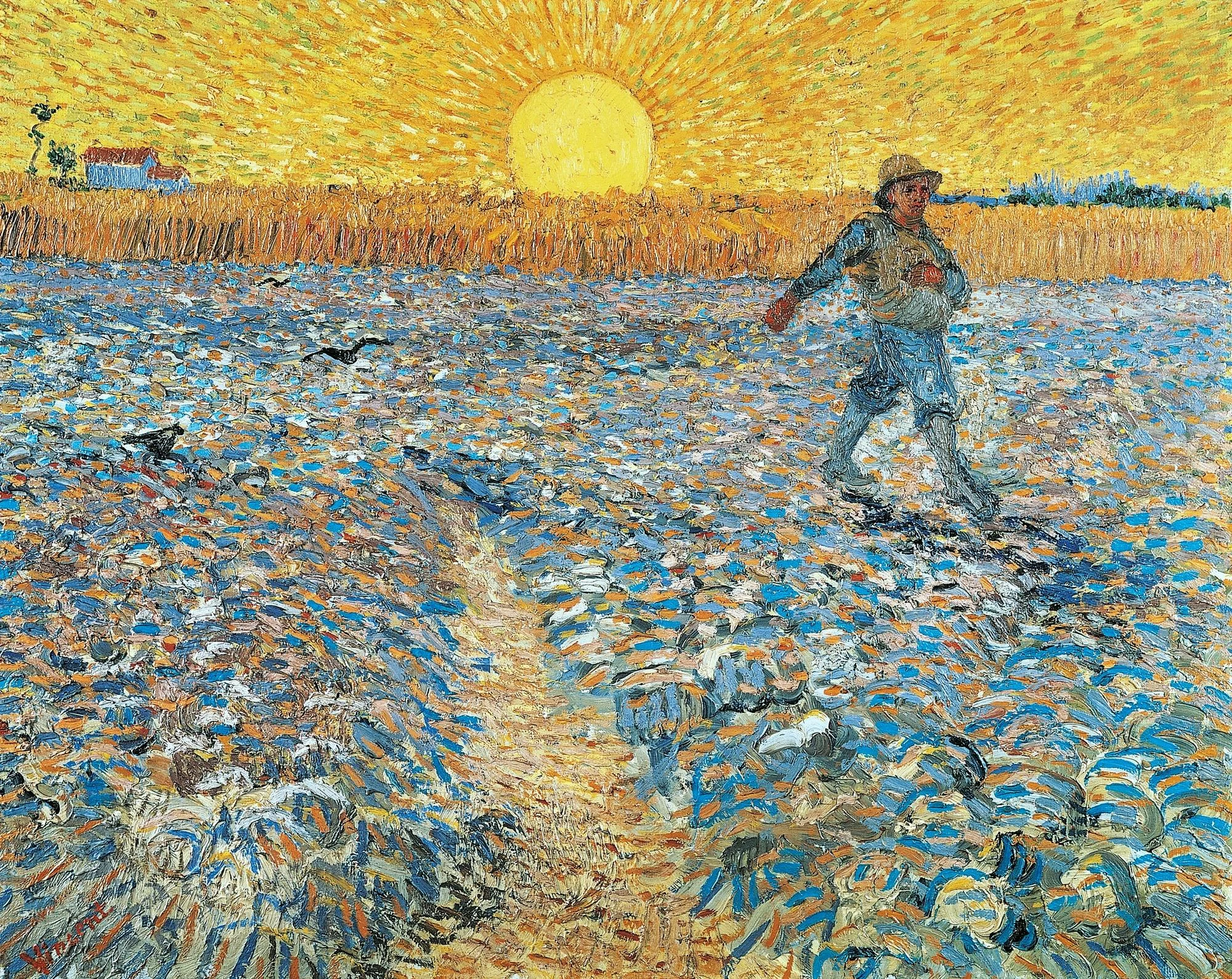
Vincent van Gogh, The Sower, 1888.
How Agricultural Workers Can Protect Their Skin
The Skin Cancer Foundation recommends several precautions throughout the working day to limit UV exposure and reduce long-term skin cancer risk.
Cover up: Workers should wear densely woven, long-sleeved shirts and pants with a UPF of 50 or higher when possible. A bandana or gaiter may provide additional protection. UV-blocking sunglasses can also help protect the eyes when permitted by workplace requirements.
Wear a hat: Larger hats generally provide more coverage, although some agricultural jobs may have specific uniform or safety requirements. Hard hats, hoodies, and baseball caps can offer some protection but may leave areas of the face and neck exposed.
Apply sunscreen: The Foundation recommends broad-spectrum sunscreen with an SPF of 50 or higher on all exposed skin, including the hands. Water-resistant sunscreen is particularly important when workers are sweating or operating in wet conditions. Sunscreen should be reapplied every two hours or more frequently when sweating heavily. Areas such as the face, ears, back of the neck and chest should not be overlooked.
Know the UV Index: Agricultural workers are encouraged to check the UV Index before beginning their workday and take additional precautions when UV radiation levels are high.
Seek shade: Workers should use available shade during the workday and on breaks, particularly during peak UV Index hours between 10 AM and 4 PM.
Protect skin regardless of the weather: UV radiation can damage the skin even under cloudy, foggy, or cool conditions.
Check the skin regularly: The Foundation recommends examining the skin from head to toe every month for anything new, changing, or unusual and seeing a dermatologist at least once a year for a professional skin examination.
Employers Can Support Sun-Safe Workplaces
The Skin Cancer Foundation and AgriSafe also highlighted the role employers can play in reducing occupational UV exposure.
Employers can support safer working environments by providing workers with access to shade, educating employees about the risks associated with unprotected UV exposure, and supporting the use of sun-protective clothing, hats, sunglasses, and sunscreen.
The organizations stressed that these measures should become part of routine occupational health and safety rather than being limited to awareness campaigns or individual responsibility.
Making Skin Cancer Prevention Part of Farm Safety
National Farm Safety and Health Week provides an opportunity to highlight occupational hazards affecting people working across agriculture. With September 25 dedicated to cancer prevention in 2026, The Skin Cancer Foundation and AgriSafe are using the campaign to draw attention to occupational UV exposure and skin cancer prevention.
Their message extends beyond the awareness week. The organizations encourage agricultural workers and employers to make comprehensive sun protection a routine part of workplace health and safety throughout the year.
The Skin Cancer Foundation has promoted daily sun protection and early detection of skin cancer since its inception in 1979. Its work includes public education, patient guidance, engagement with medical professionals, research grants, advocacy campaigns, and free skin cancer screenings through its Destination Healthy Skin program.
AgriSafe Network focuses on agricultural occupational health and safety education and offers more than 75 trainings for healthcare professionals and agricultural communities. Its mission is to reduce occupational-specific health disparities affecting agriculture, forestry, and fishing workers while supporting healthcare professionals through its Total Farmer Health model.
Read further on OncoDaily: Does Sunscreen Cause Cancer? Myths and Facts