The President’s Cancer Panel held a two-day public meeting on June 8–9, 2026, in Rockville, Maryland, focusing on one of the most urgent questions in cancer control: how lifestyle, environmental, occupational, and policy-related factors can be addressed to reduce cancer risk across the United States.
Titled “Modifiable Risk Factors for Cancer: Opportunities for Prevention”, the President’s Cancer Panel meeting brought together leading experts in cancer epidemiology, environmental health, public health, behavioral science, nutrition, occupational exposures, molecular medicine, and cancer prevention. The program examined the substantial role of modifiable risk factors in cancer development, including tobacco use, excess body weight, diet, heavy alcohol consumption, physical inactivity, carcinogenic infections, and environmental exposures.
The President’s Cancer Panel meeting also placed special attention on the rising incidence of several cancers among people younger than 50, including colorectal, breast, uterine, and kidney cancers. These trends have created new urgency around understanding cancer risk earlier in life and identifying prevention strategies that can be translated into national action.
A National Conversation on Cancer Prevention
The President’s Cancer Panel opened the meeting with a broad discussion of cancer trends and known risk factors. The first session focused on cancer incidence and mortality in the United States, cancer trends in Ontario, Canada, the impact of COVID, environmental and occupational cancer risks, and the current evidence around modifiable cancer risk factors.
Dr. Meredith Shiels presented on trends in cancer incidence and mortality in the United States, while Dr. Christine Brezden-Masley discussed cancer trends in Ontario, Canada, including the impact of COVID. Dr. Rena Jones addressed environmental and occupational risk factors for cancer, and Dr. Priti Bandi reviewed current evidence, national prevalence, and opportunities for intervention related to modifiable cancer risk factors.
Together, these presentations framed prevention as a major opportunity for the National Cancer Program. While cancer treatment continues to advance, the meeting emphasized that preventing cancer before diagnosis remains one of the most powerful ways to reduce the national cancer burden.
Early-Onset Cancers Bring New Urgency
A central theme of the President’s Cancer Panel meeting was the growing concern around early-onset cancers. Diagnoses of colorectal, breast, uterine, kidney, and other cancers among adults younger than 50 have raised important questions about environmental exposures, lifestyle factors, susceptibility, and prevention.
During the session on environmental risk factors for cancer, Dr. Mary Beth Terry presented on what the epidemiology of early-onset cancers can teach researchers about environmental exposures, susceptibility, and prevention. Dr. Charlotte Kuperwasser discussed environmental drivers of early-onset cancer and the need to rethink exposure, susceptibility, and risk.
This part of the meeting connected population-level trends with biological and environmental questions. It highlighted the importance of looking beyond individual behaviors alone and considering the broader exposures people encounter across their lives, communities, workplaces, and environments.
Environmental Exposures and the Cancer Burden
Several sessions focused on environmental risk factors and how they can be identified, measured, and addressed. The meeting included discussion of environmental carcinogens, mutational signatures, the exposome, agricultural and occupational exposures, and air toxics around industrial facilities.
Dr. Kyle Walsh presented on the work of the National Institute of Environmental Health Sciences and the U.S. National Toxicology Program in identifying environmental carcinogens to inform action. Dr. Ludmil Alexandrov discussed mutational signatures as tools for identifying the mutagenic causes of cancer. Dr. Douglas Walker spoke about operationalizing the exposome for cancer prevention and control.
The environmental risk sessions also included presentations from Dr. Peter Thorne on agricultural and occupational exposures and Dr. Peter DeCarlo on measurements for understanding air toxics exposure and cancer risk around industrial facilities.
These discussions emphasized that cancer prevention depends not only on individual decision-making, but also on improving the understanding and regulation of exposures that may affect entire communities.
Lifestyle Risk Factors and Prevention Science
The second day of the President’s Cancer Panel meeting shifted attention toward lifestyle risk factors and practical approaches to prevention. The opening session focused on early-onset colorectal cancer, gynecologic cancer, diet, metabolism, neighborhood disadvantage, and cancer biology.
Dr. Andrew Chan presented on early-onset colorectal cancer and the movement from risk factor research toward preventive interventions. Dr. Victoria Bae-Jump discussed metabolic drivers of gynecologic cancer and opportunities for prevention. Dr. Fred Tabung addressed diet, metabolism, and cancer risk in U.S. populations, while Dr. Neha Goel presented on neighborhood disadvantage and cancer biology under the title “Zip Code to Genomic Code.”
This session connected biological risk with social and environmental context. It also highlighted that prevention strategies need to consider where people live, what resources they have access to, and how broader structural factors influence cancer risk.
From Evidence to Action
The President’s Cancer Panel meeting also examined how cancer prevention can move from research findings to public health practice. Sessions on addressing modifiable risk factors focused on state-level infrastructure, technology-based approaches to healthy behavior change, diet policy, regulation, and chemical exposure reduction.
Dr. Ciara Rukse presented on using state-level infrastructure to advance chronic disease prevention. Dr. Jonathan Bricker discussed technology-based psychological approaches to healthy behavior change. Dr. Christina Roberto addressed opportunities to improve the U.S. diet through policy and regulation.
Dr. Jennifer McPartland presented on reducing endocrine-disrupting chemical exposures and advancing health through policy and market-facing approaches. This discussion placed prevention within a larger framework that includes regulation, public health systems, behavioral tools, and safer environments.
A Broad Expert Panel Across Cancer Prevention
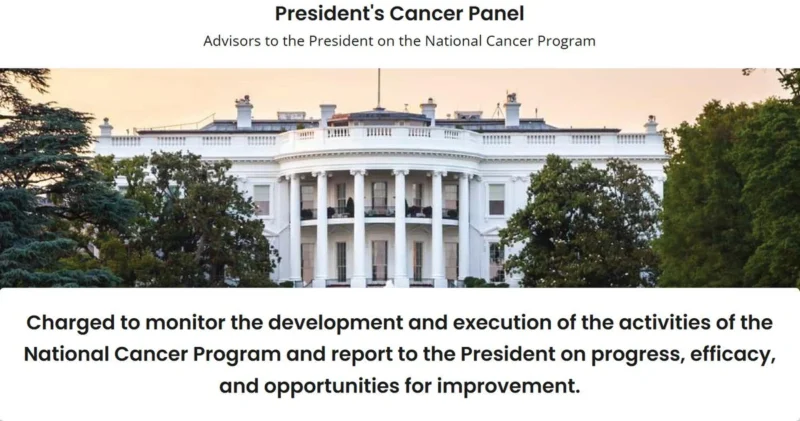
The President’s Cancer Panel meeting gathered speakers from major academic, research, public health, and policy institutions. Participants included experts from the National Cancer Institute, American Cancer Society, University of California San Diego, University of North Carolina at Chapel Hill, Mount Sinai Hospital, University of Toronto, Fred Hutch Cancer Center, Massachusetts General Hospital, Harvard Medical School, Johns Hopkins University, Memorial Sloan Kettering Cancer Center, Tufts University School of Medicine, The Pew Charitable Trusts, University of Pennsylvania, Columbia University, Ohio State University, University of Iowa, Emory University, and the National Institute of Environmental Health Sciences.
The range of speakers reflected the complexity of cancer prevention. The program included cancer epidemiologists, oncologists, environmental scientists, public health experts, behavioral researchers, nutrition policy specialists, and leaders in occupational and environmental health.
Why The President’s Cancer Panel Matters
The President’s Cancer Panel meeting came at a time when cancer prevention is receiving renewed attention. A substantial percentage of cancers in the United States has been attributed to modifiable factors, yet translating prevention science into durable public health change remains a major challenge.
The discussions across the two-day meeting showed that cancer prevention cannot be limited to one field or one intervention. It requires stronger evidence on exposures, better understanding of early-onset cancer trends, effective public health infrastructure, policy action, and practical tools that help individuals and communities reduce risk.
By focusing on both lifestyle and environmental cancer risk factors, the President’s Cancer Panel meeting placed prevention at the center of the national cancer conversation. It also highlighted the importance of moving from knowledge to implementation, especially as younger populations experience rising diagnoses of several cancer types.
Stay informed with more articles like this on OncoDaily.
Written by Nare Hovhannisyan,MD