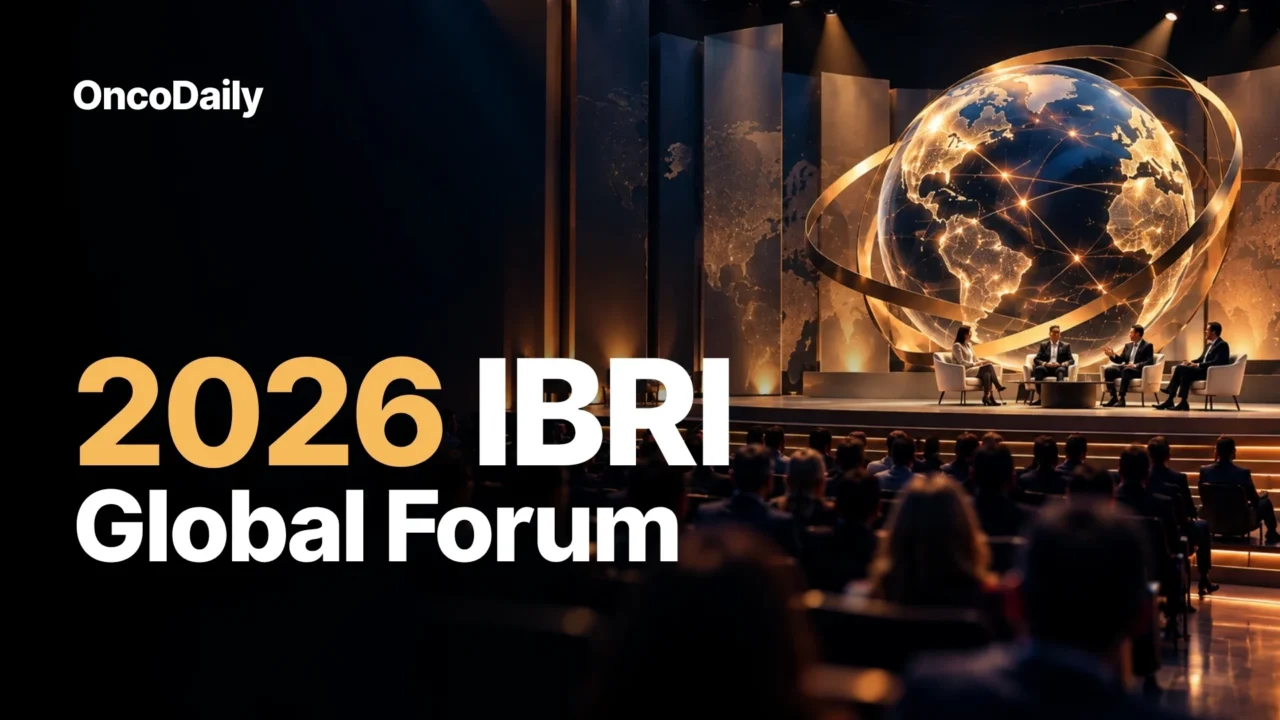
The inaugural 2026 IBRI Global Forum on Science, Philanthropy, and Investment, organized by the Indiana Biosciences Research Institute (IBRI) in Indianapolis, brought together leaders in biomedical research, philanthropy, and investment to examine one of the central challenges in modern medicine: translating scientific discoveries into effective treatments for patients.
Featuring a keynote address by William G. Kaelin Jr., MD, recipient of the 2019 Nobel Prize in Physiology or Medicine, followed by a panel discussion with representatives from philanthropy and venture investment, the forum examined how coordinated funding, scientific research, and commercial expertise can accelerate therapeutic development.
The discussions addressed advances in cancer research, the financial challenges of drug development, the importance of supporting physician-scientists, and opportunities to strengthen collaboration between academic institutions and industry.
From Scientific Discovery to Cancer Treatment: William G. Kaelin Jr.’s Keynote
The forum opened with remarks from Alan Palkowitz, President and CEO of IBRI, who emphasized that no single sector can independently support the entire process of developing new medicines.
John Lechleiter, former Chairman, President, and CEO of Eli Lilly and Company, subsequently introduced Dr. Kaelin, highlighting his contributions to cancer biology and the development of targeted therapies.
During his keynote, Dr. Kaelin reflected on his scientific career, beginning with his early interest in mathematics and medicine and his subsequent training in medical oncology. He acknowledged the influence of his mentor, David Livingston, whose guidance helped establish the foundation of his research career.
A central focus of the presentation was Dr. Kaelin’s work on the von Hippel-Lindau (VHL) tumor suppressor gene, which contributed to understanding how cells detect and respond to oxygen availability.
His research demonstrated how dysfunction of the VHL protein disrupts the regulation of hypoxia-inducible factors (HIFs), particularly HIF-2α, contributing to the development of clear cell renal cell carcinoma.
These discoveries provided a scientific foundation for therapies targeting the VHL-HIF pathway.
Targeting HIF-2α: A New Approach to Kidney Cancer
Dr. Kaelin reviewed the development of belzutifan (Welireg), a HIF-2α inhibitor, as an example of how fundamental laboratory discoveries can eventually lead to clinical treatments.
He described the scientific work that established HIF-2α as a therapeutic target and the subsequent development of small-molecule inhibitors capable of interfering with its activity.
Particular attention was given to a phase 2 clinical trial involving 61 patients with VHL disease, in which belzutifan demonstrated reductions in renal tumors and other VHL-associated lesions.
Dr. Kaelin also presented findings showing a substantial reduction in the need for surgical interventions during treatment compared with the preceding surveillance period.
The clinical results supported the FDA approval of belzutifan for eligible patients with VHL-associated tumors.
Beyond the clinical data, Dr. Kaelin discussed the experiences of patients and families affected by hereditary VHL disease, emphasizing the significance of developing treatments for conditions that can affect successive generations.
New Directions in Pancreatic Cancer: Targeting KRAS and MTAP-Deleted Tumors
Another important component of the keynote addressed emerging therapeutic approaches in pancreatic cancer.
Dr. Kaelin discussed research involving MTAP deletion, a molecular alteration found in a substantial proportion of pancreatic cancers, and its potential to create therapeutic vulnerabilities.
He presented early clinical findings involving the combination of a RAS inhibitor and a PRMT5 inhibitor in patients with metastatic pancreatic cancer who had previously received treatment.
According to the preliminary data presented, the combination demonstrated tumor reductions and encouraging durability of disease control. Dr. Kaelin reported that 89% of patients remained progression-free at nine months in the data discussed.
He emphasized that these findings remain preliminary and require further clinical evaluation.
The presentation also recognized the contributions of researchers trained within his scientific network, including Bill Sellers and Levi Garraway, whose work helped advance understanding of MTAP-associated therapeutic vulnerabilities.
Philanthropy’s Role in Advancing Rare Disease Research
Following the keynote, Amir Pasic, PhD, of the Indiana University Lilly Family School of Philanthropy, moderated a panel featuring Dr. Kaelin, Laura Grannemann of the Gilbert Family Foundation and Rocket Community Fund, and Vincent Cordero of the University of Chicago Polsky Center for Entrepreneurship and Innovation.
The discussion examined how scientific institutions, philanthropic organizations, and investors can address the barriers separating laboratory discoveries from clinical applications.
Laura Grannemann discussed the work of the Nick Gilbert Neurofibromatosis Research Institute, which focuses on accelerating research and treatment development for neurofibromatosis, a genetic disorder associated with tumors affecting nerve tissue.
She explained how philanthropic funding can support research in rare diseases that may otherwise receive insufficient commercial investment.
The institute’s approach includes the use of patient-derived organoid models and a guest research program designed to connect investigators, clinicians, and research institutions.
Grannemann emphasized that philanthropy contributes not only financial resources but also opportunities to establish partnerships, encourage scientific collaboration, and connect researchers with clinical expertise.
Investing in Breakthrough Science: The Challenge of Early-Stage Innovation
Vincent Cordero, founder and general partner of D3 Ventures, discussed the importance of venture investment in supporting technologies at the earliest stages of development.
Drawing on his experience in deep technology investment, Cordero described the difficulties faced by researchers and entrepreneurs seeking funding for scientific approaches that have not yet demonstrated commercial feasibility.
He emphasized the importance of identifying genuinely differentiated technologies, supporting founders with strong scientific and commercial capabilities, and ensuring access to investment throughout the development process.
The panel considered how public funding, philanthropy, and private investment can complement one another, particularly during the early stages when scientific uncertainty and financial risk remain substantial.
Dr. Kaelin argued that government and philanthropic support are especially important for fundamental research, where outcomes and timelines are often unpredictable and commercial investment may be difficult to justify.
Protecting Physician-Scientists and Rethinking Research Training
The discussion also addressed the future of biomedical research careers.
Dr. Kaelin emphasized the importance of physician-scientists in connecting laboratory research with clinical practice. He expressed concern about the financial pressures facing academic medical centers and their potential consequences for professionals working across both fields.
He also questioned whether traditional scientific training pathways remain sustainable, particularly as young researchers face lengthy educational requirements and increasing competition from other industries.
The panel discussed opportunities for closer cooperation between academia and industry, including new approaches to training, mentorship, and career development.
Reflecting on his own experience, Dr. Kaelin emphasized the importance of scientific mentorship in developing research judgment, methodological rigor, and the ability to identify meaningful scientific questions.
Building a Stronger Biomedical Research Network Across the Midwest
The final part of the panel focused on the role of Indianapolis and the broader Midwest in supporting biomedical innovation.
Participants discussed the potential for closer cooperation among universities, research institutions, philanthropic organizations, and industry partners across Indiana, Illinois, Michigan, and neighboring states.
Dr. Kaelin suggested that research institutions could distinguish themselves by developing specific areas of scientific expertise rather than attempting to compete across every biomedical discipline.
Cordero highlighted opportunities for regional collaboration in biotechnology, physical sciences, and other emerging technologies, while Grannemann emphasized the importance of attracting researchers through collaborative programs and institutional partnerships.
The panel agreed that successful biomedical research environments require more than scientific expertise alone. They also depend on sustained funding, management capabilities, investment networks, training opportunities, and institutional cooperation.
From Research Funding to Patient Benefit: The Forum’s Central Message
The inaugural IBRI Global Forum concluded with a shared emphasis on strengthening the connections between scientific discovery, financial support, and clinical application.
Dr. Kaelin’s presentation demonstrated how decades of fundamental research into cancer biology contributed to the development of targeted therapies, while the panel discussion examined the institutional and financial conditions necessary to support similar discoveries in the future.
For oncology, the discussions reinforced the importance of continued investment in basic science, the development of new therapeutic targets, and cooperation among researchers, clinicians, philanthropic organizations, and industry.
The 2026 IBRI Global Forum placed these priorities at the center of its inaugural meeting, emphasizing that advances in biomedical research depend not only on scientific discoveries but also on the resources, expertise, and partnerships required to translate them into treatments for patients.
More articles like this are available on OncoDaily