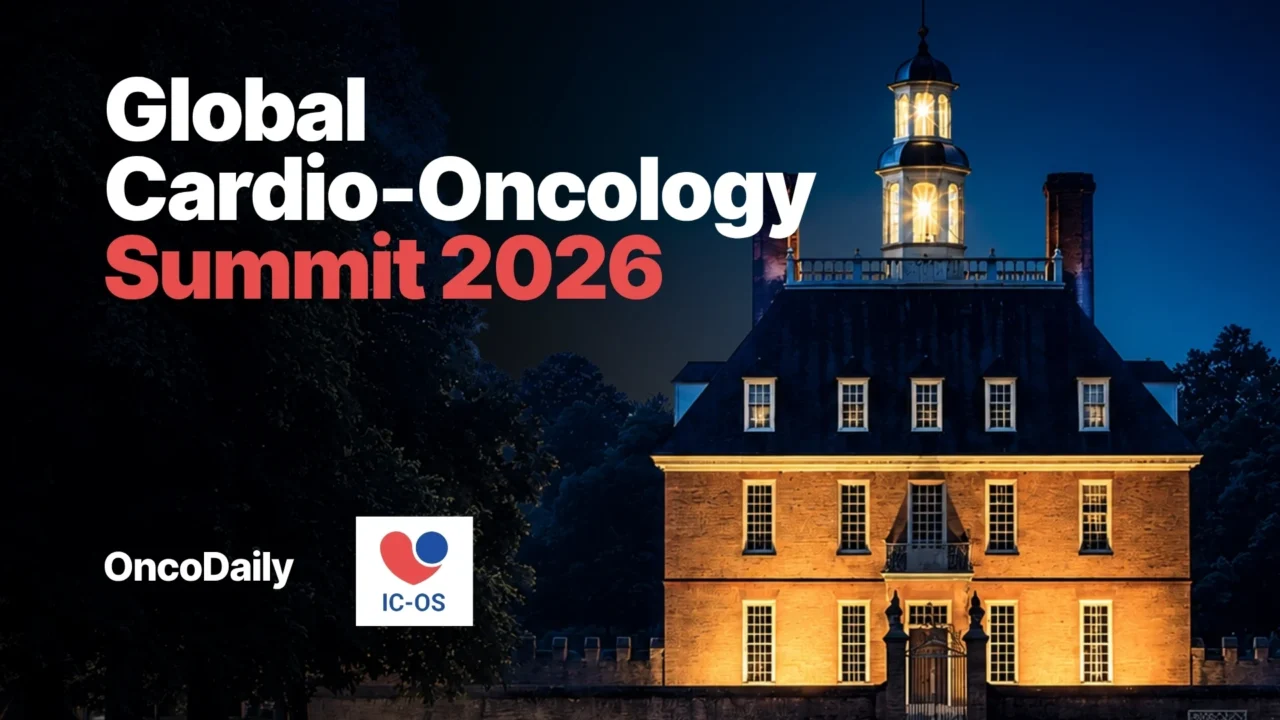
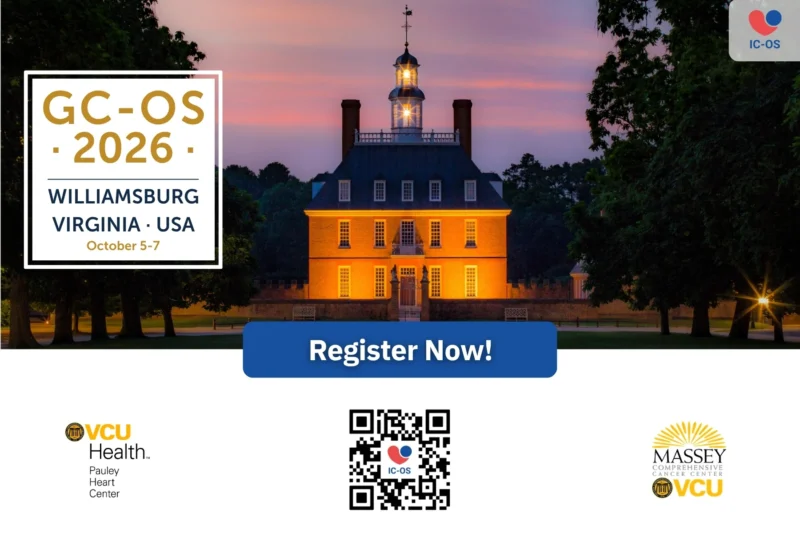
The International Cardio-Oncology Society will host the 2026 Global Cardio-Oncology Summit (GC-OS) from October 5 to 7, 2026, in Williamsburg, Virginia, USA.
Recognized as a leading international and interdisciplinary meeting in cardio-oncology, GC-OS brings together specialists committed to improving the prevention, diagnosis, surveillance, and management of cardiovascular disease among people affected by cancer.
The theme of the 2026 summit, “Cardio-Oncology Innovation and Implementation for the Future,” reflects the meeting’s focus on translating emerging science and clinical advances into meaningful improvements in patient care.
Registration is now open for GC-OS 2026
Where Cancer Care and Cardiovascular Medicine Meet
Advances in oncology have improved outcomes for many patients, but cancer therapies may also create cardiovascular challenges that require coordinated, long-term management.
GC-OS 2026 will provide a dedicated platform for clinicians, researchers, and members of the broader scientific community to examine the changing relationship between cancer, cancer treatment, and cardiovascular health.
The summit will explore new approaches to identifying cardiovascular risk, monitoring patients during and after treatment, preventing treatment-related complications, and supporting the growing population of cancer survivors.
Through interdisciplinary discussion, the meeting aims to encourage stronger collaboration between oncology and cardiovascular medicine while advancing practical strategies that can be implemented across different healthcare settings.
Innovation at the Center of the 2026 Program
The scientific program will address several rapidly developing areas in cardio-oncology.
One of the central topics will be the intersection between artificial intelligence and cardio-oncology, including its potential role in clinical assessment, surveillance, imaging, and future models of care.
The program will also examine new treatments for cardiac amyloidosis, an area experiencing continued therapeutic and clinical development.
Cardiac imaging will receive significant attention, with discussions focused on novel surveillance strategies and the use of integrative and multimodality imaging. These approaches may help clinicians detect cardiovascular changes, assess treatment-related risk, and guide management throughout the cancer care pathway.
Prevention, Exercise, and Cardiotoxicity
Preventive care will be another major component of GC-OS 2026.
Sessions will consider the role of preventive therapies and exercise interventions for cardiotoxicity, reflecting growing interest in strategies that may protect cardiovascular health before, during, and after cancer treatment.
This focus highlights an important direction within cardio-oncology: moving beyond the management of established cardiovascular complications toward earlier risk recognition and prevention.
By discussing both therapeutic and lifestyle-based interventions, the summit will offer a broad perspective on how cardiovascular risk may be addressed across the cancer continuum.
Preparing for the Next Generation of Cancer Therapies
The oncology and hematology treatment landscape continues to evolve, creating new opportunities for patients as well as new questions for cardiovascular specialists.
GC-OS 2026 will explore next-generation therapies in hematology and oncology, with attention to their potential cardiovascular implications and the clinical approaches needed to support patients receiving these treatments.
The meeting will also examine the role of the immune system in cancer and cardiovascular disease, an area of increasing importance as researchers work to better understand the biological connections between malignancy, immune activity, cancer therapy, and cardiovascular complications.
These discussions are expected to provide important context for clinicians managing patients in an era of increasingly complex and individualized cancer treatment.
A Global Forum for Research and Collaboration
Beyond its scientific sessions, GC-OS offers opportunities for professional networking, research collaboration, and the presentation of original work before an international audience.
Participants will be able to connect with colleagues from across disciplines, exchange clinical experience, discuss emerging research questions, and develop collaborations that may continue beyond the meeting.
The summit organizers have encouraged members of the scientific community to share the invitation with colleagues who may be interested in contributing to the meeting.
The participation of clinicians, investigators, and other professionals will be central to enriching the summit’s discussions and advancing new approaches within the field.
Leadership From VCU’s Cardio-Oncology Community
GC-OS 2026 will be co-chaired by Wendy Bottinor, MD, MSCI, Medical Director of Cardio-Oncology at the VCU Pauley Heart Center, and Fadi N. Salloum, PhD, Senior Associate Dean for Research at the VCU School of Medicine.
Dr. Salloum also serves as the Natalie N. and John R. Congdon Sr. Endowed Chair at the VCU Health Pauley Heart Center.
In their welcome message, the meeting co-chairs emphasized the importance of participation from the expanding and continually evolving cardio-oncology community. They noted that the engagement of attendees will help strengthen scientific dialogue and contribute to future innovation.
The summit is also connected with the Massey Comprehensive Cancer Center and VCU Health Pauley Heart Center.
Cardio-Oncology in a Historic Setting
The meeting will take place in Williamsburg, a city known for its historic and cultural attractions.
The destination is home to Colonial Williamsburg, described as the world’s largest living history museum. Williamsburg also offers dining, shopping, geographic beauty, and small-town character.
The city was recently rated the “Most Underrated Travel Gem in the U.S.,” providing summit participants with an opportunity to experience one of Virginia’s best-known historic destinations alongside the scientific program.
Registration is now open for GC-OS 2026
Written by Nare Hovhannisyan, MD
Stay informed with more articles like this on OncoDaily