“Imagination is more important than knowledge. For knowledge is limited to all we now know and understand, while imagination embraces the entire world, and all there ever will be to know and understand.”
– Albert Einstein
The greatest minds in history were those who dared to think outside the box. Their ideas often sounded impossible, reckless, or even absurd until the world was finally ready to understand them. In medicine, many breakthroughs we now take for granted began as theories that challenged everything doctors believed at the time. Dr. William Coley was one of these pioneers. His story opens our article series on the origins of cancer research and the ideas that continue to shape it today.
The “Mad” Surgeon of Manhattan and The Birth of Cancer Immunotherapy
Long before the backbones of modern immune oncology, such as monoclonal antibodies, immune checkpoints, or even BCG vaccination, were discovered, one man was already looking at the immune system as a target for cancer treatment. You might be very surprised that the earliest case of cancer immunotherapy dates back to 1891, when Dr. Coley, considered the father of immunotherapy, purposefully infected patients with a cocktail of inactivated bacteria to stimulate anti-cancer immune responses.
William Coley was a Yale University and Harvard Medical School alumnus, had a career as a bone surgeon at New York Cancer Hospital, the very first hospital in the United States devoted exclusively to cancer treatment. That is when he first met the patient who inspired Coley to seek better cancer treatments and later lay the groundwork for what would become a major field in oncology.
The Curious Case of Fred Stein
The story starts with Bessie Dashiell, a 17-year-old patient who came to Dr. Coley with a hand injury that later turned out to be an aggressive bone tumor. At that time, treatment for sarcoma was a radical one: amputation of the affected limb. Even after such complicated surgery, Bessie died 10 weeks later, from metastases that had reached her brain.
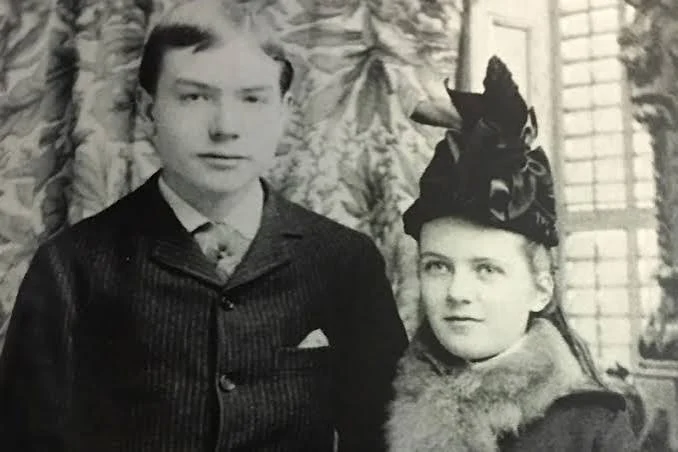 Bessie Dashiell and John Rockefeller
Bessie’s death had the clinician questioning the existing cancer treatments of his time: he had done everything according to the textbook, but was that enough? If that was the best existing solution, maybe it was time to find a new one.
He started a search for possible new treatments, looking for similar sarcoma cases in New York Hospital patients’ medical records. Digging through years of dusty archives, he found the “curious” case of Fred Stein, a German immigrant who had an inoperable neck sarcoma. Doctors were stunned when Stein’s round cell sarcoma magically vanished. But what especially caught Coley’s attention was that it happened after he was diagnosed with erysipelas, a skin infection caused by Streptococcus pyogenes. Coley decided to look for Stein, whom he eventually found in the ghettos of Manhattan, alive, well, and in fact with no trace of cancer.
How could that be possible?
Who in Their Right Mind Treats Cancer with Sepsis?
After months of research dedicated to solving this mysterious recovery, Coley came up with a hypothesis that the body’s response to an acute bacterial infection could somehow destroy tumor cells.
“Nature often gives us hints to her profoundest secrets, and it is possible that she has given us a hint which, if we will but follow, may lead us on to the solution of this difficult problem.”
– William Coley, 1891
To test this, in 1891, he began, perhaps, one of the craziest experiments in cancer history. His first patient was Zola, an Italian patient with drug addiction, who, as Coley describes, had a life-threatening tumor with “the size of a small hen’s egg” and… not really much to lose. Coley just plunged the syringe right into Zola’s tumor. Eventually, he developed a full-blown infection, and the tumor successfully disappeared in two weeks. And Zola, who had no hope of recovery, lived for 8 more years.
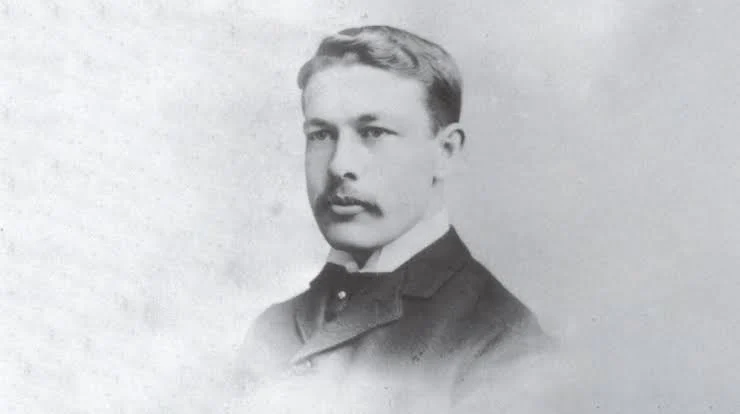 William B. Coley
Between 1891 and 1893, excited by Zola’s success, he attempted live injections on 12 patients; while 8 of his sarcoma patients responded positively, two unfortunately died from infection. Coley realized that injecting patients with live, unpredictable bacteria was far too dangerous. To make the treatment survivable, Coley partnered with the State Institute for the Study of Malignant Disease to develop a heat-killed, sterile vaccine pairing Streptococcus pyogenes with Serratia marcescens.
The formula became known as “Coley’s Toxins”.
Over the next four decades, Coley and his peers treated over 1,000 patients with this mixture. According to analyses of his archives, more than 500 of those patients experienced near-complete tumor regressions.
For patients who had inoperable, terminal bone and soft-tissue sarcomas, which at the time carried an absolute death sentence, Coley’s bizarre cocktail achieved a five-year survival rate of over 50%, with roughly 10% achieving complete, lifelong cures. Some of his patients went on to survive with zero trace of disease for over 20 years.
Even the famous Mayo Brothers, William and Charles, alongside leading orthopedic surgeons of the era, began replicating his trials, finding that using Coley’s Toxins as an addition to surgery gave better survival rates than surgery alone.
But success had another side.
Coley’s treatment was never a single, stable formula. Over his career, he experimented with more than a dozen preparations: some were too weak to cause any response, others were dangerously infectious. Even after he settled on heat-killed bacteria, the strength of the toxins varied between laboratories.
Results also depended on carefully adjusting the dose, injection site, frequency and duration until each patient developed a sustained fever. What appeared to be one treatment, in practice, was many different versions of it.
Also, many patients received the toxins after surgery or radiation, making it hard to understand which treatment caused the improvement. Coley had some extraordinary survivors, yes, but he could not prove why some patients recovered while others did not.
In 1963, long after his death, following new federal drug regulations, the FDA classified Coley’s toxins as a “new drug”, preventing their routine use without formal clinical testing. Two years later, the American Cancer Society placed them on its list of unproven cancer treatments.
Radiation Therapy Eclipsed Coley’s Method
Coley’s biggest problem was that he could not explain the mechanisms of his toxins. In addition, his experiments were not properly controlled or documented and did not meet the scientific standards of his era.
He faced a lot of peer criticism from the medical community, especially from James Ewing, who later became the president of Memorial Hospital, and at that time he was the chief pathologist and a strong pioneer of radiotherapy. After X-rays were discovered, their use in oncology emerged quickly. So Ewing, backed by a massive financial donation from copper magnate James Douglas, began reshaping the hospital’s focus toward radiation therapy.
To a medical establishment bound by the Hippocratic oath to do no harm, Coley’s methods felt like a paradox. “Infecting patients with raging sickness looked less like healing and more like clinical assault. Coley was playing a reckless game of Russian roulette with patients’ lives.”
Meanwhile, radiotherapy allowed them to quietly turn a dial, stepping back from the bedside with their ethics and their comfort, seemingly intact.
Radiation won the institutional war because it replaced the unpredictable responses of the immune system with clean, mathematical precision of a machine.
The Woman Who Refused to Bury Immunotherapy
When William Coley died in 1936, his work was destined to disappear with him. His toxins were already being forgotten while radiation and chemotherapy were taking the stage. But while preparing a biography of her father, Helen Coley Nauts began opening his files. At first, she just wanted to keep her father’s memory. Soon, it became a scientific investigation.
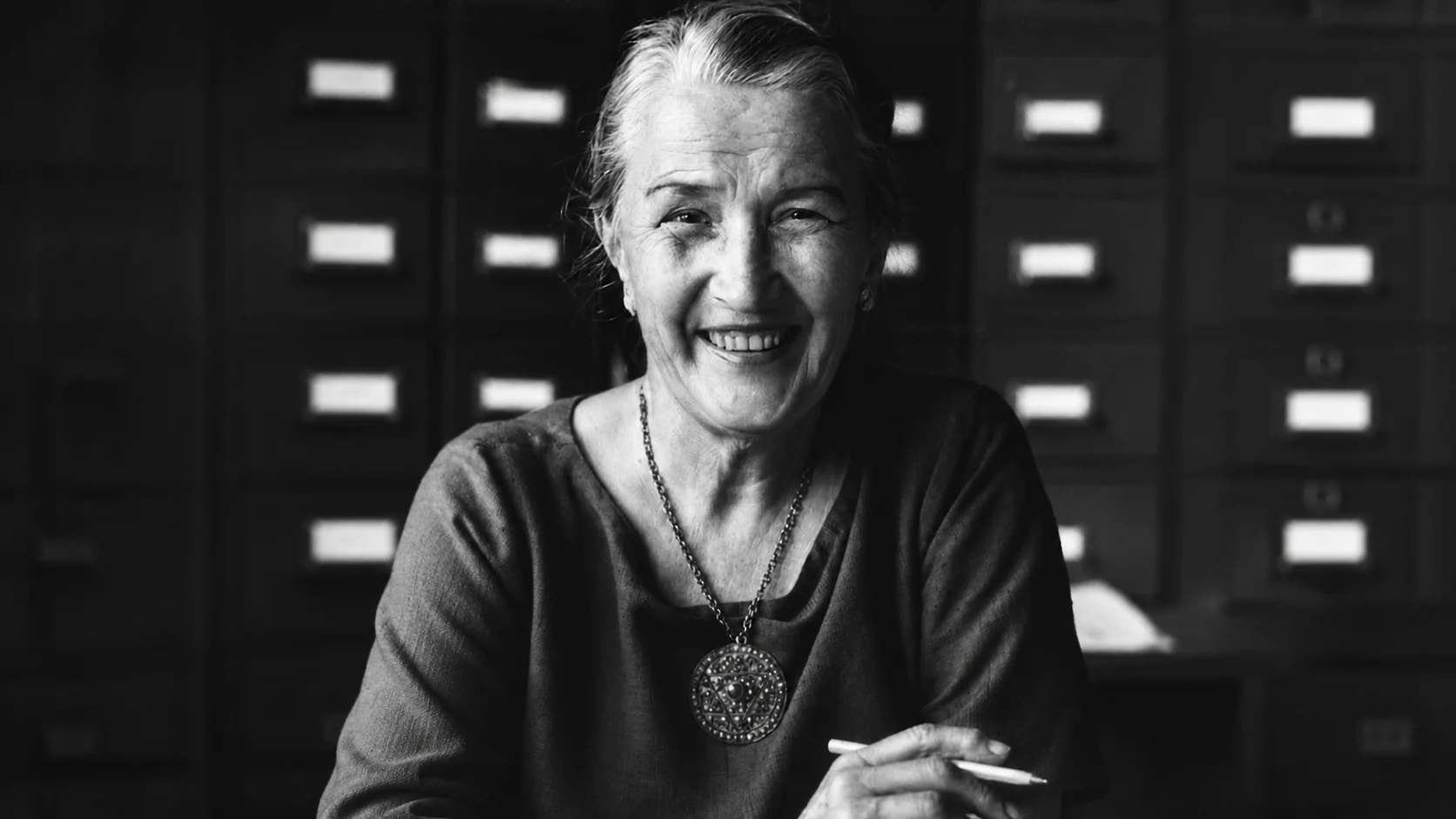 Helen Coley Nauts
She spent years studying his records, contacting physicians and tracking down patients who received the toxins decades earlier. The evidence was not perfect, but she just couldn’t ignore the obvious pattern: some patients had remarkable, long-lasting recoveries.
Helen had no medical degree and was entering a field dominated by men who often treated her as an outsider. Institutions refused to employ her and questioned her qualifications. When told that her lack of medical training made her unqualified, Helen replied like someone who spent years being underestimated:
“Actually, one can learn a lot in eight years without matriculating in a medical school.”
But Helen was her father’s daughter. When the establishment refused to open its doors, she built her own. In 1953, she founded the Cancer Research Institute in New York, a non-profit organization dedicated to immunotherapy.
William Coley planted the idea, but Helen was the one who kept it alive during the decades when almost nobody wanted it.
Today, the Cancer Research Institute is proving that scientific revolutions are not always carried forward by the people with the most impressive titles. Sometimes they survive because one person refuses to let a forgotten idea stay forgotten.
Last Laugh of the Madman
History has a habit of returning to ideas that science was not yet ready to understand.
Decades later, modern therapies are far more precise than a syringe filled with bacteria, but they follow the same basic principle Coley pursued more than a century ago: the immune system can be turned against cancer.
Turns out the man once accused of recklessness had been looking in the right direction all along.
The doctor of Manhattan can rest satisfied. The path he paved for cancer immunotherapy has stayed busy long after his death: generations of researchers are still chasing ideas just as crazy as his once seemed. And his legacy lives on in his name: the Dr. William B. Coley Award for Distinguished Research in Basic and Tumor Immunology, established in 1975. Since then, more than 85 scientists around the world have received it.
Written by Mariam Harutyunyan,
Deputy Managing Editor, OncoDaily
Associate Editor and Writer, OncoDaily Magazine
Read the full OncoDaily Magazine July Issue
You can also read: Kalshi is Betting on Trial Results and FDA Decisions Now, What’s Next?