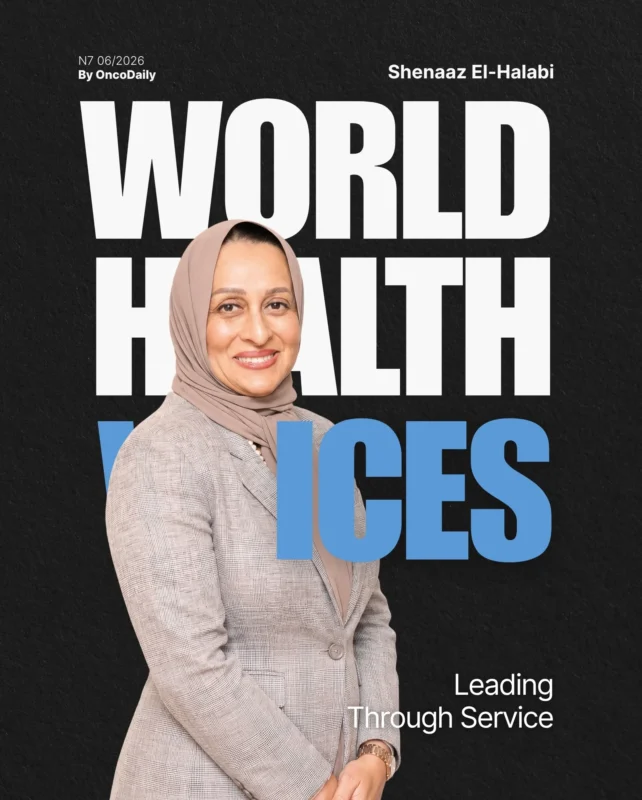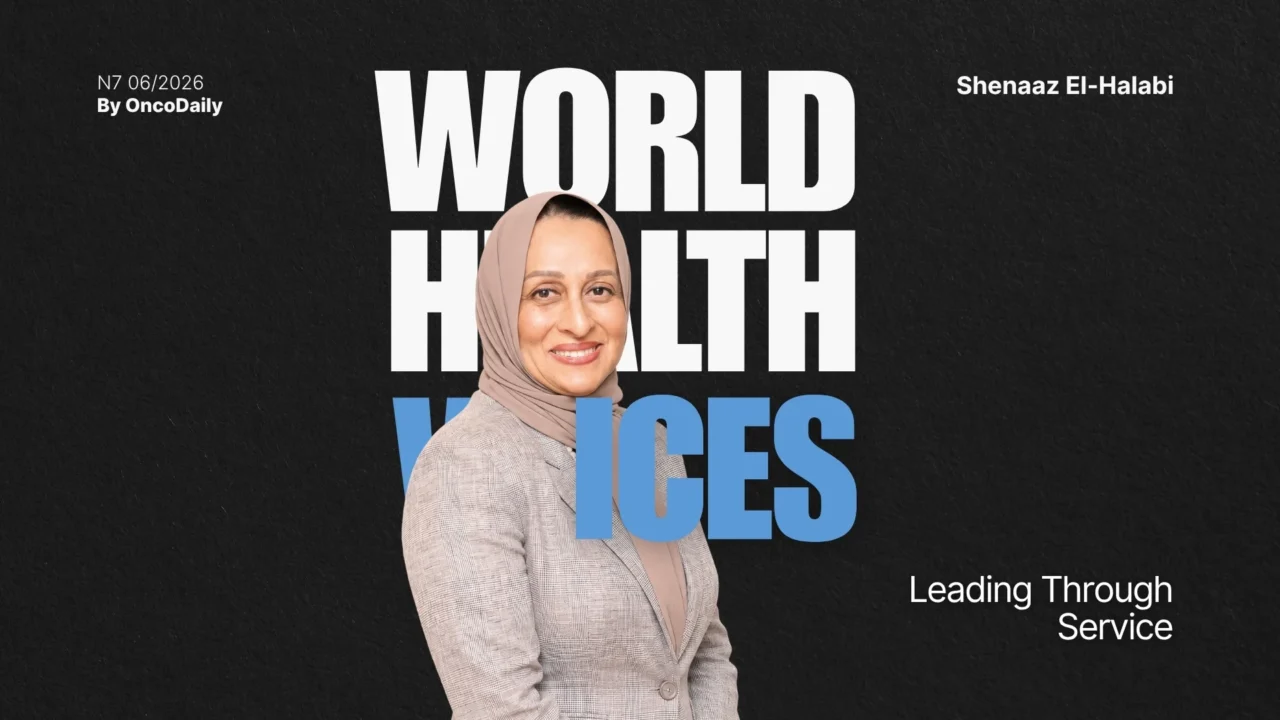
From a small village in Botswana to the center of global health decision-making
Some leaders build careers through careful planning.
Others seem to follow a compass guided by ideals.
For Shenaaz El-Halabi, service came first. Leadership followed.
Today, she serves as the World Health Organization Representative in South Africa. Before that, she spent years at the heart of the WHO, leading the Office of Director-General Dr. Tedros Adhanom Ghebreyesus during one of the most turbulent periods in modern global health, including the COVID-19 pandemic.
Yet when she describes herself, titles disappear.
“Shenaaz El-Halabi is just a simple human being who loves people, who loves nature,” she says. “I’m just an individual who loves to help others.”
It is a deceptively simple answer from someone whose career has spanned local communities, national government, and global diplomacy.
A Village Called Lobatse
El-Halabi’s story begins in Botswana.
“I was born and bred in Botswana,” she says. “I was born in a little village called Lobatse.”
She grew up as the eldest of four children in what she describes as a humble family.
The lessons that would define her leadership came not from institutions but from home.
Her mother, despite having limited formal education, believed deeply in education, women’s empowerment, equality, and human dignity.
“My mother was a very strong and firm believer in many things that we stand for today — human rights, women’s empowerment, gender equality, being able to speak out, and just doing good for humanity.”
Her father was a politician, creating an environment where discussion was encouraged and opinions were welcomed.
“We were never afraid of speaking out and saying things that we believed in.”
Those early experiences planted two ideas that would remain constant throughout her life: service and responsibility.
Today, she sees the same values reflected in her own family. She is the mother of three children—two daughters who became physicians and a son studying architecture.
“I always wanted to give them the space to choose what they wanted to do and be who they are.”
Learning Through Action
As a student, Shenaaz was curious.
“I always wanted to be the best in class.”
But her ambition was never focused solely on personal achievement.
Looking back, she believes one of her greatest gifts was the ability to see the bigger picture.
“I’ve always been a big-picture person,” she says. “Even when I was studying, I knew one day I was going to serve a much bigger community than the little town where I grew up.”
She attended a public school and never saw herself as different from anyone else.
Although she was a day student, she joined boarding students during tea breaks, queued for bread and tea like everyone else, and attended evening study sessions that she was not required to attend.
“I would come for the night classes and prepare myself for the next day.”
Responsibility came naturally.
She became a prefect and often found herself looking after others.
That instinct extended beyond school.
One story remains vivid in her memory.
She once encountered travelers stranded near her community because of vehicle trouble. Without hesitation, she invited them home.
“My mother was shocked,” she laughs.
Yet for Shenaaz El-Halabi, helping strangers felt entirely natural.
“It was always about wanting to care and help others.”
The Spirit of Botho
To understand El-Halabi, one must understand a uniquely Botswana concept: Botho.
The philosophy is difficult to translate into a single word. It encompasses humanity, dignity, compassion, humility, and respect for others.
“Serving others with humility and respect for persons,” she explains. “Recognizing that we are all individuals irrespective of our color, creed, nationality, or race.”
She believes the principle remains deeply embedded in Botswana society.
“If you go to Botswana, you will never be stranded,” she says.
A stranger asking for water will be welcomed.
A visitor knocking on a door will likely be invited inside.
“There is always a willingness to help.”
For Shenaaz El-Halabi, Botho is not simply a cultural tradition.
It is a leadership philosophy.
“Everything I do, I don’t expect anything in return,” she says. “I’m doing it for the love of humanity.”
Why Public Health?
Her journey into health was personal.
As a child, she experienced measles.
The illness left a lasting impression.
“I wanted to make sure people were immunized against vaccine-preventable diseases.”
That conviction eventually drew her toward public health.
After earning advanced training, including studies at Boston University, she joined Botswana’s Ministry of Health and spent nearly twenty-five years there.
Her career progressed steadily through multiple leadership positions, including Director of Public Health, Deputy Permanent Secretary, and ultimately Permanent Secretary—the highest-ranking civil servant within the ministry.
Throughout those years, Botswana confronted major health challenges: HIV/AIDS, tuberculosis, malaria, cholera outbreaks, H1N1 influenza, and many other public health threats.
The experience shaped her understanding of health systems.
It also reinforced her belief that prevention remains one of healthcare’s most powerful tools.
“I have always believed strongly in prevention and health promotion.”
The Unexpected Call
Despite her achievements, she never imagined leaving Botswana’s civil service.
Then, in 2017, her phone rang.
Dr. Tedros Adhanom Ghebreyesus had recently become the first African elected as Director-General of the World Health Organization.
For many across the continent, his election represented a historic moment.
Soon afterward, Shenaaz El-Halabi received an unexpected offer.
“To this day, I don’t really know why,” she says with characteristic humility.
Perhaps he had seen her interventions during regional meetings. Perhaps colleagues had recommended her. Perhaps it was her leadership within Commonwealth health initiatives and Sustainable Development Goal working groups.
Whatever the reason, she was invited to join the WHO and lead the Director-General’s office.
“I was pleasantly surprised,” she recalls.
In fact, another prestigious opportunity had arrived only days earlier.
“Two offers in one month from very reputable institutions.”
Yet the decision came quickly.
“I felt I had reached a stage where it was important to create opportunities for others as well,” she says.
The possibility of contributing to global health at the highest level proved irresistible.
“An ordinary girl from Botswana being given this opportunity.”
She accepted.
On November 30, 2017, she left Botswana’s civil service.
The following day, she became a United Nations civil servant.
At the Center of Global Health
Nothing fully prepared her for what came next.
Years in government had already taught her how to handle pressure.
Long nights.
Early mornings.
Complex crises.
Large workforces.
National emergencies.
But global health presented a different scale entirely.
Then came COVID-19.
“Never did I understand the magnitude until I went to the World Health Organization.”
Suddenly, health emergencies were no longer national challenges.
They were global.
The stakes were measured in millions of lives.
The complexity was unprecedented.
Yet the team and the leadership made the challenge manageable.
Speaking about Dr. Tedros, her admiration is evident.
“He’s a great leader. He’s very smart, very hardworking, and very committed.”
What impressed her most was not only his vision but his willingness to work alongside his team through every challenge.
“Seeing someone work equally hard made it easier for all of us.”
The experience also gave her a front-row seat to the realities of diplomacy, multilateralism, negotiation, and international cooperation.
“The importance of global health and multilateralism became very clear.”
A World That Needs Cooperation
Today, as debates continue about the future of international institutions, Shenaaz El-Halabi remains convinced that global cooperation is indispensable.
“No country is an island on its own.”
Health threats cross borders.
Pandemics cross borders.
Knowledge crosses borders.
“Diseases know no borders, and we are all in one global village.”
That belief shapes her optimism about the future.
While political disagreements may emerge, she believes countries ultimately recognize their mutual dependence.
“We need one another.”
Especially when preparing for future pandemics and addressing global health security challenges.
“There are strengths on all sides, and hopefully those strengths can continue to come together.”
Mentorship and Lifelong Learning
One surprising detail about Shenaaz El-Halabi is that, despite decades of leadership experience, she still works with a coach.
“I still have a coach,” she says.
“You never stop learning.”
Her mentors include her parents, family members, colleagues, friends, and health professionals she encounters throughout life.
But she also believes learning happens everywhere.
“I’m always learning every day from every single person.”
That openness may explain why she continues to evolve despite already reaching the highest levels of global health leadership.
Listening as Leadership
Asked what advice she would leave for future leaders, Shenaaz returns to a simple principle.
“Being yourself,” she says.
And then another.
“Being able to listen.”
Not only to supporters.
Not only to people who agree.
But especially to those who don’t.
“Listen even to voices that you don’t agree with.”
For her, listening is not merely a communication skill.
It is a leadership responsibility.
And perhaps that philosophy explains how a young girl from Lobatse, shaped by Botho, humility, and service, eventually found herself helping guide the world’s largest public health organization through one of the defining crises of our time.
Because leadership, in her view, begins with something remarkably simple:
“I just love helping others.”
Interview by Gevorg Tamamyan, Editor-in-Chief of OncoDaily and World Health Voices