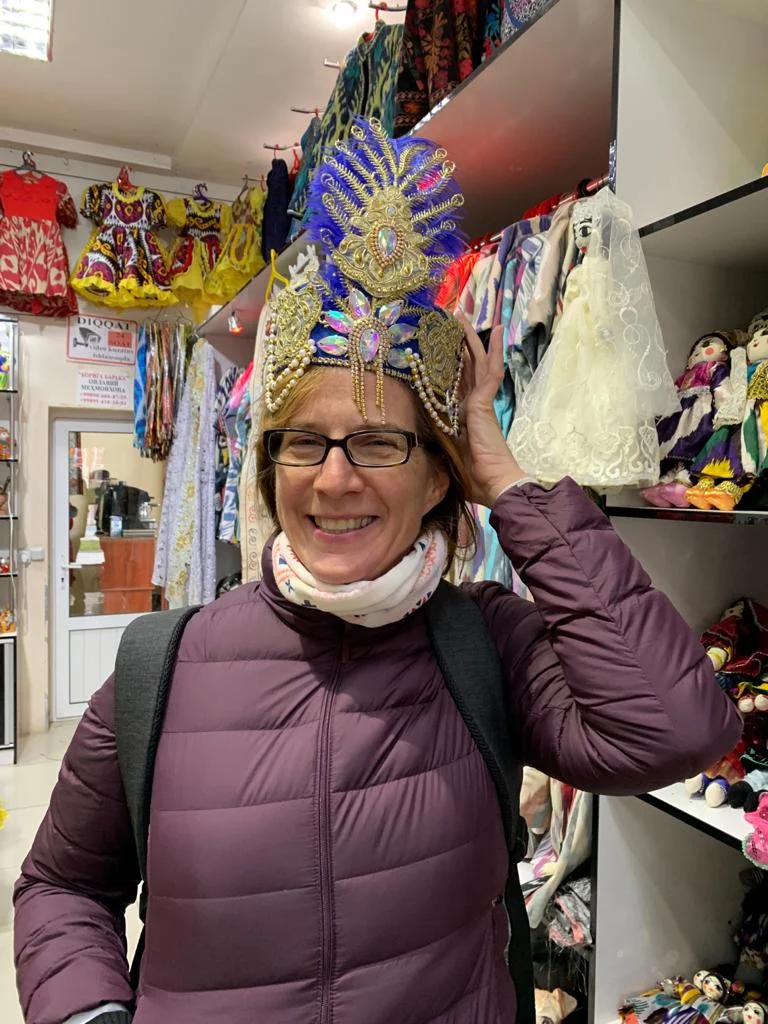
From genetic epidemiology to global cancer control, her career has been guided by one question: what will actually make a difference?
Cancer Before a Career
Severe Disease entered Marilys Corbex’s life before she could fully understand what it meant.
She was three years old when her father became ill. From then on, hospitals became part of the rhythm of her childhood.
“My dad was sick but never diagnosed, I understood much later (after his death when I was 20) that it must have been a very rare disease, and I spent at least one month every year with him in hospital,” she recalls. “For me, there was no question that I would do something related to health.”
But she did not initially want to become a doctor.
Her father had a disease that physicians struggled to diagnose. Medicine, as she experienced it, did not have the answer.
“I did not want to do medicine because medicine was not curing my dad,” she says. “I wanted to do research.”
She studied biology, then human genetics, before moving to Paris for a master’s degree and PhD in genetic epidemiology.
It was the beginning of a career in science.
But it would not remain confined to a laboratory.
Tunisia and the Discovery of Purpose
The first major turn came through Tunisia.
At the time, her boyfriend, a veterinarian, was required to complete military service in France. As an alternative, he could undertake a period of cooperation in another country.
“We were all quite anti-military,” Corbex says. “He had an opportunity to go to Tunisia, and I pushed him a lot because I wanted to go too. Once he said ‘I could go to Tunisia,’ I said ‘Yes, let’s go.’”
She found a post doc position in Paris with some work to do in Tunisia, where she managed to spend most of her time. But the greater transformation was taking place outside the research itself.
“That is where I really fell in love with the country and with the fact of helping people,” she says. “I felt that I could be much more useful there than in a research laboratory in France.”
It was also where she became interested in the World Health Organization.
She was drawn to the possibility of taking science beyond academic publication—to ministries, health systems and populations.
Then she saw an opening in genetic epidemiology at the International Agency for Research on Cancer.
She applied because IARC was part of WHO.
In 2001, she joined IARC as staff scientist.
From Epidemiology to Cancer Control
At IARC, Marilys Corbex entered the Genetic Epidemiology Group. Her formal role was highly specialized, but her supervisor allowed her to work more broadly on cancer epidemiology and risk factors.
She established a large multicountry case-control study on nasopharyngeal carcinoma, recruiting patients and controls across North Africa and Southeast Asia.
The choice of disease was partly scientific.
It was also romantic.
“I had the choice of working on nasopharyngeal carcinoma, breast cancer and some other cancers,” she says. “Nasopharyngeal carcinoma is rare almost everywhere except North Africa, Greenland and Southeast Asia. For people who like to travel and discover very different cultures, it seemed like a perfect choice.”
The study brought together collaborators in Morocco, Algeria, Tunisia, China, Indonesia and Malaysia. It examined genetic factors, diet and environmental exposures.
The team identified associations between nasopharyngeal carcinoma and certain traditional preserved foods as well as other non-genetic risk factors.
Scientifically, the work was productive.
But Marilys began confronting a problem that would redirect her career.
“I found out that all my research would probably not be translated into action on the ground,” she says. “I became a little frustrated.”
At the same time, she began helping collaborators with questions far beyond the original research protocol.
In Malaysia, she became involved in palliative care and early detection. In Morocco and Tunisia, she supported cancer registries and projects focused on the earlier detection of breast and nasopharyngeal cancers.
“That is when I became really interested in cancer control,” she says.
She was no longer satisfied with identifying risk.
She wanted to change what happened after the evidence had been produced.
A Career Across Regions
After five years at IARC, Marilys Corbex moved to the WHO Regional Office for the Eastern Mediterranean in Cairo.
She spent two years there, then 3 years as consultant with USAID on breast cancer programs in Egypt, Morocco and the broader region, continuing also to work with Malaysia independently.
Then came the Arab Spring. Projects became uncertain. At the same time, her mother became ill.
Marilys returned to Europe and took a position at the Institute of Tropical Medicine in Belgium, initiating project on breast and cervical cancer in a maternal and reproductive health research unit.
When her mother recovered and another WHO opportunity appeared, she accepted a one-year position in Geneva in 2015.
While she was there, Gauden Galea, then leading work on noncommunicable diseases at the WHO Regional Office for Europe, approached her.
He said, ‘I want you in EURO,’” she remembers.
She joined the European office and remained there for ten years building a “cancer team”.
Today, she is based again in Geneva, while much of her work continues to support countries in the European region.
Her expertise combines statistics, cancer epidemiology, cancer registration, screening, early diagnosis, palliative care and health-system organization.
“Genetic epidemiology was good because I learned a lot of statistics—really a lot,” she says. “At the beginning, it is for the statistics that collaborators asked my help in all sort of projects, including on palliative care. Now when it comes to data, indicators and statistics, I am the person.”
But ask Marilys Corbex what matters most in her work, and the answer is not statistics.
It is people.
Empowering the Right People
“It is really about helping,” she says. “You go to a country, you understand the local problems, and with your expertise you can help them by giving answers and clarity.”
She remembers one recent visit when a female deputy minister greeted her with an embrace.
“She took me in her arms and said, ‘I’m so happy you came.’ That was really nice.”
The value of a WHO mission is not always that an external expert arrives with an entirely new solution.
Sometime some people inside the country already understand what needs to be done. They have first hand experience. They know the system. But they are isolated and may lack the authority to overcome resistance.
“Often, there are people in the country who know what they are speaking about, but they are very alone,” she says.
“When you come as a WHO expert and say the same thing—and add evidence and details—it helps them convince the people they have been fighting with. In some case you manage to empowered the right people to drive the policies.”
That, for Marilys, is where WHO can be at its best.
“Sometimes it works,” she says. “Sometimes it doesn’t.”
In Kazakhstan, it worked.
A Mission That Changed a Policy
When Marilys Corbex and her colleagues arrived in Kazakhstan, they found a national system screening people for numerous types of cancer.
Some programs were evidence-based. Others were not.
Significant resources were being directed toward screening methods that had never been shown to reduce mortality. Meanwhile, evidence-based programs—particularly cervical cancer screening—had inadequate coverage.
The WHO team’s recommendation was direct.
“Stop the screening that does not make any difference,” Marilys told them. “Focus your resources primarily on cervical cancer and also breast.”
By the final day of the mission, officials had made a decision.
“They said, ‘Okay, we will do it,’” Marilys recalls.
Within months, the ineffective screening activities were stopped. Primary healthcare providers were instructed to redirect their efforts.
A year to a year and a half later, representatives from Kazakhstan presented the results at a conference.
Coverage for cervical and breast cancer screening had doubled.
“All the resources they were putting into cancer screening that did not make sense were put into cervical and breast cancer screening,” she says. “It was amazing to see how our visit had changed the policy.”
The result stayed with her because it was so easy.
Money was not simply added to the system. Existing resources were redirected toward an intervention more likely to save lives.
“That is the best part of the work,” she says. “When you feel that you make a difference.”
Sometimes, the evidence of that difference appears years later.
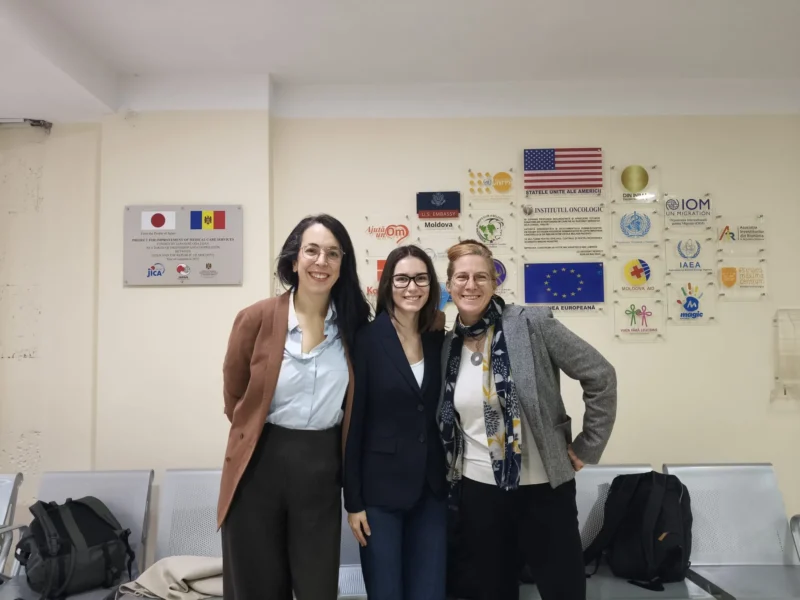
During a recent visit to Albania, officials remembered a WHO mission carried out a decade earlier.
“They told us, ‘Your mission ten years ago was a game changer for the country,’” she says. “I thought, ‘Really? Okay, great.’”
For an expert moving continuously between countries, reports and meetings, it can be difficult to know what remains after a mission ends.
Occasionally, a country tells you.
The Forces Against Evidence
The most difficult part of the work is not identifying what should be done.
It is confronting the forces that prevent it from happening.
“We make a lot of recommendations that are evidence-based,” Marilys says. “I am careful to make recommendations that are not costly and that very often save money. And then you realize that countries do not implement them.”
Why?
“Because, in fact, we are fighting vested interests.”
Her colleagues working on alcohol policy confront powerful commercial interests. Cancer control faces similar pressures.
Marilys Corbex has seen countries spend heavily on drugs with limited clinical benefit while neglecting cheaper and more effective interventions. She has seen health systems encouraged to purchase expensive screening tests and additional screening machines even when the more urgent problem is that patients presenting with large, clinically detectable tumors are not taken care of.
“You may conclude that a country needs one or two more mammography machines,” she says. “But they buy twenty because there are vested interests.”
The imbalance in influence is enormous.
“As WHO, we may come once every two to ten years and spend one week in the country,” she says. “The oncologists tell us that the companies are in their wards every day or every other day. The fight is not the same.”
Marilys Corbex also speaks about “emotional epidemiology”: the tendency to support interventions that look modern or emotionally compelling rather than those best supported by evidence.
But emotional arguments can sometimes be corrected with data.
Vested interests are harder.
A System That Has Changed
Marilys Corbex is careful not to reduce the issue to a story of good people and bad companies.
“When I speak about this, sometimes I feel as though I sound like a conspiracy theorist,” she says. “It is not that companies are full of villains. It is a system in which we are all trapped.”
Over recent decades, she argues, the structure and incentives of many companies have changed.
“If thirty or forty years ago the first aim was to make medicines that worked, these companies have now gone through financialization,” she says. “They have to make as much money as possible. The people making the decisions are not doctors or scientists. Their objectives reflect exclusively what the shareholders want.”
Innovation remains essential. New medicines continue to transform outcomes. But the price paid for certain advances can create enormous opportunity costs elsewhere.
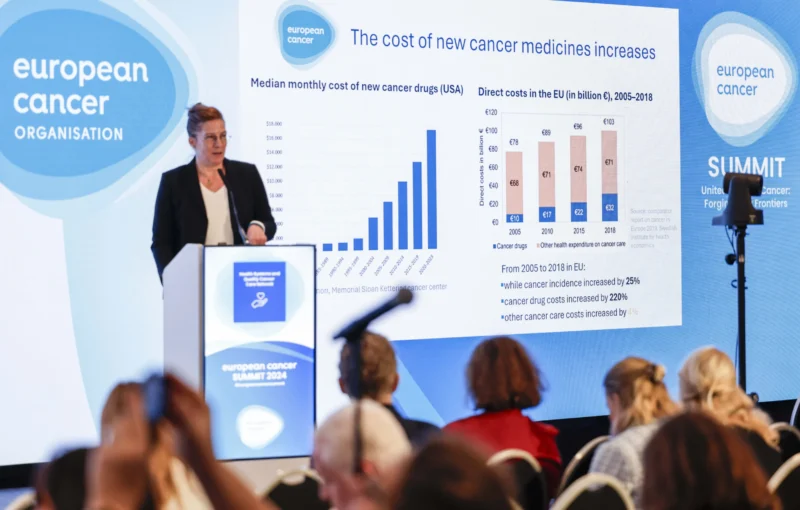
Marilys points to European data showing that while cancer incidence increased by approximately 25 percent over 13 years, spending on cancer drugs rose by roughly 220%. Other cancer-care costs increased by less than 5%.
“The burden of cancer increased,” she says, “but apart from the drug budget, which became huge, nothing else increased.”
Hospitals, nursing, navigation, radiotherapy and supportive care must compete for what remains and compared to the burden they actually decrease.
“The money given to cancer drugs, which have become crazily expensive, is money that does not go anywhere else,” she says.
At the same time, access to basic services is deteriorating in many parts of Europe.
“I used to live in a country (Belgium) where you could get a hospital appointment in two weeks,” she says. “Now it can take more than nine months… 3-6 months if you go private, 6-12 months in the public sector.”
Two Europes, Different Challenges
There is no single European cancer reality.
The countries of the European Union and those in the eastern part of the WHO European Region face different challenges.
“WHO do not do the same thing in the EU and in the eastern part of the region,” Marilys says. “They are really two different worlds.”
Within the European Union, she believes greater attention must be paid to commercial influence, health-services research and the condition of the healthcare workforce.
“We need to put more funding back into health-system and organizational research,” she says. “And we need to make the job of nurses and public doctors appealing again.”
In many public hospitals, nursing has become poorly paid, exhausting work performed by too few people. Physicians face similar pressures.
“You are badly paid, your team is severely under-staffed, and you have to work countless hours,” she says.
Eastern European and Central Asian systems carry a different mixture of strengths and weaknesses.
Some countries retained elements of their Soviet-era public health infrastructure. Others rapidly privatized services and dismantled much of what had existed before.
“The countries that kept more of the old system sometimes manage better and are more cost-efficient,” Marilys Corbex says. “They may be poorer, so the final result is not necessarily good, but they are definitively more cost-efficient than the one relying on private medicine and public-private partnerships.”
At the same time, outdated practices remain, including screening populations without sufficient evidence that the programs improve health outcomes.
The region also needs more participation from civil society and frontline professionals.
“It is still too top-down,” she says. “Decisions are made at the Ministry of Health and then imposed on primary and secondary care without knowing whether they are ready to absorb it or whether they think it is a good idea.”
Her prescription is simple.
“Listen more to your patients, your doctors and your nurses. Let NGOs flourish.”
What Makes WHO Strong
The World Health Organization itself is facing questions of trust, funding and legitimacy.
Marilys Corbex believes public perceptions of WHO are often shaped by domestic politics as much as by the organization’s actual work.
“In some countries, WHO is very badly perceived. In others, not at all,” she says. “How a country perceives WHO is closely linked to its internal politics.”
That does not mean the organization cannot improve.
WHO operates with a relatively small budget, and most of its financing is earmarked by donors for specific programs.
“We have very little flexible funding to do what we think is best. With donor funding, we have to follow the donor’s agenda.”
Different donors bring different priorities. Some favor technological solutions. Others focus on particular diseases or interventions.
The result is an organization expected to lead global health while possessing limited freedom to decide where its resources should go.
“What makes WHO strong is its advanced expertise in certain areas—expertise that no single country can have across everything,” she says.
One country may have an exceptional screening expert. Another may lead in palliative care. Another may have unique experience in quality improvement.
Bringing those people together creates a resource larger than any single national system.
The solution may be a more geographically distributed model of expertise.
“We could have hubs of expertise located in countries (i.e. not in Geneva),” Marilys Corbex says. “Now that everyone can remain connected, we do not all need to be in the same office.”
Ideally, more of those centers would be based in lower-income countries.
But those countries are less able to provide the infrastructure and funding that often accompany such arrangements, they do not offer fancy sustainably-funded building like Denmark or Switzerland.
“We are very dependent on the money,” she says. “That is the reality.”
On the Side of the People
Asked what WHO should prioritize during the coming years, Marilys first returns to commercial determinants.
“We should be stronger on commercial determinants,” she says. “There are not many other organizations that can be strong about it.”
Taking that position would send a broader message about WHO’s identity.
“It would show where WHO stands,” she says. “It stands on the side of the people.”
That matters at a moment when many citizens feel that international institutions serve politicians, corporations or wealthy elites rather than ordinary people.
Showing that WHO is prepared to confront forces that undermine health, Marilys Corbex believes, could help rebuild trust.
Her next priorities are cancer, palliative care and truly patient-centered health systems.
“Palliative care is a very neglected aspect,” she says. “And it is not only for cancer. It is needed across many diseases.”
Palliative care is part of a larger principle: treating the person rather than only the disease.
The language of personalized medicine in oncology has largely come to mean treatment tailored to the molecular characteristics of a tumor.
But patients initially heard something else.
“When we began speaking about personalized medicine, it was personalized for your genome,” Marilys Corbex says. “Some people understood, ‘Finally, they will take my person into account—my social life, my family, whether I have money, whether I have time.’”
True personalization must consider all of those realities.
“We need to focus on the needs of the patient and not only the needs of the tumor,” she says.
That means listening to people with lived experience and using their knowledge to redesign care.
It can also improve outcomes.
“When you focus on what the patient needs, you introduce palliative care earlier. You do not always treat aggressively, and sometimes the patient can actually live longer.”
A holistic approach is not the opposite of effective oncology.
Sometimes, it is more effective oncology.
Mentors and Onco-Diplomacy
Two people played particularly important roles in shaping Marilys Corbex’s career.
The first was Gauden Galea.
“He is the one who made me come to WHO Europe,” she says.
A physician and public health specialist from Malta, Galea worked across the Pacific and Europe and later served as WHO Representative in China during the COVID-19 crisis.
“He was, and still is, one of my important mentors,” Corbex says.
The second was Joe Harford, who led the US National Cancer Institute’s international work.
What Marilys admired most was his belief in what he called onco-diplomacy.
“For him, it was all about onco-diplomacy,” she says.
Harford supported the Middle East Cancer Consortium, bringing Arab countries and Israel together around cancer registration and common goals. He also pursued cooperation involving countries whose political relationships were strained in other regions.
“It was about putting countries that were in real political tensions to work against cancer,” she says. “Putting enemies together against cancer.”
She fears that some of those meetings would be more difficult to organize today.
“I am not sure we could still do it. It is awful to say, but I am not sure.”
Yet the principle remains central to her work.
Cancer can become common ground.
Science can become diplomacy.
Health can create a table around which countries otherwise unwilling to speak may still sit.
Money, Meaning and Humility
For younger professionals, Marilys Corbex’s advice begins with a warning about money.
“Do not do this for money, and first, do not think that money will make you happy,” she says.
What creates happiness, in her experience, is the feeling that one’s work matters.
“What makes you happy is doing something that gives you a sense of accomplishment,” she says. “When you fight a disease like cancer, you feel that you are on the right path.”
The work may be difficult. The barriers may be political, commercial or institutional.
“But the fact that you are fighting for a good cause makes the difference,” she says.
A life organized only around wealth, status and impressing other people eventually becomes empty.
“To make money or achieve high status just to impress others is completely empty,” she says. “And extremely boring.”
Marilys does not describe herself as detached. Quite the opposite.
“I am always caught by things,” she says. “I am passionate. Sometimes I would like to be less passionate, less angry about things and more able to say ‘Whatever.’ But I am not like that.”
Her anger is not separate from her work. It is part of the reason she has continued doing it.
She becomes angry when evidence is ignored, when money is wasted, when patients receive interventions they do not need while being denied services they do, and when those already fighting for change inside a country are undermined.
But passion, she adds, must coexist with humility.
Modern culture—particularly social media—encourages people to continually announce their importance, success and expertise.
She finds the trend extremely annoying and even dangerous.
“Evidence shows that it makes people more and more narcissistic,” she says. “And narcissism does not make people happy according to experts.”
The more one learns, she believes, the more clearly one sees the limits of individual knowledge.
“We are all very limited in front of what we should do and what we could do,” she says. “That is why we need to be many and to work together.”
No individual can understand every aspect of cancer. No institution can solve every problem. No expert, however experienced, can succeed without other experts, health professionals, governments, patients and communities.
For someone whose career began in genetic epidemiology and expanded across continents, disciplines and health systems, the conclusion is remarkably simple.
“You are the best expert,” Marilys Corbex says, “only when you work with all the other experts.”
Interview by Gevorg Tamamyan, Editor-in-Chief of OncoDaily and World Health Voices