





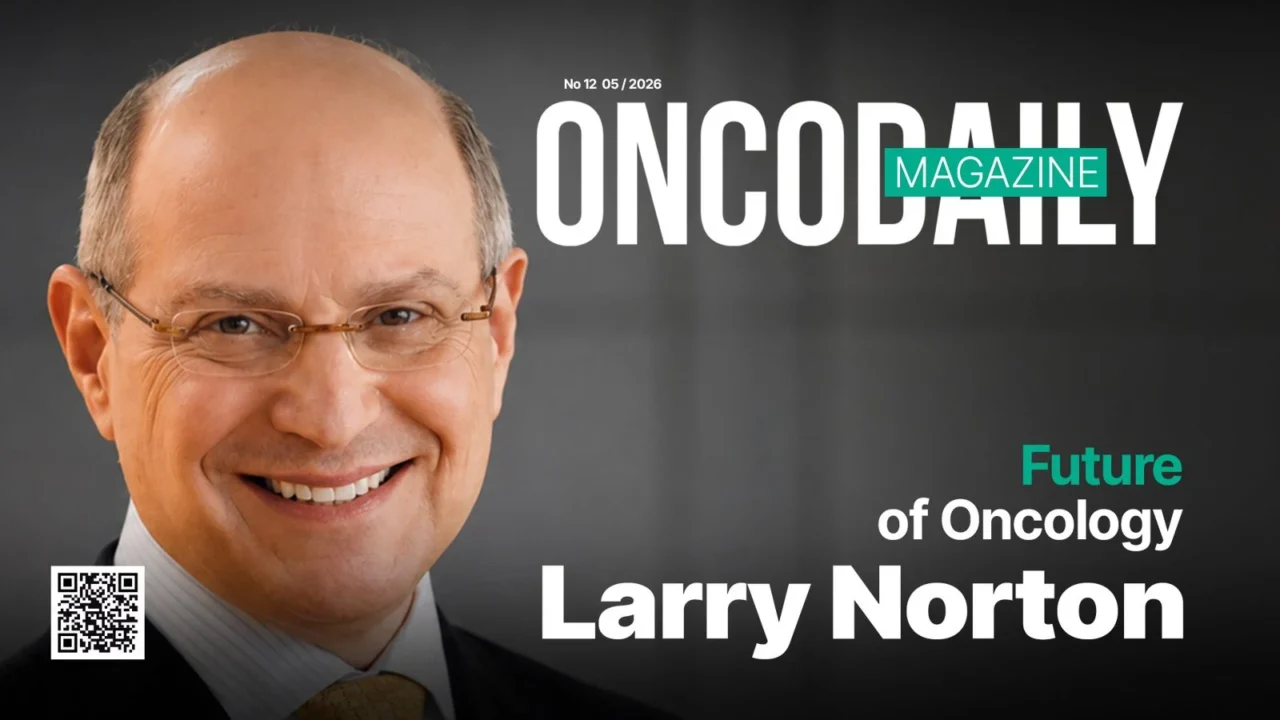
The title above, with which I have been challenged, is a daunting one. In the words of the immortal baseball player and unintentional humorist, Yogi Berra, making predictions is hard, especially about the future. But the state of the present does offer clues.
I have been involved in cancer research now for almost sixty years. I have played many diverse roles, but one constant is this question from the public: How are we doing? And in each of these years I have always answered that we are at an inflection point. Not only are we making progress, I say, but the rate of progress is increasing. This, of course, remains true at present. Yet, despite a few notable exceptions, most advanced non-hematological cancers remain lethal. Hence, the big question for those of us charged by society with changing that fact is not how we are doing, but how can we do better?
It is obvious that the same approaches that have brought us so far by increments small and large need to continue. Molecular characterization, precise anatomic and molecular imaging, immunologic and microenvironmental manipulation, molecularly targeted interventions and so many other avenues of advance will be profitable in the future as they have to the present.
But in these brief comments I would like to focus on three issues rarely discussed:
- One is our singular focus on killing cancer cells.
- Another is our addiction to understanding mechanism.
- The third concerns the design of clinical trials.
Of course, it makes sense that since it is the accumulation of cancer cells that make us ill, killing them is a good way forward. In fact, attention to cell-kill was codified in the 1960s by Howard Skipper and colleagues at the Southern Research Institute in Alabama and then presciently brought into clinical research and practice by Vincent DeVita and colleagues at the National Cancer Institute. This emphasis has been termed the log-kill hypothesis:
- killing all cancer cells is the goal;
- drugs that work in this regard kill a proportion of the cells present, not an absolute number;
- combinations are a way of dealing with heterogeneity in drug sensitivity. Essentially everything we now do in medical oncology flows therefrom.
But within this dogma there is a glaring enigma: Why proportional killing? Why do a fixed number of anticancer molecules not kill a fixed number of cancer cells, but, rather, affect its growth rate, turn that around from volume expansion toward regression?
This remains a puzzle, perhaps because it is not a topic of cellular biology but instead one of interactions between the multifarious components – cellular and non-cellular – in the complex structures we call tumors. Will spatial genomics and proteomics give us insights here? One has hopes, especially as we combine biology with geometric tools as esoteric as multi-dimensional network analysis. It is likely that this future melding of advanced biology and advanced mathematics will lean heavily on artificial intelligence, the transformative technology of our times, about which I have further comments below.
But there is another part of this story, one with immediate implications. This is the recognition that not all cancer cell divisions produce mitosis-committed progeny. Dormancy, senescence, and therapy-induced diapause-like states present huge impediments to any therapeutic strategy, no matter how sophisticated, that primarily targets mitosis. For example, let us take the case of a successful course of treatment that kills the vast bulk of cancer cells, but leaves pre-existing dormant cells behind, or even increases their absolute numbers by forcing cancer cells that would otherwise divide into quiescence.
These cells cannot be killed by the same therapies that left them behind or, even worse, produced them. Imagine further that such cells can awaken later and perhaps mutate during that mitotic awakening into more aggressive cells. Perhaps this why, on the positive side, prolonged “maintenance” treatments after initial cytoreduction prolong disease-free intervals, by killing such awakened cells as they divide.
But does such treatment drive even more cancer cells into diapause, increasing the volume of cells immune to current treatments and potentially mutating into ever more aggressive forms? If this is our current situation, were we to make major progress we must augment cell-kill by methods that keep dormant cells permanently non-mitotic. What role could immunotherapy be exercising in that regard now? And if it is accomplishing this to some degree, can such be improved? Or are there yet undiscovered means to this end in the future or oncology?
At present it seems that identifying residual small volumes of mitotically active disease in individuals by measuring circulating tumor (ct) DNA is promising in many respects. Accomplishing a ctDNA-free state is clearly associated with clinical benefit. But a ctDNA-free state does not guarantee cancer eradication since residual dormant cells that are not giving off DNA, and hence are now not detectable, may be a dominant source of lethal clones.
The future may give us tools, perhaps multi-modal AI models, to assess the presence and size of non-mitotic populations. Such diagnostic innovations may be required to develop new classes of anti-dormant cell interventions to add to our vast armamentarium that the log-kill hypothesis has already spawned.
Should the above hypothesis prove true, this area of research might be key to moving beyond improvements in progression-free survival toward cure, defined not by zero cancer cells but by a life free of cancer as cause of morbidity and mortality.
As mentioned above, artificial intelligence, AI, deep learning, will be even more important to interrogating cancer than at present, touching all aspects of our enterprise from imaging to pathology to circulating molecular diagnostics to drug design to clinical decision making. How to optimally utilize this technological revolution, however, may demand some philosophical introspection. Modern science largely seeks understanding, logical progressions from cause to effect that satisfy our need to fit phenomena into existing conceptual, deterministic frameworks. Forcing AI to give us solutions that “make sense” may be as if the creation of the internal combustion engine was used to attempt to make better horses rather than entirely new means of locomotion.
Truth may not be intuitive. It is possible, even likely, that AI will allow us to predict, manipulate, and control biological phenomena, including cancer, in the absence of causation models, as the mathematical theories of chaos have long anticipated. Cause and effect at the molecular and cellular levels could still be operant, but with so many components and with such complex interactions, and in so many dimensions, that understanding – in the historical sense – would be impossible. Yet the products of AI, “black box” though they may be, could be robust, reproducible, and utilitarian, and move us further in our quest to control cancer.
Whatever interventions we create in the future will need to be tested to establish their value and for whom they are valuable. It may be said that the single most important innovation in cancer research in modern times is not a thing but the development of the prospective randomized clinical trial. Yet we must recognize that clinical trial designs were born in an era pre-computer and even pre-calculator, when numerical manipulation was onerous.
We created our experimental methods around our analytic tools, but should our methods change as our tools evolve?
For example: Which is better, drug A or drug B? Currently we subject a given number of patients to A and usually an equal number to B in a randomized way and then calculate some central tendency of each group – say median progression-free interval – and compare that with a test of statistical significance (rejection of a null hypothesis). Such tests need to specify a variance about those parameters, and we want that variance to be as small as possible to increase the likelihood for finding one treatment better than the other if such truly exists.
To minimize these variances, we try to make the two groups as homogeneous as possible (except for the allocation to A or B). But consequently, the research groups, so strictly chosen, may bear little resemblance to the types of patients we need to treat in the real world, with their comorbidities and other individualities. Furthermore, while A might be better than B is average terms, some people who randomized to A might have done better had they received B.
The above scenario is to a considerable degree a result of our needs, in the early part of the 20th Century, to have analytic tools that we could handle computationally. In the future, multimodal AI models may bring our inferences down from the group level to the individual, and by digital twin control matching even eliminate our need for randomization.
Moreover, the net for cases could be cast over a whole population, even drawing the necessary data directly from standard electronic health records, dramatically reducing data management costs. And with federated AI systems we could incorporate anonymized data from cases from many different collections of records, even internationally, with raw data never leaving their home institution or country.
Which brings us to a final point, which is that for there to be any satisfying future of oncology it must be a global future.
As I said in my Presidential Address when I completed my term as President of ASCO in 2002, the relationship between oncologist and patient is as universal as that between parent and child. As the issues we face are universal, so must be their resolutions. Would any patient dying of cancer in one country reject a cure just because it was discovered in another?
Furthermore, AI with all its power thrives on heterogeneity. A germline mutation or environmental factor that is common in one part of the world and rare in others may lead to an observation of universal importance that would be lost were data from that part of the world left unexplored. And future success depends upon a vibrant workforce of investigators, which needs to be nourished all over the world.
Several cancers have been conquered, and all will someday succumb to science and compassion and hard work. Our job to make that someday come soon. This will happen by dedication, cooperation, and adequate funding, but also by creativity and the productive questioning of entrenched concepts and procedures. Predicting the future is hard, but realizing a bright future is unquestionable worth the effort.
Larry Norton, MD, FASCO, FAACR
Senior Vice-President, Memorial Sloan Kettering, New York