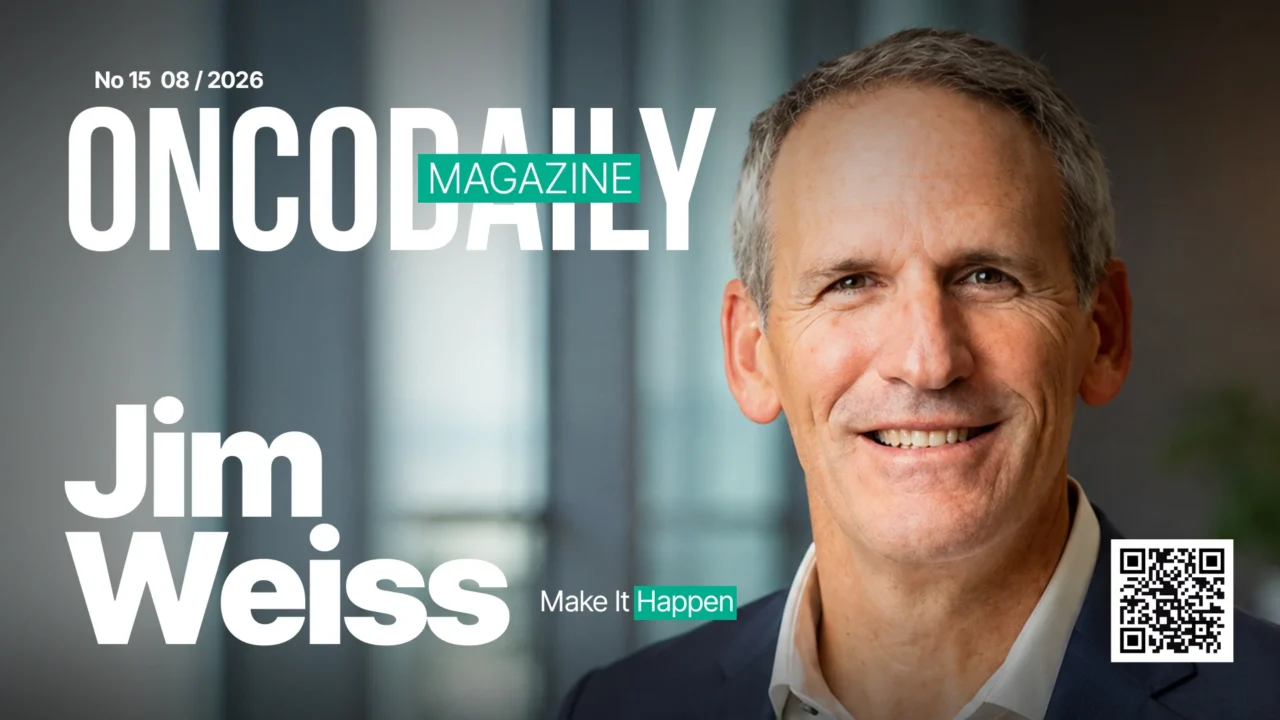
Twenty-five years after building what became Real Chemistry from the ground up, Jim Weiss reflects on mistakes well made, the loss that changed his purpose, the future of healthcare, and the one principle that has guided him through it all: do what you say you are going to do.
Twenty-five years ago, Jim Weiss started a company.
There was no grand blueprint for what it would become.
Today, Real Chemistry is a global organization with thousands of people working across multiple locations, at the intersection of healthcare, communications, data, technology and transformation.
How did it happen?
Weiss laughs.
“I don’t know.”
Then he offers perhaps the best description of his entrepreneurial journey.
“It was a series of mistakes well made.”
A Series of Mistakes Well Made
For Jim Weiss, Real Chemistry was never built according to a perfectly designed master plan.
“You kind of just fly and you go and you trip, and then you use those breakdowns to lead to the next breakthrough.”
The growth was organic.
A new client opened one door. A new employee brought another capability. Relationships multiplied.
“Every new hire taught us something new. Every new client taught us something new. And we learned from those things.”
At the center of it all was something much less complicated than strategy decks or financial models.
Relationships.
Jim had spent years on the client side before becoming an entrepreneur, building a network that followed him into his next chapter. Clients became friends. Colleagues became clients. Employees went elsewhere and eventually returned as partners.
Over time, the network became an ecosystem.
When he looks back, Jim reduces the success of Real Chemistry to three things.
“Really great people, really great clients, and the third important thing is partnering with those clients to create great work that ultimately impacts patients’ lives and caregivers’ lives.”
It sounds simple.
It rarely is.
A Firm I Would Hire
The name “Real Chemistry” came much later, but the philosophy was there from the beginning.
Weiss had spent years being the client.
That mattered.
“I used to say I want to have a firm that I would hire.”
He knew exactly what he disliked about the traditional client–agency relationship.
“I want them to be an extension of my team. I want to be treated like a colleague, not a vendor.”
That distinction shaped the company.
For Jim, communications could never be just a collection of tactics. To become truly valuable, a consultancy had to understand the business behind the communications.
“Our job is to know the client’s business better than they know it.”
And then stay long enough to matter.
Many Real Chemistry relationships have lasted a decade or even two.
The objective, he says, is to ultimately be on the same mission.
“To make the world a healthier place in some way and help impact patients’ lives.”
Jim Weiss had already witnessed what that could mean during his years at Genentech.
“We launched the first new cystic fibrosis drug in 30 years. We launched Herceptin for HER2-positive breast cancer, which changed the way we think about how to treat cancer across the board.”
Then came immunotherapies, antibody-drug conjugates, CAR-T therapies, and eventually mRNA vaccines.
Each breakthrough required science.
But science alone was not enough.
“You had to do that in partnership with the client. And so that’s Real Chemistry. You have to have real chemistry to do that well.”
Then cancer entered Jim’s life in a completely different way.
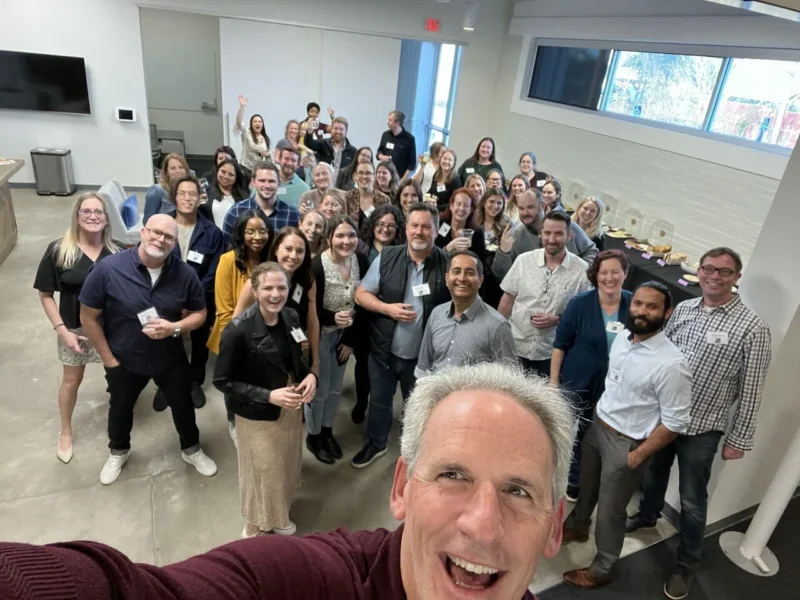
From Jim Weiss LinkedIn
When Cancer Became Personal
His wife became ill.
For months, there was uncertainty.
“We wanted to believe it was something digestive or something that could be treated. I think there was a good year of searching for that diagnosis.”
Eventually, they found the answer.
Small bowel cancer.
Stage IV.
“I think it completely shocked my wife. It was less so for me, but it’s still a shock when that happens.”
Jim knew cancer professionally.
He had spent decades communicating about medicines, patients, science and innovation.
He had also experienced cancer in his family before. His mother had developed lung cancer after decades of smoking.
But this was different.
“I went from somebody who was communicating in the world to experiencing it very real and fundamentally.”
He became a caregiver.
The experience eventually contributed to his decision to move from CEO into an active Founder and Chairman role at Real Chemistry.
More importantly, it changed his why.
He had spent his career asking how healthcare companies communicated.
Now he began asking a much more personal question.
“How are we really going to impact how healthcare gets administered, and how do patients and caregivers get the agency back to at least guide and control their own healthcare rather than having that imposed on them?”
That question became part of the motivation behind his podcast, Get Real with Jim Weiss.
And it changed how he saw the entire healthcare system.
Prevent the Event
For Jim Weiss, one of healthcare’s deepest problems is that it remains too reactive.
“We’re kind of more in reactive mode than we are in proactive mode.”
We wait for disease.
We diagnose it.
Then we treat it.
He believes the next transformation must begin earlier.
“We have to shift from a treatment-oriented healthcare system to one of prevention. We have to shift it.”
He calls the idea simply:
“Prevent the event.”
That requires much more than communication campaigns.
It requires molecular medicine, genetics, genomics, better diagnostics and earlier identification of risk.
“We have to use molecular medicine. We have to use early diagnosis. We have to use genetics and genomics to figure out how to treat disease.”
And patients can no longer be passive participants.
Communication, he argues, must become more open, and the patient voice must sit much closer to the center of decision-making.
Healthcare has already moved in that direction.
But not fast enough.
Follow the Data
One of the most important lessons Jim Weiss carried from Genentech into Real Chemistry was deceptively simple.
“Follow the data and you’ll get to the right outcome.”
He applied the same principle to communications.
For years, Real Chemistry used audience data, sentiment analysis and online behavior to understand not what people said they wanted, but what they actually did.
It made communication less dependent on instinct alone.
“We applied what the consumer market was applying, but in healthcare and pharma.”
Long before generative AI became part of almost every boardroom conversation, the company was already experimenting with machine learning and data-driven communications.
Today, AI is accelerating that work.
But Jim is wary of chasing every new trend simply because everyone else is doing it.
Take a Beat
If he were starting again today, there is one thing Jim Weiss would do differently.
“I would not overreact.”
He repeats it.
“I would not overreact.”
Entrepreneurship trains people to move quickly.
Sometimes too quickly.
“I was so active and reactive rather than contemplative.”
Experience has taught him something else.
“Take a beat.”
A competitor announces a new AI platform.
The natural instinct is to immediately respond.
To prove that you have one too.
To put something into the market before someone assumes you are behind.
Jim believes that instinct can be dangerous.
Instead, build something real.
Understand what it means.
Make sure it works.
Then talk about it.
“Real in Real Chemistry, or Get Real with Jim Weiss, has real resonance and meaning. If it’s not authentically real and sustainable, then it’s just smoke and mirrors.”
His favorite expression captures it even better.
“Vision without execution is hallucination.”
The precise origin of the quote may be debated.
The message is not.
“You’ve got to really do what you say.”
Mistakes will happen.
People will disappoint you.
Strategies will fail.
Clients will criticize you.
For Jim, the question is what happens next.
“When the client gives us feedback, we listen, we take it, and we improve.”
He smiles.
“We make mistakes really well.”
Just Start It
What advice would he give to somebody who wants to build a company today?
There is no complicated answer.
“Just start it.”
Then again:
“Just, just, just start it.”
Weiss remembers looking for reasons not to continue during the early years.
Building a company is hard.
Everyone has an opinion about what you should do.
His response?
“They can have a voice. They don’t get a vote.”
Listen.
Learn.
But ultimately, trust yourself.
“Go ahead. Trust your instincts and do it. But really do it. Don’t talk about it. Don’t think about it. Really do it.”
He has condensed that philosophy into the mantra he wants to carry into whatever comes next.
“Make it happen.”
And then the rule behind it:
“Do what you say you’re going to do.”
If you do that, Jim believes, you have already solved most of the problem.
Get Back on the Horse
One of the most important lessons of Weiss’s life came long before Genentech, Real Chemistry or healthcare.
It came at a horse show.
As a boy, Jim was involved in equestrian show jumping. He worked at a stable and eventually helped train horses.
At one competition, he lost.
And he was not happy about it.
“I was being a sore loser.”
His “horse-riding mom,” as he calls the woman who became a surrogate mother to him at the stable, came over.
Her message was direct.
“Buck up. Get on that horse. Go out in the ring. Stop crying.”
Lose.
Learn.
Get back on the horse.
For some reason, the moment stayed with him.
“Things can go wrong. You don’t have to be whiny and emotional about it. You can actually use it and then proceed.”
Decades later, life tested that philosophy in a way no horse show ever could.
His wife underwent roughly two and a half years of treatment after her diagnosis.
Then she died.
“She died in my arms. I looked in her eyes and saw that.”
Afterward, some people felt Jim returned to the world too quickly.
He saw it differently.
“What do you want me to do? Shut the door behind me and turn off the lights?”
He had lived through the diagnosis.
The treatments.
The caregiving.
The loss.
Now he wanted to live.
“I’ve been through this. I want to be in the world again.”
His wife had her own description of cancer.
She called it:
“A gift wrapped in barbed wire.”
The barbed wire was obvious.
But the gift, as she saw it, was that cancer woke her up to the world around her.
It pushed her to give back, including through her work with Patrick Dempsey’s organization.
For Jim Weiss, her death made one truth impossible to ignore.
“We don’t have a lot of time. We just don’t. We don’t have as much time as we think.”
So:
“You’ve got to get on with it.”
Science Needs Connection
Jim Weiss believes we are living through one of the most powerful scientific periods in human history.
But scientific progress still moves too slowly.
Part of the problem, he says, is fragmentation.
“There’s too many silos at work at their own purpose rather than collaboration.”
Cancer makes that challenge particularly visible.
There is no single cancer.
There are hundreds of diseases, increasingly defined by their molecular biology rather than simply the organ where they began.
That complexity is precisely why collaboration matters.
“We’ve never had more power.”
AI may become one of the tools that finally helps connect some of those silos – allowing knowledge to move faster and collaboration to happen more broadly.
For Jim Weiss, the lesson is the same one that built Real Chemistry.
“Collaboration, really working together, is what makes things go faster and better.”
The Connected Tissue of Oncology
Toward the end of our conversation, I turned the question toward ourselves.
What should OncoDaily do better?
Jim Weiss answered with another lesson from his mother.
“The moment you think you’ve arrived, it’s time to leave.”
Never become too satisfied with what has already been built.
Never assume the current model is the final one.
“We know we have to keep getting better.”
His advice went beyond media.
There are hundreds of oncology meetings, scientific societies, researchers, clinicians, companies, patient organizations, funders and publications.
But who is connecting them?
“How are they connecting all the intelligence?”
That, he believes, is the opportunity.
“OncoDaily should be existing to create the connective tissue of the oncology community -from patients to researchers to funders to all the different elements.”
Because communication, in Jim Weiss’s view, is not something that follows leadership.
It is leadership.
“Communications is leadership. Leadership is communications.”
If people cannot understand what you are doing, they cannot connect to it.
And if they cannot connect, collaboration becomes impossible.
The challenge for a platform such as OncoDaily, he says, is therefore not only to publish more information.
It is to connect the information and the people behind it.
Don’t Hire Yourself
After twenty-five years of building teams, Jim Weiss says one of the hardest parts of leadership remains choosing the right people.
The biggest temptation?
Hiring people who look and think like you.
“It’s really the hardest thing to do – not hire a bunch of people that are just like you.”
People naturally enjoy being surrounded by those who reinforce their worldview.
But that can become dangerous.
“You’ve got to have a diversity of thought and perspective.”
The best people around the table are sometimes the ones who make the conversation less comfortable.
“If you don’t surround yourself with people who challenge you, then you’re going to miss out.”
Jim Weiss found some of that value working with private equity partners who did not necessarily know his industry as deeply as he did.
What they could do was ask difficult questions.
“They asked good, hard questions.”
That forced him to think.
And sometimes that is exactly what a leader needs.
“Having people around you that are not yes people is really important.”
His description of the ideal colleague is memorable.
“Sometimes somebody that tells you you’re not wearing any clothes is the best person to have on your team.”
Seek Out Mentors. Be a Mentor.
Jim Weiss can name many people who shaped him.
His mother.
His surrogate mother from the equestrian world.
The strong women who became bosses, clients and colleagues throughout his early career.
The leaders at Genentech who taught him to follow the data.
Mentorship, he believes, should never be treated as something that ends once a person becomes successful.
“Seek out mentors and be a mentor.”
Then pay it forward.
“Be a coach, be a mentor, create a culture of that.”
Perhaps the best compliment Jim receives today is when someone tells him he helped them see something in themselves that they had not seen before.
That, ultimately, may be one of the purest definitions of leadership.
Helping another person recognize what they are capable of becoming.
***
Twenty-five years after he started, Jim Weiss has built much more than a company.
But when you strip away the thousands of employees, the clients, the technologies, the acquisitions and the growth, his philosophy remains remarkably simple.
Make mistakes.
Learn from them.
Take criticism.
Follow the data.
Surround yourself with people who challenge you.
Don’t overreact.
Take a beat.
Get back on the horse.
And remember that time is shorter than we think.
Then:
“Make it happen.”
Because in business, in healthcare and perhaps in life, doing what you say you are going to do may still be the most powerful strategy of all.
Interview by Gevorg Tamamyan, Editor-in-Chief of OncoDaily and World Health Voices
OncoDaily Magazine, August Issue
Read Next in the August Issue of OncoDaily Magazine: “Christopher Jackson and the Question Oncology Cannot Avoid: Who Is Progress Really For?”