There are interviews you do.
There are interviews you remember.
And then there are interviews that change something inside you.
Today, sitting across from Her Excellency Fatima Maada Bio, First Lady of Sierra Leone, I had one of those.
At some point, I almost wanted to stop.
Not because I wanted the interview to end.
Because the room, the building, New York itself had become too heavy.
She was speaking about children. About girls. About what happens when childhood is taken away before a child even understands what is happening.
And she was not speaking as a politician.
She was speaking as one of those girls.
“I needed to survive.”
As a child in Sierra Leone, she was told that a man would become her husband.
She had never had a boyfriend. She barely understood what a relationship was.
Suddenly, an adult man was being presented to her as her future.
So she rebelled. She cut her hair short.
She started wearing pants, forbidden in her family.
She dressed in ways that would make her unacceptable to the system trying to decide her life for her.
“I became very rebellious,” she said.
Because rebellion was survival…
Sitting in front of me decades later was no longer that frightened girl.
There was a First Lady.
A leader.
A woman who had spent years forcing an entire country to confront something that had been accepted for generations.
And perhaps the most powerful part of her story was not what she changed for herself.
It was what she changed for her mother.
Her mother had also been married as a child. For decades, she had lived within a system in which saying “no” to her husband was almost unimaginable.
As a younger woman, Fatima had been angry with her mother. Why did you not protect me?
Only later did she understand.
Her mother, too, had lived without that freedom..
And then she said something I will remember for a very long time:
“It is my journey that has given my mother her freedom.”
Her mother, now in her late sixties, can finally look at her husband and say:
No.
For the first time, she told her daughter:
“I can breathe.”
Fatima looked at me and said that if nothing else, knowing she had set her mother free was an achievement.
Sometimes we talk about changing the world.
Sometimes changing the world starts by giving freedom back to your own mother.
But Fatima Maada Bio did not stop there.
She took that rebellion from her childhood and turned it into policy.
Then into law. Then into culture.
She told me something particularly important: passing legislation was not the hardest part.
Changing minds was.
It took years of working with paramount chiefs, religious leaders, pastors, imams, communities and, importantly, men.
Before the national law was even passed, communities had already begun creating their own rules against child marriage.
And eventually something extraordinary happened.
Girls across Sierra Leone began using a sentence as protection:
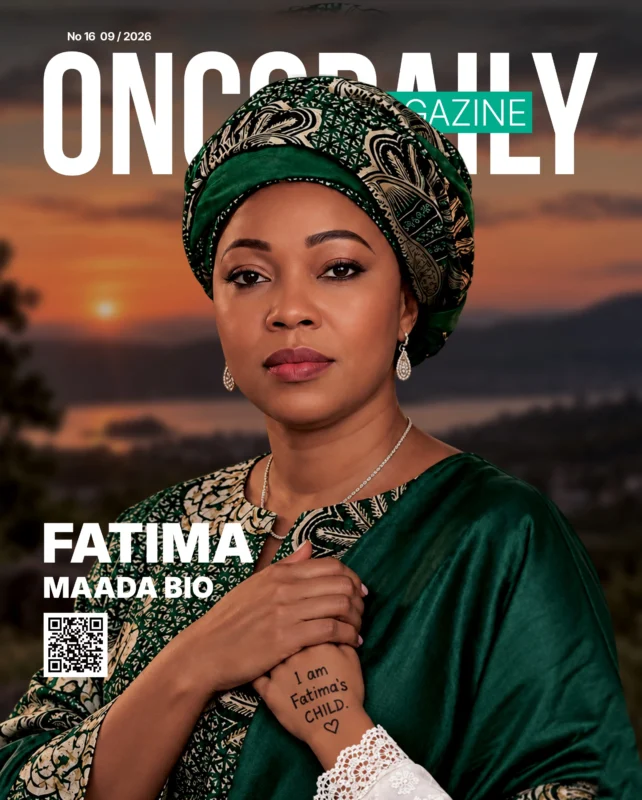
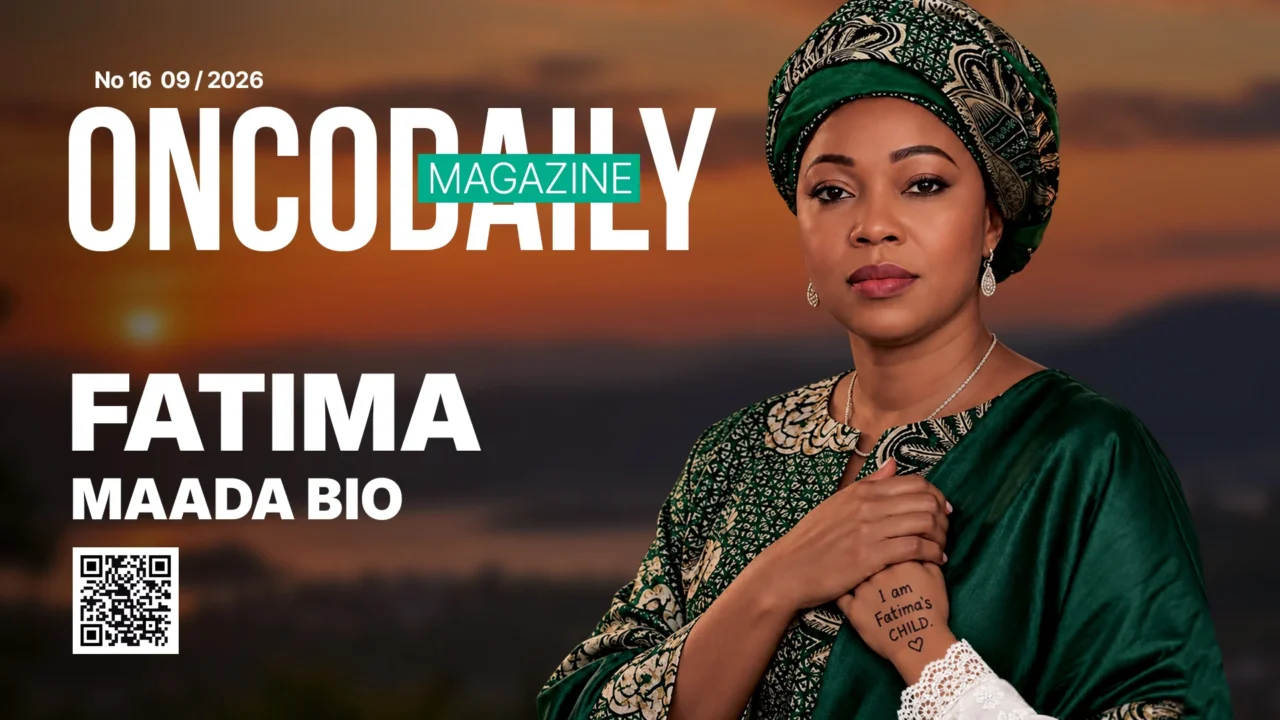
“I am Fatima’s child.”
They did not need to explain their age.
They did not need to explain anything else.
“I am Fatima’s child. Period.”
Everyone understood what it meant.
This child is protected.
Stay away.
And when she was telling me this story, I knew something.
I know what I want OncoDaily’s first non-documentary feature film to be called.
“I am Fatima’s child”
I could already see the opening scene.
And strangely, despite the horror of the subject, it may begin almost like a tragic comedy.
Because she told me about the first man who decided to test Sierra Leone’s new law.
He married a 12- or 13-year-old girl.
And then, unbelievably, posted the wedding photographs himself on social media.
What happened next?
He was arrested.
The girl’s parents were arrested.
The people who attended the wedding were arrested.
The person who officiated the marriage was arrested.
And then she added:
“We arrested the DJ who plays the music.”
The DJ is in prison.
It sounds almost absurd.
Until you understand the message.
If you attend the marriage of a child, clap, dance, officiate, organize or provide the soundtrack, you cannot later say that what happened to that child was somebody else’s responsibility.
“Next time if they invite you to a wedding,” she said, “you will ask questions.”
That may be one of the simplest descriptions of accountability I have heard.
The World Must Say No
Two days before our conversation, she had taken this fight from Sierra Leone to the world.
At the United Nations, she introduced the initiative establishing an international day dedicated to ending child, early and forced marriage.
For her, the message was clear.
This is not an African problem.
It is a global problem.
And Sierra Leone had something to say to the world:
“We have dared to say no, and we meant it.”
That sentence probably describes Fatima Maada Bio better than any biography could.
A girl once told that somebody else would decide whom she married.
A daughter who eventually gave her mother the power to say no.
A First Lady who made thousands of girls comfortable saying, “I am Fatima’s child.”
A woman now asking the entire world to say the same thing:
No.
***
At the end of our conversation, I asked her what comes next.
She changed Sierra Leone. She has led Africa’s First Ladies Organization.
Now she has taken one of her defining causes onto the global stage.
So what happens after she is no longer First Lady?
She smiled.
She knows people are already asking whether another chapter in public life is waiting for her.
She did not give me an answer.
She only said that there are things she still wants to do for her people—and that, when the time comes to make that choice, she will let us know.
I think we will hear much more from Fatima Maada Bio.
But today, after leaving that room, and walking along East 42nd street, I was thinking less about presidents, titles or what comes next.
I was thinking about a little girl cutting her hair.
About a mother finally able to breathe.
About a DJ sitting in prison.
And about thousands of girls who discovered four words powerful enough to protect their childhood:
I am Fatima’s child.
By Gevorg Tamamyan, Editor-in-Chief of OncoDaily and World Health Voices