





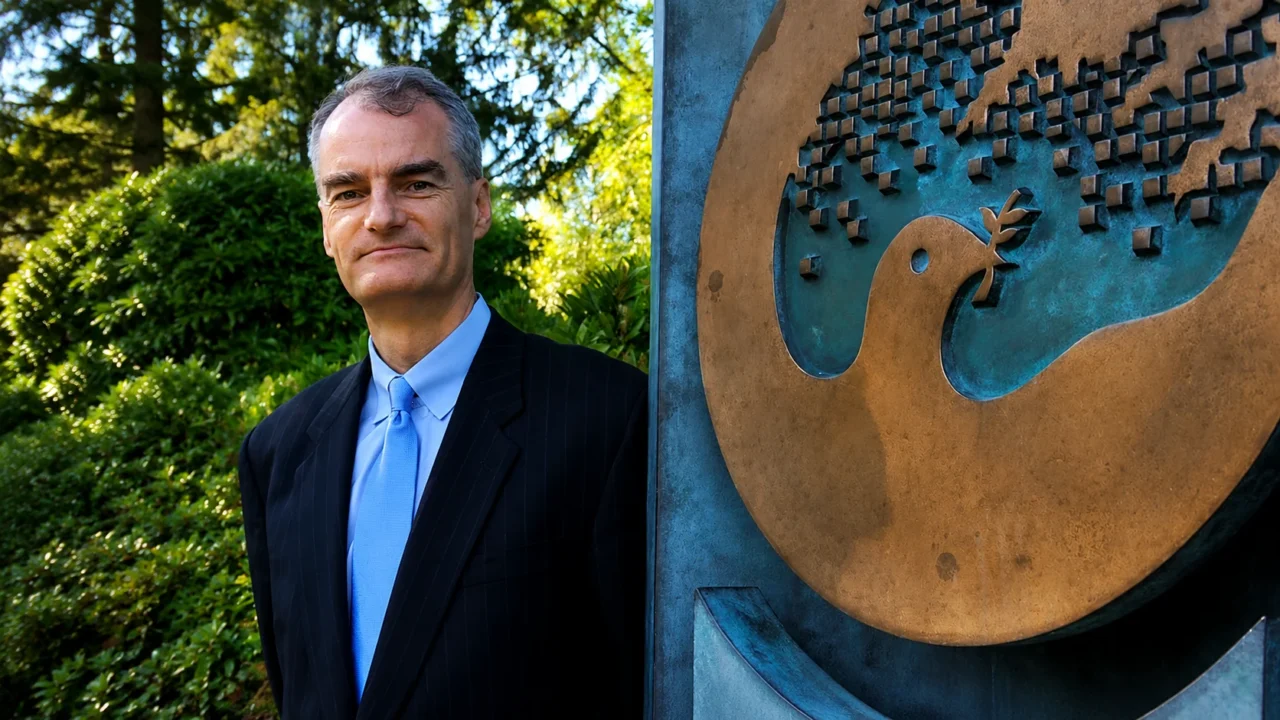
By Hugh Dugan, President, The Truce Foundation
Every two years, as the world gathers for the Olympic Games, we revive one of humanity’s oldest and most practical commitments to peace: the Olympic Truce.
Far from a symbolic gesture, the Truce is a functional instrument. It creates a humanitarian corridor—an assurance of safe passage—for athletes, officials, families, and spectators to travel, participate, and return home unharmed. It is a reminder that even in times of tension, the world can pause long enough to let excellence, fair play, and human dignity take center stage.
Today, that ancient promise carries new urgency. Conflict zones around the world are witnessing rising barriers to medical access, especially for those battling life‑threatening diseases. The Olympic Truce must be invoked not only to safeguard movement to and from the Games, but also to enable humanitarian corridors of all kinds—corridors that save lives.
One such example is the recently established
OncoCorridor, a model humanitarian pathway designed to ensure that cancer patients trapped in conflict zones can receive timely, effective treatment. Its purpose is straightforward: to guarantee safe medical transit, uninterrupted access to oncology care, and protection for medical personnel.
Its principles mirror those of the Olympic Truce itself—neutrality, safe passage, and the primacy of human life. The OncoCorridor demonstrates how a truce can be operationalized to meet modern humanitarian needs, offering a lifeline to those whose survival depends on crossing borders for care.
As we look toward the Los Angeles 2028 Olympic Games, we see an opportunity to widen these corridors—to dilate them in the spirit of fair play and competition. Just as athletes overcome adversity on the field of play, so too must we help individuals overcome the adversities of disease, especially when conflict denies them access to treatment. LA28 can be a global moment when the Olympic Truce is exercised not only for sport, but for life itself.
The stories of Olympic athletes who have faced cancer underscore the power of resilience and the universality of this struggle. Maarten van der Weijden, who survived acute leukemia before winning gold in Beijing; Santiago Lange, who captured gold in Rio months after losing part of his lung to cancer; Max Parrot, who returned from Hodgkin lymphoma to win Olympic gold; Novlene Williams‑Mills, who competed through breast cancer; Nathan Adrian, who overcame testicular cancer; Matt Glaetzer, who returned to world‑class cycling after thyroid cancer; and Piper Gilles, who triumphed over ovarian cancer before medaling at Milano‑Cortina. Their strength—perfected in competition—became the very strength they relied upon in their personal cancer ordeals.
Their journeys remind us that cancer respects no borders, no politics, no ceasefires. Yet humanity can create the corridors that allow treatment to continue, even when conflict rages. The Olympic Truce offers the world a template: pause hostilities, protect the vulnerable, and let safe passage prevail.
As LA28 approaches, may the Truce be exercised fully—so that all who wish to participate may do so safely, and so that those fighting for their lives may find the corridors they need to survive. The Games celebrate human potential; the Truce protects it.
Also read the story of Summer Olympians Who Returned to Win Medals after Cancer