






Holly Norman, Head of Health Policy and Systems at Cancer Research UK, shared on LinkedIn:
“Earlier this year, the Government set itself a challenge that could transform cancer outcomes in England.
The National Cancer Plan for England pledges that by 2035, 3 in 4 people diagnosed with cancer will survive for at least 5 more years – up from 60% now.
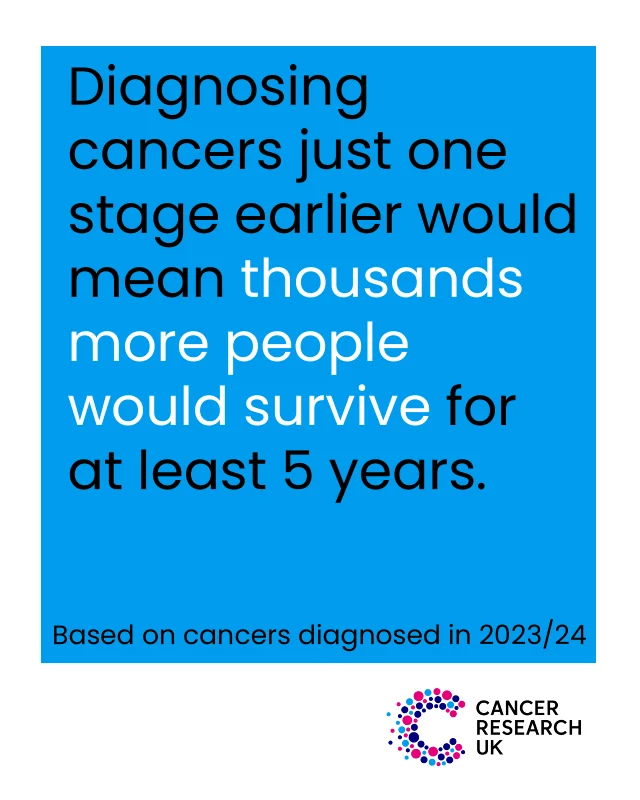
Delivering this ambition demands action on multiple fronts. One of the most important will be making good on promises to reduce cancers found at later stages and drive a major shift towards diagnosing cancers earlier, when treatment is more likely to be successful.
In this article, I explore what it will take to deliver.
Innovation is an essential part of the picture: new tests and strategies are needed to deliver a step change in stage at diagnosis. But whilst there is exciting potential in these areas, we mustn’t overlook proven approaches that can be implemented today.
Strengthening screening programmes, supporting people to access care when they have symptoms, and helping healthcare professionals spot cancer earlier will all be critical. The Government must guarantee progress across these areas as well as committing to supporting innovation that can drive impact.
If we get that balance right, the National Cancer Plan can drive a real shift towards earlier diagnosis and better cancer outcomes.”
Matt Sample, Senior Health Policy Manager at Cancer Research UK, added:
“A great article from my colleague Holly Norman here in the Cancer Research UK (CRUK) health policy team, as part of our ongoing series taking a closer look at the National Cancer Plan.
We’ve seen some very welcome progress on diagnosing more cancers at an earlier stage in recent years but, with the NCP’s survival ambition relying on a real step change in earlier diagnosis, it couldn’t be more important to get the strategy right over the next 10 years.
The key takeaway for me is that there’s lots of innovation in the pipeline that could really transform how we detect and diagnose cancer – but many of the big potential game changers are still many years away from hitting the system. So the focus now needs to be twofold.
First, really motoring on with what we know works, while continuing to support innovation (particularly in known areas where good tools don’t currently exist) and ensuring that the health system is in a good place to rapidly adopt new approaches when the evidence is there to back them up.
Do give the article a read, and share this and the whole series with your networks!”