






Allison Fitzgerald, Hematology/Oncology Clinical Fellow at Dana-Farber Cancer Institute, shared on X:
“While I’m sitting on the plane, I figured I would jot down what I’ve learned about ways to engineer CAR T cells to recognize two different antigens.
- Co-administration
- Co-transduction
- Tandem CARs
- Bicistronic CARs
- Bidirectional CARs
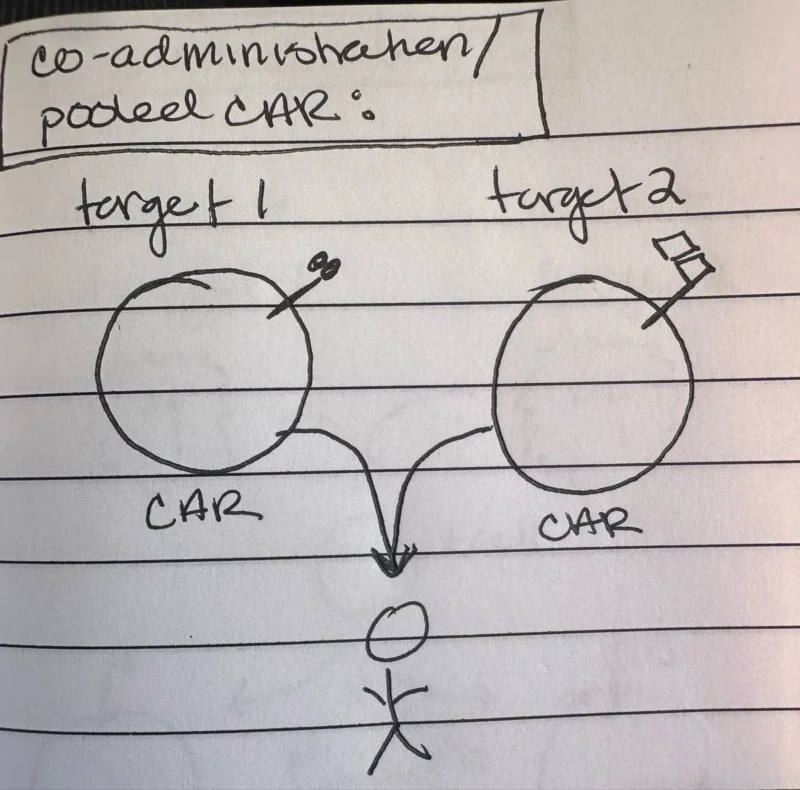
1. Co-administration of two CARs that target a single antigen, also known as pooled CARs
Pros: well-characterized engineering methods
Cons: double the cost, one CAR might outcompete the other
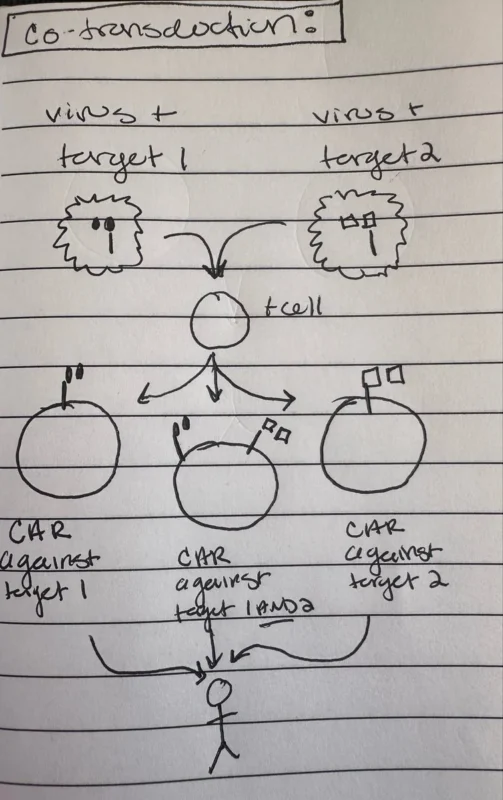
2. Co-transduction with two viruses containing a single CAR
Pros: well characterized engineering methods
Cons: mixed CAR pools, some CARs might outcompete, transduction efficacy might not be the same for each CAR
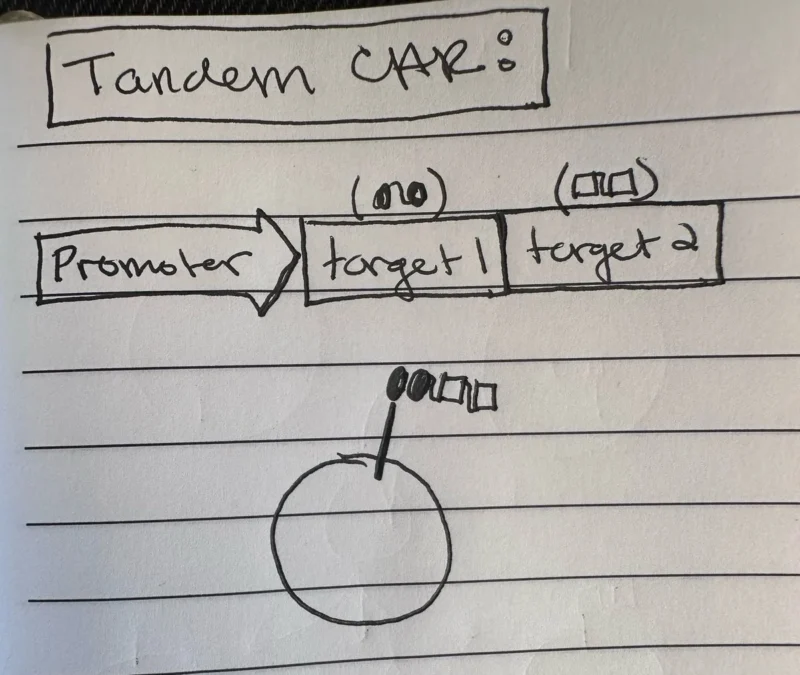
3. Tandem CARs
Pros: homogenous expression of both targets, small for packaging
Cons: possibility for steric hindrance, shared receptor can alter antigen recognition
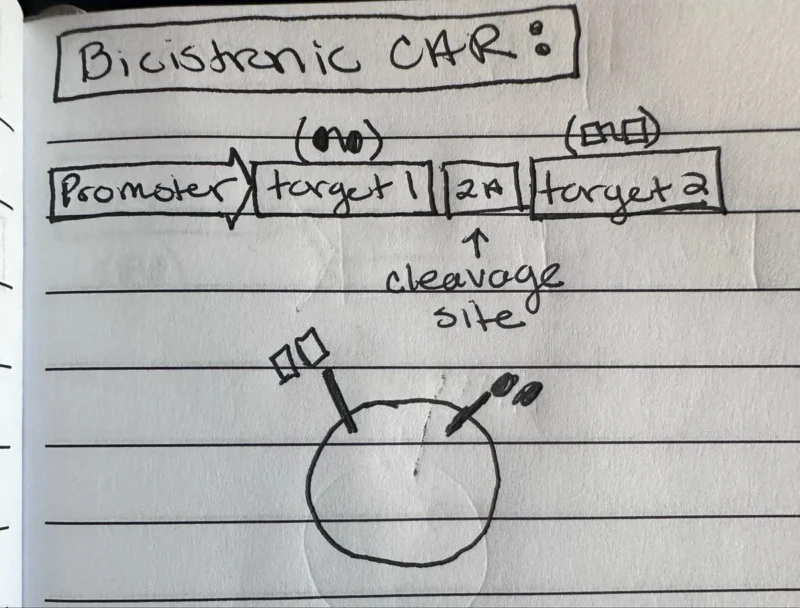
4. Bicistronic CARs
Pros: theoretically there should be equal expression of both targets (although fall off may happen leading to less expression of second target)
Cons: large construct harder to package
5. Bidirectional CARs
Pros: theoretically could have different promoters and thus differential expression of CAR constructs
Cons: large construct harder to package, uneven CAR expression
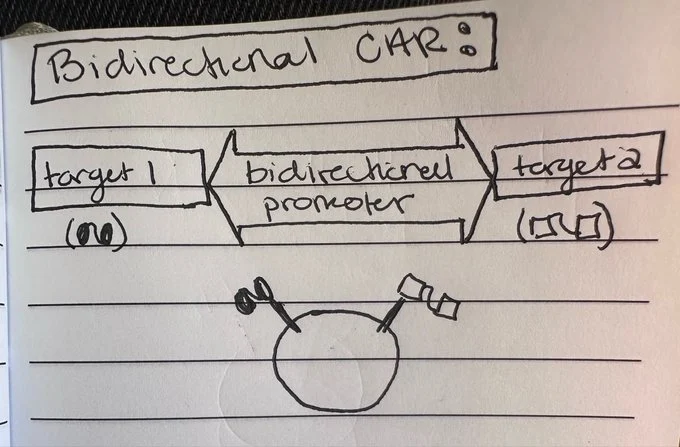
That’s it! This is not exhaustive, and neither are the pros and cons. Just a simple intro. Please don’t come after me for my handwriting or sketches. Opposite of AI but still slop!”
Other articles featuring Allison Fitzgerald on OncoDaily.