Al-Ola A. Abdallah, Associate Professor and Plasma Cell Disorder Program Director at the University of Kansas Medical Center, shared on X:
“Our multicenter study on carfilzomib-induced cardiovascular toxicity in multiple myeloma is now published in Current Oncology!
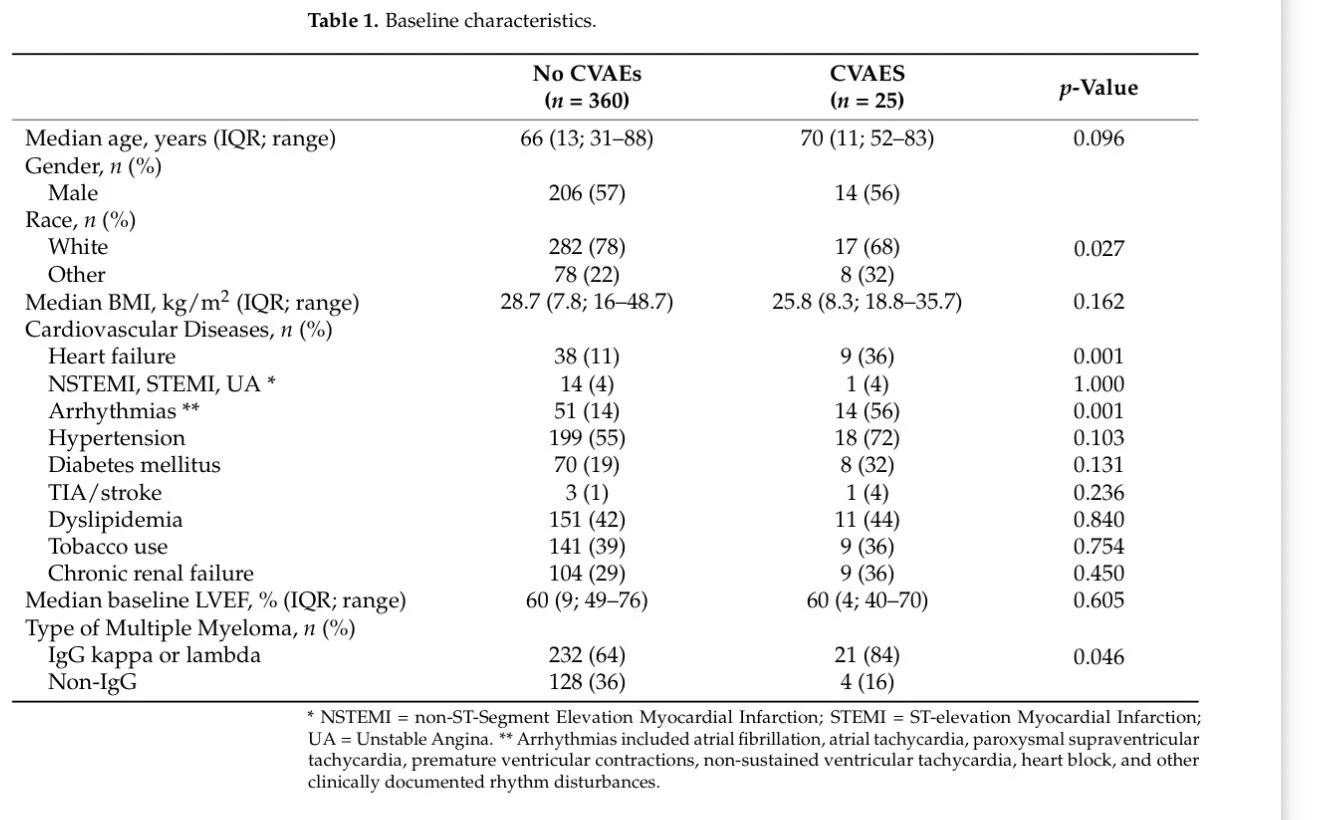
We evaluated 385 patients across 3 U.S. centers to better understand incidence, timing and risk factors.
How common was cardiotoxicity?
- CVAEs: 6.5%
- Median onset: 157 days
- Range: 3–1,323 days
Importantly, toxicity was not limited to early treatment-supporting cardiovascular surveillance throughout carfilzomib therapy.
What cardiovascular events occurred?
Among patients developing CVAEs:
- Heart failure: 86%
- Arrhythmias: 32%
- Pulmonary edema: 20%
- Acute coronary syndrome: 8%
Median absolute decline in LVEF at the event: 35%.
Who was at greatest risk?
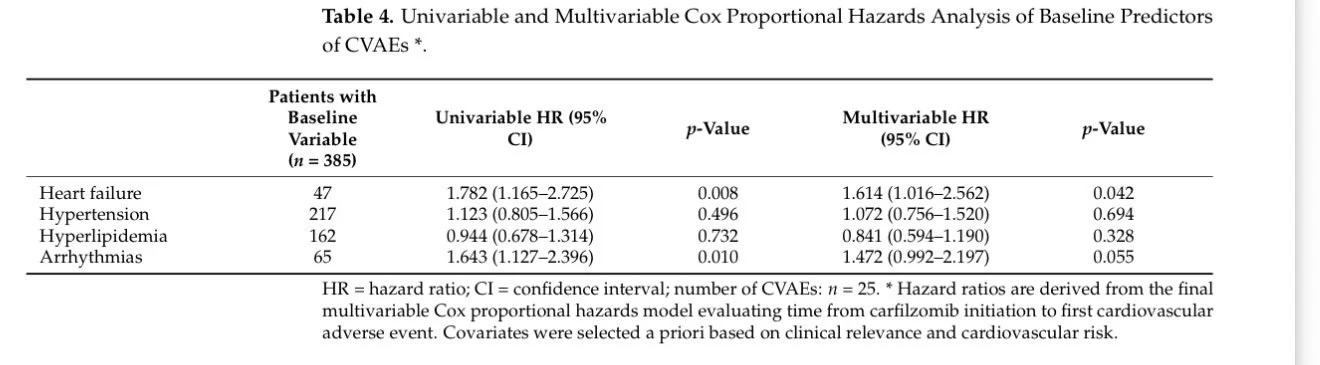
Pre-existing heart failure was independently associated with increased CVAE risk:
HR 1.61 | 95% CI 1.02–2.56 | p=0.042
Baseline arrhythmia also showed a strong trend:
HR 1.47 | p=0.055 Interestingly, hypertension and hyperlipidemia were not independent predictors.
There was also some encouraging news:
After stopping carfilzomib, some patients experienced partial recovery of cardiac function, with a median LVEF improvement of 20%. This reinforces the importance of:
- Early recognition
- Prompt intervention
- Continued cardiac
Take-home message:
Carfilzomib-associated CVAEs were relatively infrequent but clinically meaningful.
Patients with pre-existing cardiac dysfunction – especially heart failure – may warrant closer surveillance and a risk-adapted cardio-oncology approach. ”
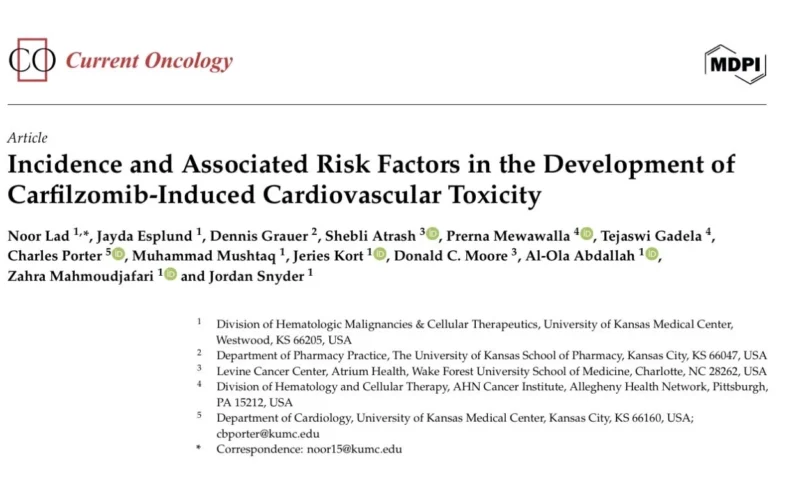
Title: Incidence and Associated Risk Factors in the Development of Carfilzomib-Induced Cardiovascular Toxicity
Authors: Noor Lad, Jayda Esplund, Dennis Grauer, Shebli Atrash, Prerna Mewawalla, Tejaswi Gadela, Charles Porter, Muhammad Mushtaq, Jeries Kort, Donald C. Moore, Al-Ola Abdallah, Zahra Mahmoudjafari, and Jordan Snyder.