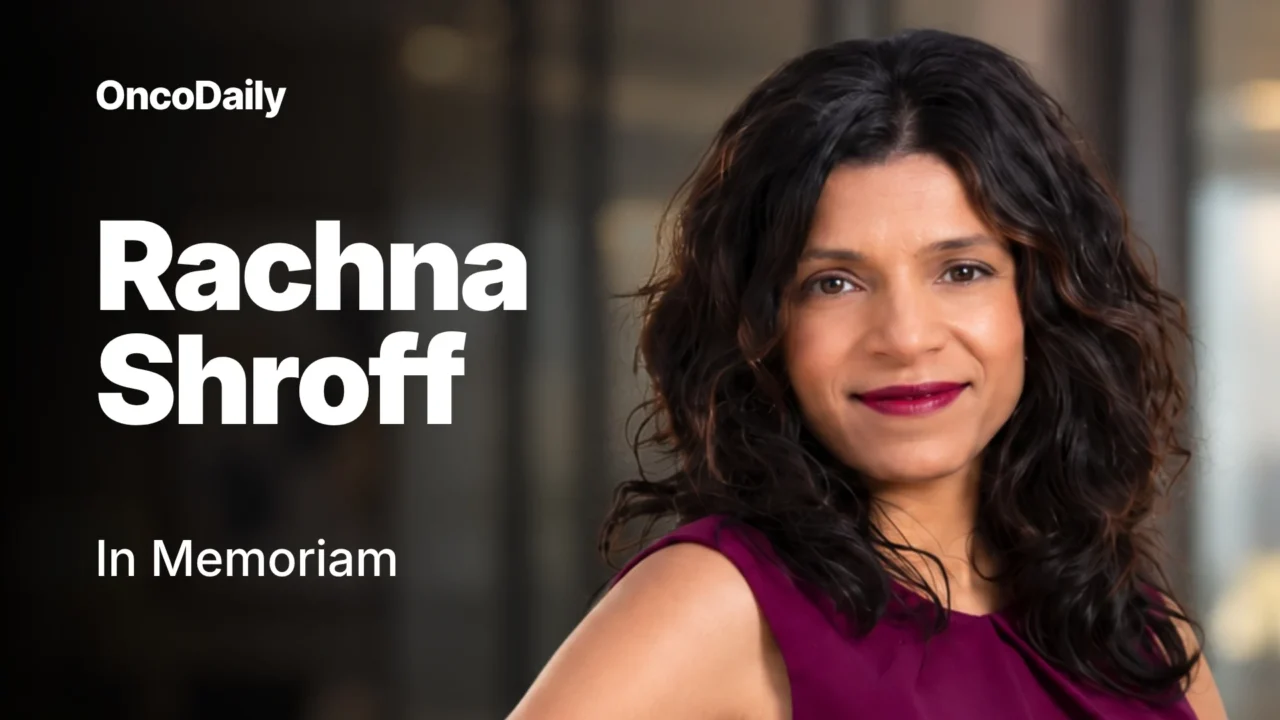
The oncology community mourns the passing of Rachna Shroff, MD, MS, FASCO, an internationally respected gastrointestinal oncologist, clinician-scientist, and leading expert in cholangiocarcinoma whose contributions to cancer research and patient care have left a lasting mark on the field.
The University of Arizona College of Medicine – Tucson announced her passing with profound sadness, remembering Dr. Shroff as a valued colleague, dedicated physician, accomplished researcher, and compassionate leader.
At the University of Arizona, Dr.Rachna Shroff served as associate director of clinical investigations at the University of Arizona Cancer Center and chief of the Division of Hematology/Oncology in the Department of Medicine. She was also the inaugural John F. and Valli S. Duval Endowed Professor for Gastrointestinal Oncology and previously served as associate dean for clinical and translational research at the College of Medicine – Tucson.
Her career was defined by a commitment to improving outcomes for patients with gastrointestinal cancers, particularly those affected by rare and difficult-to-treat malignancies.
A Pioneer in Cholangiocarcinoma Research
Dr. Rachna Shroff was internationally recognized for her contributions to the treatment of cholangiocarcinoma, a rare bile duct cancer that historically offered patients limited therapeutic options.
She devoted much of her research to this challenging disease at a time when no therapies had received approval from the U.S. Food and Drug Administration specifically for cholangiocarcinoma.
As a principal investigator, she led landmark clinical trials that contributed to significant changes in the treatment landscape. Her research helped advance the development of new therapeutic approaches and expand treatment possibilities for patients facing a diagnosis with historically poor outcomes.
Beyond cholangiocarcinoma, Dr. Rachna Shroff was widely recognized for her work in pancreatic and hepatobiliary cancers, with a particular focus on novel drug treatments and immunological therapies.
Her scientific contributions included more than 80 publications and over 130 professional speaking engagements, reflecting her standing within the international oncology community.
She also held important national leadership positions, including co-chair of the Hepatobiliary Subcommittee of the Southwest Oncology Group (SWOG) and chair of the 2024 American Society of Clinical Oncology Gastrointestinal Cancers Symposium (GI ASCO 2024).
From Tucson to National Leadership in Oncology
Dr. Rachna Shroff’s interest in medicine and scientific research began at an early age.
The daughter of a nephrologist mother and a biochemist father, she grew up with a strong appreciation for scientific discovery and the importance of compassionate patient care.
Her journey in cancer research began in Tucson, where she received the 1993 Osler Fellowship as a high school student. The fellowship provided an opportunity to work in the laboratory of Margaret Briehl, PhD, a University of Arizona Cancer Center member and professor at the College of Medicine – Tucson.
She subsequently completed her undergraduate education at Brown University and earned her medical degree from Thomas Jefferson University.
Following her fellowship training at the University of Texas MD Anderson Cancer Center, completed in 2010, Dr. Shroff joined the institution’s faculty as an associate professor of gastrointestinal medical oncology, serving from 2010 to 2018.
In 2018, she returned to Tucson to join the University of Arizona, bringing her clinical expertise, research experience, and commitment to advancing gastrointestinal oncology to the institution where her interest in cancer research had first developed.
Building Opportunities for Patients and Future Oncologists
During her years at the University of Arizona, Dr. Rachna Shroff played an important role in strengthening the institution’s gastrointestinal oncology program and expanding access to clinical trials throughout Southern Arizona.
Her work at the Cancer Center focused not only on developing new therapeutic strategies but also on ensuring that patients could benefit from emerging scientific advances.
As chief of the Division of Hematology/Oncology, she assumed a central leadership role in the Department of Medicine. She also served for three years as associate dean for clinical and translational research, supporting the connection between laboratory discoveries and clinical practice.
Throughout these responsibilities, she remained committed to the human aspects of cancer care, recognizing the importance of compassion alongside scientific progress.
Her influence extended beyond her own research and clinical practice to the development of future generations of oncologists and investigators.
A Final Wish: Supporting the Next Generation of Cancer Researchers
Among Dr. Rachna Shroff’s most meaningful contributions was an initiative she pursued during the final months of her life.
In September, while facing her own life-limiting cancer, she expressed a wish to establish the Conquer Cancer – Rachna Shroff, MD, MS, FASCO Endowed Young Investigator Award in Biliary Cancers.
The award was created to support young investigators conducting research in biliary cancers, a field to which she had devoted much of her professional life.
Within weeks, Dr.Rachna Shroff succeeded in raising more than $1.35 million to support future cancer research and innovation.
The establishment of this endowed award reflects her determination to continue advancing biliary cancer research by creating opportunities for the next generation of scientists.
It also represents a deeply personal contribution to a field in which she had spent years working to improve treatment options and outcomes for patients.
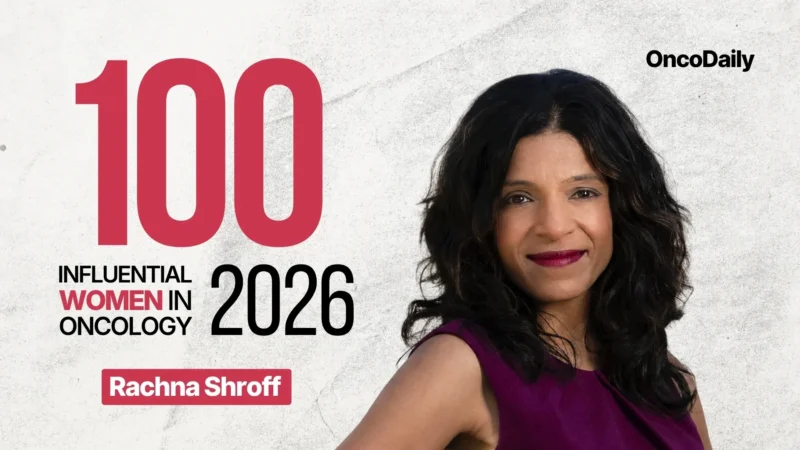
100 Influential Women in Oncology in 2026
Remembering the Physician, Colleague, and Friend
Beyond her distinguished professional career, Dr. Rachna Shroff was remembered for the importance she placed on her family, friendships, and personal relationships.
She is survived by her husband, Dr. Puneet Shroff, professor of medicine and associate director of the Banner Medical Group’s Allergy Clinic; their children, Simran and Sachin; her parents, Devendar Trivedi and Dr. Amita Trivedi; and her sister, Neema Sahni.
In its tribute, the University of Arizona College of Medicine – Tucson invited faculty, staff, students, residents, and fellows to support one another during this period of grief and to keep Dr. Shroff’s family, friends, and colleagues in their thoughts.
Her passing is a profound loss to the gastrointestinal oncology community and to the many patients, researchers, and colleagues whose lives she touched.
Dr. Rachna Shroff leaves behind an important scientific legacy through her clinical trials, publications, leadership, and efforts to expand access to cancer care. Through the endowed Young Investigator Award established in her name, her commitment to biliary cancer research will continue to support future discoveries.
OncoDaily extends its deepest condolences to Dr. Shroff’s family, friends, colleagues, and the entire oncology community. Her contributions to cancer research, her dedication to patients, and her commitment to future generations of investigators will be remembered with profound respect and gratitude.
Remembering Rachna Shroff: Tributes From the Oncology Community
Following the announcement of Dr. Rachna Shroff’s passing, members of the international oncology community have shared tributes reflecting on her scientific contributions, leadership, compassion, and lasting influence on colleagues and future generations of cancer researchers.
Yan Leyfman, MD, physician-scientist, shared on LinkedIn:
“There are individuals who advance medicine through their discoveries, and there are those who transform it through their humanity. Dr. Rachna Shroff, MD, FASCO did both.
Although I did not have the privilege of knowing Dr. Shroff personally, I was fortunate to cross paths with her on several occasions at scientific meetings, including ASCO. What struck me was not simply her extraordinary intellect or the respect she commanded as a leader in gastrointestinal oncology, but her warmth, humility, and genuine kindness. She had that rare ability to illuminate a room with her positivity, make those around her feel valued, and inspire the next generation of physicians and scientists.
Her contributions to cholangiocarcinoma and hepatobiliary oncology have fundamentally advanced a field once defined by limited therapeutic options. Yet, I believe her greatest legacy extends far beyond publications, clinical trials, or academic titles. It lives in the patients whose lives she changed, the trainees she mentored, the colleagues she inspired, and the countless individuals who experienced her compassion.
Perhaps nowhere is her selflessness more evident than in one of her final wishes: establishing the Conquer Cancer–Rachna Shroff Endowed Young Investigator Award in Biliary Cancers. Even while confronting her own mortality, she was thinking about the future of others. About the discoveries yet to be made. About the young investigators who deserved an opportunity to make a difference. That, to me, is the very essence of leadership.
We often measure greatness in medicine by the impact of one’s scientific contributions. But true greatness is also measured by what we leave behind in others. Dr. Shroff exemplified both.
When we reflect on the evolution of biliary tract cancer research, her name will remain inseparable from its progress. But when we reflect on the kind of physicians, mentors, and human beings we should aspire to become, her example will be equally enduring.
The passage of time must never diminish the memory of those who helped shape our field. We owe it to leaders like Dr. Shroff not simply to remember their accomplishments, but to carry forward the values that made those accomplishments meaningful.
Her passing leaves a profound void, but her legacy will continue to illuminate the path for generations of oncologists and investigators. The field is better because she was part of it. We are better because of the example she set.
My deepest condolences to her family, friends, colleagues, trainees, and the entire oncology community.
Rest in peace, Dr. Shroff. Your light has not been extinguished. It lives on in every life you touched, every investigator you inspired, and every discovery that will emerge because you believed in the next generation.
Some legacies are written in scientific journals. The greatest are written in the lives of others.”
Daniel Persky, Senior Medical Director at BeOne Medicines and Emeritus Professor of Medicine at the University of Arizona Cancer Center, previously shared his support for Dr. Shroff’s initiative:
“Please consider donating to my amazing friend’s cause. Rachna Shroff, MD, FASCO has dedicated her life to fighting biliary cancers, and this is an important way to further this calling.”
Deanna van Gestel, FASCO, CEO of VANIAM GROUP LLC and Founder of Women Leaders in Oncology, also previously expressed her support for Dr. Shroff and the establishment of the endowed Young Investigator Award:
“Some people spend their careers lifting others up. Rachna Shroff is one of them.”
She further emphasized:
“She has been deeply committed to ASCO and to Conquer Cancer, the ASCO Foundation, all while navigating a health journey of her own with the same grace and strength she brings to everything she does.”
Tian Zhang, MD, MHS, FASCO, shared on X:
“Beyond devastating. Rachna was a friend to all oncologists, well known in @ASCO circles. We will all miss her. Her legacy lives on in the YIA endowed in her name.”