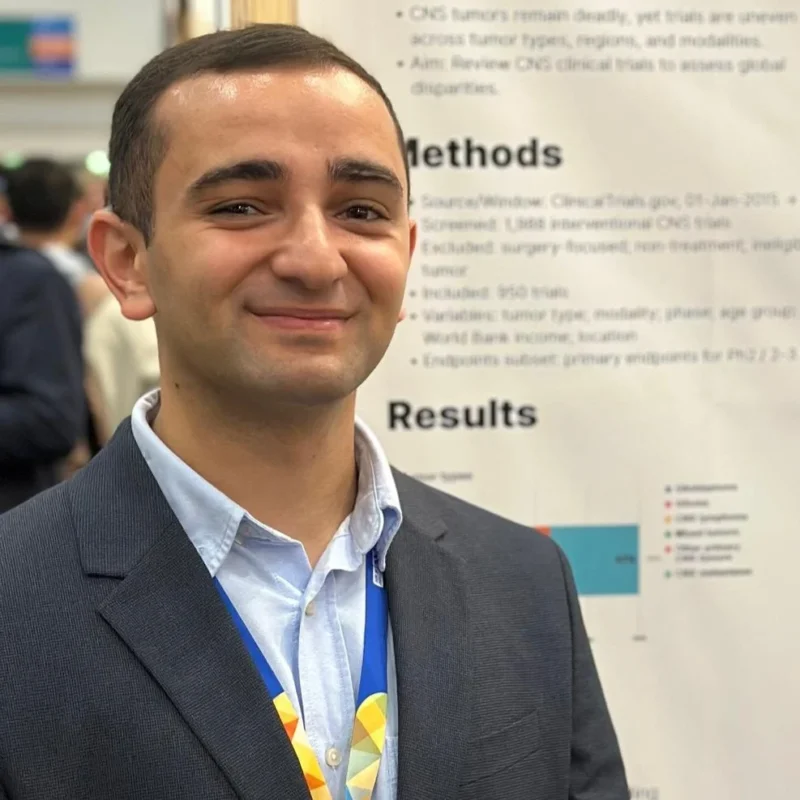
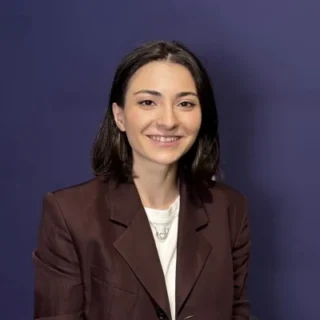
Navid Madani, PhD, a scientist, educator and global health leader whose work connected cancer and infectious disease research with health equity and capacity building across the Middle East and North Africa, has died.
Madani was the founding director of the Science Health Education (SHE) Center at Dana-Farber Cancer Institute, a senior scientist in Dana-Farber’s Department of Cancer Immunology and Virology, and held appointments in the Departments of Microbiology and Global Health and Social Medicine at Harvard Medical School.
Timothy Rebbeck, Director of the Center for Global Health at Dana-Farber Cancer Institute, announced her loss in a tribute, describing Madani as “a beacon of global oncology.” He highlighted her leadership of the SHE Center and her work in education and training within Dana-Farber’s Center for Global Health.
Rebbeck wrote:
“My colleagues and I are deeply saddened by the loss of Navid Madani, PhD, a beacon of globalCa oncology. Navid was the founding director of the Science, Health, and Education (SHE) Center and the head of education and training in the Center for Global Health at the Dana-Farber Cancer Institute. Her work provided cancer education and training for countless individuals around the world.While her loss is great, so has been her impact.”
From HIV Research to Global Health
Madani’s scientific career extended well beyond oncology. Her research focused extensively on HIV/AIDS, viral entry, drug discovery and approaches to preventing HIV transmission, including the development of woman-controlled strategies to reduce infection. Dana-Farber credits her work with helping characterize small molecules capable of binding HIV-1 gp120 and inhibiting viral entry.
She earned her PhD in biochemistry and molecular biology at Oregon Health & Science University, where she trained in the laboratory of David Kabat. Her doctoral research examined HIV-1 Vif and contributed to work that ultimately helped establish the importance of the Vif–APOBEC3G interaction in HIV biology. OHSU later recognized Madani among its 2024 School of Medicine Alumni Award recipients.
Her scientific interests increasingly expanded into global health, particularly the intersection of research, education and health inequities affecting people in the Middle East and North Africa.

Building the SHE Center
In 2019, Madani established the Science Health Education Center at Dana-Farber, building on years of collaboration with clinicians, researchers and students throughout the MENA region.
The Center was designed to strengthen scientific and healthcare capacity through education, mentorship, research partnerships and collaboration between institutions in the MENA region and the Dana-Farber and Harvard communities.
Its work has included training in manuscript and grant writing, research methodology, mentorship and networking. According to Dana-Farber, SHE Center workshops across countries including Jordan, Morocco, the United Arab Emirates and Iran have involved more than 400 healthcare workers, with women accounting for more than half of participants.
A central part of Madani’s vision was ensuring that collaboration did not simply mean transferring knowledge from the United States to other countries. She advocated for reciprocal partnerships in which researchers and clinicians on both sides could learn from one another.
Championing Women’s Health and Women in Science
Supporting women became one of the defining themes of Madani’s work.
The SHE Center specifically sought to strengthen opportunities for female clinicians, scientists, and healthcare professionals across the MENA region and to address gaps in women’s health, including breast and gynecologic cancers, reproductive health, and sexually transmitted infections.
In 2023, the Center established SHE Cares, a locally led network focusing on women’s health across the region. Its activities have addressed issues ranging from breast cancer early detection and cancer registries to mental health, reproductive health and research capacity.
Madani frequently described mentorship not simply as professional guidance, but as a responsibility. In a 2023 interview, she spoke about the influence of her own mentors and her determination to create similar opportunities for younger scientists, particularly women.
A Scientist Who Also Became a Cancer Patient
Madani’s commitment to cancer equity also became deeply personal.
She was diagnosed with stage IV ovarian cancer in May 2019, transforming her experience of cancer from that of a scientist and educator to that of a patient as well. She publicly discussed how experiencing cancer care herself strengthened her interest in improving early detection and expanding access to high-quality healthcare for women internationally.
Shortly before news of her death, her husband, Kirk Tanner, shared that Madani had entered inpatient hospice after living with stage IV ovarian cancer for more than seven years. He described her as a mother, scientist and visionary and reflected on how, throughout those years, she continued building the SHE Center into a platform supporting women, healthcare professionals and researchers across the MENA region.
Her sister, Fatemeh Madani, also shared a tribute, writing that she would continue to be inspired by her sister’s strength, passion and courage.
A Legacy of Science, Education and Connection
Madani’s career brought together areas that are too often treated separately: laboratory science, cancer care, infectious disease, women’s health, education and global health equity.
Through her research and through the networks she helped establish, her influence extended from laboratories at Dana-Farber and Harvard to clinicians, scientists, students and patients across the Middle East and North Africa.
Her belief in mentorship and in women supporting other women was perhaps captured most simply in the words Rebbeck chose to remember her by:
“Being a woman is our superpower. There is a place in heaven for women who help other women.”
OncoDaily extends its deepest condolences to Navid Madani’s family, friends, colleagues, and the global oncology and scientific communities whose lives and work she touched. Her legacy in science, education, mentorship, and global health will continue to inspire generations to come.
Explore more oncology news and features on OncoDaily.