At the ESMO Congress 2026, Niven Mehra (Nijmegen, Netherlands) presented results from the PROMPT study (NCT04746300), evaluating plasma circulating tumour DNA (ctDNA) as a standalone or complementary approach to tumour tissue sequencing in patients with metastatic castration-resistant prostate cancer (mCRPC).
The prospective study included 301 matched tissue–plasma pairs and assessed concordance between plasma ctDNA and tumour tissue sequencing for detecting homologous recombination repair (HRR) and PI3K/AKT pathway alterations.
Why Was PROMPT Conducted?
Genomic testing plays an important role in treatment selection for patients with mCRPC. Tissue next-generation sequencing (NGS) is an established approach but requires adequate biopsy material, while plasma ctDNA testing offers a non-invasive and repeatable alternative.
Whether plasma ctDNA can replace tumour tissue sequencing or should remain a complementary approach is not yet established. The PROMPT study investigated this question in patients with mCRPC before first- or second-line therapy, focusing on alterations in BRCA1/2, other HRR genes, and the PI3K/AKT pathway.
PROMPT Study Design
PROMPT was a prospective matched tissue–plasma concordance study involving 301 patients with mCRPC. Tumour tissue samples included 161 fresh biopsies and 140 archival specimens, analysed using the TruSight Oncology 500 (TSO500) sequencing panel. Plasma ctDNA was analysed using a custom 57-gene targeted panel.
Matched leukocyte DNA was available for 262 patients and was used to identify alterations associated with clonal haematopoiesis. The median ctDNA tumour fraction was 5% (interquartile range 0–25%).
The analysis assessed single-nucleotide variants (SNVs), insertions and deletions (indels), and biallelic copy losses in BRCA1/2, other HRR genes, and PI3K/AKT pathway genes. Concordance was evaluated using positive and negative percentage agreement (PPA and NPA) and positive and negative predictive values (PPV and NPV), with tumour tissue serving as the comparator.
BRCA1/2 and HRR Alterations
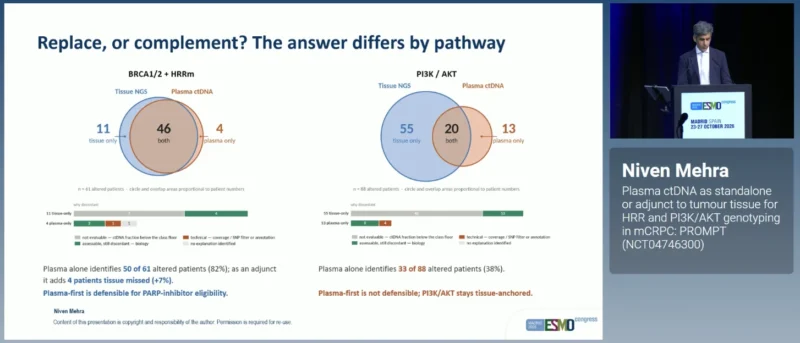
BRCA1/2 and other HRR alterations were identified in 61 patients. Of these, 46 had alterations detected in both plasma and tumour tissue, 11 had alterations detected only in tissue, and four had alterations detected only in plasma.
Plasma ctDNA alone identified 50 of 61 alteration-positive patients (82%). When used alongside tissue sequencing, it identified four additional patients whose alterations were not detected in tissue, representing an additional 7% detection yield.
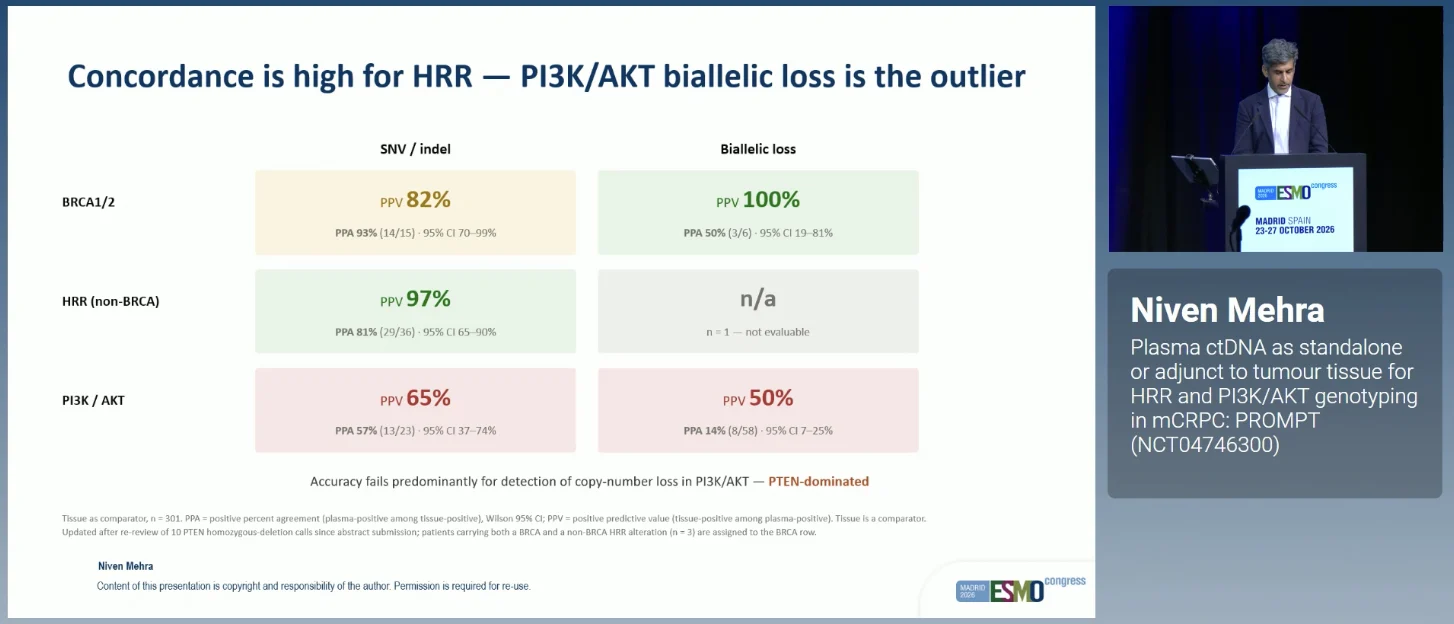
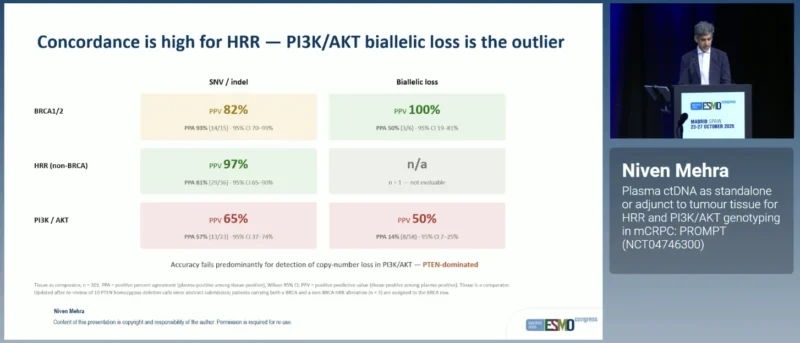
Concordance varied according to alteration type. For BRCA1/2 SNVs/indels, PPA was 93% (14/15), with a PPV of 82%. For non-BRCA HRR SNVs/indels, PPA was 81% (29/36), with a PPV of 97%. For BRCA1/2 biallelic losses, PPA was 50% (3/6), with a PPV of 100%.
The investigators reported that plasma ctDNA could serve as a standalone test for assessing PARP inhibitor eligibility when tumour fraction is adequate, while providing additional detection when used alongside tissue sequencing.

You can also read about PROpel Trial on OncoDaily.
PI3K/AKT Pathway Alterations
PI3K/AKT pathway alterations were identified in 88 patients. Of these, 20 had alterations detected in both plasma and tumour tissue, 55 had alterations detected only in tissue, and 13 had alterations detected only in plasma. Plasma ctDNA alone identified alterations in 33 of 88 patients (38%), substantially fewer than observed for BRCA1/2 and other HRR alterations.
Concordance was lower for PI3K/AKT alterations, particularly biallelic copy losses. For SNVs/indels, PPA was 57% (13/23), with a PPV of 65%. For biallelic losses, PPA was 14% (8/58), with a PPV of 50%.
The investigators identified PTEN-dominated copy-number loss as a major source of discordance between plasma and tissue sequencing. Among 17 patients with tissue-detected biallelic PTEN loss and sufficient ctDNA tumour fraction, eight had concordant findings in plasma. These findings highlighted the limitations of plasma ctDNA for detecting PI3K/AKT pathway alterations, particularly PTEN copy-number losses.
PTEN Loss and Overall Survival
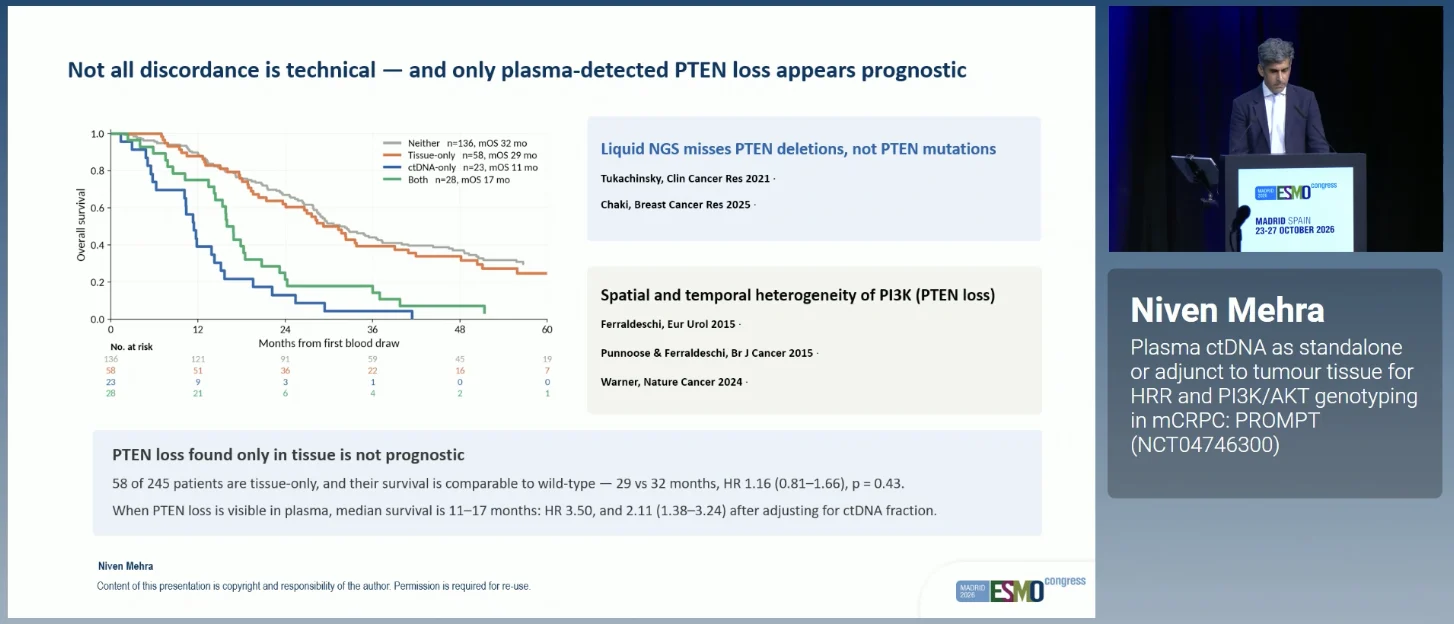
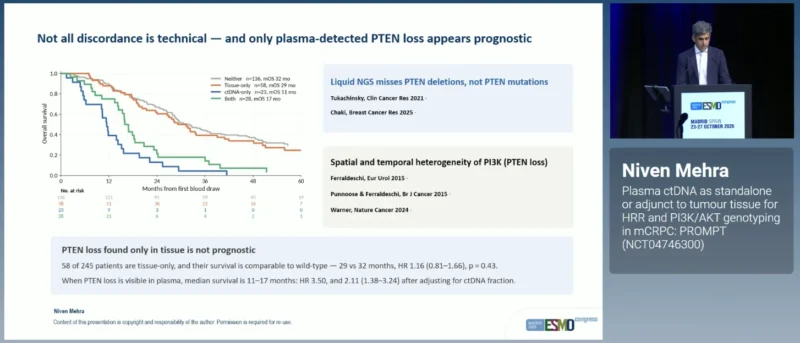
The presentation also examined the association between PTEN loss detected in tissue or plasma and overall survival (OS). Among patients with PTEN loss detected only in tissue (n=58), median OS was 29 months, compared with 32 months in patients without detected PTEN loss (n=136; HR 1.16; 95% CI 0.81–1.66; p=0.43).
In contrast, median OS was 11 months among patients with PTEN loss detected only in plasma (n=23) and 17 months among those with PTEN loss detected in both plasma and tissue (n=28). The investigators reported that PTEN loss detected in plasma appeared to have prognostic relevance, while PTEN loss identified only in tissue was not associated with a difference in overall survival in this analysis.
Conclusions
The PROMPT study demonstrated high concordance between plasma ctDNA and tumour tissue sequencing for BRCA1/2 and other HRR alterations in patients with mCRPC.
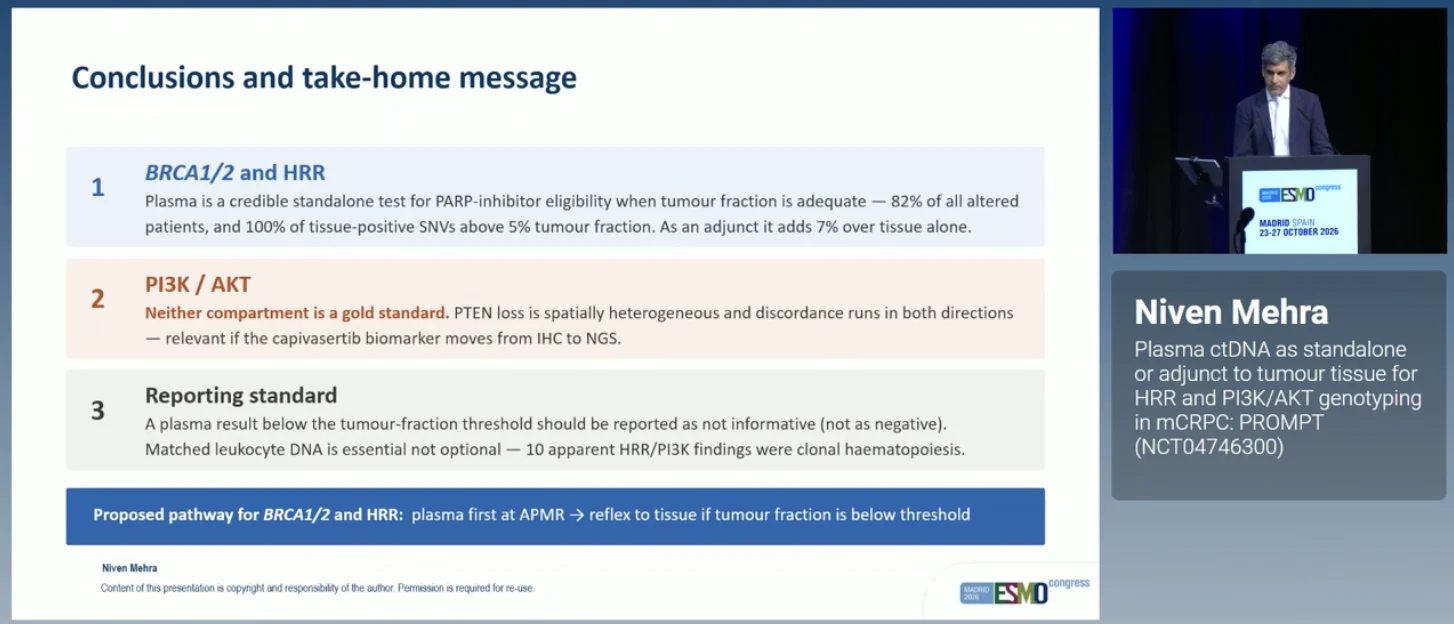
Plasma ctDNA identified 82% of patients with BRCA1/2 or other HRR alterations and provided an additional 7% detection yield when used alongside tissue sequencing. The investigators concluded that plasma ctDNA represents a credible standalone testing approach for assessing PARP inhibitor eligibility when tumour fraction is adequate, with reflex tissue testing proposed when tumour fraction is insufficient.
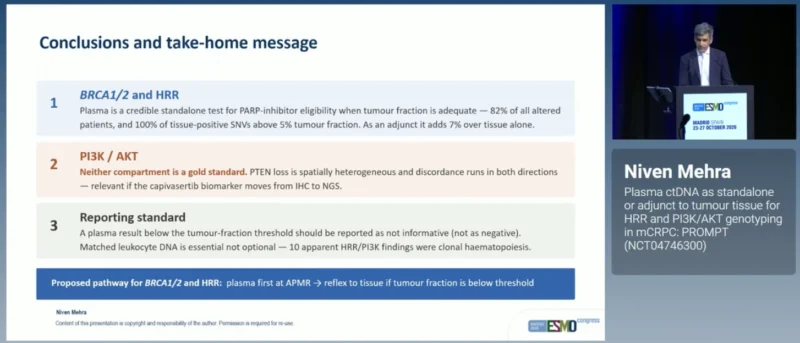
However, concordance was substantially lower for PI3K/AKT pathway alterations, particularly PTEN biallelic losses. The investigators emphasized that neither tissue nor plasma represents an absolute gold standard for PTEN alterations, given their spatial heterogeneity, and that PI3K/AKT genotyping should remain tissue-anchored.
The presentation also highlighted the importance of reporting plasma results below the relevant tumour-fraction threshold as non-informative rather than negative. Matched leukocyte DNA analysis was considered essential for identifying clonal haematopoiesis, which accounted for 10 apparent HRR/PI3K findings.
Find more videos on OncoDaily YouTube TV.