
Kidney cancer remains a major and growing global health challenge. According to the latest internationally comparable estimates, 434,840 people were diagnosed with kidney cancer worldwide in 2022 and 155,953 died from the disease. Kidney cancer was the 14th most commonly diagnosed cancer worldwide, and the burden was substantially higher among men: approximately 277,800 cases occurred in men compared with 157,040 in women.
The geographical distribution is striking. Asia accounted for approximately 35% of all new cases, Europe for 34%, Northern America for 18%, Latin America and the Caribbean for around 8%, Africa for almost 4%, and Oceania for just over 1%. Mortality was also concentrated in Asia and Europe, which together accounted for more than 70% of kidney cancer deaths worldwide.
These numbers are expected to grow substantially. A 2025 review in European Urology, now incorporated into the European Association of Urology epidemiology guidance, projects approximately 745,791 new kidney cancer cases in 2050, 72% more than in 2022, and 304,861 deaths, an increase of about 96%. These projections primarily reflect population growth and ageing and assume that current incidence and mortality rates remain constant.
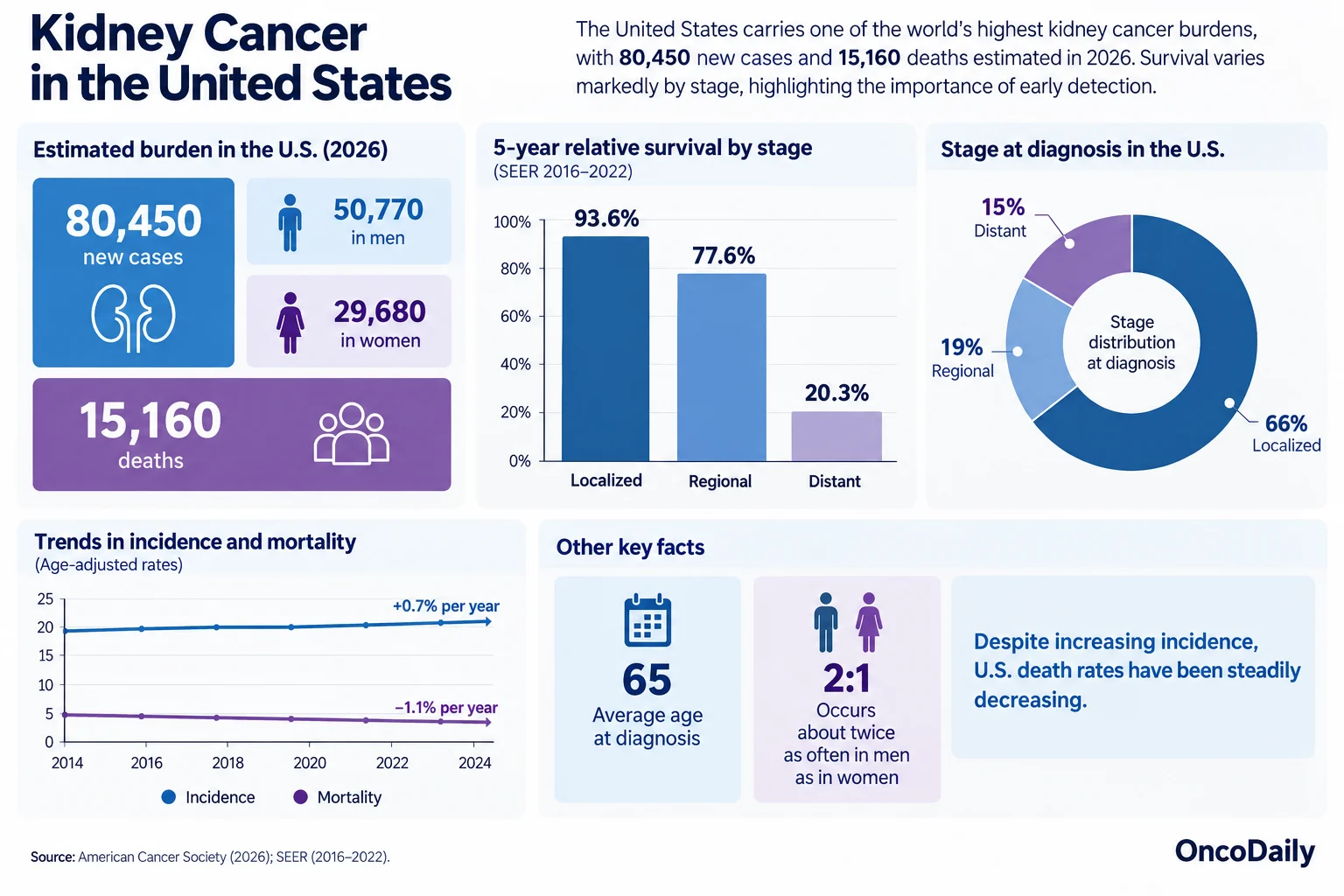
United States: More Than 80,000 Cases Expected in 2026
The United States carries one of the world’s highest kidney cancer burdens. The American Cancer Society estimates that 80,450 new kidney and renal pelvis cancers will be diagnosed in 2026, including 50,770 in men and 29,680 in women. Approximately 15,160 people are expected to die from the disease.
The latest SEER data show a 79.2% five-year relative survival rate for kidney and renal pelvis cancer based on diagnoses from 2016–2022. But survival varies dramatically by stage. Five-year relative survival is 93.6% for localized disease, 77.6% for regional disease, and only 20.3% for distant-stage disease. About 66% of U.S. cases are diagnosed while the cancer remains localized, while approximately 15% are diagnosed after distant spread.
There is also an interesting divergence between incidence and mortality. U.S. age-adjusted incidence increased by an average of 0.7% per year from 2014–2023, while death rates decreased by approximately 1.1% annually from 2015–2024. The average age at diagnosis is about 65, and kidney cancer is approximately twice as common among men as women.
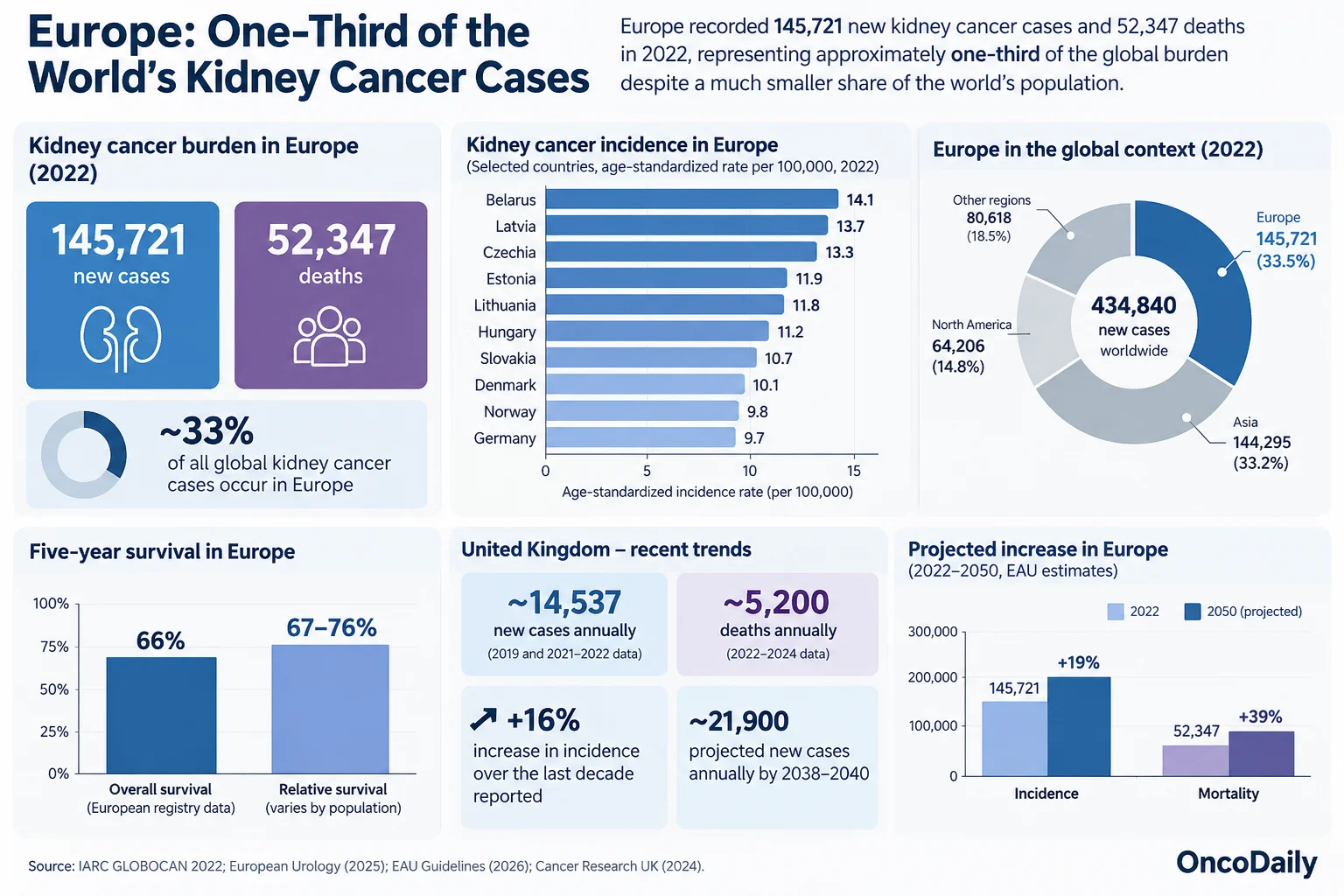
Europe: One-Third of the World’s Kidney Cancer Cases
Europe recorded an estimated 145,721 new kidney cancer cases and 52,347 deaths in 2022, representing approximately one-third of the global burden despite accounting for a much smaller proportion of the world’s population.
Some of the world’s highest kidney cancer incidence rates occur in Europe. In GLOBOCAN 2022 data, Belarus had an age-standardized incidence rate of 14.1 per 100,000, followed by Latvia at 13.7 and Czechia at 13.3. The EAU also identifies Belarus, Latvia, and Czechia among the highest-incidence European countries.
European outcomes nevertheless vary considerably between countries. A recent European Urology review reported five-year overall survival of around 66% in European registry data and five-year relative survival ranging from approximately 67% to 76% depending on the population studied.
The United Kingdom provides a useful example of recent national trends. Around 14,537 new kidney cancers are diagnosed annually, based on 2019 and 2021–2022 data, while approximately 5,200 people die from kidney cancer each year, based on 2022–2024 data. UK incidence rates increased by approximately 16% over the most recent decade reported, and Cancer Research UK projects around 21,900 new cases annually by 2038–2040.
Demographic projections suggest Europe’s kidney cancer burden will continue increasing, although more slowly than in many lower-income regions. The EAU projects a 19% increase in European kidney cancer incidence between 2022 and 2050 and approximately a 39% increase in mortality.
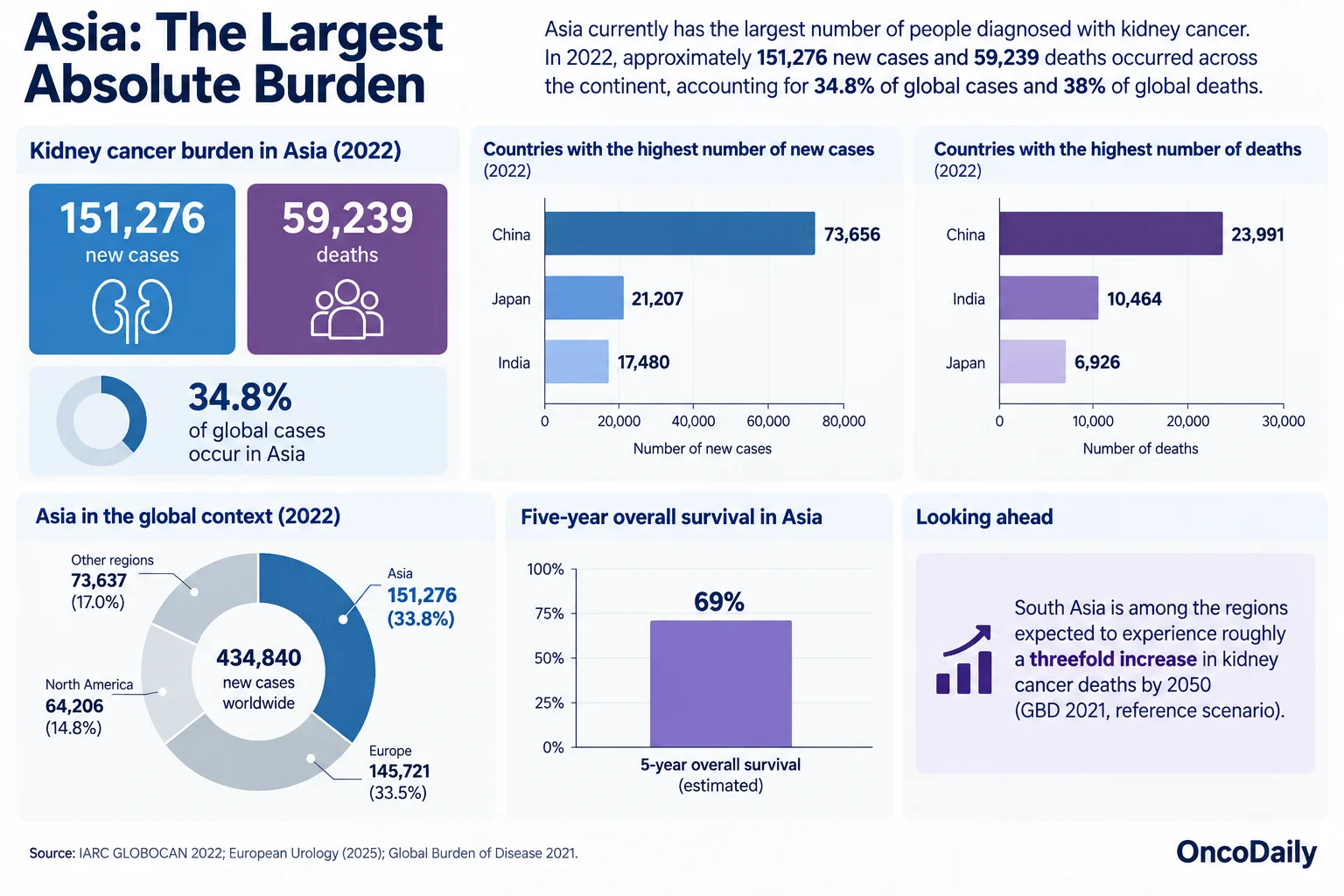
Asia: The Largest Absolute Burden
Asia currently has the largest number of people diagnosed with kidney cancer. In 2022, approximately 151,276 new cases and 59,239 deaths occurred across the continent, accounting for 34.8% of global cases and 38% of global deaths.
China alone recorded approximately 73,656 new cases, the highest number of any country worldwide. Japan followed with 21,207 cases and India with 17,480. China also had the world’s largest number of kidney cancer deaths, at approximately 23,991, while India recorded 10,464 and Japan 6,926.
Available evidence summarized in the 2025 European Urology review places five-year overall survival in Asia at approximately 69%, although outcomes vary substantially across individual countries and healthcare systems.
A separate analysis using Global Burden of Disease 2021 data highlights the potential future challenge facing the region. Under its reference scenario, South Asia is among the regions expected to experience roughly a threefold increase in kidney cancer deaths by 2050.
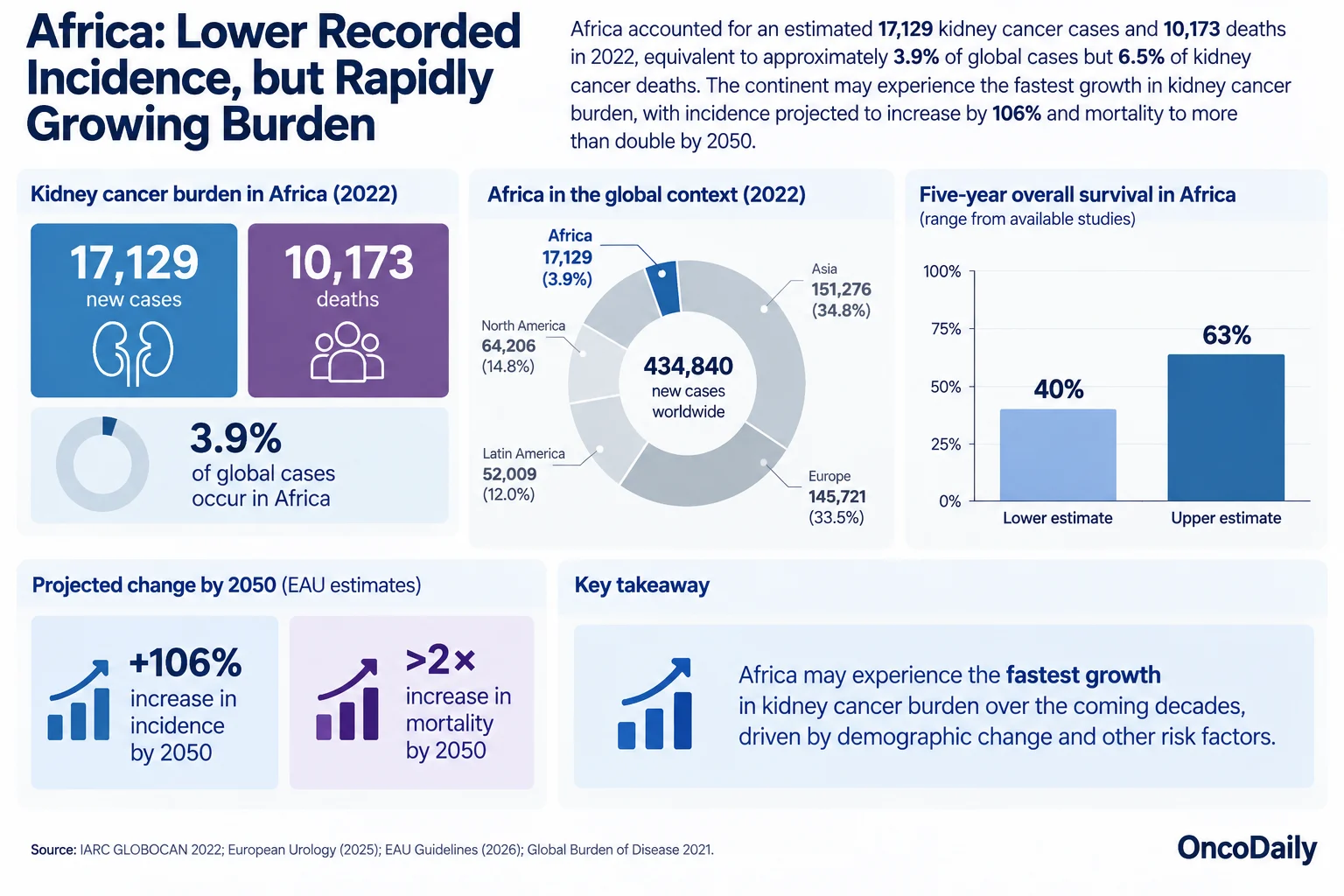
Africa: Lower Recorded Incidence, but Rapidly Growing Burden
Africa accounted for an estimated 17,129 kidney cancer cases and 10,173 deaths in 2022, equivalent to approximately 3.9% of global cases but 6.5% of kidney cancer deaths.
Survival estimates are also substantially more variable. The international epidemiological review reported five-year overall survival ranging from approximately 40% to 63% in available African studies, compared with around 66% in Europe and 69% in Asia.
Africa may experience the fastest growth in kidney cancer burden over the coming decades. EAU projections suggest that, based on demographic change, kidney cancer incidence in Africa could increase by approximately 106% by 2050. The guideline also projects mortality to more than double. A separate GBD-based analysis similarly identified Sub-Saharan Africa as one of the regions facing particularly large increases in kidney cancer deaths through 2050.
Australia: Rising Incidence Alongside High Survival
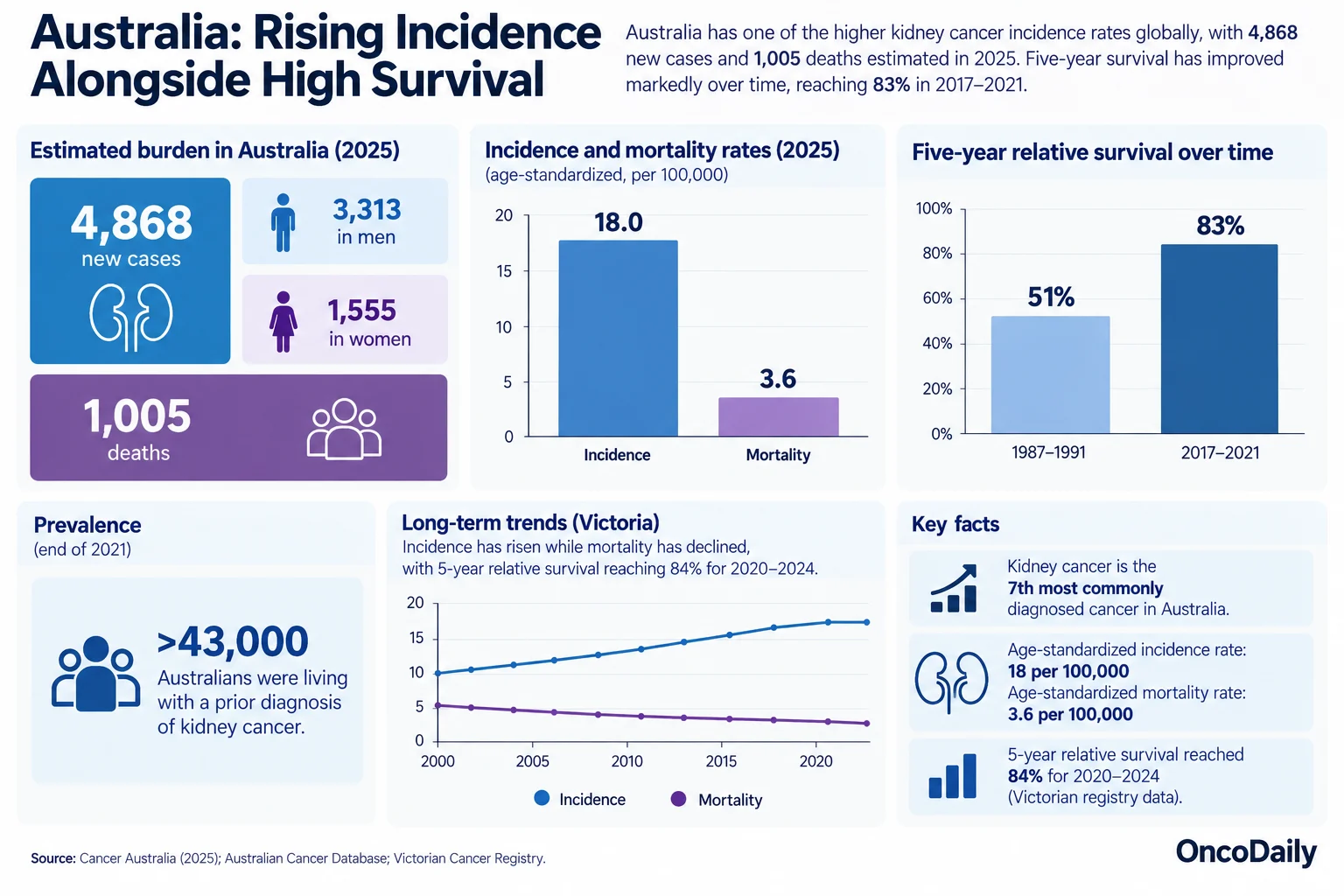
Australia has one of the higher kidney cancer incidence rates globally. Cancer Australia estimates that 4,868 people will be diagnosed with kidney cancer in 2025, including 3,313 men and 1,555 women. Kidney cancer is estimated to remain the seventh most commonly diagnosed cancer in Australia.
Approximately 1,005 kidney cancer deaths were projected for 2025. The estimated age-standardized incidence rate was 18 cases per 100,000 people, compared with an age-standardized mortality rate of 3.6 deaths per 100,000.
Australia also demonstrates how survival has improved over time. Five-year relative survival rose from 51% in 1987–1991 to 83% in 2017–2021. At the end of 2021, more than 43,000 Australians were living who had been diagnosed with kidney cancer at some point during the preceding 40 years.
Recent Victorian registry data show a similar long-term pattern: incidence has continued to rise while mortality rates have declined, and five-year relative survival reached 84% for 2020–2024.
Why Is the Kidney Cancer Burden Increasing?
Part of the rise in kidney cancer incidence is associated with population growth and ageing, while wider use of abdominal imaging has also increased the incidental detection of renal masses. At the same time, several important modifiable risk factors have been established.
The EAU identifies smoking, obesity and hypertension as definite risk factors for renal cell carcinoma. Compared with a BMI below 25, BMI above 35 has been associated with approximately a 71% higher risk in cited studies, while hypertension has been associated with an approximately 70% increase in risk. Diabetes, chronic kidney disease and metabolic syndrome have also been linked to kidney cancer.
There is currently no evidence supporting routine population-wide screening for renal cell carcinoma, which makes risk-based prevention, awareness, early diagnosis and access to appropriate treatment particularly important.
Looking Toward 2050
The future burden of kidney cancer is expected to rise substantially over the coming decades. Based on current demographic trends, the number of new kidney cancer cases worldwide is projected to increase from approximately 434,840 in 2022 to 745,791 by 2050, representing an increase of around 72%. Annual deaths are projected to rise even more sharply, from approximately 155,953 to 304,861, an increase of nearly 96%.
This growth will not be distributed equally across regions. Europe is expected to experience a more moderate increase, while Africa and parts of Asia are projected to see some of the fastest growth in both incidence and mortality. In Africa, for example, kidney cancer incidence is projected to more than double by 2050, largely reflecting rapid population growth, ageing populations and changing patterns of cancer risk.
These projections also highlight an important disparity between rising cancer burden and access to care. Countries with well-established cancer registries, earlier diagnosis, advanced imaging, surgery, systemic therapies and multidisciplinary care have already seen improvements in survival. In contrast, many low- and middle-income countries continue to face challenges related to delayed diagnosis, limited access to specialist services and treatment, and incomplete cancer registration.
Population ageing will be a major driver of future cases, but trends in modifiable risk factors may also influence the scale of the increase. Obesity, hypertension and tobacco exposure remain established risk factors for renal cell carcinoma, meaning that prevention strategies targeting these conditions may have an important role alongside advances in diagnosis and treatment.
At the same time, the projected increase should not be interpreted as inevitable. Improvements in prevention, earlier detection of symptomatic disease, access to high-quality surgery and systemic treatment, and wider availability of evidence-based cancer care could substantially influence future mortality.
The 2050 projections therefore represent more than a forecast of rising case numbers. They underline the need for health systems to prepare for a growing kidney cancer population while addressing regional inequalities in diagnosis, treatment and long-term outcomes. The challenge over the next two decades will be not only to manage more patients, but also to ensure that advances in kidney cancer care reach populations where the burden is expected to grow fastest.
VIRO 2026 – Global Voices in Renal Oncology
OncoDaily will host VIRO 2026 – Global Voices in Renal Oncology, a global virtual congress dedicated to renal oncology and the evolving management of kidney cancer, on September 10–11, 2026. The congress will bring together international experts to discuss current standards of care, emerging treatment strategies, multidisciplinary decision-making, and practical challenges in renal cancer management.

Reference
- Larcher A, Campi R, Bex A, Bray F, Bukavina L, Jonasch E, et al. Epidemiology of renal cancer: incidence, mortality, survival, genetic predisposition, and risk factors. European Urology. 2025;88(4):341–358. doi:10.1016/j.eururo.2025.06.005.
- International Agency for Research on Cancer. Global Cancer Observatory: Cancer Today. GLOBOCAN 2022. Kidney cancer fact sheet. Lyon, France: International Agency for Research on Cancer; 2024.
- European Association of Urology. EAU Guidelines on Renal Cell Carcinoma. 2026 ed. Arnhem, The Netherlands: EAU Guidelines Office; 2026. ISBN 978-94-92671-32-5.
- National Cancer Institute. Surveillance, Epidemiology, and End Results Program. Cancer Stat Facts: Kidney and Renal Pelvis Cancer. Bethesda, MD: National Cancer Institute; 2026.
- American Cancer Society. Key Statistics About Kidney Cancer. Atlanta, GA: American Cancer Society; 2026.
- Cancer Research UK. Kidney Cancer Statistics. London: Cancer Research UK; accessed September 7, 2026.
- Cancer Australia. Kidney Cancer in Australia Statistics. Australian Government; updated December 18, 2025.
- World Cancer Research Fund International. Kidney Cancer Statistics: Global Cancer Incidence and Mortality. London: WCRF International; GLOBOCAN 2022 data.
- Li D, Zhao H, Fan S, Bai J, Guo L, You J, et al. Global and regional burden of kidney cancer from 1990 to 2021: analysis and future predictions based on Global Burden of Disease Study. BMC Cancer. 2025;25:1661. doi:10.1186/s12885-025-15130-8.
- Mignozzi S, Santucci C, Briganti A, Montorsi F, La Vecchia C, Corso G, et al. The global burden of kidney cancer: trends in mortality and incidence with predictions to 2025. European Journal of Cancer Prevention. 2026;35(5):395–404. doi:10.1097/CEJ.0000000000001000.
Disclaimer: This event is intended for educational purposes and does not promote or make representations regarding specific pharmaceutical products or investigational compounds.