
Key takeaways
- Neladalkib, previously known as NVL-655, is an investigational oral ALK-selective tyrosine kinase inhibitor.
- It is designed to inhibit native ALK and resistance mutations, including ALK G1202R and compound mutations.
- The recommended Phase 2 dose is 150 mg orally once daily.
- ALKOVE-1 showed antitumor activity in heavily pretreated ALK-positive NSCLC, including patients with resistance mutations and measurable brain lesions.
- The randomized Phase 3 ALKAZAR trial is comparing first-line neladalkib with alectinib.
- Neladalkib is under FDA Priority Review, with a target decision date of November 27, 2026, but it is not currently approved.
- Liver-enzyme elevations, constipation, taste changes, peripheral edema, cough, and nausea were among the commonly reported adverse events.
NVL-655, now named neladalkib, is an investigational oral tyrosine kinase inhibitor designed for ALK-positive cancers. Its leading development program is in advanced ALK-positive non-small cell lung cancer, or NSCLC, including tumors resistant to earlier ALK inhibitors.
Neladalkib is not currently FDA-approved. Its New Drug Application is under FDA Priority Review for previously treated advanced ALK-positive NSCLC, with a target decision date of November 27, 2026.
What Is NVL-655?
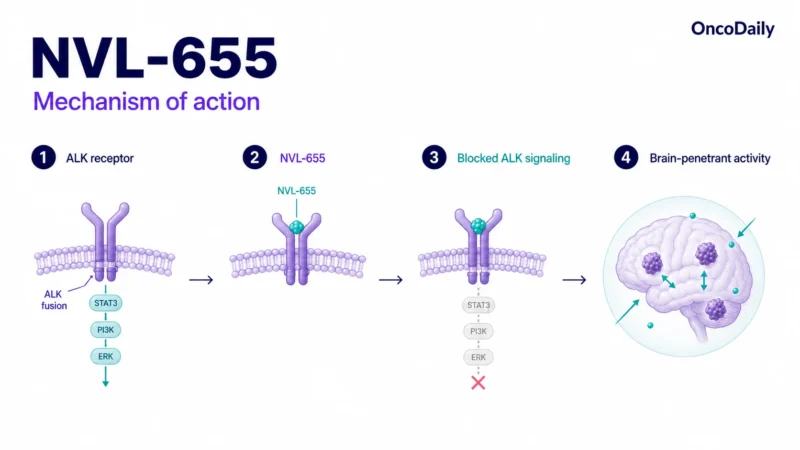
Neladalkib is an oral, brain-penetrant, ALK-selective inhibitor designed to block ALK signaling while limiting off-target inhibition of TRK proteins.
Abnormal ALK signaling promotes cancer-cell growth and survival. Neladalkib inhibits native ALK and several treatment-emergent resistance mutations, including G1202R and compound ALK mutations.
Its central nervous system penetration is intended to provide activity against brain metastases. Its TRK-sparing design may reduce neurological adverse effects associated with less selective ALK inhibitors.
NVL-655 was the drug’s original development code. Neladalkib is its current generic name.
What Is The Dose Of Neladalkib?
The recommended Phase 2 dose is:
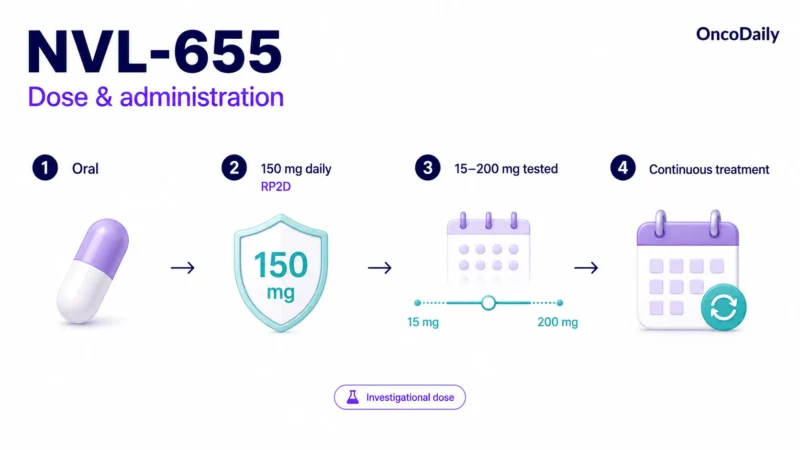
Neladalkib 150 mg orally once daily.
Phase 1 evaluated doses ranging from 15 to 200 mg once daily. Safety, pharmacokinetic, and antitumor-activity findings supported selection of the 150 mg daily regimen.
This remains an investigational dose until regulatory approval and publication of prescribing information.
How Is Neladalkib Administered?
Neladalkib is taken orally once daily on a continuous treatment schedule.
Treatment generally continues until disease progression, unacceptable toxicity, withdrawal, or another protocol-defined reason for discontinuation.
Public trial information does not consistently establish:
- Administration with or without food
- Tablet crushing or dissolution instructions
- Management of vomiting after a dose
- Instructions for a missed dose
- Commercial storage requirements
These details remain governed by the ALKOVE-1 protocol and investigational-product instructions.
Does Neladalkib Require An In-Line Filter?
Neladalkib does not require an in-line filter because it is administered orally.
It does not require dilution, an infusion bag, intravenous tubing, or flushing instructions.
Is Premedication Required?
Neladalkib does not have a routinely established premedication regimen.
Supportive medicines may be given for nausea, constipation, or other adverse effects according to clinical need. Premedication requirements may differ when neladalkib is studied with another anticancer treatment.
Are Dose Reductions Used?
Clinical trials permit temporary interruption, dose reduction, or permanent discontinuation for clinically significant toxicity.
Dose modification may be considered for:
- Elevated alanine aminotransferase or aspartate aminotransferase
- Persistent nausea
- Peripheral edema
- Significant gastrointestinal toxicity
- Severe or recurrent nonhematologic adverse effects
In ALKOVE-1, treatment-emergent adverse events led to dose reductions in approximately 17% of patients and treatment discontinuation in 5%.
What Is Known About Neladalkib Pharmacokinetics?
Neladalkib is an orally bioavailable small molecule administered once daily.
The ALKOVE-1 trial included pharmacokinetic evaluation and drug-interaction substudies involving itraconazole, midazolam, and repaglinide. However, definitive public values for terminal half-life, clearance, accumulation, metabolism, and food effects remain limited.
No approved renal- or hepatic-impairment dose recommendations are available.
Are Renal Or Hepatic Dose Adjustments Required?
No validated dose adjustments have been established for patients with renal or hepatic impairment.
Clinical trials generally require adequate organ function. Liver tests require particular monitoring because increased ALT and AST were among the most frequently reported laboratory adverse events.
What Did Clinical Trials Show?
The Phase 1/2 ALKOVE-1 trial, NCT05384626, evaluated neladalkib in advanced ALK-positive NSCLC and other ALK-altered solid tumors.
Among 253 patients with previously treated ALK-positive NSCLC, the independently assessed objective response rate was 31%. Estimated response durability was 64% at 12 months and 53% at 18 months.
Activity was higher in selected resistance groups:
- ORR of 46% among 63 patients who had not received lorlatinib
- ORR of 68% among 47 patients with an ALK G1202R mutation
- ORR of 58% among patients with compound ALK mutations after at least two previous ALK inhibitors
Among patients with measurable brain lesions, the intracranial response rate was 32% overall and 63% in the lorlatinib-naïve subgroup.
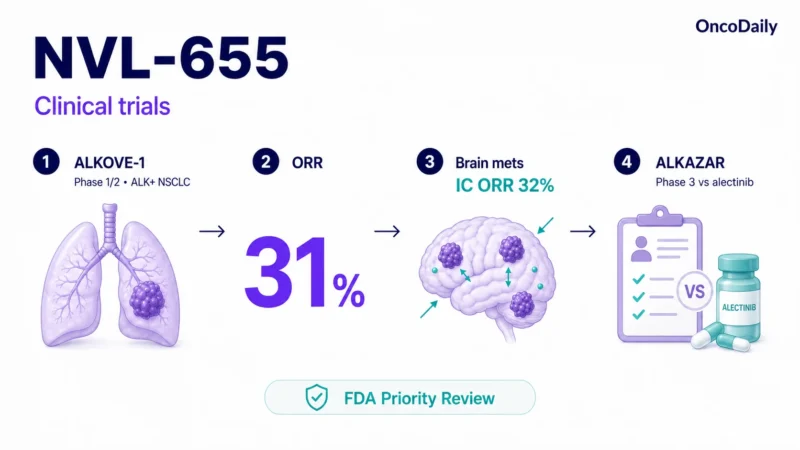
The randomized Phase 3 ALKAZAR trial, NCT06765109 is comparing first-line neladalkib with alectinib in approximately 450 patients with untreated advanced ALK-positive NSCLC. Its primary endpoint is progression-free survival.
Watch more: Hear the patient perspective on living with ALK-positive metastatic lung cancer in this OncoDaily interview with Nancee Pronsati.
What Are The Side Effects Of Neladalkib?
The most frequently reported treatment-emergent adverse events at 150 mg once daily included:
- Increased ALT
- Increased AST
- Constipation
- Taste changes
- Peripheral edema
- Cough
- Nausea
In the ALKOVE-1 safety population, increased ALT occurred in approximately 47% of patients and increased AST in 44%. Constipation occurred in 28%, dysgeusia in 23%, peripheral edema in 18%, and cough and nausea in 16% each.
Its safety profile remains under regulatory review, and complete toxicity-management recommendations are not yet available.
Read more about neladalkib and other emerging targeted therapies for ALK-positive NSCLC on OncoDaily.
Read more about neladalkib and emerging treatment strategies for advanced ALK-positive NSCLC on OncoDaily.
FAQ
Is NVL-655 Approved?
No. Neladalkib remains investigational. Its FDA application is under Priority Review, with a decision expected by November 27, 2026.
Is NVL-655 The Same As Neladalkib?
Yes. NVL-655 is the original development code for neladalkib.
How Is Neladalkib Taken?
Neladalkib is taken orally. The recommended Phase 2 dose is 150 mg once daily.
Does Neladalkib Require An Infusion Filter?
No. Neladalkib is an oral medication and does not require infusion equipment or filtration.
What Cancer Is Neladalkib Mainly Being Studied In?
Its leading indication is advanced ALK-positive NSCLC, including disease that has progressed after earlier ALK tyrosine kinase inhibitors.