





Tremelimumab (Imjudo): Mechanism of Action, Dosing, Clinical Uses, Trials, and Side Effects
Key takeaways
- Tremelimumab is a human IgG2 monoclonal antibody targeting CTLA-4.
- It enhances T-cell activation by blocking CTLA-4 interactions with CD80 and CD86.
- It is FDA-approved in combination with durvalumab for unresectable HCC and with durvalumab plus platinum chemotherapy for metastatic NSCLC.
- HIMALAYA demonstrated improved survival with STRIDE in unresectable HCC.
- POSEIDON demonstrated improved overall and progression-free survival in metastatic NSCLC.
- The principal safety concerns are immune-mediated colitis, hepatitis, endocrinopathies, pneumonitis, and other immune-related toxicities.
Tremelimumab-actl (Imjudo) is a human IgG2 monoclonal antibody targeting cytotoxic T-lymphocyte-associated antigen 4 (CTLA-4), an inhibitory immune checkpoint receptor involved in regulating T-cell activation. By blocking CTLA-4 interactions with CD80 and CD86, tremelimumab enhances T-cell activation and supports antitumor immune responses.
Unlike chemotherapy, tremelimumab does not directly damage tumor-cell DNA. Instead, it removes inhibitory signals that limit the immune system’s ability to recognize and destroy malignant cells.
Tremelimumab is administered in combination with durvalumab (Imfinzi), an anti-PD-L1 antibody. Together, these agents inhibit complementary immune checkpoint pathways.
The FDA approved tremelimumab on October 21, 2022, for unresectable hepatocellular carcinoma (HCC), followed by approval in November 2022 for selected patients with metastatic non-small cell lung cancer (NSCLC).
The combination has two important applications:
- Unresectable HCC: A single priming dose of tremelimumab followed by regular durvalumab maintenance, known as the STRIDE regimen.
- Metastatic NSCLC: A limited course of tremelimumab with durvalumab and platinum-based chemotherapy.
The pivotal HIMALAYA and POSEIDON trials established these treatment approaches. As of November 2026, they remain the two FDA-approved cancer settings for tremelimumab.
Key Facts
- Generic name: Tremelimumab-actl
- Brand name: Imjudo
- Drug class: Immune checkpoint inhibitor
- Antibody type: Human IgG2 monoclonal antibody
- Molecular target: CTLA-4 (CD152)
- Mechanism: Blocks CTLA-4 binding to CD80/CD86, enhancing T-cell activation
- Initial FDA approval: October 21, 2022
- Administration: Intravenous infusion
- Infusion duration: 60 minutes
- HCC dose: 300 mg IV once, followed by durvalumab maintenance
- NSCLC dose: 75 mg IV for up to five doses
- Combination partner: Durvalumab; platinum chemotherapy in NSCLC
- Approved indications: Unresectable HCC and selected metastatic NSCLC
- Pivotal trials: HIMALAYA and POSEIDON
- Important biomarkers: EGFR and ALK in NSCLC; no mandatory PD-L1 threshold
- Major toxicities: Colitis, hepatitis, pneumonitis, endocrinopathies, nephritis, and dermatological reactions
- Boxed warning: None
- Monitoring: Liver function, renal function, thyroid function, ACTH, and symptoms of immune-mediated toxicity
- Elimination half-life: Approximately 16.9 days after a single dose
- Available strengths: 25 mg/1.25 mL and 300 mg/15 mL
- Concentration: 20 mg/mL
What Is Tremelimumab?
Tremelimumab is an immune checkpoint inhibitor that selectively binds CTLA-4, an inhibitory receptor expressed on activated T cells and regulatory T cells.
CTLA-4 normally limits excessive T-cell activation and helps maintain immune tolerance.
However, this regulatory pathway may also suppress beneficial antitumor immune responses.
By blocking CTLA-4, tremelimumab promotes the expansion and activation of responsive T lymphocytes.
Tremelimumab differs from durvalumab in its molecular target and primary site of action.
Tremelimumab targets CTLA-4, influencing T-cell priming and activation.
Durvalumab targets PD-L1, reducing inhibitory signaling affecting activated T cells.
Their combination provides dual immune checkpoint inhibition.
How Does Tremelimumab Differ From Ipilimumab?
Both tremelimumab and ipilimumab target CTLA-4.
However:
- Tremelimumab: Human IgG2 antibody, approved in combination with durvalumab.
- Ipilimumab: Human IgG1 antibody, frequently combined with nivolumab or used alone in selected melanoma settings.
Their Fc characteristics, approved dosing schedules, and clinical indications differ.
They should not be considered interchangeable.
What Is the Mechanism of Action of Tremelimumab?
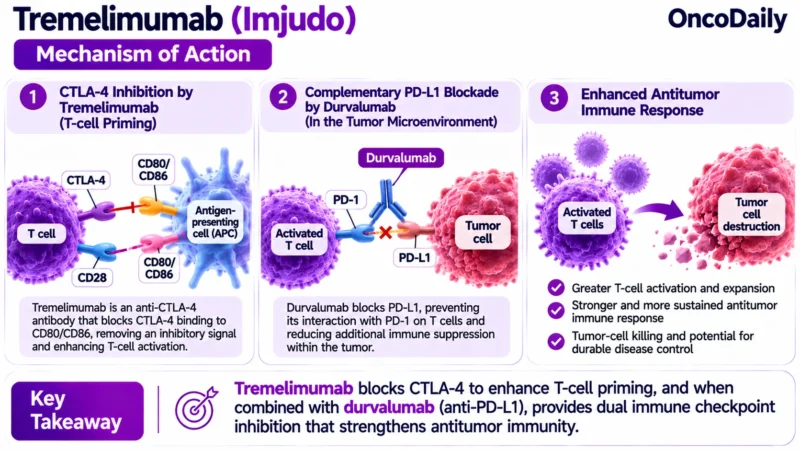
1. Antigen Presentation
Antigen-presenting cells, particularly dendritic cells, process tumor-associated antigens and present them to T lymphocytes.
T-cell activation requires antigen recognition and costimulatory signaling.
2. CD28-Mediated Costimulation
CD28 on T lymphocytes interacts with CD80 and CD86 on antigen-presenting cells.
This promotes:
- T-cell activation
- Proliferation
- Survival
- Cytokine production
3. CTLA-4-Mediated Inhibition
CTLA-4 competes with CD28 for CD80 and CD86 binding.
Because CTLA-4 binds these ligands with greater affinity, it limits costimulatory signaling and reduces T-cell activation.
4. Tremelimumab Binds CTLA-4
Tremelimumab selectively binds CTLA-4 and prevents its interaction with CD80 and CD86.
This removes a regulatory brake on T-cell activation.
5. Enhanced T-Cell Activation
CTLA-4 blockade promotes the activation and expansion of responsive antitumor T-cell populations.
This may increase cytokine production and immune recognition of tumor-associated antigens.
6. Complementary PD-L1 Blockade
Durvalumab blocks PD-L1 interactions with PD-1 and CD80.
Combining tremelimumab and durvalumab inhibits complementary immune regulatory pathways.
7. Immune-Mediated Tumor Destruction
Activated cytotoxic T cells recognize malignant cells and induce apoptosis through perforin, granzymes, and other immune-mediated mechanisms.
This may produce tumor regression and durable disease control.
Overall mechanism:
Tremelimumab → CTLA-4 binding → blockade of CTLA-4/CD80-CD86 interactions → enhanced T-cell priming → durvalumab-mediated PD-L1 blockade → improved antitumor immunity → tumor-cell destruction.
What Is the Recommended Dose of Tremelimumab?
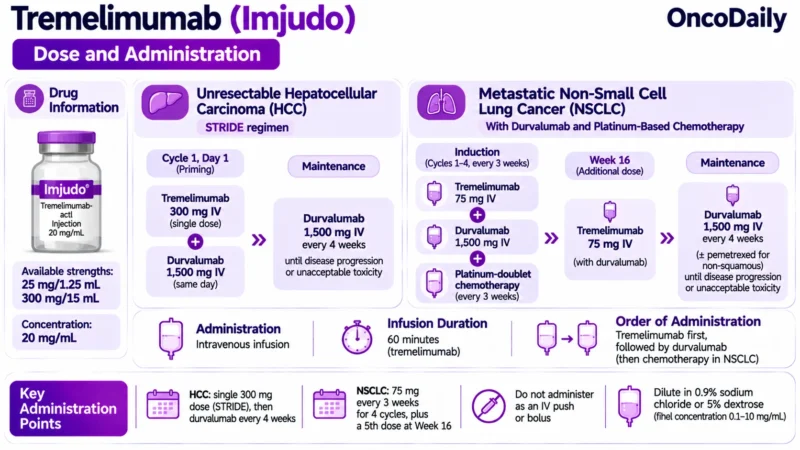
Tremelimumab dosing depends on the indication, body weight, and combination regimen.
Unresectable Hepatocellular Carcinoma — STRIDE Regimen
For adults weighing at least 30 kg:
Cycle 1, Day 1
- Tremelimumab: 300 mg IV once
- Durvalumab: 1,500 mg IV on the same day
Maintenance
Continue durvalumab 1,500 mg IV every four weeks until disease progression or unacceptable toxicity.
No additional tremelimumab doses are routinely administered.
This is the STRIDE regimen, meaning Single Tremelimumab Regular Interval Durvalumab.
HCC — Patients Weighing Less Than 30 kg
The U.S. label specifies:
- Tremelimumab: 4 mg/kg IV once
- Durvalumab: 20 mg/kg IV on the same day
Continue durvalumab 20 mg/kg every four weeks.
These weight-based instructions do not constitute a pediatric approval.
Metastatic Non-Small Cell Lung Cancer
For adults weighing at least 30 kg:
Induction phase — Four cycles
- Tremelimumab: 75 mg IV every three weeks
- Durvalumab: 1,500 mg IV every three weeks
- Platinum-doublet chemotherapy: Every three weeks
Maintenance phase
Continue durvalumab 1,500 mg every four weeks.
Histology-based pemetrexed maintenance may be included for eligible patients with non-squamous NSCLC.
Additional tremelimumab dose
Administer a fifth 75 mg IV dose at Week 16, together with durvalumab.
Thus, the planned course contains five tremelimumab doses.
If fewer than four platinum chemotherapy cycles are delivered, the remaining planned tremelimumab doses may be administered with durvalumab according to the prescribing schedule.
NSCLC — Patients Weighing Less Than 30 kg
The label specifies:
- Tremelimumab: 1 mg/kg
- Durvalumab: 20 mg/kg
Use the same indication-specific induction and maintenance intervals.
Again, this does not indicate pediatric approval.
Chemotherapy Selection in NSCLC
Platinum-doublet chemotherapy depends on histology.
For non-squamous NSCLC, possible regimens include platinum–pemetrexed.
For squamous NSCLC, regimens include platinum–gemcitabine or carboplatin–nab-paclitaxel.
The full chemotherapy regimen should follow the relevant prescribing information.
Treatment Duration
HCC: Tremelimumab is administered once; durvalumab continues until progression or unacceptable toxicity.
NSCLC: Tremelimumab is planned for up to five doses; durvalumab maintenance continues until progression or unacceptable toxicity.
These schedules follow the August 2026 U.S. prescribing information.
How Should Tremelimumab Be Administered?
Intravenous Infusion
Tremelimumab is administered intravenously over 60 minutes.
It must not be administered as an IV push or bolus.
Available Formulations
Imjudo is supplied in single-dose vials containing:
- 25 mg/1.25 mL
- 300 mg/15 mL
Both contain 20 mg/mL tremelimumab.
Preparation and Dilution
Dilute the required dose in:
- 0.9% sodium chloride, or
- 5% dextrose
The final concentration should be 0.1–10 mg/mL.
Inspect the solution before administration and do not shake the vial.
Administer through an appropriate low-protein-binding 0.2- or 0.22-micron inline filter.
Order of Administration
For HCC:
Tremelimumab → Durvalumab
For NSCLC:
Tremelimumab → Durvalumab → Platinum-based chemotherapy
Separate infusion bags and filters are required.
Infusion Observation
For the HCC combination, observe the patient for 60 minutes after tremelimumab, then administer durvalumab.
For NSCLC, the first cycle requires additional separation between infusions. If no reactions occur, subsequent infusion intervals may be shortened according to the label.
Premedication
Routine corticosteroid or antihistamine premedication is not generally required.
Premedication may be individualized for patients with previous infusion reactions or accompanying chemotherapy.
What Should You Do If a Tremelimumab Dose Is Missed?
If a scheduled dose is missed:
- Contact the oncology team.
- Establish why treatment was delayed.
- Assess unresolved toxicity.
- Reschedule according to the indication-specific regimen.
- Do not administer a double dose.
In HCC, the single planned priming dose requires particular attention to treatment scheduling.
In NSCLC, any change to the planned five-dose course should be coordinated with durvalumab and chemotherapy.
How Are Tremelimumab Dose Modifications Managed?
Routine dose reductions are not recommended.
Immune-mediated toxicities are managed through treatment interruption, corticosteroids, additional immunosuppressive therapy, or permanent discontinuation.
Immune-Mediated Colitis
Grade 2: Withhold treatment.
Grade 3–4: Permanently discontinue the combination regimen.
Immune-Mediated Pneumonitis
Grade 2: Withhold treatment.
Grade 3–4: Permanently discontinue.
Immune-Mediated Hepatitis
Management depends on AST, ALT, bilirubin, baseline hepatic function, and liver tumor involvement.
Clinically significant hepatitis requires withholding therapy.
Severe hepatitis may require permanent discontinuation.
Endocrinopathies
Clinically significant thyroid, pituitary, adrenal, or pancreatic endocrine dysfunction may require treatment interruption and hormone replacement.
Permanent discontinuation depends on severity and clinical stability.
Immune-Mediated Nephritis
Grade 2–3 creatinine elevation generally requires treatment interruption.
Grade 4 renal toxicity requires permanent discontinuation.
Myocarditis
Grade 2–4 myocarditis requires permanent discontinuation.
Infusion-Related Reactions
Grade 1–2 reactions may require slowing or interrupting the infusion.
Grade 3–4 reactions require permanent discontinuation.
Corticosteroid Management
For significant immune-mediated toxicity, systemic corticosteroids are commonly initiated at prednisone or methylprednisolone equivalent 1–2 mg/kg/day, depending on the affected organ and severity.
Corticosteroids are typically tapered gradually after improvement, usually over at least four weeks.
Steroid-refractory cases require specialist-directed management.
What Drug Interactions Are Important With Tremelimumab?
CYP450-Metabolized Medications
Tremelimumab is a monoclonal antibody eliminated through proteolytic degradation rather than CYP450 metabolism.
Conventional CYP-mediated pharmacokinetic interactions are unlikely.
Systemic Corticosteroids
Baseline systemic immunosuppression may influence checkpoint inhibitor activity.
However, corticosteroids are essential for treating clinically significant immune-mediated adverse reactions.
Other Immunosuppressive Agents
Concurrent immunosuppressive treatment requires individualized assessment, especially in patients with autoimmune diseases or previous organ transplantation.
Durvalumab
Combining CTLA-4 and PD-L1 blockade increases the potential for immune-mediated adverse reactions, particularly colitis, hepatitis, dermatological toxicity, and endocrinopathies.
Platinum-Based Chemotherapy
In NSCLC, accompanying chemotherapy introduces additional risks, including myelosuppression, nephrotoxicity, nausea, infection, and peripheral neuropathy.
Each chemotherapy agent has its own contraindications, interaction profile, and dose-modification requirements.
Does Tremelimumab Require Dose Adjustment in Renal or Hepatic Impairment?
Renal Impairment
Population pharmacokinetic analyses have not identified clinically meaningful changes in exposure in patients with mild or moderate renal impairment.
Routine dose adjustment is not indicated within these studied ranges.
The effect of severe renal impairment, particularly creatinine clearance below 30 mL/min, is not adequately characterized.
Hepatic Impairment
Mild or moderate hepatic impairment does not appear to meaningfully alter tremelimumab pharmacokinetics.
Data in severe hepatic impairment remain insufficient.
For HCC, hepatic functional reserve is a critical consideration.
Most patients in HIMALAYA had Child–Pugh A liver function.
Patients with decompensated cirrhosis, severe portal hypertension, or clinically significant ascites require individualized assessment.
What Is the Pharmacokinetic Profile of Tremelimumab?
Molecular Structure
Tremelimumab is a human IgG2 monoclonal antibody with an approximate molecular weight of 149 kDa.
Distribution
Estimated central volume of distribution:
3.45 L
Estimated peripheral volume of distribution:
2.66 L
Elimination Half-Life
- After a single dose: Approximately 16.9 days
- At steady state: Approximately 18.2 days
Clearance
- After a single dose: 0.286 L/day
- At steady state: 0.263 L/day
Metabolism
Tremelimumab undergoes catabolic degradation into peptides and amino acids.
Immunogenicity
Antidrug antibodies have been detected in clinical trials.
In HIMALAYA, approximately 11% of evaluable patients developed antitremelimumab antibodies.
Their clinical effect on treatment efficacy remains uncertain.
What Are the Clinical Uses of Tremelimumab?
Unresectable Hepatocellular Carcinoma
Tremelimumab combined with durvalumab is FDA-approved for adults with unresectable HCC.
The STRIDE regimen involves a single high-dose CTLA-4 priming infusion, followed by regular durvalumab maintenance.
It is an important systemic treatment option for patients with unresectable HCC who are candidates for immune checkpoint therapy.
STRIDE may be particularly relevant when an immune checkpoint regimen without VEGF inhibition is desired.
However, the risk of immune-mediated hepatitis must be carefully considered in patients with underlying chronic liver disease.
Metastatic Non-Small Cell Lung Cancer
Tremelimumab with durvalumab and platinum-based chemotherapy is FDA-approved for selected adults with metastatic NSCLC.
Eligible patients must have no sensitizing EGFR mutations or ALK genomic tumor aberrations.
The regimen is applicable to squamous and non-squamous NSCLC, with histology-specific chemotherapy.
POSEIDON demonstrated improved overall survival and progression-free survival compared with chemotherapy alone.
Investigational and Non-Approved Uses
Tremelimumab has been investigated in other malignancies, including SCLC, biliary tract cancer, mesothelioma, and other solid tumors.
These investigational applications should not be confused with FDA-approved indications.
In particular, tremelimumab is not part of the FDA-approved durvalumab–platinum–etoposide regimen for extensive-stage SCLC.
What Molecular Testing Is Required Before Tremelimumab?
EGFR and ALK Testing in NSCLC
Molecular profiling is essential before selecting the approved tremelimumab-containing NSCLC regimen.
Known sensitizing EGFR mutations or ALK rearrangements exclude patients from the labeled indication.
Broader molecular profiling should be considered in accordance with current NSCLC treatment recommendations.
PD-L1 Testing
PD-L1 expression can be evaluated using immunohistochemistry.
However, PD-L1 positivity is not required for the FDA-approved tremelimumab–durvalumab–chemotherapy regimen.
In POSEIDON, benefit was evaluated across different PD-L1 expression categories.
Hepatocellular Carcinoma Assessment
Before STRIDE treatment, evaluate:
- Child–Pugh classification
- ECOG performance status
- Bilirubin, AST, ALT, albumin, and INR
- Portal hypertension and variceal bleeding history
- Hepatitis B and C status
- Presence of ascites or encephalopathy
- Tumor burden and extrahepatic spread
No mandatory PD-L1 or molecular biomarker threshold is required for the HCC indication.
Baseline Safety Assessment
Assess complete blood count, renal function, liver function, thyroid function, ACTH, blood glucose, autoimmune disease history, and previous transplantation.
These investigations help identify potential treatment risks and provide reference values for immune-mediated toxicity monitoring.
What Did the Pivotal Clinical Trials Show?
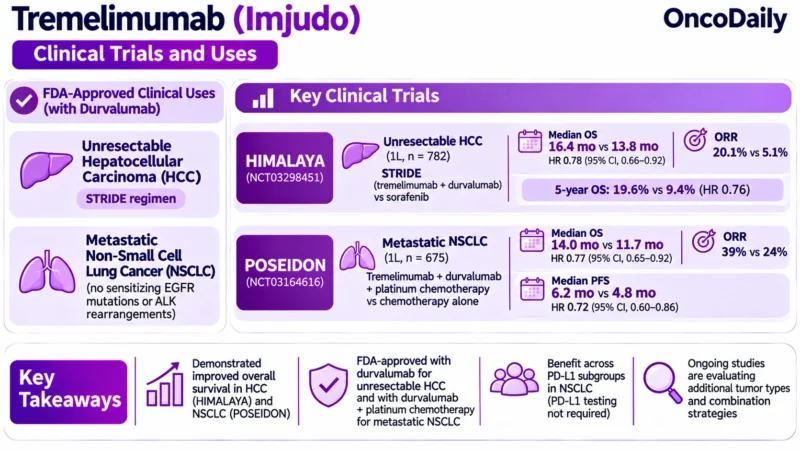
1. HIMALAYA — Tremelimumab Plus Durvalumab in Unresectable HCC
HIMALAYA (NCT03298451) was a randomized phase III study evaluating first-line immune checkpoint therapy in patients with unresectable HCC.
The pivotal STRIDE-versus-sorafenib efficacy comparison included 782 patients.
Patients received a single 300 mg dose of tremelimumab with durvalumab, followed by durvalumab maintenance, or sorafenib.
Median Overall Survival
- STRIDE: 16.4 months
- Sorafenib: 13.8 months
Overall Survival Hazard Ratio
HR: 0.78 (95% CI, 0.66–0.92)
P = 0.0035
Median Progression-Free Survival
- STRIDE: 3.8 months
- Sorafenib: 4.1 months
Progression-Free Survival Hazard Ratio
HR: 0.90 (95% CI, 0.77–1.05)
Overall Response Rate
- STRIDE: 20.1%
- Sorafenib: 5.1%
Median Duration of Response
- STRIDE: 22.3 months
- Sorafenib: 18.4 months
Despite no improvement in median PFS, STRIDE demonstrated a significant overall survival benefit and higher response rate.
These results supported the FDA approval of tremelimumab plus durvalumab for unresectable HCC.
HIMALAYA — Five-Year Overall Survival Update
An updated analysis published in 2025 reported sustained survival benefit.
Five-Year Overall Survival
- STRIDE: 19.6%
- Sorafenib: 9.4%
Updated Overall Survival Hazard Ratio
HR: 0.76 (95% CI, 0.65–0.89)
Approximately one in five patients receiving STRIDE remained alive at five years.
This long-term follow-up strengthened the evidence for durable benefit with the regimen.
Watch More: HIMALAYA: Tremelimumab and Durvalumab as First-Line Therapy in Unresectable HCC — ecancer.
2. POSEIDON — Tremelimumab Plus Durvalumab and Chemotherapy in Metastatic NSCLC
POSEIDON (NCT03164616) was a randomized phase III trial comparing tremelimumab plus durvalumab and platinum-based chemotherapy against chemotherapy alone in previously untreated metastatic NSCLC.
The pivotal efficacy comparison included 675 patients.
Median Overall Survival
- Tremelimumab combination: 14.0 months
- Chemotherapy: 11.7 months
Overall Survival Hazard Ratio
HR: 0.77 (95% CI, 0.65–0.92)
P = 0.00304
Median Progression-Free Survival
- Combination: 6.2 months
- Chemotherapy: 4.8 months
Progression-Free Survival Hazard Ratio
HR: 0.72 (95% CI, 0.60–0.86)
P = 0.00031
Overall Response Rate
- Combination: 39%
- Chemotherapy: 24%
Median Duration of Response
Combination: 9.5 months
Chemotherapy: 5.1 months
The trial demonstrated significant improvements in both overall and progression-free survival, establishing the triple-component regimen as a treatment option for eligible patients with metastatic NSCLC.
Does Tremelimumab Have CNS Activity?
Tremelimumab does not directly target a CNS-specific oncogenic alteration.
Its mechanism relies on immune activation.
The POSEIDON trial excluded patients with active or untreated brain metastases, limiting direct evidence of intracranial efficacy.
Patients with brain metastases require individualized management incorporating:
- Neurological symptoms
- Intracranial disease burden
- Prior radiotherapy
- Corticosteroid requirements
- Suitability for stereotactic radiosurgery or surgery
Tremelimumab is not an established standard treatment for primary CNS tumors.
Is Tremelimumab FDA Approved?
Yes.
The FDA first approved tremelimumab on October 21, 2022, in combination with durvalumab for unresectable HCC.
Later in November 2022, the FDA approved tremelimumab with durvalumab and platinum-based chemotherapy for metastatic NSCLC without sensitizing EGFR mutations or ALK genomic aberrations.
As of November 2026, these remain its two U.S. approved indications.
Tremelimumab is not FDA-approved as standalone monotherapy.
What Is the Current Clinical Role of Tremelimumab in 2026?
Tremelimumab primarily provides CTLA-4 blockade within durvalumab-based combination regimens.
In unresectable HCC, STRIDE remains an established immune checkpoint treatment option with demonstrated long-term overall survival benefit.
In metastatic NSCLC, the POSEIDON regimen offers a dual checkpoint plus chemotherapy approach for patients without sensitizing EGFR mutations or ALK rearrangements.
Treatment selection should consider the availability of alternative regimens, comorbidities, disease characteristics, toxicity risk, and patient preferences.
A defining feature of tremelimumab is its limited-duration administration, with prolonged durvalumab maintenance after CTLA-4 priming.
Read More: EMERALD-3 at ASCO 2026: STRIDE With or Without Lenvatinib Plus TACE in Unresectable HCC by OncoDaily.
What Are the Major Side Effects of Tremelimumab?
Immune-Mediated Adverse Reactions
Severe and potentially fatal immune-mediated toxicities are the principal safety concern with tremelimumab.
CTLA-4 blockade enhances immune activation but may disrupt normal immune tolerance.
Toxicities can occur during treatment or after discontinuation.
The combination with durvalumab requires careful monitoring across multiple organ systems.
Immune-Mediated Colitis
Symptoms include:
- Diarrhea
- Abdominal pain
- Blood or mucus in stool
- Dehydration
- Fever
Severe complications include intestinal perforation.
Grade 3–4 colitis generally requires permanent discontinuation.
Immune-Mediated Hepatitis
Tremelimumab can cause inflammatory liver injury.
Possible findings include:
- Increased AST and ALT
- Hyperbilirubinemia
- Jaundice
- Fatigue
- Abdominal pain
Hepatotoxicity is particularly important in patients with HCC and underlying cirrhosis.
Immune-mediated hepatitis must be differentiated from viral hepatitis, biliary obstruction, tumor progression, and hepatic decompensation.
Immune-Mediated Pneumonitis
Symptoms include new or worsening cough, dyspnea, hypoxia, and inflammatory pulmonary infiltrates.
Infectious and malignant causes should be excluded.
Endocrinopathies
Potential immune-mediated endocrine complications include:
- Hypothyroidism
- Hyperthyroidism
- Thyroiditis
- Hypophysitis
- Adrenal insufficiency
- Type 1 diabetes mellitus
Some patients require long-term hormone replacement.
Immune-Mediated Nephritis
Patients may develop elevated creatinine and acute kidney injury.
Dehydration, chemotherapy toxicity, and other causes of renal dysfunction should be assessed.
Dermatological Reactions
Common reactions include rash and pruritus.
Rare severe reactions include Stevens–Johnson syndrome, toxic epidermal necrolysis, and DRESS syndrome.
Immune-Mediated Myocarditis
Myocarditis is uncommon but potentially life-threatening.
Symptoms may include chest pain, palpitations, syncope, dyspnea, and arrhythmias.
Suspected myocarditis requires immediate interruption and urgent cardiological evaluation.
Neurological Toxicity
Rare complications include:
- Myasthenia gravis
- Guillain–Barré syndrome
- Encephalitis
- Myelitis
- Peripheral neuropathy
- Myositis
Immune-Mediated Pancreatitis
Patients may develop abdominal pain, nausea, vomiting, and elevated pancreatic enzymes.
Infusion-Related Reactions
Possible symptoms include fever, chills, rash, hypotension, and respiratory discomfort.
Severe reactions require permanent discontinuation.
Chemotherapy-Associated Toxicity
In metastatic NSCLC, additional adverse reactions may include myelosuppression, infection, neuropathy, nausea, and nephrotoxicity.
Other Common Adverse Reactions
In HIMALAYA, commonly reported adverse reactions included:
- Rash
- Diarrhea
- Fatigue
- Pruritus
- Musculoskeletal pain
- Abdominal pain
In POSEIDON, common adverse reactions included nausea, fatigue, decreased appetite, musculoskeletal pain, rash, and diarrhea.
Embryo-Fetal Toxicity
Tremelimumab may cause fetal harm.
Females of reproductive potential should use effective contraception during treatment and for three months after the last dose.
Breastfeeding is not recommended during treatment and for three months after the final dose.
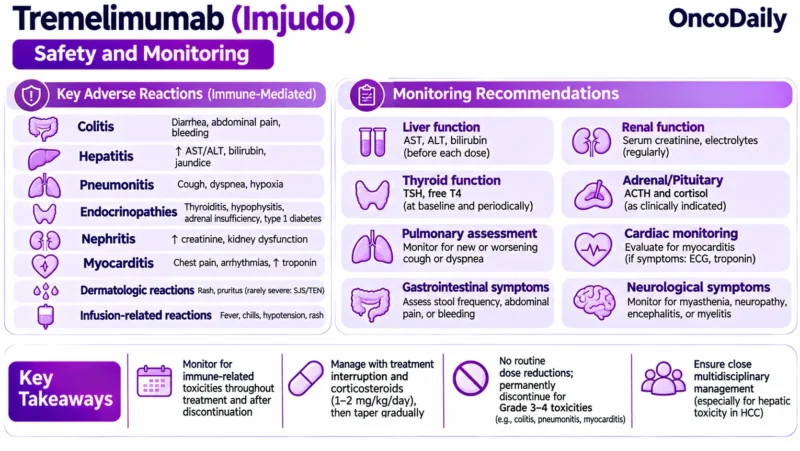
What Monitoring Is Required During Tremelimumab Treatment?
Baseline Assessment
Evaluate:
- Complete blood count
- AST, ALT, and bilirubin
- Serum creatinine and electrolytes
- Thyroid function
- ACTH and other endocrine parameters
- Blood glucose
- Autoimmune disease history
- Previous transplantation
- Performance status
Liver Function
Monitor AST, ALT, and bilirubin before each dose.
Patients with HCC require additional assessment for hepatic decompensation, worsening ascites, encephalopathy, and other complications of cirrhosis.
Renal Function
Monitor serum creatinine and electrolytes at baseline and before each dose.
Thyroid and Pituitary Function
Assess thyroid function and ACTH at baseline and before each dose.
Measure morning cortisol and additional pituitary hormones when clinically indicated.
Gastrointestinal Monitoring
Assess stool frequency, abdominal pain, diarrhea, and gastrointestinal bleeding.
Pulmonary Monitoring
Evaluate new cough, dyspnea, hypoxia, and other respiratory symptoms.
Obtain imaging when pneumonitis is suspected.
Cardiovascular Monitoring
Investigate chest pain, palpitations, syncope, or unexplained breathlessness.
ECG, troponin, and cardiac imaging may be required.
Neurological Monitoring
Assess muscle weakness, headache, visual symptoms, sensory changes, and swallowing difficulties.
Infusion Monitoring
Observe for hypersensitivity and infusion-related reactions, particularly during the initial treatment cycle.
Tumor Response
Use appropriate cross-sectional imaging to evaluate tumor response and progression.
In HCC, response assessment should consider tumor viability and established radiological criteria.
Long-Term Monitoring
Immune-mediated toxicities can develop after treatment discontinuation.
Continued clinical surveillance is therefore essential.