


Rituximab (Rituxan; MabThera): Understanding Its Mechanism, Dosing, Clinical Uses, and Role in B-Cell Malignancies and Autoimmune Diseases
Key takeaways
- Rituximab is a chimeric anti-CD20 monoclonal antibody.
- It produces B-cell depletion through complement-dependent cytotoxicity, antibody-dependent cellular cytotoxicity, and phagocytosis.
- Rituximab was first approved by the FDA in 1997.
- It remains a foundational treatment in CD20-positive B-cell malignancies, including DLBCL, follicular lymphoma, and selected CLL regimens.
- It also has approved roles in rheumatoid arthritis, GPA/MPA, and pemphigus vulgaris.
- The common adult lymphoma dose is 375 mg/m² intravenously, although dosing varies substantially by indication.
- The LNH-98.5 trial demonstrated improved long-term survival with R-CHOP compared with CHOP alone.
- PRIMA established a progression-free survival benefit from rituximab maintenance in responding follicular lymphoma.
- CLL8 demonstrated improved PFS with FCR compared with FC.
- RAVE demonstrated noninferior remission induction with rituximab compared with cyclophosphamide-based therapy in ANCA-associated vasculitis.
- Ritux 3 demonstrated substantially improved complete remission without therapy in pemphigus.
- The most characteristic immediate toxicity is infusion-related reactions.
- Major serious risks include HBV reactivation, PML, severe infections, severe mucocutaneous reactions, and tumor lysis syndrome.
- All patients require HBV screening before treatment.
- A separate subcutaneous rituximab–hyaluronidase formulation is available for selected adult hematologic malignancies.
- Rituximab biosimilars expand treatment availability, but individual product labeling should be checked.
- Rituximab continues to play a central role in modern B-cell-directed immunotherapy.
Rituximab (Rituxan; MabThera) is a chimeric monoclonal antibody targeting CD20, a surface antigen expressed on most mature B lymphocytes and many B-cell malignancies. By binding CD20, rituximab induces B-cell depletion through complement-dependent cytotoxicity, antibody-dependent cellular cytotoxicity, and immune-mediated phagocytosis.
First approved by the FDA in November 1997, rituximab transformed the treatment of B-cell non-Hodgkin lymphoma and subsequently became an important therapy for chronic lymphocytic leukemia (CLL) and several autoimmune diseases. Its approved indications include selected CD20-positive B-cell lymphomas, CLL, rheumatoid arthritis, granulomatosis with polyangiitis (GPA), microscopic polyangiitis (MPA), and pemphigus vulgaris.
Unlike oral targeted therapies, rituximab has indication-specific dosing schedules, commonly ranging from 375 mg/m² intravenously in lymphoma to 1,000 mg per infusion in certain autoimmune conditions.
Key Facts
- Generic name: Rituximab
- Brand names: Rituxan, MabThera
- Drug class: Anti-CD20 monoclonal antibody
- Antibody type: Chimeric human–murine IgG1
- Molecular target: CD20
- Mechanism: Complement-dependent cytotoxicity, antibody-dependent cellular cytotoxicity, phagocytosis, and B-cell depletion
- Route: Intravenous: separate subcutaneous rituximab–hyaluronidase formulation available
- Initial U.S. approval: 1997
- Common lymphoma dose: 375 mg/m² intravenously
- CLL dose: 375 mg/m² in cycle 1, followed by 500 mg/m² in cycles 2–6
- Rheumatoid arthritis dose: 1,000 mg intravenously on Days 1 and 15
- GPA/MPA induction: 375 mg/m² weekly for 4 weeks
Pemphigus vulgaris induction: Two 1,000-mg infusions separated by 2 weeks - IV vial strengths: 100 mg/10 mL and 500 mg/50 mL
- Major oncology indications: CD20-positive B-cell NHL and CLL
- Other indications: Rheumatoid arthritis, GPA, MPA, pemphigus vulgaris
- Characteristic toxicity: Infusion-related reactions
- Major serious toxicities: HBV reactivation, progressive multifocal leukoencephalopathy, serious infections, severe mucocutaneous reactions
- Metabolism: Proteolytic catabolism
- Important precaution: HBV screening before treatment
- Biosimilars: Truxima, Ruxience, Riabni and other approved products
What Is Rituximab?
Rituximab is a genetically engineered monoclonal antibody that selectively binds the:
CD20 antigen.
CD20 is expressed on:
- Pre-B cells
- Mature B lymphocytes
- Most malignant B cells in CD20-positive lymphomas
It is generally absent from hematopoietic stem cells and most terminally differentiated plasma cells.
CD20-positive B cells participate in:
- Antibody-mediated immune responses
- Antigen presentation
- Cytokine production
- Autoimmune inflammation
- B-cell malignancy progression
By targeting these cells, rituximab produces therapeutic effects in both malignant and immune-mediated diseases.
In hematologic malignancies, rituximab promotes destruction of malignant B cells.
In autoimmune conditions, B-cell depletion reduces pathological immune activation and may decrease autoantibody production over time.
Rituximab is a type I anti-CD20 monoclonal antibody, characterized by effective complement recruitment and immune-effector-cell activation.
What Is the Mechanism of Action of Rituximab?
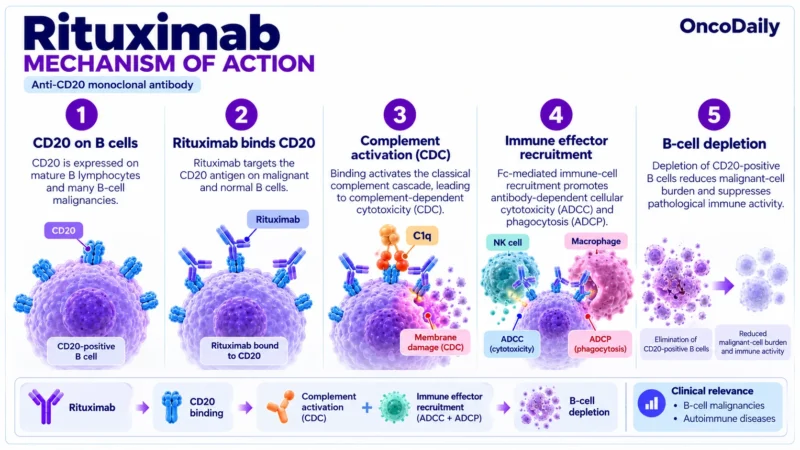
1. CD20 Is Expressed on B Cells
CD20 is a transmembrane protein expressed on mature B lymphocytes and many B-cell malignancies.
These include:
- Follicular lymphoma
- Diffuse large B-cell lymphoma
- Chronic lymphocytic leukemia
- Other CD20-positive B-cell lymphomas
2. Rituximab Binds CD20
Rituximab binds an extracellular epitope of CD20.
The antibody’s Fc region recruits complement proteins and immune effector cells.
3. Complement-Dependent Cytotoxicity Is Activated
Rituximab binding activates the classical complement cascade through C1q.
This promotes formation of the membrane attack complex and destruction of CD20-positive cells.
This mechanism is known as:
Complement-dependent cytotoxicity (CDC).
4. Antibody-Dependent Cellular Cytotoxicity Occurs
Rituximab-coated B cells are recognized by immune effector cells, including:
- Natural killer cells
- Macrophages
- Other Fc receptor-expressing immune cells
These cells promote antibody-dependent cellular cytotoxicity (ADCC) and phagocytosis (ADCP).
5. B-Cell Depletion Produces Clinical Benefit
The combined mechanisms result in depletion of CD20-positive B cells.
In oncology, this reduces malignant B-cell burden.
In autoimmune diseases, it suppresses pathological B-cell-mediated immune activity.
Overall:
Rituximab → CD20 binding → complement activation + immune-effector-cell recruitment → B-cell depletion → reduced malignant-cell burden or autoimmune activity.
Watch more: How Does Rituxan (Rituximab) Work?
What Is the Recommended Dose of Rituximab?
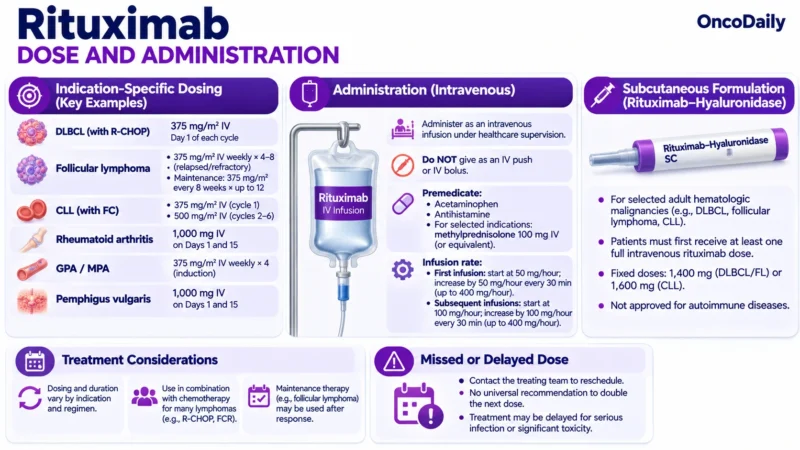
Rituximab dosing depends on the disease and treatment regimen.
Diffuse Large B-Cell Lymphoma
Recommended dose:
375 mg/m² intravenously
on Day 1 of each chemotherapy cycle.
Rituximab is commonly administered with:
R-CHOP chemotherapy.
Follicular Lymphoma
Relapsed or Refractory Disease
375 mg/m² intravenously once weekly for 4 or 8 doses.
Previously Untreated Disease
375 mg/m² intravenously on Day 1 of each chemotherapy cycle, for up to 8 doses.
Maintenance
Following response to first-line rituximab-containing chemotherapy:
375 mg/m² every 8 weeks for up to 12 doses.
Chronic Lymphocytic Leukemia
With fludarabine and cyclophosphamide:
Cycle 1
375 mg/m² intravenously.
Cycles 2–6
500 mg/m² intravenously
on Day 1 of each subsequent 28-day cycle.
Rheumatoid Arthritis
1,000 mg intravenously on Day 1 and Day 15.
Administered with methotrexate.
Subsequent treatment courses depend on clinical response, generally every 24 weeks, but not sooner than 16 weeks.
GPA and MPA
For induction:
375 mg/m² intravenously once weekly for 4 weeks.
For adult follow-up treatment:
500 mg intravenously twice, separated by 2 weeks, followed by 500 mg every 6 months according to clinical evaluation.
Pemphigus Vulgaris
Initial treatment:
1,000 mg intravenously on Day 1 and Day 15
with tapering glucocorticoids.
Maintenance commonly includes:
500 mg at Month 12 and every 6 months thereafter, based on clinical evaluation.
Pediatric and specialized lymphoma regimens require disease-specific dosing protocols.
How Should Rituximab Be Administered?
Intravenous Administration
Rituximab must be administered as an intravenous infusion under healthcare supervision.
Do not administer as:
- Intravenous push
- Intravenous bolus
Premedication
Recommended premedication generally includes:
- Acetaminophen
- An antihistamine
For selected autoimmune indications:
Methylprednisolone 100 mg intravenously, or equivalent, approximately 30 minutes before infusion.
Initial Infusion
Start at:
50 mg/hour.
If tolerated, increase by:
50 mg/hour every 30 minutes
to a maximum of:
400 mg/hour.
Subsequent Infusions
If the previous infusion was tolerated:
Start at:
100 mg/hour.
Increase by:
100 mg/hour every 30 minutes
to a maximum of 400 mg/hour.
Certain eligible lymphoma patients may receive a faster 90-minute infusion according to prescribing criteria.
Subcutaneous Administration
A separate formulation, rituximab–hyaluronidase (Rituxan Hycela), is available for selected adult hematologic malignancies.
Patients must first receive:
At least one full intravenous rituximab dose
before receiving the subcutaneous formulation.
The subcutaneous formulation uses fixed doses and is not directly interchangeable milligram-for-milligram with intravenous rituximab.
What Should You Do If a Rituximab Dose Is Missed?
Rituximab is administered according to a scheduled infusion protocol.
If an appointment is missed:
- Contact the treating team.
- Reschedule based on the treatment regimen.
- Assess whether treatment modification is necessary.
Ther is no universal recommendation to double a subsequent infusion.
Delays may be appropriate for serious infections or significant treatment-related toxicity.
How Are Rituximab Dose Modifications Managed?
Rituximab generally does not require the standard stepwise dose reductions used with oral kinase inhibitors.
Management focuses on infusion-rate adjustment, treatment interruption, or discontinuation.
Mild or Moderate Infusion Reactions
- Slow or temporarily stop the infusion.
- Administer supportive treatment.
- Resume after symptom resolution when appropriate.
- Consider restarting at approximately half the previous infusion rate.
Severe Infusion Reactions
Immediately stop treatment.
Provide emergency management, including oxygen, fluids, bronchodilators, or epinephrine when indicated.
Severe or life-threatening reactions may require permanent discontinuation.
Hepatitis B Reactivation
Discontinue rituximab and initiate appropriate antiviral management.
Progressive Multifocal Leukoencephalopathy
If PML is suspected, withhold treatment and arrange urgent neurological assessment.
If confirmed:
Discontinue rituximab.
Severe Mucocutaneous Reactions
For Stevens–Johnson syndrome, toxic epidermal necrolysis, or other severe reactions:
Immediately discontinue rituximab.
What Drug Interactions Are Important With Rituximab?
Rituximab is not metabolized through CYP450 pathways.
Its clinically important interactions primarily involve immune suppression.
Other Immunosuppressive Agents
Concomitant chemotherapy, glucocorticoids, and other immunosuppressive drugs may increase the risk of:
- Serious infections
- Cytopenias
- Prolonged immunosuppression
- Hypogammaglobulinemia
Live Vaccines
Live vaccines are generally not recommended during rituximab-associated B-cell depletion.
Vaccine responses may also be reduced.
Review immunizations before treatment.
Antihypertensive Medications
Rituximab may cause infusion-related hypotension.
Consider withholding antihypertensive drugs approximately:
12 hours before and during infusion
when clinically appropriate.
Antimicrobial Prophylaxis
Antiviral prophylaxis may be indicated for HBV reactivation risk.
Pneumocystis jirovecii pneumonia prophylaxis is required or recommended for certain rituximab-containing regimens.
Does Rituximab Require Dose Adjustment in Renal or Hepatic Impairment?
Renal Impairment
Rituximab is not primarily eliminated through the kidneys.
Routine dose adjustment is generally not specified for renal impairment.
However, patients at risk of tumor lysis syndrome or receiving nephrotoxic chemotherapy require careful monitoring.
Hepatic Impairment
Rituximab undergoes protein catabolism rather than CYP-mediated hepatic metabolism.
No standard hepatic dose-reduction algorithm is established.
However, HBV reactivation is a major concern and requires appropriate screening, prophylaxis, and monitoring.
What Is the Pharmacokinetic Profile of Rituximab?
Half-Life
Rituximab has a prolonged elimination half-life that varies by indication, tumor burden, and treatment exposure.
In NHL, a mean terminal half-life of approximately:
22 days
was reported following the fourth weekly infusion in a historical pharmacokinetic analysis.
Distribution
Rituximab distributes primarily within blood and extracellular compartments.
Target-mediated distribution and clearance depend partly on CD20-positive cell burden.
Metabolism
Rituximab is metabolized through:
Proteolytic catabolism
into peptides and amino acids.
Clearance
Clearance depends on:
- CD20-positive B-cell burden
- Tumor volume
- Disease type
- Treatment exposure
B-Cell Recovery
B-cell depletion may persist for months after treatment.
Recovery varies considerably between patients.
Repeated treatment can cause prolonged B-cell suppression and hypogammaglobulinemia.
What Are the Clinical Uses of Rituximab?
Diffuse Large B-Cell Lymphoma
Rituximab is a foundational component of immunochemotherapy for CD20-positive DLBCL.
It is used in regimens including:
- R-CHOP
- Pola-R-CHP
Follicular Lymphoma
Rituximab is used for:
- Relapsed or refractory disease
- Combination with first-line chemotherapy
- Maintenance after induction response
- Selected monotherapy strategies
Chronic Lymphocytic Leukemia
Rituximab is FDA approved with fludarabine/cyclophosphamide.
Modern targeted treatments have reduced reliance on FCR, but it remains relevant in selected circumstances.
Pediatric Mature B-Cell Malignancies
Rituximab is approved with chemotherapy for selected children aged at least 6 months with advanced CD20-positive mature B-cell malignancies.
Autoimmune Diseases
FDA-approved non-oncology indications include:
- Rheumatoid arthritis
- GPA
- MPA
- Pemphigus vulgaris
Other autoimmune applications may be off-label.
What Testing Is Required Before Rituximab?
CD20 Testing
For B-cell malignancies, CD20 expression is commonly assessed by:
- Immunohistochemistry
- Flow cytometry
Hepatitis B Screening
Before starting treatment, screen for:
- HBsAg
- Anti-HBc
HBV reactivation can occur even in patients with resolved infection.
Anti-HBs and HBV DNA may be assessed when appropriate.
Other Baseline Assessments
Evaluate:
- Complete blood count
- Liver function
- Active infections
- Vaccination status
- Immunoglobulin concentrations when appropriate
- Tumor lysis risk in high-burden malignancies
What Did the Pivotal Clinical Trials Show?
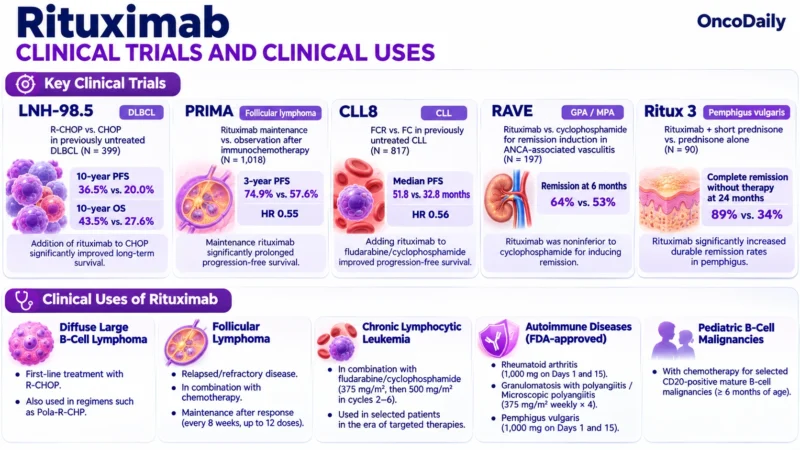
LNH-98.5 — R-CHOP Versus CHOP
The landmark randomized trial evaluated rituximab plus CHOP versus CHOP alone in older patients with previously untreated DLBCL.
The study enrolled:
399 patients.
Ten-Year Progression-Free Survival
- R-CHOP: 36.5%
- CHOP: 20.0%
Ten-Year Overall Survival
- R-CHOP: 43.5%
- CHOP: 27.6%
These findings established a major long-term survival benefit from adding rituximab to chemotherapy.
PRIMA — Rituximab Maintenance in Follicular Lymphoma
The phase III PRIMA study evaluated rituximab maintenance after response to first-line immunochemotherapy.
The trial randomized:
1,018 patients.
Three-Year Progression-Free Survival
- Maintenance: 74.9%
- Observation: 57.6%
Hazard ratio:
0.55
No significant overall survival advantage was demonstrated in the initial analysis.
CLL8 — Rituximab in Chronic Lymphocytic Leukemia
The phase III CLL8 trial compared:
- Fludarabine/cyclophosphamide (FC)
- Rituximab plus FC (FCR)
Median Progression-Free Survival
- FCR: 51.8 months
- FC: 32.8 months
Hazard ratio:
0.56
The study established the benefit of adding rituximab to FC chemotherapy.
RAVE — ANCA-Associated Vasculitis
The randomized RAVE study compared rituximab with cyclophosphamide-based treatment for remission induction.
The study enrolled:
197 patients.
Complete Remission Without Prednisone at Six Months
- Rituximab: 64%
- Cyclophosphamide: 53%
Rituximab demonstrated noninferiority.
Ritux 3 — Pemphigus
The Ritux 3 trial evaluated rituximab plus a short prednisone course versus prednisone alone.
Complete Remission Without Therapy at 24 Months
- Rituximab group: 89%
- Prednisone group: 34%
The results demonstrated substantial benefit from B-cell depletion in pemphigus.
Does Rituximab Have CNS Activity?
Rituximab has limited penetration across an intact blood–brain barrier.
It is included in some treatment regimens for:
- Primary CNS lymphoma
- Secondary CNS lymphoma
However, CNS-directed chemotherapy remains essential when indicated.
Intrathecal rituximab has been investigated, but it is not a standard FDA-approved administration route.
Is Rituximab FDA Approved?
Yes.
Rituximab received its initial FDA approval in:
November 1997.
Hematologic Indications
Approved indications include selected:
- CD20-positive non-Hodgkin lymphomas
- Chronic lymphocytic leukemia
- Pediatric mature B-cell malignancies
Autoimmune Indications
Approved indications include:
- Rheumatoid arthritis
- GPA
- MPA
- Pemphigus vulgaris
Subcutaneous Rituximab
Rituximab–hyaluronidase is approved for selected adult hematologic malignancies.
It requires at least one previous full intravenous rituximab dose.
Biosimilars
FDA-approved rituximab biosimilars include:
- Truxima
- Ruxience
- Riabni
Product-specific indications should be verified.
What Is the Current Clinical Role of Rituximab in 2026?
B-Cell Lymphomas
Rituximab remains central to first-line treatment of many CD20-positive lymphomas.
It is included in established regimens such as R-CHOP and more recent combinations including Pola-R-CHP.
Read more: AbbVie and Genmab Report 51% Reduction in Progression With Epcoritamab Plus R-CHOP in Diffuse Large B-Cell Lymphoma by OncoDaily.
Follicular Lymphoma
Rituximab remains important in induction and maintenance strategies, although newer targeted agents and bispecific antibodies have expanded treatment options.
Chronic Lymphocytic Leukemia
Targeted therapies, including BTK and BCL2 inhibitors, have changed CLL management.
Rituximab-containing chemoimmunotherapy is now reserved for selected situations rather than routine use in most patients.
Autoimmune Diseases
Rituximab remains an established B-cell-depleting treatment for rheumatoid arthritis, ANCA-associated vasculitis, and pemphigus vulgaris.
What Are the Major Side Effects of Rituximab?
Infusion-Related Reactions
Infusion reactions are among the most common adverse effects.
Symptoms may include:
- Fever
- Chills
- Rash
- Hypotension
- Dyspnea
- Bronchospasm
Severe and fatal reactions have occurred, particularly during the first infusion.
Hepatitis B Reactivation
HBV reactivation may cause:
- Hepatitis
- Liver failure
- Death
Reactivation can occur in patients with previous resolved infection.
HBV screening is mandatory before treatment.
Progressive Multifocal Leukoencephalopathy
PML is a rare, potentially fatal JC virus-associated neurological infection.
New neurological symptoms require urgent evaluation.
Serious Infections
B-cell depletion can increase the risk of:
- Bacterial infections
- Viral infections
- Opportunistic infections
- Recurrent infections
Risk increases with concurrent chemotherapy and other immunosuppressive agents.
Hypogammaglobulinemia
Repeated treatment may cause reduced immunoglobulin concentrations and increased infection susceptibility.
Cytopenias
Reported abnormalities include:
- Neutropenia
- Lymphopenia
- ThrombocytopeniaAnemia
Late-onset neutropenia may occur after treatment completion.
Tumor Lysis Syndrome
Rapid malignant B-cell destruction may cause:
- Hyperuricemia
- Hyperkalemia
- Hyperphosphatemia
- Hypocalcemia
- Acute kidney injury
Patients with high tumor burden require appropriate prophylaxis and monitoring.
Severe Mucocutaneous Reactions
Rare but severe reactions include:
- Stevens–Johnson syndrome
- Toxic epidermal necrolysis
These require immediate discontinuation.
Other Important Toxicities
Additional serious adverse reactions include:
- Cardiovascular events
- Renal toxicity
- Bowel obstruction or perforation
- Prolonged immunosuppression
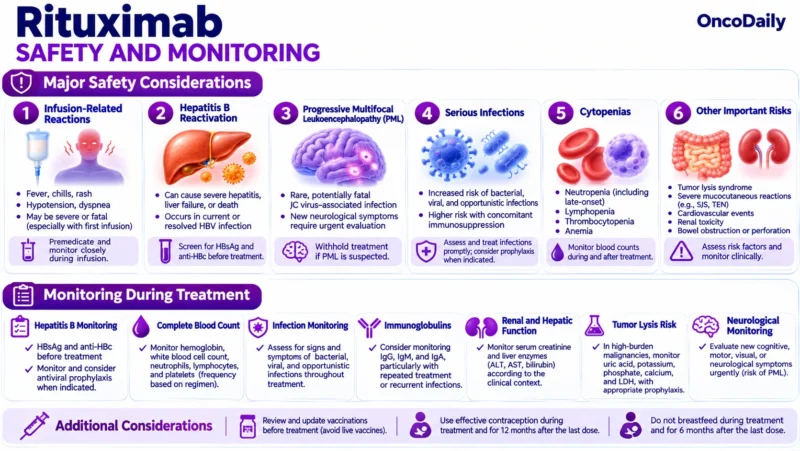
What Monitoring Is Required During Rituximab Treatment?
Hepatitis B Monitoring
Screen all patients before treatment for:
- HBsAg
- Anti-HBc
Patients with current or previous infection require appropriate monitoring and antiviral prophylaxis when indicated.
HBV reactivation may occur months after treatment completion.
Complete Blood Count
Monitor:
- Hemoglobin
- White blood cell count
- Neutrophils
- Lymphocytes
- Platelets
Frequency depends on the treatment regimen.
Infusion Monitoring
During administration, monitor:
- Blood pressure
- Heart rate
- Oxygen saturation
- Respiratory status
- Infusion reactions
Infection Monitoring
Assess for fever, respiratory symptoms, recurrent infections, and opportunistic infections.
Immunoglobulin Monitoring
Consider monitoring:
- IgG
- IgM
- IgA
particularly during repeated treatment or in patients with recurrent infections.
Tumor Lysis Monitoring
For high-risk lymphoma patients, monitor:
- Uric acid
- Creatinine
- Potassium
- Phosphate
- Calcium
- LDH
Renal and Hepatic Function
Monitor renal function and liver enzymes according to the underlying disease and treatment regimen.
Neurological Monitoring
Evaluate new cognitive, motor, visual, or neurological symptoms urgently because of the risk of PML.
Reproductive Considerations
Rituximab may cause fetal harm.
Effective contraception is recommended for females of reproductive potential during treatment and for:
12 months after the final dose.
Breastfeeding is not recommended during treatment and for:
6 months after the final dose.
FAQ
What Is Rituximab Used For?
It is also approved for rheumatoid arthritis, GPA/MPA, and pemphigus vulgaris.
What Is the Mechanism of Action of Rituximab?
What Is the Standard Rituximab Dose?
375 mg/m² intravenously.
However, the dose varies by indication and treatment protocol.
Is Rituximab Chemotherapy?
Rituximab is a monoclonal antibody used as immunotherapy.
It is frequently combined with chemotherapy in hematologic malignancies.
What Are the Most Important Side Effects?
Serious risks include HBV reactivation, PML, severe mucocutaneous reactions, and tumor lysis syndrome.
Why Is Hepatitis B Screening Required?
Reactivation can lead to severe hepatitis, liver failure, or death.
Can Rituximab Be Given Subcutaneously?
Patients must first receive at least one full intravenous rituximab dose.
How Long Does Rituximab Affect B Cells?
The duration varies according to treatment exposure, underlying disease, and individual patient factors.
Are Rituximab Biosimilars Available?
Multiple FDA-approved rituximab biosimilars are available, including Truxima, Ruxience, and Riabni.
What Are the Most Important Clinical Trials?
- LNH-98.5: R-CHOP versus CHOP in DLBCL
- PRIMA: Rituximab maintenance in follicular lymphoma
- CLL8: FCR versus FC in CLL
- RAVE: Rituximab in ANCA-associated vasculitis
- Ritux 3: Rituximab in pemphigus
- POLARIX: Modern rituximab-containing treatment strategies in DLBCL