





Cyclophosphamide: An Established Alkylating Chemotherapy and Immunosuppressive Agent
Key takeaways
- Cyclophosphamide is a prodrug that must be activated in the liver before it can damage cancer-cell DNA.
- Its active metabolite, phosphoramide mustard, forms DNA cross-links that interfere with replication and promote cell death.
- There is no single universal cyclophosphamide dose; dosing varies considerably by cancer type, combination regimen, route, treatment intent, and patient characteristics.
- Cyclophosphamide may be given intravenously or orally and is usually combined with other anticancer medicines.
- Adequate hydration and frequent urination help reduce urinary toxicity, particularly with higher doses.
- Mesna may be used with high-dose cyclophosphamide or when the risk of hemorrhagic cystitis is clinically important.
- Cyclophosphamide commonly causes myelosuppression, nausea, hair loss, infertility, and infection risk.
- Rare but serious toxicities include hemorrhagic cystitis, cardiomyopathy, pulmonary injury, severe hyponatremia, secondary cancers, and veno-occlusive liver disease.
- Cyclophosphamide remains an important component of modern chemotherapy, transplantation, and cellular-therapy protocols.
Cyclophosphamide is an FDA-approved alkylating chemotherapy used alone or as part of combination regimens for several hematologic malignancies and solid tumors. It is available in intravenous and oral formulations and is also used in selected transplant-conditioning, graft-versus-host disease–prevention, and immunosuppressive settings.
This article aims to review cyclophosphamide’s mechanism of action, dose, administration, preparation requirements, pharmacokinetics, clinical applications, safety profile, regulatory status, and current role in oncology.
Cyclophosphamide Key Facts
- Generic name: Cyclophosphamide
- Former brand name: Cytoxan
- Drug class: Alkylating agent; nitrogen mustard derivative
- Treatment type: Cytotoxic chemotherapy and immunosuppressive therapy
- Administration: Intravenous or oral
- Active metabolites: Phosphoramide mustard and acrolein
- Main approved cancers: Lymphomas, leukemias, multiple myeloma, breast cancer, ovarian cancer, neuroblastoma, retinoblastoma, and advanced mycosis fungoides
- Additional clinical roles: Stem-cell-transplant conditioning, post-transplant GVHD prevention, lymphodepletion before cellular therapy, and selected nonmalignant immune disorders
- Approval status: FDA approved
- Dose: Regimen- and indication-specific
- Important toxicities: Myelosuppression, infection, hemorrhagic cystitis, infertility, cardiotoxicity, pulmonary toxicity, secondary malignancies, and embryo-fetal toxicity
What Is Cyclophosphamide?
Cyclophosphamide is a synthetic chemotherapy drug chemically related to the nitrogen mustards. It has both antineoplastic and immunosuppressive activity.
The FDA-approved cancer indications include:
- Hodgkin lymphoma
- Selected non-Hodgkin lymphomas
- Multiple myeloma
- Acute and chronic leukemias
- Advanced mycosis fungoides
- Disseminated neuroblastoma
- Ovarian adenocarcinoma
- Retinoblastoma
- Breast cancer
Although it can have activity when administered alone, cyclophosphamide is more commonly used concurrently or sequentially with other anticancer drugs.
Examples of established cyclophosphamide-containing regimens include:
- AC: Doxorubicin and cyclophosphamide for breast cancer
- AC-T: Doxorubicin and cyclophosphamide followed by paclitaxel
- CMF: Cyclophosphamide, methotrexate, and fluorouracil
- CHOP: Cyclophosphamide, doxorubicin, vincristine, and prednisone
- R-CHOP: Rituximab plus CHOP
- TAC: Docetaxel, doxorubicin, and cyclophosphamide
Cyclophosphamide is also used for lymphodepletion before some CAR T-cell, tumor-infiltrating lymphocyte, and other adoptive cellular therapies. Post-transplant cyclophosphamide has become an important strategy for reducing graft-versus-host disease after allogeneic hematopoietic stem-cell transplantation.
Cyclophosphamide Mechanism of Action
Cyclophosphamide is administered as an inactive prodrug. It is metabolized primarily in the liver to active compounds, including aldophosphamide and phosphoramide mustard.
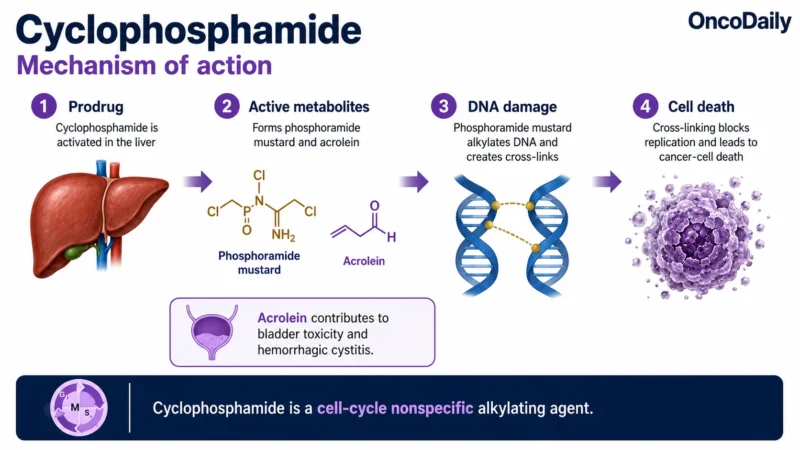
Its mechanism involves several steps:
- Hepatic activation: Liver enzymes convert cyclophosphamide into active metabolites.
- Phosphoramide mustard formation: Aldophosphamide is converted into phosphoramide mustard.
- DNA alkylation: Phosphoramide mustard attaches alkyl groups to DNA.
- DNA cross-linking: Cross-links prevent normal DNA replication and transcription.
- Cell-cycle disruption: Rapidly dividing cancer cells become unable to complete cell division.
- Cell death: Accumulated DNA damage activates apoptosis and other cell-death pathways.
Cyclophosphamide is considered cell-cycle nonspecific, although rapidly proliferating cells are generally more susceptible to its effects.
What Causes Cyclophosphamide Bladder Toxicity?
Cyclophosphamide metabolism also produces acrolein, a toxic metabolite excreted in urine.
When acrolein remains in contact with the bladder lining, it may cause:
- Bladder irritation
- Hematuria
- Hemorrhagic cystitis
- Bladder fibrosis
- Rarely, severe or fatal urinary-tract injury
Hydration, frequent bladder emptying, and mesna in selected regimens help reduce exposure of the urinary tract to acrolein.
Immunosuppressive Effects
Cyclophosphamide suppresses proliferating B and T lymphocytes. This contributes to its use in autoimmune disease, transplant conditioning, and GVHD prevention.
When administered shortly after stem-cell transplantation, high-dose cyclophosphamide preferentially eliminates rapidly expanding alloreactive T cells while allowing other immune and stem cells to recover.
What Is the Dose of Cyclophosphamide?
There is no single standard cyclophosphamide dose. The correct dose depends on:
- Cancer type
- Treatment regimen
- Oral or intravenous administration
- Body weight or body-surface area
- Curative, adjuvant, palliative, conditioning, or immunosuppressive intent
- Combination drugs
- Bone-marrow reserve
- Kidney and liver function
- Previous chemotherapy or radiotherapy
- Treatment response and toxicity
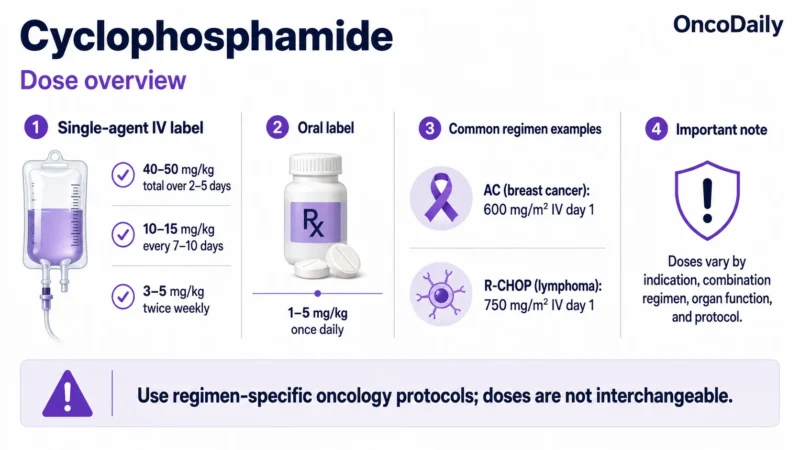
FDA-Labeled Intravenous Dosing
When cyclophosphamide is used as the only anticancer drug in patients without hematologic deficiency, the FDA label describes an initial course of:
40–50 mg/kg intravenously, divided over 2–5 days.
Other labeled intravenous schedules include:
- 10–15 mg/kg every 7–10 days
- 3–5 mg/kg twice weekly
These general labeled schedules are not substitutes for disease-specific oncology protocols. Most modern cancer treatment uses body-surface-area–based doses within multidrug regimens.
FDA-Labeled Oral Dosing
The labeled oral dose range for malignant disease is:
1–5 mg/kg orally once daily for initial or maintenance treatment.
The dose must be adjusted according to the regimen, clinical response, myelosuppression, and other toxicities.
Examples of Regimen-Specific Dosing
Common protocols may use substantially different doses, such as:
- Conventional doses administered every 2–4 weeks
- Dose-dense schedules with growth-factor support
- Daily low-dose or metronomic schedules
- High-dose conditioning before stem-cell transplantation
- Post-transplant doses used for GVHD prophylaxis
- Lymphodepleting doses given before engineered T-cell therapy
These doses are not interchangeable. Treatment must follow the specific chemotherapy or transplant protocol.
How Is Cyclophosphamide Administered?
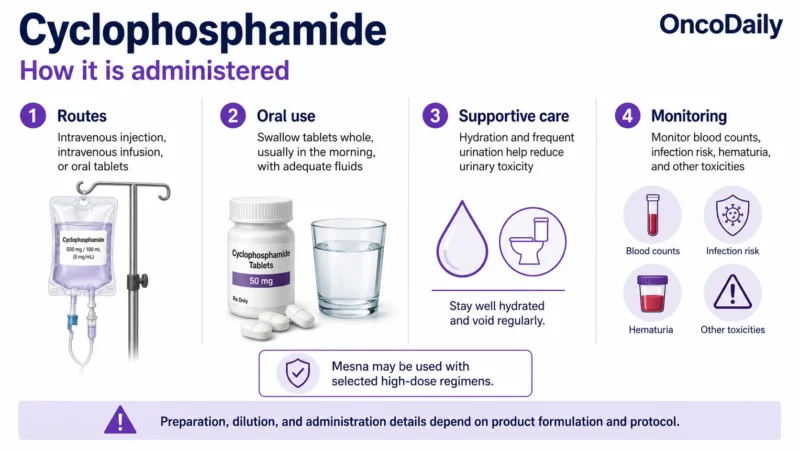
Cyclophosphamide may be administered:
- By direct intravenous injection
- By intravenous infusion
- As an oral tablet
- Less commonly through specialized protocol-defined schedules
Intravenous Administration
Cyclophosphamide may be administered slowly by IV injection or infusion.
The current FDA label for one ready-to-dilute formulation instructs clinicians to:
- Dilute to 20 mg/mL with 0.9% sodium chloride for direct IV injection
- Dilute to 2 mg/mL for infusion using a compatible solution such as 0.45% sodium chloride, 5% dextrose, or 5% dextrose with 0.9% sodium chloride
- Administer slowly to reduce rate-associated symptoms such as facial swelling, headache, nasal congestion, or scalp burning
Preparation instructions differ between manufacturers and formulations, particularly between ready-to-dilute solutions and powder vials. The current product-specific label and institutional pharmacy guidance must therefore be followed.
Oral Administration
Cyclophosphamide tablets should be:
- Swallowed whole
- Taken in the morning
- Taken with adequate fluids
- Not crushed or chewed
- Handled as hazardous cytotoxic medication
Taking the dose in the morning supports hydration and frequent urination during waking hours, which may reduce urinary-tract exposure to toxic metabolites.
Hydration
Adequate fluid intake or intravenous hydration should be provided during or immediately after cyclophosphamide administration to promote urine production and reduce urinary toxicity.
Patients receiving high-dose treatment may require:
- Intensive IV hydration
- Frequent urine monitoring
- Strict fluid-balance assessment
- Mesna
- Monitoring for electrolyte disturbances and fluid overload
Does Cyclophosphamide Require an In-Line Filter?
A universal in-line-filter requirement is not specified in the FDA cyclophosphamide label.
The solution should be visually inspected for particulate matter and discoloration before administration. A filter should only be used when required by:
- The specific product label
- Institutional pharmacy policy
- The complete chemotherapy regimen
- The infusion solution or administration equipment
Filtration instructions from another chemotherapy product should not automatically be applied to cyclophosphamide.
Is Premedication Required?
Cyclophosphamide does not have one universal premedication regimen.
Supportive treatment is selected according to the dose, regimen, and individual patient risk.
Antiemetic Premedication
Cyclophosphamide can cause nausea and vomiting. Antiemetic prophylaxis may include:
- A serotonin 5-HT3 antagonist
- Dexamethasone
- An NK1 receptor antagonist
- Olanzapine
- Other protocol-directed antiemetics
The number and type of antiemetics depend on the cyclophosphamide dose and the emetogenic potential of the complete regimen.
Mesna
Mesna binds toxic urinary metabolites and may be used to reduce the risk of hemorrhagic cystitis.
It is particularly relevant with:
- High-dose cyclophosphamide
- Transplant-conditioning regimens
- Previous bladder toxicity
- Protocols associated with substantial urotoxic exposure
Mesna does not replace adequate hydration and frequent urination.
Growth-Factor Support
Granulocyte colony-stimulating factor may be administered when the regimen carries a clinically important risk of febrile neutropenia or when individual risk factors justify prophylaxis.
Are Dose Reductions Used?
Yes. Cyclophosphamide treatment may be delayed, reduced, or discontinued because of toxicity.
Dose modification may be needed for:
- Neutropenia
- Thrombocytopenia
- Serious infection
- Hemorrhagic cystitis
- Renal impairment
- Hepatic impairment
- Cardiac toxicity
- Pulmonary toxicity
- Severe mucositis
- Prolonged bone-marrow suppression
- Severe hyponatremia
- Poor performance status
Complete blood counts should be monitored throughout treatment. The label advises against administration when neutrophils are 1,500/mm³ or lower or platelets are below 50,000/mm³, although specific clinical protocols may define additional criteria.
The exact reduced dose and criteria for restarting treatment depend on the complete regimen rather than cyclophosphamide alone.
What Is Known About Cyclophosphamide Pharmacokinetics?
Cyclophosphamide is well absorbed after oral administration and undergoes hepatic activation.
Metabolism
Several cytochrome P450 enzymes participate in cyclophosphamide activation, including:
- CYP2B6
- CYP2C9
- CYP2C19
- CYP3A4
- CYP3A5
The resulting metabolites include:
- 4-hydroxycyclophosphamide
- Aldophosphamide
- Phosphoramide mustard
- Acrolein
Phosphoramide mustard is mainly responsible for antitumor activity, while acrolein contributes to urinary toxicity.
Distribution and Elimination
Cyclophosphamide and its metabolites are distributed through body fluids and tissues. Renal excretion contributes to elimination of the parent drug and metabolites.
Pharmacokinetic exposure can vary because of:
- Age
- Liver function
- Kidney function
- Genetic differences in metabolic enzymes
- Drug interactions
- Previous or simultaneous chemotherapy
- High-dose treatment
- Repeated administration
Traditional plasma concentrations do not fully predict treatment efficacy because active intracellular metabolites contribute to the drug’s effects.
Are Renal or Hepatic Dose Adjustments Required?
Renal Impairment
Reduced kidney function may increase cyclophosphamide and metabolite exposure.
The FDA label recommends close monitoring for toxicity in patients with moderate or severe renal impairment. Some cyclophosphamide can be removed through dialysis, so the timing of administration relative to dialysis may be clinically important.
Dose adjustment is regimen-specific and may depend on:
- Creatinine clearance
- Dialysis status
- Treatment intent
- Planned cyclophosphamide dose
- Concomitant medicines
Hepatic Impairment
Because cyclophosphamide requires hepatic activation, severe liver impairment may reduce conversion to active metabolites and potentially reduce efficacy.
At the same time, altered metabolism may unpredictably affect toxicity. There is no single universally validated dose adjustment for every degree of hepatic dysfunction.
Treatment decisions should consider:
- Bilirubin
- Transaminases
- Synthetic liver function
- Cause and severity of impairment
- Treatment urgency
- Alternative regimens
What Did Cyclophosphamide Clinical Trials Show?
Cyclophosphamide has been studied for decades, and its clinical role is supported by numerous trials across different diseases rather than one single registration study.
Breast Cancer
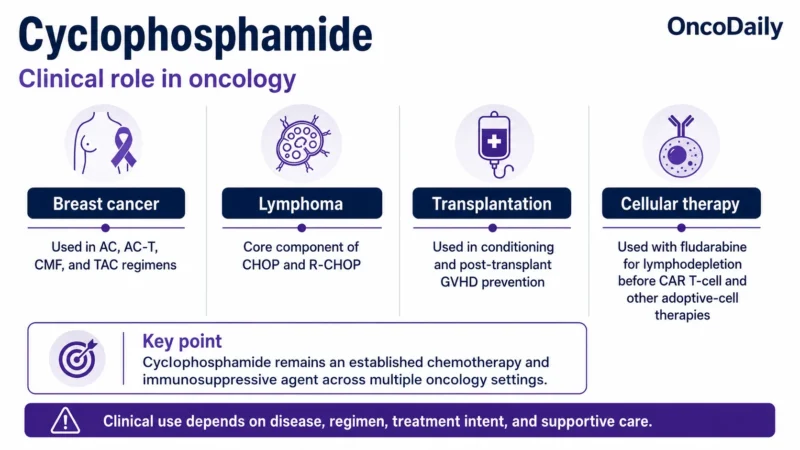
Cyclophosphamide is used in several neoadjuvant and adjuvant breast-cancer regimens, including AC, AC-T, CMF, and TAC.
Its role is usually evaluated as part of combination chemotherapy rather than as an isolated drug. Modern trials continue to compare anthracycline-containing and non-anthracycline cyclophosphamide regimens and to combine them with targeted therapies or immunotherapy.
Clinical trial: NCT00070564 — Phase 3 evaluation of cyclophosphamide-containing adjuvant chemotherapy schedules in early breast cancer.
Lymphoma
Cyclophosphamide is a core component of CHOP and R-CHOP.
R-CHOP combines:
- Rituximab
- Cyclophosphamide
- Doxorubicin
- Vincristine
- Prednisone
It remains a major treatment platform for several B-cell lymphomas, including diffuse large B-cell lymphoma.
Read more: about diffuse large B-cell lymphoma and R-CHOP treatment on OncoDaily.
Watch more: Low-Grade Lymphomas: Treatments, Strategies, and Innovations on OncoDaily.
Leukemia and Multiple Myeloma
Cyclophosphamide has established activity in multiple leukemias and multiple myeloma. Its role varies from conventional combination chemotherapy to mobilization, conditioning, salvage treatment, and immunomodulatory combinations.
Stem-Cell Transplantation
Cyclophosphamide may be administered:
- Before transplantation as part of conditioning
- After transplantation to prevent graft-versus-host disease
- In haploidentical, matched-related, or matched-unrelated transplant strategies
A randomized transplant study supported a post-transplant cyclophosphamide–based regimen as an effective GVHD-prevention strategy, helping expand its use beyond haploidentical transplantation.
Cellular Therapy
Cyclophosphamide is frequently combined with fludarabine for lymphodepletion before:
- CAR T-cell therapy
- Tumor-infiltrating lymphocyte therapy
- Engineered T-cell receptor therapies
- Other adoptive-cell treatments
In this setting, its main purpose is to reduce competing immune cells and create an environment that supports expansion of the infused therapeutic cells.
Current Research
Cyclophosphamide continues to be evaluated in clinical trials involving:
- Chemoimmunotherapy
- Metronomic immunomodulation
- Cancer vaccines
- Cellular therapies
- Novel transplant-conditioning regimens
- GVHD prevention
- Dose-reduced regimens for older or medically vulnerable patients
The NCI continues to list numerous active cyclophosphamide-containing oncology trials.
Is Cyclophosphamide Approved?
Yes. Cyclophosphamide is FDA approved.
Approved formulations include oral tablets and intravenous products. Multiple manufacturers produce cyclophosphamide, and product-specific formulation, concentration, preparation, and storage instructions may differ.
Its approved malignant indications include selected:
- Lymphomas
- Leukemias
- Multiple myeloma
- Breast cancer
- Ovarian cancer
- Neuroblastoma
- Retinoblastoma
- Mycosis fungoides
Oral cyclophosphamide is also approved for biopsy-proven minimal-change nephrotic syndrome in selected pediatric patients who do not respond adequately to or cannot tolerate corticosteroids.
What Is the Current Status of Cyclophosphamide?
Cyclophosphamide remains an established and widely used oncology medicine.
Its role continues to evolve because it serves several distinct purposes:
- Direct cytotoxic chemotherapy
- Combination chemotherapy
- Immunosuppression
- Stem-cell-transplant conditioning
- Post-transplant GVHD prevention
- Lymphodepletion before cellular therapy
- Immune modulation in experimental combinations
Because it is an older generic medicine, current research generally evaluates cyclophosphamide as part of a multidrug or multimodality treatment strategy rather than as a new standalone anticancer agent.
What Are the Side Effects of Cyclophosphamide?
Common or clinically important adverse effects include:
- Neutropenia
- Leukopenia
- Anemia
- Thrombocytopenia
- Infection
- Nausea
- Vomiting
- Reduced appetite
- Fatigue
- Hair loss
- Mouth sores
- Diarrhea
- Skin and nail changes
- Temporary or permanent infertility
- Menstrual changes
- Reduced sperm production
Myelosuppression and Infection
Cyclophosphamide can cause severe bone-marrow suppression and immunosuppression, potentially leading to serious or fatal infection.
Blood counts should be monitored throughout treatment. The lowest white-cell and platelet counts commonly occur during the first two weeks after administration, although timing depends on the regimen.
Hemorrhagic Cystitis
Urinary complications include:
- Hematuria
- Hemorrhagic cystitis
- Pyelitis
- Ureteritis
- Bladder fibrosis
- Secondary bladder cancer
Severe hemorrhagic cystitis requires treatment interruption or discontinuation.
Cardiotoxicity
High-dose cyclophosphamide may cause:
- Myocarditis
- Pericarditis
- Arrhythmias
- Heart failure
- Hemorrhagic myocardial injury
Risk may be higher with high cumulative exposure, previous chest radiotherapy, existing heart disease, or other cardiotoxic therapies.
Pulmonary Toxicity
Cyclophosphamide may cause pneumonitis or pulmonary fibrosis. New cough, shortness of breath, or reduced oxygen levels require clinical evaluation.
Hyponatremia
Cyclophosphamide may produce water retention and severe hyponatremia, including a syndrome resembling inappropriate antidiuretic hormone secretion.
Secondary Malignancies
Long-term risks include secondary cancers, particularly:
- Bladder cancer
- Myelodysplastic syndrome
- Acute leukemia
- Other hematologic or solid malignancies
Infertility and Pregnancy Risk
Cyclophosphamide can impair ovarian and testicular function. Infertility may be temporary or permanent and depends on age, dose, cumulative exposure, and other therapies.
The drug can harm a developing fetus and requires appropriate pregnancy-prevention counseling during and after treatment.
Written by Mirna Antabian, MD