


Avelumab (Bavencio): Mechanism of Action, Dosing, Clinical Uses, Trials, and Side Effects
Key takeaways
- Avelumab is a fully human IgG1 monoclonal antibody targeting PD-L1.
- It restores antitumor T-cell activity and retains the capacity to induce ADCC in vitro.
- Its approved uses include metastatic MCC, selected advanced urothelial carcinoma settings, and advanced RCC with axitinib.
- The standard dose is 800 mg intravenously every two weeks.
- Unlike several other checkpoint inhibitors, avelumab requires antihistamine and acetaminophen premedication before the first four infusions.
- JAVELIN Merkel 200 demonstrated durable responses in metastatic MCC.
- JAVELIN Bladder 100 established an overall survival benefit for avelumab maintenance after platinum chemotherapy in advanced urothelial carcinoma.
- JAVELIN Renal 101 demonstrated improved progression-free survival and response rates with avelumab plus axitinib in advanced RCC.
- Immune-mediated toxicities and infusion-related reactions are the principal safety concerns.
Avelumab (Bavencio) is a fully human IgG1 monoclonal antibody targeting programmed death-ligand 1 (PD-L1), an inhibitory immune checkpoint protein expressed on tumor cells and immune cells within the tumor microenvironment. By preventing PD-L1 from interacting with PD-1 and B7.1 (CD80), avelumab restores antitumor T-cell activity and promotes immune-mediated destruction of malignant cells.
Unlike conventional chemotherapy, avelumab does not directly damage cancer-cell DNA or interfere with cell division. Instead, it inhibits immune checkpoint signaling that malignant cells use to evade immune surveillance.
Avelumab belongs to the immune checkpoint inhibitor (ICI) class. It can be administered as monotherapy or combined with axitinib, depending on the malignancy and treatment setting.
The FDA first approved avelumab on March 23, 2017, for metastatic Merkel cell carcinoma (MCC), a rare and aggressive neuroendocrine skin cancer.
Its indications subsequently expanded to include locally advanced or metastatic urothelial carcinoma and advanced renal cell carcinoma (RCC).
One of avelumab’s most important clinical applications is first-line maintenance therapy following platinum-based chemotherapy in advanced urothelial carcinoma, supported by the phase III JAVELIN Bladder 100 trial.
Unlike atezolizumab and durvalumab, which have Fc-engineered antibodies designed to minimize effector activity, avelumab retains an IgG1 Fc region capable of mediating antibody-dependent cellular cytotoxicity (ADCC) in experimental systems.
As of November 2026, its U.S. prescribing information includes metastatic MCC, selected urothelial carcinoma indications, and first-line advanced RCC in combination with axitinib.
Key Facts
- Generic name: Avelumab
- Brand name: Bavencio
- Drug class: Immune checkpoint inhibitor
- Antibody type: Fully human IgG1 monoclonal antibody
- Molecular target: PD-L1 (CD274)
- Mechanism: PD-L1 blockade, restoration of T-cell activity, and potential ADCC
- Initial FDA approval: March 23, 2017
- Administration: Intravenous infusion
- Recommended dose: 800 mg every two weeks
- Infusion duration: 60 minutes
- Premedication: Antihistamine and acetaminophen before the first four infusions
- Combination dosing: Avelumab 800 mg every two weeks plus axitinib 5 mg orally twice daily
- Treatment duration: Until progression or unacceptable toxicity
- FDA indications: Metastatic MCC, selected advanced urothelial carcinoma settings, and advanced RCC with axitinib
- Important trials: JAVELIN Merkel 200, JAVELIN Bladder 100, JAVELIN Renal 101, and JAVELIN Solid Tumor
- Major biomarkers: PD-L1, Merkel cell polyomavirus status, and disease-specific molecular alterations
- Boxed warning: None
- Principal toxicities: Infusion-related reactions, fatigue, rash, and immune-mediated adverse reactions
- Serious risks: Pneumonitis, colitis, hepatitis, endocrinopathies, nephritis, myocarditis, and major cardiovascular events with axitinib
- Monitoring: Liver function, renal function, thyroid function, blood glucose, infusion reactions, and blood pressure with axitinib
- Elimination half-life: Approximately 6.1 days
- Intravenous formulation: 20 mg/mL solution
What Is Avelumab?
Avelumab is a fully human monoclonal antibody that selectively binds PD-L1.
PD-L1 is an immune regulatory protein expressed on malignant cells and immune cells.
Its interaction with PD-1 receptors on activated T lymphocytes suppresses T-cell proliferation, cytokine secretion, and cytotoxic activity.
Many tumors exploit this pathway to escape immune recognition.
Avelumab blocks PD-L1-mediated signaling, restoring antitumor activity in responsive T-cell populations.
Like atezolizumab and durvalumab, avelumab targets PD-L1.
However, avelumab retains the ability to induce ADCC in vitro, whereas atezolizumab and durvalumab have Fc modifications that substantially reduce Fc-mediated effector activity.
This distinction makes avelumab mechanistically different from other approved PD-L1 inhibitors, although the independent contribution of ADCC to clinical efficacy remains uncertain.
What Is the Mechanism of Action of Avelumab?
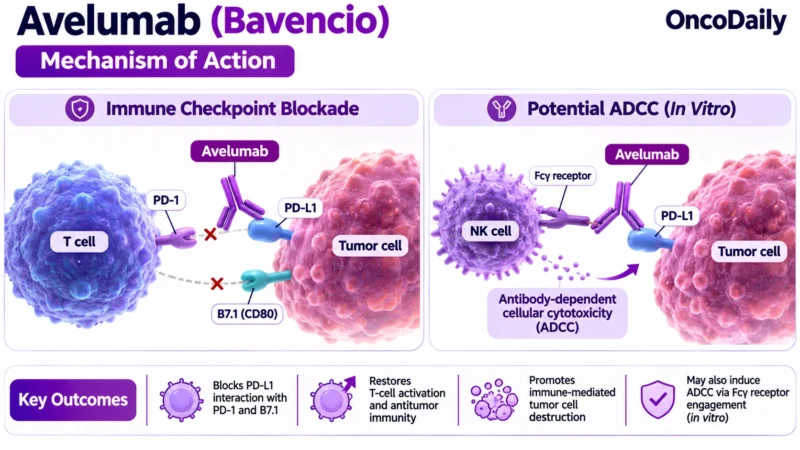
1. PD-L1 Expression
Tumor cells and tumor-associated immune cells may express PD-L1.
PD-L1 contributes to immune escape by suppressing activated antitumor T cells.
Its expression can be influenced by inflammatory cytokines and tumor microenvironment signals.
2. PD-L1-Mediated Immune Suppression
PD-L1 binds PD-1 receptors on activated T lymphocytes.
This interaction suppresses intracellular T-cell signaling, reducing:
- T-cell proliferation
- Cytokine production
- Cytotoxic function
- Antitumor immune surveillance
PD-L1 also interacts with B7.1, contributing to immune regulation.
3. Avelumab Binds PD-L1
Avelumab selectively binds PD-L1 and prevents its interaction with PD-1 and B7.1.
This interrupts inhibitory signaling without directly blocking PD-1 interaction with PD-L2.
4. Restoration of T-Cell Activity
PD-L1 blockade restores immune activity in responsive antitumor T-cell populations.
This enhances T-cell proliferation, cytokine secretion, and immune-mediated cancer-cell recognition.
5. Antibody-Dependent Cellular Cytotoxicity
Avelumab retains a functional IgG1 Fc region.
Its Fc region may interact with Fcγ receptors on immune effector cells, particularly natural killer cells.
This can induce ADCC against PD-L1-expressing cells in vitro.
However, the clinical importance of this mechanism relative to checkpoint inhibition has not been established.
6. Immune-Mediated Tumor-Cell Destruction
Activated cytotoxic T lymphocytes recognize tumor-associated antigens and release perforin and granzymes.
These mechanisms contribute to malignant-cell apoptosis and tumor regression.
7. Durable Antitumor Activity
Avelumab may generate prolonged responses through sustained immune activation and antitumor surveillance.
However, primary or acquired resistance may develop.
Overall mechanism:
Avelumab → PD-L1 binding → inhibition of PD-1/B7.1 signaling → restoration of T-cell activity ± Fc-mediated ADCC → enhanced antitumor immunity → cancer-cell destruction.
What Is the Recommended Dose of Avelumab?
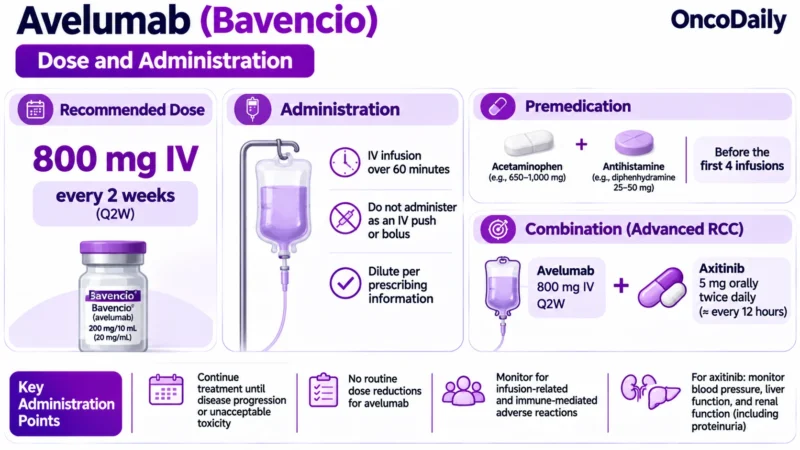
Standard Adult Intravenous Dose
The recommended dose for approved indications is:
800 mg IV every two weeks.
Each infusion is administered over 60 minutes.
Treatment generally continues until disease progression or unacceptable toxicity.
Metastatic Merkel Cell Carcinoma
Adults and pediatric patients aged 12 years and older
Avelumab 800 mg IV every two weeks.
Continue until disease progression or unacceptable toxicity.
This dose applies to the FDA-approved population, including eligible adolescents.
Advanced Urothelial Carcinoma — First-Line Maintenance
Avelumab is administered after first-line platinum-based chemotherapy in patients whose disease has not progressed.
Dose: 800 mg IV every two weeks.
In JAVELIN Bladder 100, patients received four to six cycles of gemcitabine plus cisplatin or carboplatin before maintenance treatment.
Treatment was initiated 4–10 weeks after chemotherapy completion.
Avelumab was continued until progression or unacceptable toxicity.
Previously Treated Advanced Urothelial Carcinoma
Avelumab 800 mg IV every two weeks.
The U.S. label also includes selected patients with disease progression during or after platinum-containing chemotherapy, including recurrence within 12 months of perioperative platinum treatment.
Clinical use should account for prior checkpoint inhibitor exposure and contemporary treatment sequencing.
Advanced Renal Cell Carcinoma
For first-line advanced RCC:
- Avelumab: 800 mg IV every two weeks.
- Axitinib: 5 mg orally twice daily, approximately 12 hours apart.
Axitinib may be administered with or without food.
Axitinib dose escalation or reduction is managed according to its own prescribing information.
Continue until progression or unacceptable toxicity.
How Should Avelumab Be Administered?
Intravenous Infusion
Avelumab is administered intravenously over 60 minutes.
It must not be administered as an intravenous push or bolus.
Preparation and Dilution
Bavencio is supplied as:
200 mg/10 mL (20 mg/mL) in single-dose vials.
The required dose is diluted in an appropriate infusion solution according to the prescribing information.
Use appropriate aseptic technique and inspect the solution for visible particles or discoloration.
Do not shake the vial.
Premedication
Premedication is required before the first four infusions.
Administer:
- An antihistamine
- Acetaminophen
Premedication for subsequent infusions depends on clinical judgment and previous infusion reactions.
This is an important distinction from several other PD-1/PD-L1 inhibitors, for which routine premedication is generally unnecessary.
Administration With Axitinib
Avelumab is administered intravenously while axitinib is taken orally twice daily.
Patients should be monitored for overlapping and treatment-specific toxicities, particularly hepatotoxicity, hypertension, diarrhea, and cardiac complications.
Hospitalization
Routine hospitalization is not required.
Treatment is generally administered in an outpatient oncology setting equipped to manage infusion-related and immune-mediated adverse reactions.
What Should You Do If an Avelumab Dose Is Missed?
If a scheduled infusion is missed:
- Contact the treating oncology team.
- Determine the reason for treatment interruption.
- Reschedule the dose according to clinical circumstances.
- Reassess previous infusion reactions or unresolved toxicities.
- Do not administer a double dose.
If avelumab is combined with axitinib, missed oral axitinib doses should be managed according to axitinib prescribing instructions.
How Are Avelumab Dose Modifications Managed?
Routine dose reductions are not recommended.
Avelumab-related toxicity is generally managed through temporary interruption, supportive care, corticosteroids, or permanent discontinuation.
Immune-Mediated Pneumonitis
Grade 2: Withhold avelumab.
Grade 3–4: Permanently discontinue treatment.
Exclude infection, pulmonary embolism, and disease progression when clinically relevant.
Immune-Mediated Colitis
Grade 2–3 colitis generally requires treatment interruption.
Grade 4 colitis requires permanent discontinuation.
Systemic corticosteroids are used for clinically significant cases.
Additional immunosuppressive therapy may be required for corticosteroid-refractory disease.
Immune-Mediated Hepatitis
Treatment modification depends on AST, ALT, bilirubin, baseline hepatic function, and treatment regimen.
Severe hepatitis may require permanent discontinuation.
Immune-Mediated Endocrinopathies
Patients with thyroid dysfunction, adrenal insufficiency, or diabetes may require hormone replacement.
Temporary treatment interruption may be appropriate until clinical stabilization.
Immune-Mediated Nephritis
Clinically significant renal dysfunction may require withholding avelumab.
Severe immune-mediated nephritis may require permanent discontinuation.
Immune-Mediated Myocarditis
Suspected myocarditis requires immediate treatment interruption and urgent cardiac evaluation.
Clinically significant immune-mediated myocarditis generally requires permanent discontinuation.
Infusion-Related Reactions
Grade 1: Reduce the infusion rate.
Grade 2: Withhold or interrupt the infusion and resume at a reduced rate when appropriate.
Grade 3–4: Permanently discontinue avelumab.
Combination With Axitinib
Axitinib may require dose reduction, interruption, or discontinuation for toxicities including hypertension, hepatotoxicity, and diarrhea.
Avelumab dose reduction is not recommended.
What Drug Interactions Are Important With Avelumab?
CYP450-Metabolized Medications
Avelumab is a monoclonal antibody primarily eliminated through proteolytic degradation.
Conventional CYP450-mediated pharmacokinetic interactions are not expected.
Corticosteroids
Systemic corticosteroids may suppress immune activity.
Unnecessary baseline immunosuppression should be minimized when clinically feasible.
However, corticosteroids remain essential for managing significant immune-mediated toxicities.
Other Immunosuppressive Agents
Concomitant potent immunosuppression may affect checkpoint inhibitor activity.
Careful evaluation is required in patients with autoimmune disorders or previous transplantation.
Axitinib
Combination treatment introduces additional risks including:
- Hypertension
- Hepatotoxicity
- Proteinuria
- Diarrhea
- Hemorrhage
- Thromboembolism
- Major adverse cardiovascular events
Axitinib is metabolized primarily through CYP3A4/5, so its drug interactions should be reviewed separately.
Does Avelumab Require Dose Adjustment in Renal or Hepatic Impairment?
Renal Impairment
Population pharmacokinetic analyses have not demonstrated clinically meaningful changes in avelumab clearance across mild to severe renal impairment, including studied patients with creatinine clearance as low as 15 mL/min.
Routine renal dose adjustment is not required within the studied range.
Clinical data in dialysis patients remain limited.
Hepatic Impairment
Mild and moderate hepatic impairment do not significantly affect avelumab pharmacokinetics.
Severe hepatic impairment has not been adequately characterized.
Patients receiving axitinib require additional hepatic assessment and possible axitinib dose modifications.
What Is the Pharmacokinetic Profile of Avelumab?
Molecular Structure
Avelumab is a fully human IgG1 monoclonal antibody with an approximate molecular weight of 147 kDa.
Distribution
Mean steady-state volume of distribution:
4.7 L
Elimination Half-Life
Approximately:
6.1 days
Clearance
Estimated systemic clearance:
0.59 L/day
Metabolism
Avelumab undergoes proteolytic degradation into peptides and amino acids.
Steady-State Exposure
Steady-state concentrations are generally achieved after approximately 4–6 weeks.
Immunogenicity
Antidrug antibodies may develop during treatment.
Their clinical impact depends on the study population and assay methodology.
The pharmacokinetic values and dosing recommendations are derived from the current U.S. Bavencio prescribing information.
What Are the Clinical Uses of Avelumab?
Metastatic Merkel Cell Carcinoma
Avelumab is FDA-approved for adults and adolescents aged 12 years and older with metastatic MCC.
MCC is an aggressive neuroendocrine skin cancer associated with Merkel cell polyomavirus infection or ultraviolet radiation-related genomic damage.
Avelumab may provide durable responses in selected patients, including those previously treated with chemotherapy.
Advanced Urothelial Carcinoma — First-Line Maintenance
Avelumab is approved for patients with locally advanced or metastatic urothelial carcinoma whose disease has not progressed following first-line platinum-based chemotherapy.
Patients may have achieved:
- Complete response
- Partial response
- Stable disease
The JAVELIN Bladder 100 trial established a significant survival benefit from switching to maintenance avelumab after chemotherapy.
Previously Treated Advanced Urothelial Carcinoma
Avelumab also retains a U.S. labeled indication for selected patients with disease progression during or following platinum-based chemotherapy.
However, its use in this setting has become less prominent because of changes in first-line treatment, particularly enfortumab vedotin plus pembrolizumab, and other subsequent-line options.
Advanced Renal Cell Carcinoma
Avelumab combined with axitinib is approved for first-line treatment of advanced RCC.
The combination targets two complementary pathways:
- Avelumab: PD-L1-mediated immune suppression
- Axitinib: VEGFR1, VEGFR2, and VEGFR3 signaling
This approach combines immunotherapy with inhibition of tumor-associated angiogenesis.
Although approved, avelumab–axitinib is less commonly prioritized than some other contemporary immunotherapy-based first-line RCC combinations because treatment selection incorporates the totality of survival evidence, patient risk, tolerability, and guideline preferences.
What Molecular Testing Is Required Before Avelumab?
PD-L1 Expression
PD-L1 expression may be assessed using immunohistochemistry.
However, PD-L1 positivity is not required for the FDA-approved avelumab indications.
Both PD-L1-positive and PD-L1-negative patients demonstrated responses in clinical studies.
Merkel Cell Polyomavirus
Merkel cell polyomavirus is associated with a substantial proportion of MCC cases.
Testing may be useful for diagnostic and biological characterization.
However, MCPyV positivity is not required for avelumab treatment.
Urothelial Carcinoma Molecular Testing
Molecular profiling may identify clinically important alterations, including:
- FGFR3 alterations
- HER2 expression or amplification
- Other actionable genomic abnormalities
These biomarkers may influence subsequent treatment options but are not mandatory for avelumab maintenance.
Renal Cell Carcinoma Assessment
Relevant baseline evaluation includes:
- Histological subtype
- IMDC risk classification
- Performance status
- Blood pressure
- Renal function
- Hepatic function
- Proteinuria assessment
PD-L1 expression is not required for avelumab–axitinib treatment selection.
Baseline Clinical Evaluation
Before treatment, assess complete blood count, renal and hepatic function, thyroid function, blood glucose, previous autoimmune disease, transplantation history, and current immunosuppressive medications.
Patients receiving axitinib require additional cardiovascular and renal assessment.
What Did the Pivotal Clinical Trials Show?
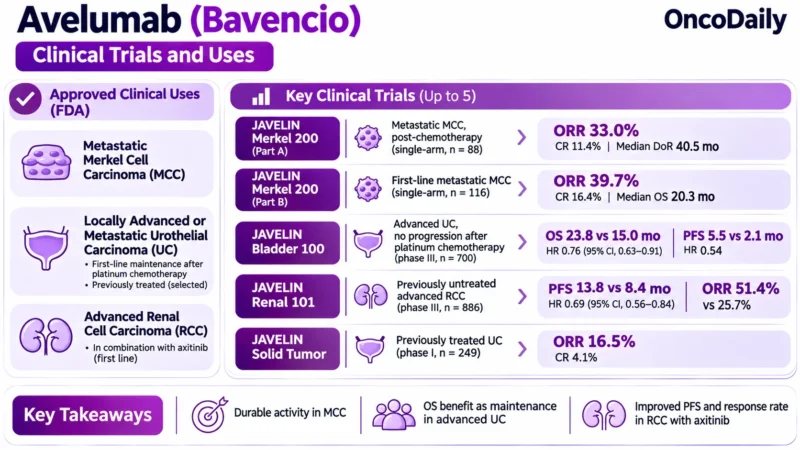
JAVELIN Merkel 200 — Avelumab After Chemotherapy in Metastatic MCC
JAVELIN Merkel 200 Part A (NCT02155647) was a single-arm phase II study involving 88 patients with metastatic MCC whose disease had progressed after chemotherapy.
Patients received avelumab until progression or unacceptable toxicity.
Objective Response Rate
ORR: 33.0% (95% CI, 23.3–43.8%)
Complete Response Rate
11.4%
Median Duration of Response
40.5 months at extended follow-up.
The study demonstrated durable responses in a malignancy with historically limited treatment options.
These results supported the initial FDA approval of avelumab in 2017.
JAVELIN Merkel 200 Part B — First-Line Metastatic MCC
Part B enrolled 116 patients who had not received previous systemic treatment for metastatic MCC.
Objective Response Rate
ORR: 39.7% (95% CI, 30.7–49.2%)
Complete Response Rate
16.4%
Median Overall Survival
20.3 months in the reported analysis.
The findings confirmed clinically meaningful activity in treatment-naïve metastatic MCC.
Responses were observed in both PD-L1-positive and PD-L1-negative tumors.
JAVELIN Bladder 100 — Maintenance Avelumab in Urothelial Carcinoma
JAVELIN Bladder 100 (NCT02603432) was a randomized phase III trial involving 700 patients with locally advanced or metastatic urothelial carcinoma without progression after first-line platinum-containing chemotherapy.
Patients received avelumab plus best supportive care or best supportive care alone.
Median Overall Survival — Primary Analysis
- Avelumab: 21.4 months
- Control: 14.3 months
Overall Survival Hazard Ratio
HR: 0.69 (95% CI, 0.56–0.86)
P = 0.001
Updated Median Overall Survival
- Avelumab: 23.8 months
- Control: 15.0 months
Updated Overall Survival Hazard Ratio
HR: 0.76 (95% CI, 0.63–0.91)
Median Progression-Free Survival — Updated Analysis
- Avelumab: 5.5 months
- Control: 2.1 months
Progression-Free Survival Hazard Ratio
HR: 0.54
The study established switch-maintenance avelumab as an effective post-chemotherapy strategy for eligible patients with advanced urothelial carcinoma.
JAVELIN Renal 101 — Avelumab Plus Axitinib in Advanced RCC
JAVELIN Renal 101 (NCT02684006) was a randomized phase III study involving 886 patients with previously untreated advanced RCC.
The study compared avelumab plus axitinib with sunitinib.
Median Progression-Free Survival — Overall Population
- Avelumab plus axitinib: 13.8 months
- Sunitinib: 8.4 months
Progression-Free Survival Hazard Ratio
HR: 0.69 (95% CI, 0.56–0.84)
P < 0.001
Overall Response Rate
- Avelumab plus axitinib: 51.4%
- Sunitinib: 25.7%
The trial demonstrated improved progression-free survival and response rates with the combination.
The findings supported FDA approval of avelumab plus axitinib for first-line advanced RCC.
JAVELIN Solid Tumor — Avelumab in Previously Treated Urothelial Carcinoma
JAVELIN Solid Tumor (NCT01772004) was a phase I multicohort study evaluating avelumab across several malignancies.
The urothelial carcinoma cohorts included patients whose disease had progressed after platinum-containing chemotherapy.
A total of 249 patients received treatment in the pooled cohorts.
Confirmed Objective Response Rate — Two-Year Analysis
ORR: 16.5% (95% CI, 12.1–21.8%)
Complete Response Rate
4.1%
The findings demonstrated durable activity in a subset of previously treated patients and supported the earlier FDA approval in advanced urothelial carcinoma.
This was a single-arm analysis, without a randomized comparison against other treatments.
Watch More: JAVELIN Bladder 100: Avelumab Maintenance for Advanced Bladder Cancer — VJOncology.
Does Avelumab Have CNS Activity?
Avelumab is not considered a conventional CNS-penetrating targeted anticancer agent.
Its antitumor effects are primarily mediated through immune activation.
Evidence supporting intracranial efficacy remains limited.
In clinical studies of MCC, urothelial carcinoma, and RCC, patients with active or untreated brain metastases were frequently excluded.
Treatment selection for patients with CNS metastases should consider neurological symptoms, intracranial disease burden, corticosteroid requirements, and available local treatments.
Avelumab is not an established standard treatment for primary CNS malignancies.
Is Avelumab FDA Approved?
Yes.
Avelumab was first approved by the FDA in March 2017.
Important regulatory milestones include:
- March 2017: Metastatic Merkel cell carcinoma.
- May 2017: Previously treated advanced urothelial carcinoma.
- May 2019: First-line advanced RCC with axitinib.
- June 2020: First-line maintenance treatment of advanced urothelial carcinoma following platinum-based chemotherapy.
The current U.S. label retains all three disease categories.
What Is the Current Clinical Role of Avelumab in 2026?
Merkel Cell Carcinoma
Avelumab remains an important immunotherapy option in metastatic MCC.
It may produce durable responses regardless of PD-L1 expression or Merkel cell polyomavirus status.
Urothelial Carcinoma Maintenance
Avelumab maintenance remains an evidence-based option following first-line platinum-based chemotherapy in patients without disease progression.
However, the increasing use of enfortumab vedotin plus pembrolizumab as initial treatment has changed the population for whom chemotherapy followed by avelumab is routinely considered.
The JAVELIN Bladder 100 results should not be extrapolated automatically to patients previously treated with first-line enfortumab vedotin plus pembrolizumab.
Renal Cell Carcinoma
Avelumab plus axitinib remains FDA-approved in advanced RCC.
Treatment selection should consider alternative contemporary immunotherapy combinations, cardiovascular risk, baseline comorbidities, and the available survival evidence.
Read More: AVENANCE: Real-World Avelumab Maintenance in Advanced Urothelial Carcinoma by OncoDaily
What Are the Major Side Effects of Avelumab?
Infusion-Related Reactions
Infusion-related reactions are an important characteristic toxicity of avelumab.
Symptoms may include:
- Fever and chills
- Flushing
- Rash
- Dyspnea
- Hypotension
- Back pain
- Bronchospasm
Severe reactions may require permanent discontinuation.
Antihistamine and acetaminophen premedication is recommended before the first four infusions.
Immune-Mediated Pneumonitis
Pneumonitis may present with cough, dyspnea, hypoxia, and inflammatory pulmonary infiltrates.
In the pooled avelumab monotherapy safety population, immune-mediated pneumonitis occurred in approximately 1.1%of patients.
Severe and fatal cases have been reported.
Immune-Mediated Colitis
Symptoms include diarrhea, abdominal pain, gastrointestinal bleeding, and dehydration.
Immune-mediated colitis occurred in approximately 1.5% of patients in the pooled monotherapy safety population.
Severe complications may include gastrointestinal perforation.
Immune-Mediated Hepatitis
Avelumab may cause immune-mediated hepatic inflammation.
Clinical findings include elevated AST, ALT, bilirubin, and occasionally jaundice.
Hepatotoxicity is especially important when avelumab is combined with axitinib.
Thyroid Dysfunction
Avelumab may cause:
- Hypothyroidism
- Hyperthyroidism
- Thyroiditis
Some patients require long-term thyroid hormone replacement.
Adrenal Insufficiency and Hypophysitis
Adrenal insufficiency may present with fatigue, hypotension, nausea, or electrolyte abnormalities.
Hypophysitis may cause headache, visual symptoms, or pituitary hormone deficiencies.
Severe adrenal insufficiency can result in adrenal crisis.
Type 1 Diabetes Mellitus
Avelumab may cause immune-mediated diabetes.
Patients may develop insulin dependence or present with diabetic ketoacidosis.
Immune-Mediated Nephritis
Possible findings include elevated serum creatinine, acute kidney injury, and electrolyte disturbances.
Other causes of renal dysfunction should be excluded.
Dermatological Toxicity
Adverse reactions include:
- Rash
- Pruritus
- Dermatitis
- Vitiligo
Rare severe reactions include Stevens–Johnson syndrome, toxic epidermal necrolysis, and DRESS syndrome.
Immune-Mediated Myocarditis
Myocarditis is uncommon but potentially life-threatening.
Symptoms may include chest pain, palpitations, dyspnea, syncope, and fatigue.
Suspected myocarditis requires urgent cardiac assessment.
Neurological Toxicity
Rare immune-mediated complications include:
- Myasthenia gravis
- Guillain–Barré syndrome
- Encephalitis
- Myelitis
- Peripheral neuropathy
- Myositis
New neurological symptoms require prompt assessment.
Axitinib-Associated Toxicity
Combination treatment with axitinib introduces additional risks:
- Hypertension
- Proteinuria
- Diarrhea
- Palmar-plantar erythrodysesthesia
- Hepatotoxicity
- Hemorrhage
- Thromboembolic complications
- Major adverse cardiovascular events
Hepatotoxicity and cardiovascular complications are particularly important during avelumab–axitinib treatment.
Other Common Adverse Reactions
Commonly reported reactions include fatigue, nausea, diarrhea, decreased appetite, constipation, rash, pruritus, and musculoskeletal pain.
The toxicity profile depends on the treatment setting and combination regimen.
Transplant-Related Complications
Checkpoint inhibition may increase the risk of solid organ transplant rejection.
Serious complications, including graft-versus-host disease, have occurred following allogeneic hematopoietic stem-cell transplantation.
Embryo-Fetal Toxicity
Avelumab may cause fetal harm.
Females of reproductive potential should use effective contraception during treatment and for at least one month after the final dose.
Breastfeeding is not recommended during treatment and for at least one month afterward.
These safety considerations are described in the current U.S. prescribing information.
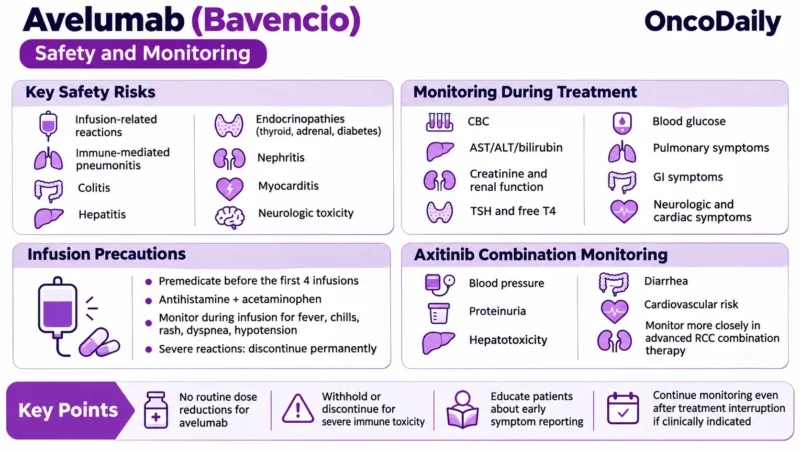
What Monitoring Is Required During Avelumab Treatment?
Infusion Monitoring
Monitor patients during treatment for:
- Fever or chills
- Hypotension
- Respiratory symptoms
- Rash
- Anaphylaxis
Provide antihistamine and acetaminophen premedication before the first four infusions.
Complete Blood Count
Monitor CBC at baseline and periodically according to clinical circumstances.
Assess anemia, thrombocytopenia, and other hematological abnormalities.
Liver Function
Monitor AST, ALT, bilirubin, and other relevant hepatic biochemical parameters.
More intensive attention to hepatotoxicity is required during combination treatment with axitinib.
Renal Function
Monitor serum creatinine, estimated renal function, and electrolytes.
Urinalysis and proteinuria assessment are especially important during axitinib treatment.
Thyroid Function
Monitor TSH and free T4 at baseline and periodically during therapy.
Investigate symptoms suggesting thyroiditis, hypothyroidism, or hyperthyroidism.
Adrenal and Pituitary Function
Evaluate morning cortisol, ACTH, and other endocrine parameters when clinically indicated.
Unexplained fatigue, hypotension, or hyponatremia should prompt investigation.
Blood Glucose
Monitor for hyperglycemia and symptoms of insulin-deficient diabetes.
Assess urgently if diabetic ketoacidosis is suspected.
Pulmonary Monitoring
Evaluate new cough, dyspnea, hypoxia, and respiratory symptoms.
Obtain chest imaging when pneumonitis is suspected.
Gastrointestinal Monitoring
Assess stool frequency, abdominal pain, diarrhea, and gastrointestinal bleeding.
Cardiovascular Monitoring
Monitor blood pressure regularly in patients receiving avelumab with axitinib.
Investigate chest pain, palpitations, syncope, and new dyspnea.
ECG, troponin, and cardiac imaging may be required when myocarditis or cardiovascular toxicity is suspected.
Neurological Monitoring
Assess new muscle weakness, sensory abnormalities, headache, confusion, visual symptoms, or swallowing difficulties.
Tumor Response
Evaluate treatment response using appropriate imaging and clinical criteria.
Pseudoprogression can occur with checkpoint inhibition but should not be assumed when progression is detected.