


Atezolizumab (Tecentriq): Mechanism of Action, Dosing, Clinical Uses, Trials, and Side Effects
Key takeaways
- Atezolizumab is a humanized, Fc-engineered IgG1 monoclonal antibody that targets PD-L1.
- It blocks PD-L1 interactions with PD-1 and B7.1, restoring antitumor T-cell activity.
- Its clinical indications include selected NSCLC, extensive-stage SCLC, HCC, melanoma, ASPS, postoperative ctDNA MRD-positive bladder cancer, and stage III dMMR colon cancer.
- The standard adult intravenous schedules are 840 mg every two weeks, 1,200 mg every three weeks, or 1,680 mg every four weeks.
- Tecentriq Hybreza provides a subcutaneous alternative for eligible patients.
- Important pivotal trials include OAK, IMpower010, IMpower133, IMforte, IMbrave150, IMvigor011, and ATOMIC.
- Immune-mediated adverse reactions represent the principal safety concern.
- Routine dose reductions are not recommended; clinically significant toxicities require treatment interruption or discontinuation according to severity.
Atezolizumab (Tecentriq) is a humanized monoclonal antibody targeting programmed death-ligand 1 (PD-L1), an immune checkpoint protein expressed on tumor cells and immune cells within the tumor microenvironment. By preventing PD-L1 from interacting with PD-1 and B7.1 (CD80), atezolizumab restores T-cell-mediated antitumor activity and enhances immune-mediated destruction of malignant cells.
Unlike conventional chemotherapy, atezolizumab does not directly damage cancer-cell DNA or inhibit cell division. Instead, it interrupts inhibitory immune signaling that cancer cells exploit to evade immune surveillance.
Atezolizumab belongs to the immune checkpoint inhibitor (ICI) class and may be administered as monotherapy or combined with chemotherapy, targeted therapy, or antiangiogenic agents, depending on the malignancy and clinical setting.
The FDA initially approved atezolizumab on May 18, 2016, for advanced urothelial carcinoma. Its indications subsequently expanded to include non-small cell lung cancer (NSCLC), small cell lung cancer (SCLC), hepatocellular carcinoma (HCC), melanoma, and alveolar soft part sarcoma (ASPS).
In September 2024, the FDA approved Tecentriq Hybreza, providing a subcutaneous administration option.
In October 2025, maintenance atezolizumab combined with lurbinectedin received FDA approval for eligible patients with extensive-stage SCLC.
On May 15, 2026, the FDA approved adjuvant atezolizumab for adults with muscle-invasive bladder cancer and detectable circulating tumor DNA molecular residual disease (ctDNA MRD) after cystectomy.
On October 8, 2026, the FDA approved atezolizumab with fluoropyrimidine–oxaliplatin chemotherapy for resected stage III mismatch repair-deficient (dMMR) colon cancer.
Key Facts
- Generic name: Atezolizumab
- Brand name: Tecentriq
- Subcutaneous formulation: Tecentriq Hybreza
- Drug class: Immune checkpoint inhibitor
- Antibody type: Humanized, Fc-engineered IgG1 monoclonal antibody
- Target: Programmed death-ligand 1 (PD-L1/CD274)
- Mechanism: PD-L1 blockade and restoration of antitumor T-cell activity
- Initial FDA approval: May 18, 2016
- Administration: Intravenous infusion
- Alternative administration: Subcutaneous injection with Tecentriq Hybreza
- Standard adult IV dose: 840 mg every two weeks, 1,200 mg every three weeks, or 1,680 mg every four weeks
- Subcutaneous dose: 1,875 mg atezolizumab plus 30,000 units hyaluronidase every three weeks
- Initial infusion duration: 60 minutes
- Subsequent infusion duration: 30 minutes if tolerated
- Treatment duration: Indication-dependent
- Major biomarkers: PD-L1, EGFR, ALK, BRAF V600, ctDNA MRD, and dMMR
- Landmark trials: OAK, IMpower010, IMpower110, IMpower133, IMforte, IMbrave150, IMspire150, IMvigor011, and ATOMIC
- Boxed warning: None
- Major risks: Immune-mediated adverse reactions, infusion-related reactions, transplant complications, and embryo-fetal toxicity
- Monitoring: Liver function, renal function, thyroid function, blood glucose, immune-mediated symptoms, and tumor response
- Elimination half-life: Approximately 27 days
- Intravenous formulation: 60 mg/mL solution
What Is Atezolizumab?
Atezolizumab is a recombinant humanized monoclonal antibody engineered to recognize and bind PD-L1.
PD-L1 is an inhibitory immune checkpoint ligand involved in maintaining immune tolerance and limiting excessive immune activation.
It is expressed on certain malignant cells, antigen-presenting cells, and other immune cells.
PD-L1 interacts with PD-1 receptors on activated T lymphocytes, suppressing T-cell proliferation, cytokine production, and cytotoxic activity.
Many tumors exploit this pathway by expressing PD-L1, allowing malignant cells to escape immune surveillance.
Atezolizumab blocks the interaction between PD-L1 and PD-1, restoring immune activity in responsive antitumor T-cell populations.
Unlike nivolumab, pembrolizumab, cemiplimab, dostarlimab, and toripalimab, which target PD-1, atezolizumab directly targets PD-L1.
Atezolizumab shares its target with durvalumab and avelumab, although these antibodies differ in their structure, Fc properties, dosing, and approved indications.
An important characteristic of atezolizumab is its engineered Fc region, which minimizes antibody-dependent cellular cytotoxicity against PD-L1-expressing immune cells.
What Is the Mechanism of Action of Atezolizumab?
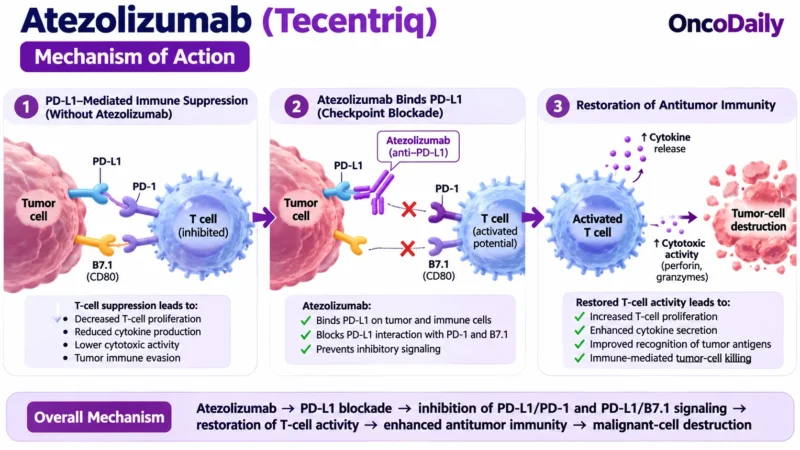
1. PD-L1 Expression on Tumor and Immune Cells
PD-L1 may be expressed on tumor cells and immune cells within the tumor microenvironment.
Its expression can increase in response to inflammatory cytokines, particularly interferon-gamma.
PD-L1 expression contributes to adaptive immune resistance and enables tumors to suppress antitumor immune responses.
2. Activation of Inhibitory Immune Checkpoint Signaling
PD-L1 binds PD-1 receptors on activated T lymphocytes.
PD-1 activation recruits intracellular signaling proteins, including phosphatases that suppress T-cell receptor and costimulatory signaling.
This reduces:
- T-cell proliferation
- Cytokine secretion
- Cytotoxic activity
- Antitumor immune surveillance
PD-L1 also interacts with B7.1 (CD80), contributing to immune regulation.
3. Atezolizumab Binds PD-L1
Atezolizumab selectively binds PD-L1 and prevents its interaction with PD-1 and B7.1.
Unlike anti-PD-1 antibodies, atezolizumab does not directly inhibit the interaction between PD-1 and PD-L2.
4. Restoration of T-Cell Activity
Blocking PD-L1 reduces inhibitory signaling and restores immune activity in responsive antitumor T-cell populations.
This promotes:
- Increased T-cell proliferation
- Enhanced cytokine production
- Improved cytotoxic function
- Recognition of tumor-associated antigens
5. Immune-Mediated Tumor-Cell Killing
Activated cytotoxic T lymphocytes recognize tumor antigens presented through major histocompatibility complex molecules.
These cells release perforin and granzymes and produce inflammatory cytokines, contributing to malignant-cell apoptosis and tumor regression.
6. Reduced Fc-Mediated Immune Cell Depletion
Atezolizumab contains an engineered IgG1 Fc region designed to minimize Fc-mediated effector functions.
This reduces unwanted depletion of PD-L1-expressing immune cells.
Its antitumor effect is primarily mediated through checkpoint blockade rather than direct antibody-dependent cancer-cell killing.
7. Durable Antitumor Immune Responses
Atezolizumab may produce prolonged antitumor responses, including disease control persisting after discontinuation.
However, primary or acquired resistance can develop through impaired antigen presentation, interferon-signaling alterations, immunosuppressive tumor microenvironments, and alternative immune checkpoints.
Overall mechanism:
Atezolizumab → PD-L1 blockade → inhibition of PD-L1/PD-1 and PD-L1/B7.1 interactions → restoration of T-cell activity → enhanced antitumor immunity → malignant-cell destruction.
How Does Atezolizumab Differ From Anti-PD-1 Immunotherapy?
Atezolizumab targets PD-L1, whereas nivolumab and pembrolizumab target PD-1.
Anti-PD-1 antibodies prevent both PD-L1 and PD-L2 from interacting with PD-1.
Atezolizumab blocks PD-L1-mediated signaling while preserving the PD-1/PD-L2 interaction.
However, this mechanistic difference does not establish that anti-PD-L1 antibodies are universally more effective or safer than anti-PD-1 antibodies.
Clinical selection depends on the malignancy, disease stage, biomarker status, previous treatments, combination regimen, and supporting trial evidence.
What Is the Recommended Dose of Atezolizumab?
Standard Adult Intravenous Dose
For most approved indications:
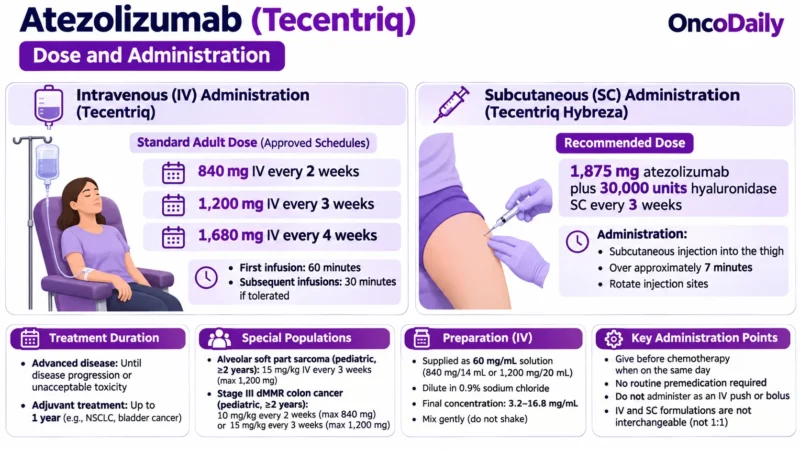
- 840 mg IV every two weeks, or
- 1,200 mg IV every three weeks, or
- 1,680 mg IV every four weeks.
The initial infusion is administered over 60 minutes.
Subsequent infusions may be shortened to 30 minutes if tolerated.
Not all dosing schedules should be substituted within combination protocols without considering the treatment schedule of accompanying medications.
Adjuvant Non-Small Cell Lung Cancer
For eligible patients with completely resected stage II–IIIA NSCLC and PD-L1 expression of at least 1%:
Atezolizumab is administered after surgery and platinum-based chemotherapy.
Treatment may continue for up to one year, unless recurrence or unacceptable toxicity occurs.
First-Line Metastatic NSCLC Monotherapy
For eligible patients with high PD-L1 expression and without EGFR or ALK genomic aberrations:
Atezolizumab is administered using an approved adult IV schedule until progression or unacceptable toxicity.
First-Line Metastatic Non-Squamous NSCLC
Atezolizumab may be combined with:
- Bevacizumab, carboplatin, and paclitaxel.
- Carboplatin and nab-paclitaxel.
The induction and maintenance schedules depend on the selected regimen.
Previously Treated Metastatic NSCLC
Atezolizumab monotherapy may be administered following progression during or after platinum-containing chemotherapy in eligible patients.
Treatment generally continues until disease progression or unacceptable toxicity.
Extensive-Stage Small Cell Lung Cancer
A commonly used first-line induction regimen includes:
- Atezolizumab 1,200 mg IV on Day 1.
- Carboplatin AUC 5 IV on Day 1.
- Etoposide 100 mg/m² IV on Days 1–3.
Treatment is repeated every 21 days for four cycles.
Following induction, atezolizumab maintenance is administered in patients without disease progression.
Maintenance Atezolizumab Plus Lurbinectedin
For patients without progression following first-line atezolizumab, carboplatin, and etoposide:
- Atezolizumab 1,200 mg IV every three weeks.
- Lurbinectedin 3.2 mg/m² IV every three weeks.
Treatment continues until progression or unacceptable toxicity.
Unresectable or Metastatic Hepatocellular Carcinoma
Atezolizumab 1,200 mg IV every three weeks plus bevacizumab 15 mg/kg IV every three weeks.
Treatment generally continues until progression or unacceptable toxicity.
BRAF V600-Mutated Melanoma
Atezolizumab is administered with vemurafenib and cobimetinib.
The approved regimen begins with targeted therapy before atezolizumab is introduced.
Subsequent treatment follows the combination-specific dosing schedule.
Alveolar Soft Part Sarcoma
Adults
840 mg every two weeks, 1,200 mg every three weeks, or 1,680 mg every four weeks.
Pediatric patients aged two years and older
15 mg/kg IV every three weeks, up to a maximum dose of 1,200 mg.
Adjuvant Muscle-Invasive Bladder Cancer
For adults with detectable ctDNA MRD after cystectomy:
Atezolizumab may be administered using an approved adult IV schedule for up to one year.
Adjuvant Stage III dMMR Colon Cancer
Atezolizumab is administered with fluoropyrimidine–oxaliplatin chemotherapy for six months, followed by atezolizumab monotherapy for an additional six months.
Adults
840 mg every two weeks, 1,200 mg every three weeks, or 1,680 mg every four weeks, according to the protocol.
Pediatric patients aged two years and older
- 10 mg/kg IV every two weeks, maximum 840 mg, or
- 15 mg/kg IV every three weeks, maximum 1,200 mg.
Pediatric and combination dosing should follow the current indication-specific prescribing information.
Subcutaneous Atezolizumab — Tecentriq Hybreza
Tecentriq Hybreza contains atezolizumab and recombinant human hyaluronidase.
The recommended dose is:
1,875 mg atezolizumab plus 30,000 units hyaluronidase every three weeks.
The injection is administered subcutaneously into the thigh over approximately seven minutes.
Tecentriq Hybreza is available for eligible adults and, for the stage III dMMR colon cancer indication, eligible pediatric patients aged 12 years and older weighing at least 40 kg.
Intravenous and subcutaneous formulations are not interchangeable on a milligram-for-milligram basis.
Treatment Duration
Treatment duration depends on the malignancy and treatment setting.
Advanced cancer treatment generally continues until disease progression or unacceptable toxicity.
Adjuvant treatment commonly continues for up to one year.
How Should Atezolizumab Be Administered?
Intravenous Infusion
Atezolizumab is administered through an intravenous infusion.
The initial infusion lasts 60 minutes.
Subsequent infusions may be administered over 30 minutes if the initial infusion was tolerated.
Atezolizumab must not be administered as an intravenous push or bolus.
Preparation and Dilution
Tecentriq is supplied as a 60 mg/mL solution.
Available single-dose vials include:
- 840 mg/14 mL
- 1,200 mg/20 mL
The required dose is diluted in 0.9% sodium chloride solution according to the prescribing information.
The diluted preparation should be mixed gently without shaking.
Other medications should not be administered through the same intravenous line.
Administration With Chemotherapy
When atezolizumab and chemotherapy are scheduled on the same day, atezolizumab is generally administered first.
Each accompanying anticancer medication should be prepared and administered according to its prescribing information.
Subcutaneous Administration
Tecentriq Hybreza is administered by a healthcare professional into the thigh.
The injection takes approximately seven minutes.
It must not be administered intravenously.
Premedication
Routine premedication with corticosteroids, antihistamines, or antipyretics is not generally required for atezolizumab monotherapy.
Premedication may be considered according to previous administration reactions or the requirements of concomitant anticancer therapy.
Hospitalization
Routine hospitalization is not required.
Treatment is generally administered in an outpatient oncology setting equipped to manage infusion reactions and other treatment-related complications.
What Should You Do If an Atezolizumab Dose Is Missed?
If a scheduled dose is missed:
- Contact the treating oncology team.
- Determine the reason for treatment interruption.
- Reschedule treatment according to clinical circumstances.
- Confirm adequate recovery from treatment-related toxicities when applicable.
- Do not administer a double dose.
There is no routine dose-escalation or step-up schedule following a missed dose.
How Are Atezolizumab Dose Modifications Managed?
Routine dose reductions are not recommended.
Treatment-related toxicities are managed through temporary interruption, supportive care, corticosteroids, additional immunosuppressive therapy when required, or permanent discontinuation.
Immune-Mediated Pneumonitis
Grade 2: Withhold treatment.
Grade 3–4: Permanently discontinue treatment.
Alternative causes, including infection, pulmonary embolism, radiation pneumonitis, and cancer progression, should be investigated.
Immune-Mediated Colitis
Grade 2–3 colitis generally requires treatment interruption.
Grade 4 colitis requires permanent discontinuation.
Systemic corticosteroids are used for clinically significant immune-mediated colitis.
Infliximab or vedolizumab may be considered for corticosteroid-refractory cases after appropriate infectious evaluation.
Immune-Mediated Hepatitis
Treatment modifications depend on AST, ALT, bilirubin, baseline hepatic function, and underlying liver disease.
Severe hepatitis may require permanent discontinuation.
Mycophenolate mofetil may be considered for corticosteroid-refractory immune-mediated hepatitis.
Immune-Mediated Endocrinopathies
Clinically significant endocrinopathies may require treatment interruption until the patient is stable.
Hormone replacement may include levothyroxine, glucocorticoids, mineralocorticoids, or insulin.
Permanent discontinuation is not always required when endocrine dysfunction is adequately controlled.
Immune-Mediated Nephritis
Clinically significant renal dysfunction may require withholding treatment and administering corticosteroids.
Severe immune-mediated nephritis may require permanent discontinuation.
Immune-Mediated Myocarditis
Suspected myocarditis requires immediate treatment interruption and urgent cardiac evaluation.
Confirmed clinically significant myocarditis generally requires permanent discontinuation and specialist management.
Infusion-Related Reactions
Mild or moderate reactions may require slowing or interrupting the infusion.
Severe or life-threatening reactions require permanent discontinuation.
Treatment resumption depends on organ involvement, toxicity severity, clinical recovery, corticosteroid requirements, and the prescribing information.
What Drug Interactions Are Important With Atezolizumab?
CYP450-Metabolized Medications
Atezolizumab is not primarily metabolized through cytochrome P450 enzymes.
Conventional CYP450-mediated pharmacokinetic interactions are therefore not expected.
Corticosteroids
Systemic corticosteroids can suppress immune activity.
Unnecessary baseline immunosuppression should generally be minimized when clinically feasible.
However, corticosteroids remain essential for treating clinically significant immune-mediated adverse reactions.
Immunosuppressive Agents
Concomitant systemic immunosuppressive treatment may influence checkpoint inhibitor activity.
Careful assessment is particularly important in patients with autoimmune disease or previous transplantation.
Bevacizumab
Combination treatment with bevacizumab introduces additional risks:
- Hypertension
- Bleeding
- Proteinuria
- Thromboembolic complications
- Gastrointestinal perforation
- Wound-healing complications
Platinum-Based Chemotherapy
Combination treatment may increase:
- Neutropenia
- Anemia
- Thrombocytopenia
- Infection
- Nausea and vomiting
- Peripheral neuropathy
- Renal dysfunction
Lurbinectedin
Lurbinectedin adds clinically important risks of myelosuppression, infection, fatigue, and hepatotoxicity.
Its CYP3A-mediated drug interactions should be reviewed separately.
BRAF and MEK Inhibitors
Combination treatment with vemurafenib and cobimetinib introduces additional hepatic, dermatological, ocular, and cardiac risks.
Does Atezolizumab Require Dose Adjustment in Renal or Hepatic Impairment?
Renal Impairment
Population pharmacokinetic analyses have not demonstrated clinically significant effects of mild or moderate renal impairment on atezolizumab exposure.
Routine dose adjustment is generally unnecessary in these groups.
Evidence in severe renal impairment remains limited.
Immune-mediated nephritis can occur regardless of baseline renal function.
Hepatic Impairment
Mild and moderate hepatic impairment have not demonstrated clinically meaningful effects on atezolizumab pharmacokinetics.
The effects of severe hepatic impairment remain insufficiently characterized.
Patients with HCC require careful evaluation of hepatic reserve, portal hypertension, cirrhosis, and potential immune-mediated hepatitis.
What Is the Pharmacokinetic Profile of Atezolizumab?
Molecular Structure
Atezolizumab is a humanized, Fc-engineered IgG1 monoclonal antibody with an approximate molecular weight of 145 kDa.
Distribution
Estimated steady-state volume of distribution:
6.9 L
Elimination Half-Life
Approximately:
27 days
Clearance
Estimated steady-state clearance:
0.2 L/day
Metabolism
Atezolizumab undergoes proteolytic degradation into peptides and amino acids through normal antibody catabolic pathways.
Steady-State Exposure
Steady-state exposure is generally reached within approximately six to nine weeks, depending on the dosing schedule.
The prolonged elimination half-life supports extended dosing intervals.
What Are the Clinical Uses of Atezolizumab?
Non-Small Cell Lung Cancer
Atezolizumab has several established NSCLC indications.
Adjuvant treatment
Atezolizumab is approved following complete surgical resection and platinum-based chemotherapy in eligible patients with stage II–IIIA NSCLC and PD-L1 expression of at least 1%.
First-line metastatic monotherapy
Atezolizumab is used in patients with high PD-L1 expression and without EGFR or ALK genomic aberrations.
First-line metastatic combination treatment
Approved regimens for eligible non-squamous NSCLC include:
- Atezolizumab, bevacizumab, carboplatin, and paclitaxel.
- Atezolizumab, carboplatin, and nab-paclitaxel.
Previously treated metastatic NSCLC
Atezolizumab monotherapy may be used following progression during or after platinum-based chemotherapy, with appropriate prior targeted therapy for eligible EGFR- or ALK-altered tumors.
Extensive-Stage Small Cell Lung Cancer
Atezolizumab combined with carboplatin and etoposide is an established first-line treatment for extensive-stage SCLC.
Following induction, atezolizumab may be continued as maintenance.
The addition of lurbinectedin provides another approved maintenance option for eligible patients without disease progression.
Hepatocellular Carcinoma
Atezolizumab plus bevacizumab is approved for adults with previously untreated unresectable or metastatic HCC.
The combination improved overall and progression-free survival compared with sorafenib.
Patients should be evaluated for portal hypertension and relevant esophageal or gastric varices before treatment.
BRAF V600-Mutated Melanoma
Atezolizumab is approved in combination with vemurafenib and cobimetinib for unresectable or metastatic melanoma with a BRAF V600 mutation.
BRAF mutation confirmation is necessary before treatment selection.
Alveolar Soft Part Sarcoma
Atezolizumab is approved for adults and pediatric patients aged two years and older with unresectable or metastatic ASPS.
ASPS is a rare sarcoma frequently associated with an ASPSCR1::TFE3 fusion.
Conventional cytotoxic chemotherapy generally has limited activity in this malignancy.
Atezolizumab demonstrated clinically meaningful responses in prospective clinical research.
Muscle-Invasive Bladder Cancer
Atezolizumab is approved as adjuvant treatment for adults following cystectomy who have detectable circulating tumor DNA molecular residual disease.
Patient selection requires an FDA-authorized ctDNA MRD assay.
This indication represents an important development in molecular residual disease-guided adjuvant immunotherapy.
Stage III Mismatch Repair-Deficient Colon Cancer
Atezolizumab is approved with fluoropyrimidine–oxaliplatin chemotherapy for patients with completely resected stage III dMMR colon cancer.
The indication includes adults and eligible pediatric patients.
This represents an important expansion of immunotherapy into curative-intent treatment of biomarker-selected colon cancer.
Historical and Withdrawn Indications
Earlier U.S. approvals for advanced urothelial carcinoma were withdrawn.
The previous indication for metastatic triple-negative breast cancer in combination with nab-paclitaxel was also withdrawn.
These historical indications should not be confused with current approved uses.
What Biomarker Testing Is Required Before Atezolizumab?
PD-L1 Expression
PD-L1 expression is assessed through immunohistochemistry.
The VENTANA PD-L1 (SP142) assay was central to atezolizumab clinical development.
PD-L1 assessment may include tumor-cell and tumor-infiltrating immune-cell staining, depending on the indication.
Adjuvant NSCLC
The approved adjuvant indication requires PD-L1 expression on at least 1% of tumor cells.
The greatest relative disease-free survival benefit in IMpower010 was observed in patients with high PD-L1 expression.
First-Line Metastatic NSCLC Monotherapy
High PD-L1 expression is defined as:
- At least 50% of tumor cells staining positive, or
- PD-L1-positive immune cells covering at least 10% of the tumor area.
An FDA-authorized assay should be used.
EGFR and ALK Testing
Molecular testing for EGFR mutations and ALK rearrangements is important before selecting first-line atezolizumab in metastatic NSCLC.
Broader molecular profiling is also clinically important to identify actionable oncogenic drivers.
BRAF Mutation Testing
BRAF V600 mutation positivity is required before administering atezolizumab with vemurafenib and cobimetinib for melanoma.
ctDNA Molecular Residual Disease
For the adjuvant bladder cancer indication, detectable postoperative ctDNA MRD is required.
The FDA authorized Signatera CDx as a companion diagnostic in May 2026.
Serial postoperative ctDNA testing helps identify patients at increased risk of recurrence who may benefit from adjuvant atezolizumab.
Mismatch Repair Testing
Mismatch repair deficiency is required for the approved stage III colon cancer indication.
Testing commonly includes immunohistochemistry for:
- MLH1
- PMS2
- MSH2
- MSH6
Loss of expression of mismatch repair proteins indicates dMMR.
Additional testing may be appropriate to evaluate possible Lynch syndrome.
ASPS Molecular Testing
ASPS is typically associated with the ASPSCR1::TFE3 fusion.
Molecular confirmation can support diagnosis.
A specific PD-L1 expression threshold is not required for atezolizumab eligibility in ASPS.
Baseline Clinical Evaluation
Before initiating atezolizumab, assess complete blood count, renal and hepatic function, thyroid function, blood glucose, performance status, autoimmune disease history, previous transplantation, and relevant concomitant medications.
What Did the Pivotal Clinical Trials Show?
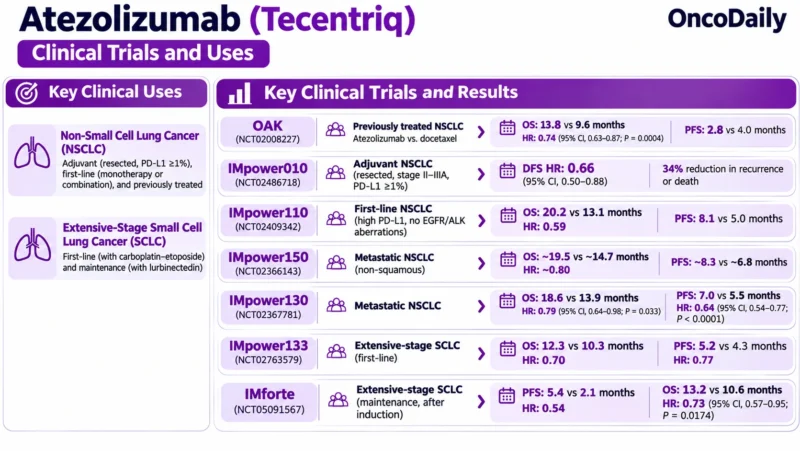
OAK — Atezolizumab in Previously Treated NSCLC
OAK (NCT02008227) was a randomized phase III trial involving 1,225 patients with previously treated advanced NSCLC.
The trial compared atezolizumab with docetaxel.
The primary overall survival analysis included the first 850 randomized patients.
Median Overall Survival
- Atezolizumab: 13.8 months
- Docetaxel: 9.6 months
Overall Survival Hazard Ratio
HR: 0.74 (95% CI, 0.63–0.87)
P = 0.0004
Median Progression-Free Survival
- Atezolizumab: 2.8 months
- Docetaxel: 4.0 months
Although median progression-free survival was not improved, atezolizumab demonstrated significantly longer overall survival.
The findings established atezolizumab as an important treatment option following platinum-based chemotherapy.
IMpower010 — Adjuvant Atezolizumab in Resected NSCLC
IMpower010 (NCT02486718) was a randomized phase III trial evaluating adjuvant atezolizumab following complete surgical resection and platinum-based chemotherapy.
Patients received atezolizumab or best supportive care.
The primary efficacy analysis included patients with stage II–IIIA NSCLC whose tumors expressed PD-L1 on at least 1% of tumor cells.
Disease-Free Survival Hazard Ratio
HR: 0.66 (95% CI, 0.50–0.88)
This represented a 34% relative reduction in the hazard of recurrence or death.
Among patients with PD-L1 expression of at least 50%, the disease-free survival benefit was particularly pronounced.
The study established atezolizumab as an adjuvant treatment option in appropriately selected patients with resected NSCLC.
IMpower110 — First-Line Atezolizumab Monotherapy in NSCLC
IMpower110 (NCT02409342) was a randomized phase III trial comparing first-line atezolizumab with platinum-based chemotherapy in advanced NSCLC.
The pivotal efficacy population included patients with high PD-L1 expression and without EGFR or ALK genomic aberrations.
Median Overall Survival
- Atezolizumab: 20.2 months
- Chemotherapy: 13.1 months
Overall Survival Hazard Ratio
HR: 0.59
Median Progression-Free Survival
- Atezolizumab: 8.1 months
- Chemotherapy: 5.0 months
The results supported atezolizumab as a chemotherapy-free first-line option for selected patients with metastatic NSCLC.
IMpower150 — Atezolizumab, Bevacizumab, and Chemotherapy in NSCLC
IMpower150 (NCT02366143) was a randomized phase III trial evaluating atezolizumab-containing combinations in metastatic non-squamous NSCLC.
The principal comparison evaluated the addition of atezolizumab to bevacizumab, carboplatin, and paclitaxel.
Median Overall Survival
- Atezolizumab combination: Approximately 19.5 months
- Control: Approximately 14.7 months
Overall Survival Hazard Ratio
HR: Approximately 0.80
Median Progression-Free Survival
- Atezolizumab combination: Approximately 8.3 months
- Control: Approximately 6.8 months
These results relate to the relevant EGFR/ALK wild-type analysis, with estimates varying by analysis population and follow-up.
The trial established a four-drug chemoimmunotherapy regimen for eligible patients with metastatic non-squamous NSCLC.
IMpower130 — Atezolizumab Plus Carboplatin and Nab-Paclitaxel
IMpower130 (NCT02367781) was a randomized phase III trial evaluating atezolizumab, carboplatin, and nab-paclitaxel compared with chemotherapy alone.
Median Overall Survival
- Atezolizumab combination: 18.6 months
- Chemotherapy: 13.9 months
Overall Survival Hazard Ratio
HR: 0.79 (95% CI, 0.64–0.98)
P = 0.033
Median Progression-Free Survival
- Atezolizumab combination: 7.0 months
- Chemotherapy: 5.5 months
Progression-Free Survival Hazard Ratio
HR: 0.64 (95% CI, 0.54–0.77)
P less than 0.0001
The results demonstrated improved survival outcomes with atezolizumab-containing chemotherapy.
IMpower133 — First-Line Extensive-Stage Small Cell Lung Cancer
IMpower133 (NCT02763579) was a randomized phase III trial involving 403 patients with previously untreated extensive-stage SCLC.
Patients received atezolizumab plus carboplatin and etoposide or placebo plus chemotherapy, followed by maintenance treatment.
Median Overall Survival
- Atezolizumab plus chemotherapy: 12.3 months
- Chemotherapy alone: 10.3 months
Overall Survival Hazard Ratio
HR: 0.70
Median Progression-Free Survival
- Atezolizumab combination: 5.2 months
- Chemotherapy alone: 4.3 months
Progression-Free Survival Hazard Ratio
HR: 0.77
The results established atezolizumab plus carboplatin and etoposide as a first-line treatment option for extensive-stage SCLC.
IMforte — Lurbinectedin Plus Atezolizumab Maintenance in SCLC
IMforte (NCT05091567) was a randomized phase III trial involving 483 patients with extensive-stage SCLC who had not progressed following atezolizumab, carboplatin, and etoposide.
Patients received lurbinectedin plus atezolizumab or atezolizumab alone.
Median Progression-Free Survival
- Lurbinectedin plus atezolizumab: 5.4 months
- Atezolizumab alone: 2.1 months
Progression-Free Survival Hazard Ratio
HR: 0.54
Median Overall Survival
- Combination: 13.2 months
- Atezolizumab alone: 10.6 months
Overall Survival Hazard Ratio
HR: 0.73 (95% CI, 0.57–0.95)
P = 0.0174
The study demonstrated improved progression-free and overall survival, supporting the October 2025 FDA approval of the maintenance combination.
Read More: Lurbinectedin Plus Atezolizumab Doubled PFS vs Atezolizumab Alone in the IMforte Trial by OncoDaily.
Watch More: Maintenance Lurbinectedin + Atezolizumab Improves Survival Outcomes in ES-SCLC — IMforte Trial.
Does Atezolizumab Have CNS Activity?
Atezolizumab-containing regimens may demonstrate activity in selected patients with brain metastases, particularly NSCLC and melanoma.
Its effects are mediated through immune activation rather than direct inhibition of a CNS-specific molecular target.
However, prospective intracranial efficacy data remain limited compared with certain targeted therapies and other immunotherapy combinations.
Treatment selection depends on:
- Neurological symptoms
- Intracranial tumor burden
- Corticosteroid requirements
- Previous brain radiotherapy
- Extracranial disease control
- Suitability for surgery or stereotactic radiosurgery
In extensive-stage SCLC, atezolizumab does not replace appropriate brain imaging surveillance or indicated local therapy.
Atezolizumab is not an established standard treatment for primary CNS malignancies such as glioblastoma.
Is Atezolizumab FDA Approved?
Yes.
Atezolizumab received its initial FDA approval on May 18, 2016.
Important regulatory milestones include:
- 2016: Initial approval for advanced urothelial carcinoma.
- 2018: First-line approval for extensive-stage SCLC.
- 2019: Expansion into metastatic NSCLC treatment.
- 2020: Approval in hepatocellular carcinoma and BRAF V600-mutated melanoma.
- 2021: Adjuvant approval in selected resected NSCLC.
- 2022: Approval for unresectable or metastatic ASPS.
- 2024: Approval of Tecentriq Hybreza.
- 2025: Maintenance approval with lurbinectedin in extensive-stage SCLC.
- May 2026: Adjuvant approval in ctDNA MRD-positive muscle-invasive bladder cancer.
- October 2026: Adjuvant approval with chemotherapy in stage III dMMR colon cancer.
Regulatory indications vary according to malignancy, treatment setting, biomarker status, patient age, formulation, and geographical region.
What Is the Current Clinical Role of Atezolizumab in 2026?
First-Line Chemoimmunotherapy
Atezolizumab is incorporated into first-line treatment regimens for selected patients with NSCLC and extensive-stage SCLC.
Its combination with bevacizumab is also an established treatment option for eligible patients with advanced HCC.
Adjuvant Immunotherapy
Atezolizumab has expanded into curative-intent treatment settings.
Approved adjuvant indications include selected resected NSCLC, ctDNA MRD-positive muscle-invasive bladder cancer, and stage III dMMR colon cancer.
Biomarker-Guided Treatment
Important biomarkers include PD-L1 in NSCLC, BRAF V600 in melanoma, ctDNA MRD in bladder cancer, and dMMR in colon cancer.
The IMvigor011 and ATOMIC trials demonstrated the increasing importance of biological selection beyond conventional pathological staging.
Maintenance Immunotherapy
Atezolizumab can be continued as maintenance following induction chemotherapy in extensive-stage SCLC.
The addition of lurbinectedin provides a maintenance strategy with improved survival outcomes but increased hematologic toxicity.
Rare Cancer Treatment
Atezolizumab provides an approved systemic immunotherapy option for advanced ASPS.
Subcutaneous Immunotherapy
Tecentriq Hybreza provides an alternative administration route for eligible patients.
Shorter administration time may improve treatment convenience but does not eliminate immune-mediated toxicity risks.
What Are the Major Side Effects of Atezolizumab?
Immune-Mediated Adverse Reactions
Immune-mediated adverse reactions are the characteristic toxicities of atezolizumab.
PD-L1 blockade can disrupt physiological immune tolerance and allow activated immune cells to attack normal tissues.
These reactions may affect almost any organ system.
They can occur during treatment or after treatment discontinuation.
Severe and fatal immune-mediated complications have been reported.
Immune-Mediated Pneumonitis
Symptoms may include:
- New or worsening cough
- Dyspnea
- Hypoxia
- Chest discomfort
- Fever
Radiological findings may include ground-glass opacities and interstitial inflammatory changes.
Alternative causes such as infection, pulmonary embolism, radiation pneumonitis, and cancer progression should be excluded.
Immune-Mediated Colitis
Colitis may present with diarrhea, abdominal pain, gastrointestinal bleeding, fever, and dehydration.
Severe complications may include bowel perforation.
Infectious causes, including Clostridioides difficile, should be considered.
Immune-Mediated Hepatitis
Possible manifestations include:
- Elevated AST and ALT
- Hyperbilirubinemia
- Fatigue
- Jaundice
- Right upper quadrant discomfort
Hepatotoxicity is particularly important in patients with HCC and underlying liver disease.
Thyroid Dysfunction
Atezolizumab may cause:
- Hypothyroidism
- Hyperthyroidism
- Thyroiditis
Some patients experience transient thyrotoxicosis followed by hypothyroidism.
Long-term levothyroxine replacement may be required.
Adrenal Insufficiency
Symptoms may include fatigue, hypotension, nausea, vomiting, hyponatremia, and hypoglycemia.
Severe cases may result in adrenal crisis.
Hypophysitis
Immune-mediated pituitary inflammation may cause hormone deficiencies and present with headache, fatigue, hypotension, or visual disturbances.
Hormone replacement may be necessary.
Type 1 Diabetes Mellitus
Atezolizumab may cause immune-mediated pancreatic beta-cell dysfunction.
Patients can develop insulin-dependent diabetes or present with diabetic ketoacidosis.
Immune-Mediated Nephritis
Possible findings include elevated creatinine, acute kidney injury, urinary abnormalities, and electrolyte disturbances.
Other causes of renal dysfunction should be investigated.
Dermatological Toxicity
Common dermatological reactions include:
- Rash
- Pruritus
- Dry skin
- Erythema
Rare severe reactions include Stevens–Johnson syndrome, toxic epidermal necrolysis, and DRESS.
Immune-Mediated Myocarditis
Myocarditis is uncommon but potentially life-threatening.
Symptoms may include chest pain, dyspnea, palpitations, syncope, and fatigue.
Clinical findings may include arrhythmias, elevated troponin, conduction abnormalities, and heart failure.
Myocarditis may coexist with myositis or myasthenia gravis.
Neurological Toxicity
Potential complications include:
- Myasthenia gravis
- Guillain–Barré syndrome
- Encephalitis
- Myelitis
- Peripheral neuropathy
- Autoimmune neuropathies
New weakness, diplopia, difficulty swallowing, confusion, or neurological deficits require prompt evaluation.
Infusion-Related Reactions
Symptoms may include fever, chills, flushing, rash, wheezing, hypotension, and dyspnea.
Severe reactions require permanent discontinuation.
Subcutaneous Injection-Site Reactions
Tecentriq Hybreza may cause local pain, redness, swelling, tenderness, or bruising.
Transplant-Related Complications
Atezolizumab may increase the risk of solid organ transplant rejection.
Serious complications, including graft-versus-host disease, have occurred in patients undergoing allogeneic hematopoietic stem-cell transplantation before or after checkpoint inhibition.
Chemotherapy-Associated Toxicity
Combination regimens may produce additional:
- Neutropenia
- Anemia
- Thrombocytopenia
- Infection
- Nausea and vomiting
- Alopecia
- Peripheral neuropathy
- Mucositis
- Fatigue
Bevacizumab-Associated Toxicity
The combination with bevacizumab requires monitoring for hypertension, proteinuria, bleeding, thrombosis, gastrointestinal perforation, and wound-healing complications.
Variceal bleeding is particularly important in HCC.
Lurbinectedin-Associated Toxicity
Maintenance atezolizumab plus lurbinectedin introduces additional hematologic toxicity.
In IMforte, Grade 3–4 treatment-related adverse events occurred in approximately 25.6% of patients receiving the combination compared with 5.8% receiving atezolizumab alone.
Other Common Adverse Reactions
Common reactions across clinical settings include:
- Fatigue
- Nausea
- Decreased appetite
- Constipation
- Diarrhea
- Rash
- Pruritus
- Fever
- Cough
- Dyspnea
- Musculoskeletal pain
The adverse-effect profile depends on the underlying malignancy and accompanying anticancer therapies.
Embryo-Fetal Toxicity
Atezolizumab may cause fetal harm.
Females of reproductive potential should use effective contraception during treatment and for at least five months after the last dose.
Breastfeeding is not recommended during treatment and for five months afterward.
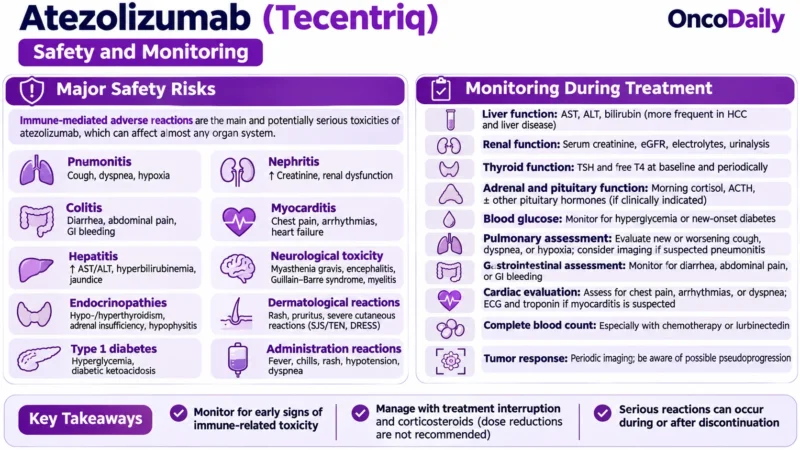
What Monitoring Is Required During Atezolizumab Treatment?
Thyroid Function
Monitor TSH and free T4 at baseline and periodically during treatment.
Investigate symptoms of hypothyroidism, hyperthyroidism, or thyroiditis.
Adrenal and Pituitary Function
Assess morning cortisol, ACTH, electrolytes, and other pituitary hormones when clinically indicated.
Unexplained fatigue, hypotension, or hyponatremia should prompt evaluation for adrenal insufficiency.
Liver Function
Monitor AST, ALT, bilirubin, and relevant hepatic biochemical parameters.
Particular attention is required in patients with underlying liver disease or HCC.
Renal Function
Monitor serum creatinine, estimated renal function, and electrolytes.
Urinalysis and additional nephrological evaluation may be required when immune-mediated nephritis is suspected.
Blood Glucose
Monitor for hyperglycemia, new insulin deficiency, and symptoms of diabetic ketoacidosis.
Pulmonary Monitoring
Evaluate new or worsening cough, dyspnea, hypoxia, and respiratory symptoms.
Obtain chest imaging when pneumonitis is suspected.
Gastrointestinal Monitoring
Monitor stool frequency, diarrhea, abdominal pain, gastrointestinal bleeding, and dehydration.
Early evaluation is important to prevent severe immune-mediated colitis.
Cardiovascular Monitoring
Investigate new chest pain, palpitations, syncope, or unexplained dyspnea.
ECG, cardiac troponin, echocardiography, or cardiac MRI may be required when myocarditis is suspected.
Neurological Monitoring
Assess new muscle weakness, sensory abnormalities, headache, confusion, visual disturbances, and swallowing difficulties.
Complete Blood Count
Monitor hemoglobin, leukocytes, neutrophils, and platelets.
Hematologic monitoring is particularly important during treatment with chemotherapy or lurbinectedin.
Combination-Specific Monitoring
Additional monitoring depends on accompanying treatment.
Bevacizumab: Blood pressure, proteinuria, bleeding risk, and wound-healing complications.
Lurbinectedin: Blood counts, liver function, infection, and myelosuppression.
Platinum chemotherapy: Hematologic parameters, renal function, electrolytes, and neuropathy.
BRAF/MEK inhibitors: Liver function, cardiac function, dermatological toxicity, and ocular symptoms.
Tumor Response
Evaluate disease response using appropriate imaging and clinical criteria.
Pseudoprogression can occur with immune checkpoint inhibition but should not be assumed when radiological progression is detected.
ctDNA MRD Monitoring
In the adjuvant bladder cancer setting, postoperative ctDNA MRD testing is central to selecting eligible patients.
Testing should follow the validated assay and approved clinical indication.
Reproductive Monitoring
Confirm pregnancy status when appropriate and counsel patients regarding contraception, pregnancy, and breastfeeding.
FAQ
What Is Atezolizumab Used For?
What Is Its Mechanism of Action?
Is Atezolizumab Chemotherapy?
What Is the Standard Dose?
Can Atezolizumab Be Administered Subcutaneously?
Does Atezolizumab Require PD-L1 Positivity?
PD-L1 testing is required for selected NSCLC indications, while other treatment settings have different biomarker requirements.
Can Atezolizumab Treat Colon Cancer?
Can Atezolizumab Treat Bladder Cancer?
Is Atezolizumab Used for Triple-Negative Breast Cancer?
What Is the Most Important Side Effect?
Does Atezolizumab Have a Boxed Warning?
How Is Atezolizumab Different From Nivolumab?
They differ in indications, approved combinations, dosing schedules, and supporting clinical evidence.