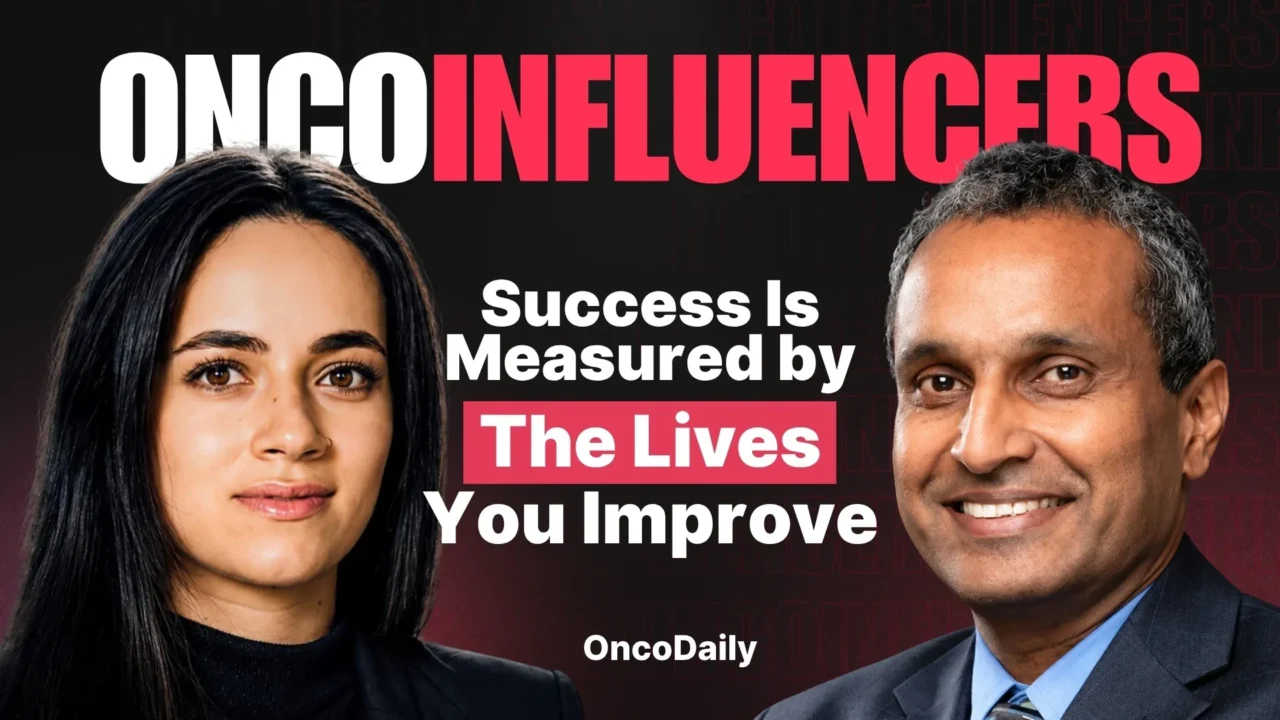
Tata Memorial Hospital once geotagged 75,000 patients who had come through its doors in Mumbai. Less than 30% were from Maharashtra. The rest had travelled from elsewhere – many across thousands of kilometres, often without money, family support or the resources needed to stay in an unfamiliar city through months of cancer treatment.
Some never completed it.
In oncology, there is a familiar phrase for what happens next: the patient “abandoned treatment.”
For Dr. C. S. Pramesh, Director of Tata Memorial Hospital in Mumbai and Convener of India’s National Cancer Grid, calling this “treatment abandonment” places the failure on the wrong side of the equation.
“I think that’s taking the easy way out. I think it’s the health system that’s failed them.”
That way of looking at the problem, not only at what happened to the patient, but at the system that made it possible, runs through much of Pramesh’s career.
He leads one of India’s most prominent cancer institutions, yet some of his most important work has been driven by a question that reaches far beyond Tata Memorial itself: what is the value of building an exceptional cancer center if access to that level of care still depends on where a patient lives?
A Wider View of Cancer Care
Dr. Pramesh did not begin his career imagining himself as a hospital director or the leader of a national cancer network. First, he wanted to become a doctor. Then a surgeon. Eventually, he chose cancer surgery and specialized further in thoracic oncology.
The future he pictured was relatively straightforward: treating patients, teaching students and perhaps doing research alongside clinical work. And despite everything that came later, he still describes caring for patients as the most rewarding part of what he does.
But clinical practice also exposed its own limits.
“I gradually realized that treating patients one patient at a time, while extremely meaningful – and to me, even today, the most rewarding part of my work is treating patients – that by itself is not enough.”
The realization did not pull him away from patients. It changed the scale at which he thought about helping them.
“I felt that if we could improve systems, influence policy, and build collaborations, we could improve care for millions, order of magnitude by way of scale.”
Working at that scale also changed how he understood his own place within the work.
“That shift from thinking about individual patients to thinking about healthcare systems has probably defined the trajectory of my career. Medicine is a team sport, and nobody, regardless of who they are – no leader succeeds alone.”
Over time, that thinking moved beyond the clinic and into the way he approached institutions themselves.
When One Great Cancer Center Is Not Enough
The patients traveling to Mumbai made one problem impossible to ignore.
“India has extraordinary centers of excellence, some of which could rival some of the best cancer centers anywhere in the world, but they were working largely in silos. Clinical practices were different, research was fragmented, there was not much collaboration between these centers, training opportunities were not equal in these centers, and many of these hospitals had limited access to expertise.”
The disconnection also meant that knowledge, training and experience were not moving easily between centers.
“So rather than creating yet another institution, we wanted to create a network of existing institutions that could then learn from one another, have shared knowledge, and collectively raise standards.”
That network became the National Cancer Grid, launched in 2013 with 17 centers. Today it includes more than 400 cancer centers across India, with participation extending to neighboring countries and other low- and middle-income settings.
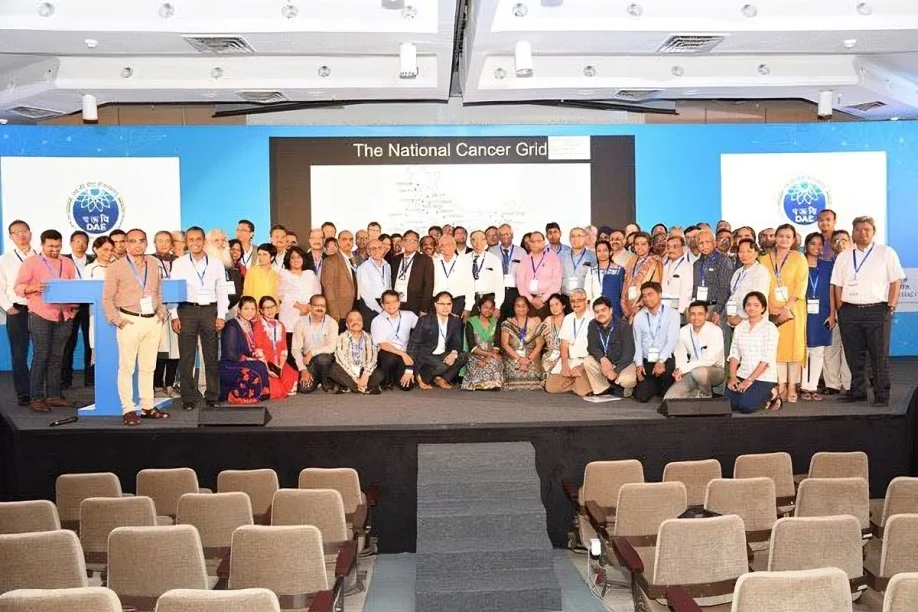
Source/ncgindia.org
“Typically, as cancer center leaders, the ambition of every cancer center CEO or director… is to make their center or their hospital the best cancer hospital in the world. But to me, what a truly good cancer center or a hospital should be doing, is to narrow the gap in quality between the highest-performing centers and the lowest-performing centers.”
The principle running underneath it is simple.
“Rather than just your own center getting better and better and better and not taking care of some of the other centers, you’ve lost an opportunity. Collaboration is far more powerful than competition when the goal is improving patient care.”
Pramesh is particularly proud that the National Cancer Grid does not belong to Tata Memorial or to any single institution. It is member-driven and, in his description, fundamentally a ground-up movement.
Leadership Means Making Yourself Less Necessary
“I always used to think that expert leadership was all about expertise, and that the smartest person is a natural leader.”
Over time, the view changed substantially.
“Leadership is really about enabling others. It’s about creating a shared vision, getting people to believe in that shared vision, building that trust, and helping other people achieve things that they couldn’t have achieved individually.”
Dr. Pramesh describes his preferred approach as servant leadership.
“While many people associate leadership with authority, I think the main attribute of a leader is to actually serve and enable growth amongst others. The important decisions a leader makes are not by speaking first, but creating a space for others to contribute, and creating a space which enables people to disagree without being disagreeable.”
He also argues that leaders should listen before speaking, create space for others to contribute, and make disagreement possible without allowing it to become personal.
“A true leader would actually encourage dissent. This is something I believe in very, very strongly.”
Those ideas were tested almost immediately. Soon after Pramesh became Director of Tata Memorial Hospital, COVID-19 hit, forcing him to learn the job in the middle of a crisis while trying to keep cancer care running. He describes those months with a phrase that captures both the difficulty and the speed of learning.
“That year and a half of COVID was like getting an MBA in healthcare. It was learning on the go, learning how to administer as you handle one crisis after the other.”
Once the immediate crisis of COVID-19 had eased, the broader demands of the role remained. Leading an institution with more than eight decades of history also made him think beyond the tenure of any one director. In his view, the real test was what remained strong after the person in charge was gone.
“You measure success not by what you accomplish as an individual leader, but by what continues to thrive long after you have stepped aside.”
Research training was one place where that became tangible. Across many low- and middle-income countries, Dr. Pramesh had seen young clinicians being encouraged to conduct research without ever receiving formal training in how to frame an important question, design a study or carry it through.
That gap eventually led to CReDO.
CReDO: When the Real Investment Is the Researcher
“Most of us who are involved in research in low- and middle-income countries got into research without any formal training in how to do research.”
CReDO was built as a response to that experience, but not as another lecture-based course. Participants came with their own research ideas and worked on them directly with mentors, developing the questions, methods and study designs as part of the program itself.
The aim was deliberately different from another conference built around lectures.
“We didn’t want yet another meeting where people listened to lectures and went home inspired, but unchanged. What makes CReDO unique to me is the fact that it focuses on people rather than projects.”
Dr. Pramesh says CReDO has now trained more than 500 early-career researchers from over 40 countries, alongside biostatisticians and patient representatives. Some participants have gone on to build multicenter collaborations, lead research programs and mentor others.
“Seeing former participants… becoming independent researchers, mentors, and leaders in your own rights has been the singularly most rewarding outcome that we’ve seen.”
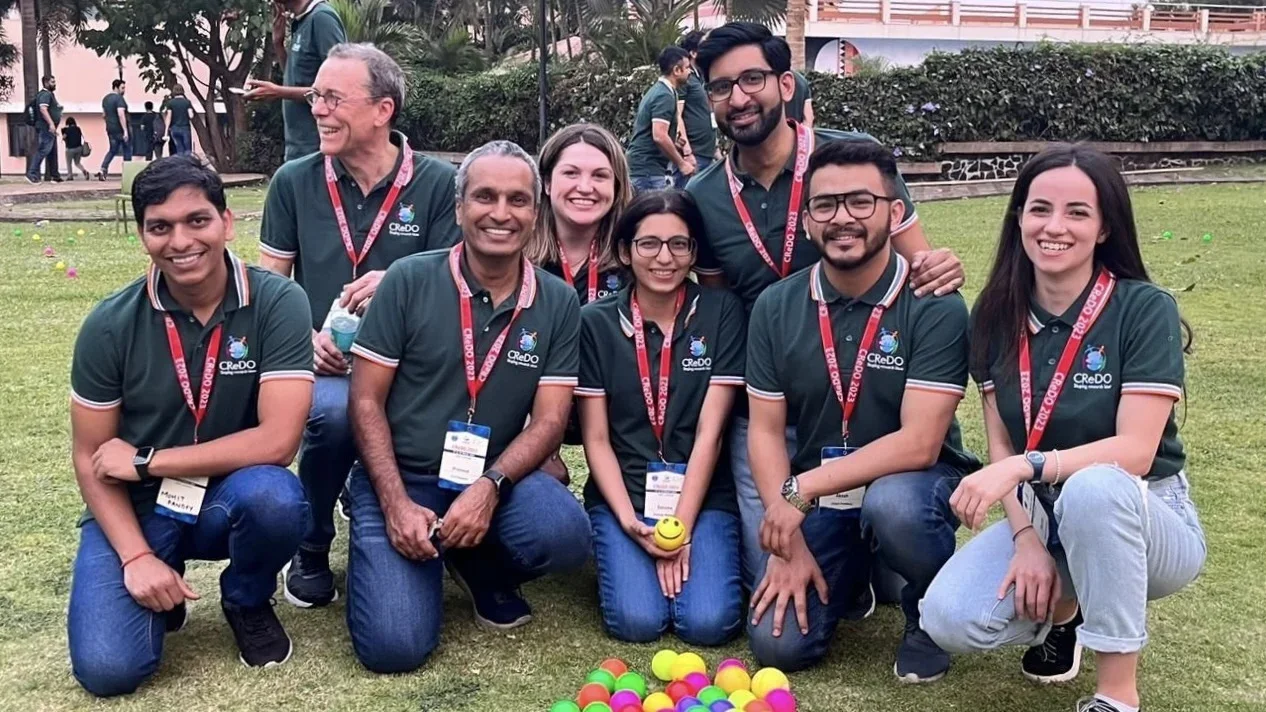
Shushan Hovsepyan/LinkedIn
Many of those researchers came from health systems working with very different resources, constraints and ways of delivering care. That experience also challenged a familiar assumption about global oncology: that knowledge should flow mainly from richer countries to poorer ones.
What Global Cancer Care Still Gets Wrong
Pramesh considers global oncology one of the field’s most misunderstood terms. Too often, it is imagined as knowledge flowing in one direction: high-income countries develop expertise and technologies, then export them to countries with fewer resources.
He rejects that model.
“Global oncology is not about exporting solutions from one country to another, kind of going from the north to the south. It’s about making sure that where someone is born or where someone lives does not determine whether they survive or not survive their cancer diagnosis.”
High-income countries have produced extraordinary advances in cancer diagnosis and treatment. But health systems working under severe resource constraints have developed expertise of a different kind: how to deliver effective care when there is simply less to work with. Those lessons, he argues, have value well beyond the countries where they were developed.
“Every country, regardless of their resources, has something to teach and something to learn. Global cancer control is about partnership. It’s about collaboration. It’s not charity from the high-income countries to low-income countries. It’s about sharing knowledge and enabling the strengthening of health systems and making sure that scientific advances benefit everyone and not just the richest 10% or 20% of the world’s population.”
That inequity is not only about who gets access to the newest treatment. Pramesh also questioned where attention and investment in health tend to go in the first place. He described a tendency to confuse healthcare with health: sophisticated hospitals and technologies receive enormous attention, while prevention, early detection, primary care and the conditions that shape whether people reach care at all can receive far less.
Cancer exposes that imbalance particularly clearly. While oncology celebrates increasingly sophisticated drugs, surgery and radiation technologies, millions of patients still struggle to obtain timely diagnosis, basic pathology, surgery or radiotherapy.
That was why he was reluctant to assume that the next major improvement in global cancer outcomes would necessarily come from another technological breakthrough.
“The greatest gains in cancer control over the next decade may not come from the next new breakthrough drug or robotic surgery or proton therapy, but from ensuring that what we know works – the proven interventions – reach everyone.”
He was not arguing for less innovation. He was arguing against treating discovery as the end of the job.
“Innovation does matter. I’m not trying to trivialize innovation and advances in technology. But implementation matters just as much, probably even more.”
The Influences Beyond Medicine
When the conversation turned away from cancer systems and toward the influences outside medicine, Dr. Pramesh pointed first to his family – his parents and brother, all academics – and then to the teachers and senior doctors who shaped him through training. What stayed with him most clearly was the standard they set for patient care.
“The lessons that stayed with me were dedication, putting the patient first, integrity, and uncompromising clinical excellence. Every patient deserves your absolute best, regardless of who they are, regardless of how much they can pay, regardless of where they come from.”
Family came up again later, from a different direction, when he was asked how he balanced the demands of his work with the rest of his life.
“Different phases of life demand very different priorities. There are times when work inevitably takes precedence, and especially in the area that we work in, which is healthcare. But what matters is making sure that the people closest to you still know that they remain your priority. And to me, family always remains my priority.”
He did not describe that balance in terms of equal hours. Over time, he had become more conscious of what he did with the time he had.
“I’ve learned to value presence more than quantity of time. And while it doesn’t work all the time, when I’m with family or with close friends, I try to be completely present rather than be distracted by emails or meetings. And I also find reward and renewal through reading, traveling, and spending time in nature. These moments often give you a perspective and remind you that while our work is important, it’s not the entirety of our lives.”
Reading, in particular, had stayed with him across different stages of his life, and three books had left a lasting mark.
Richard Bach’s Jonathan Livingston Seagull came first.
“It influenced me at a very early stage of my life. The message that it sends across is that excellence is a journey rather than just a destination. Its message about questioning limits, continually striving to improve, and prioritizing purpose over recognition is something that’s truly resonated with me throughout my career.”
Hans Rosling’s Factfulness was the next one taking the spotlight.
“It reminds you to question assumptions and look carefully at data. It clearly reinforces the importance of evidence over anecdotes, optimism which is grounded in facts.”
His third choice, Viktor Frankl’s Man’s Search for Meaning, was the one he connected most directly to medicine.
“Even in the face of suffering, people can find dignity, they can find purpose, and they can find hope. As an oncologist, I’ve seen that patients often teach us as much about resilience as we teach them about medicine.”
What Should a Career Leave Behind?
After speaking about the people and ideas that had shaped his own life, the final question turned toward those still at the beginning of theirs: young oncologists who wanted, eventually, to contribute beyond individual patient care.
Dr. Pramesh’s advice was to begin with the part of medicine that could not be skipped.
“First and foremost, become an excellent clinician, become a good doctor. Everything else rests on understanding patients and earning their trust. If you want to work on healthcare systems or global cancer control, that understanding has to come from being a good and empathetic doctor first.”
From there, he urged them to stay curious – but not to confuse curiosity with following whatever happened to be receiving the most attention.
“Ask questions that matter to patients and that matter to the health system, rather than questions that are fashionable. And collaborate generously. The whole is always larger than the sum of the parts. The big challenges that we face in cancer care are not going to be solved by individuals. They are going to be solved by teams, by networks and by partnerships.”
His last advice was about how to measure a career.
“A career is a marathon, not a sprint. Success is not about titles or the number of publications that you have. It is about the patients you have helped, the people you have mentored, the institutions you have strengthened, and the difference you have been able to make at a systems level.”
His final measure brought the conversation back to cancer care itself.
“If at the end of your career, cancer care is in any small way better because you were a part of it, then you had a career that’s been worth living.”
Written by Eliz Baloyan, MD, Editor at OncoDaily
Interview by Shushan Hovsepyan, MD, SVP of OncoDaily