Turning a scientific discovery into a therapy is one of the most complex stages of biomedical research. Beyond the underlying science, progress depends on drug discovery capabilities, translational infrastructure, funding, and collaboration across multiple sectors.
The Indiana Biosciences Research Institute (IBRI), founded in 2013, is an independent nonprofit research institute working across translational science and early-stage therapeutic development. Its current research includes cardiometabolic and neurodegenerative diseases, as well as rare pediatric cancers such as neurofibromatosis and metastatic sarcomas.
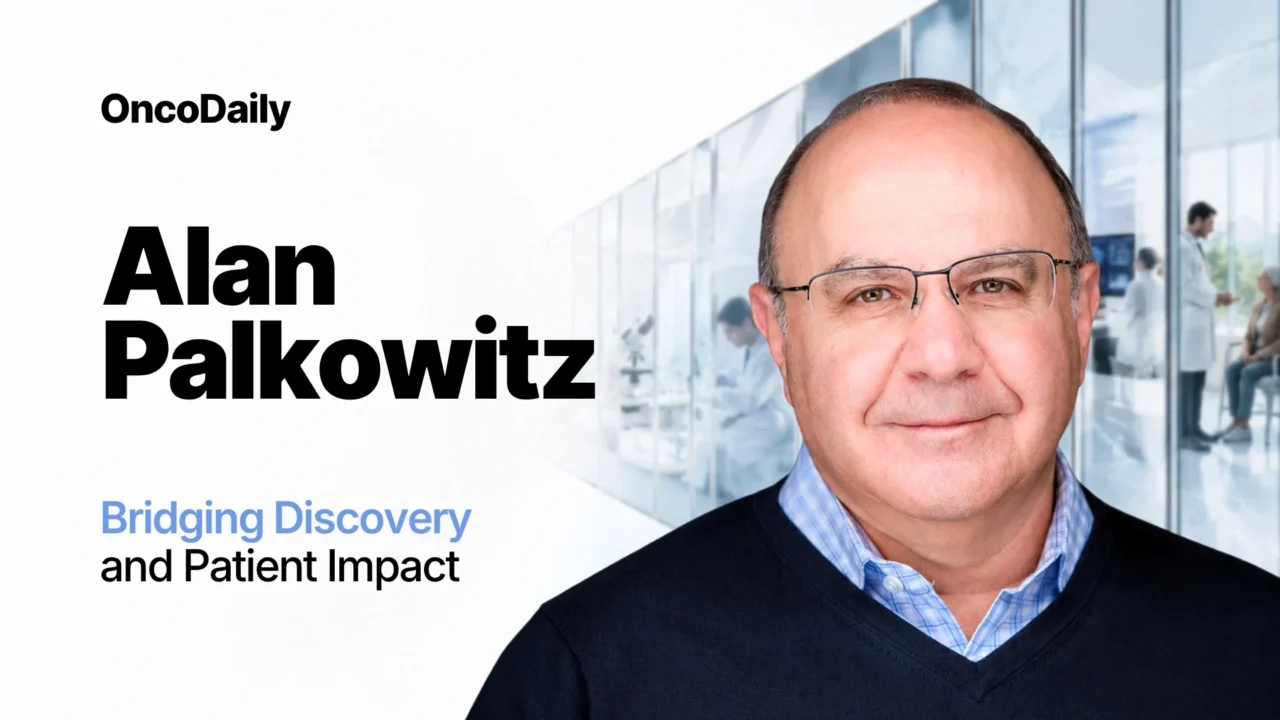
In this interview with OncoDaily, IBRI CEO Alan Palkowitz discusses the institute’s research model, its work in oncology and drug discovery, the challenges of translating early science into development programs, and the role of collaboration and investment in that process.
For readers meeting IBRI for the first time, could you introduce the institute, the story behind its founding and the mission that drives your work today?
Indiana Biosciences Research Institute (IBRI) was founded in 2013 by a coalition of Indiana’s life sciences companies and research universities, with generous philanthropic support from Eli Lilly and Company and the Lilly Endowment, along with funding from the state of Indiana. It was created to bridge the translational gap between early scientific discovery and patient-ready therapies, working across academia, industry, philanthropy, and government to unite previously fragmented forces in the race to eliminate disease and improve human health.
We pursue this work in three ways. First, internal teams conduct translational research in our core disease focus areas: diseases of aging, which currently includes cardiometabolic diseases and Alzheimer’s disease and related dementias, and pediatric cancers, including neurofibromatosis types 1 and 2 as well as metastatic sarcomas. Promising intellectual property can be advanced into new companies through Libris Innovations, our for-profit subsidiary, which provides a path toward real patient impact.
Second, through collaborations with biotechnology, pharmaceutical, and academic teams, IBRI applies our expertise and capabilities to fill gaps, help de-risk programs, and accelerate timelines. Finally, through Future Legends Lab, a purpose-built incubator, we support emerging life science startups with the lab space, shared resources, expertise, and access to capital networks needed to succeed.
IBRI is often described as an industry-inspired translational research institute sitting at the interface of academia, industry, and government. What does that model look like in practice, and what makes it unique?
In practice, this means IBRI sits between early scientific discovery and clinical development, doing the complex translational work that determines whether promising ideas can actually progress. Our teams bring together disease biology, medicinal chemistry, cellular pharmacology, and data science to evalulate targets and therapeutic hypotheses, design and optimize molecules, and generate the data needed to assess whether something has real therapeutic potential.
An academic lab can identify a disease mechanism but rarely has the infrastructure to turn that insight into a drug candidate. A company can develop a drug candidate but may not have the flexibility to pursue an early, unproven hypothesis. IBRI picks up where early-stage discovery often stalls, carrying the work forward into an actual drug candidate, until a company or investor is ready to take it on.
What makes this possible at scale is IBRI’s independence. As a standalone nonprofit, we can commit to a research program based on its scientific merit and patient need, rather than any single partner’s near-term interest. When a program is ready, it can advance into a new company through Libris Innovations, with the proceeds reinvested into IBRI.
The institute’s roots are in diabetes and metabolic disease, and your work has since expanded into areas such as Alzheimer’s disease, rare pediatric diseases, and cancer. Which current initiatives or programs are you most excited about?
Across our disease focus areas, we are pursuing strategies that both advance scientific understanding and provide a path to potential new therapeutics. What excites us most right now is the connectivity between disease processes. Many of the areas we are studying share common signaling pathways, which gives our team a distinct vantage point to spot connections that might otherwise be missed.
For example, we are currently examining the connection between metabolism and neurodegenerative diseases, particularly through the modulation of inflammatory pathways. This could provide insight for new biomarker and therapeutic strategies previously unknown.
Many of our readers work in oncology and biotech. Could you tell us more about IBRI’s growing work in cancer research and how your capabilities in drug discovery, data sciences, and molecular innovation support it?
IBRI’s cancer research is focused on rare pediatric diseases, where unmet need is high, and small patient populations have historically meant limited investment. Across these programs, our work draws on the same core capabilities. Data science helps us identify biomarkers and make sense of patterns in patient populations, molecular innovation allows us to design new drug candidates, and capabilities like cellular screening and preclinical modeling helps move findings toward clinical development.
In neurofibromatosis type 1, mutations disrupt the tumor suppressor protein neurofibromin. In some patients, this can lead to an aggressive cancer, malignant peripheral nerve sheath tumors (MPNSTs). Our teams have identified antibody candidates targeting DLK1, a potential biomarker that could enable earlier detection of MPNSTs and potentially serve as a targeted drug delivery vehicle for DLK1-positive tumors. We are also working on a gene-targeted protein therapy to compensate for the NF1 mutation itself, which could help prevent malignant progression that leads to MPNSTs, in addition to NF1’s broader disease effects.
IBRI’s pediatric sarcoma research focuses on metastasis, as currently available treatments typically focus on the primary tumor as the target. Our researchers have identified the platelet-derived growth factor receptor (PDGFR) family of cell surface receptors as an early driver of lung metastasis in multiple pediatric sarcomas. We’re developing monoclonal antibodies to block PDGFR activation, which could reduce the growth of existing metastatic lesions or prevent new ones from forming.
Collaboration is central to IBRI’s approach. Could you share one or two partnerships, with academia, industry, government, or early-stage biotech companies, that best illustrate the impact of this model?
One great example is TREAT-AD, the National Institute on Aging initiative working to characterize and validate new drug targets for Alzheimer’s disease. IBRI was selected as a partner for our capabilities in medicinal chemistry, iPSC-based pharmacology, and translational assay development, work that has focused heavily on microglia and the role of neuroinflammation. As an extension of this work, IBRI joined Indiana University School of Medicine and Purdue University in securing a five-year, $11.3 million NIH grant to advance SHIP1 inhibitors as potential Alzheimer’s therapeutics.
Another example is our partnership with Elanco, announced this April, to develop a novel feline iPSC-derived renal cell model for chronic kidney disease. Insights from this work have the potential to support Elanco’s therapeutic development priorities, which could demonstrate promising applications across both animal and human health. Once established, these feline iPSC lines could also serve as a versatile platform for modeling a wider range of diseases, opening up real possibilities for translational research and future therapies.
How would you describe IBRI’s role in Indiana’s life sciences ecosystem, from supporting emerging companies to attracting and developing scientific talent?
Indiana has become a concentrated hub for global life sciences leadership, and IBRI is proud to play a role in driving innovation forward, helping develop talent, supporting life science startup companies, and advancing research and partnerships across the state.
Through the Future Legends Lab, our incubator model, emerging life sciences companies gain access to infrastructure, capabilities, and connections that usually take years to build, from lab and office space to investor networks. That kind of support can be the difference between a founder staying in Indiana to build their company and having to leave the state to find what they need elsewhere.
The IBRI Internship Program is built to complement academic learning through exposure to the pace, expectations, and opportunities of a translational research environment. Through real-world experience and close mentorship, students build applied skills, confidence, and a clear sense of direction that can catalyze their future careers. Most students come from Indiana, part of a deliberate effort to keep talented Hoosiers in the state throughout college and into their professional careers. This year, we received more than 680 applications for just 30 positions, proof that the next generation of scientific talent is eager for this kind of hands-on experience.
On October 29, IBRI will host the inaugural Global Forum on Science, Philanthropy, and Investment at the Eiteljorg Museum in Indianapolis. What inspired the forum, and what do you hope it will achieve?
The idea for the Global Forum grew out of a straightforward observation: translating breakthrough research into patient-ready therapies remains one of the most complex challenges in life sciences, and it takes experts working together across sectors to solve it. Scientists, philanthropists, and investors each play an important role in translational medicine, but don’t often sit in the same conversation.
The Global Forum is our effort to change that. Through a keynote address and a moderated panel, we’re convening leaders across research, philanthropy, and investment to examine how rigorous science, aligned funding, and strategic investment can shorten development timelines, reduce risk, and expand the impact of biomedical innovation.
We designed the Global Forum to create space for real, substantive dialogue between groups and consider it a success if attendees leave with a clearer, shared sense of how their roles depend on one another to move a scientific discovery toward patients.
The program features a keynote from Nobel laureate Dr. William G. Kaelin, Jr. and a panel spanning philanthropy, entrepreneurship, and investment. Why is the alignment of these sectors so important for advancing translational medicine and drug development today?
Advancing translational medicine and drug discovery has grown more difficult and expensive, and no single sector can carry the work alone. Philanthropy can fund work that may be too early or not yet proven enough to attract significant traditional investment. Without that support, many promising ideas would never generate the data needed to move forward at all. Entrepreneurs form companies that provide the structure and resources needed to carry that early-stage work forward. Investment is what allows those companies to scale and ultimately reach the populations in need.
On their own, each of these sectors is limited. Philanthropy can fund good science that never becomes a company. A company can exist without attracting capital to grow. Investment typically follows once the earlier stages reduced risk enough to justify a commitment. Without these sectors working together, strong science can stall and never advance to the point of helping patients in need.
Looking back, which achievements or milestones are you most proud of, and how does IBRI measure its impact?
Over the past few years, IBRI has invested across multiple areas including talent acquisition and development, technology, and an expanding portfolio of projects. The return on those investments has been quite exciting, and it has now created new opportunities to expand our scientific agenda and mission.
Just as importantly, we have earned the trust of multiple partners who are now seeking to deepen their collaboration with IBRI in ways that we had not imagined a few years ago. In parallel, we have successfully activated multiple funding mechanisms to support our work and growth. Sustainability is a key goal for us, and this progress gives us the confidence to explore new areas for strategic investment.
Looking ahead, what is your vision for IBRI over the next five years, and what message would you like to share with the global scientific and biotech community?
The success and evolution of the IBRI model suggest it may be part of a broader solution to a persistent challenge in biopharmaceutical research and development: the stretch between basic science and private sector investment where projects are most likely to stall. This gap has grown significantly over the past few years due to multiple factors, including a changing pharma model that has become more development-focused, limited venture investment in early-stage science, and growing uncertainty around federal funding for academic research.
IBRI’s work sits squarely at this point in the translational continuum, where scientific uncertainty and investor risk are the greatest. As we look ahead, we expect IBRI to emerge as an innovative leader, serving as a blueprint for bridging that gap and providing a new channel for innovation to progress from concept to patient impact.
IBRI’s model addresses a persistent challenge in biomedical innovation: helping promising science move beyond early discovery and toward real therapeutic development.
As Alan Palkowitz highlights, progress increasingly depends on stronger alignment between researchers, industry, philanthropy, entrepreneurs, and investors. IBRI’s goal is to help create that bridge and give promising discoveries a clearer path toward patient impact.
Explore more OncoDaily coverage on translational research, and drug discovery.