 Algeria
 Over the past few years, Algeria has made significant progress in modernizing cancer care through the progressive integration of immunotherapy into routine oncology practice. Supported by the country’s National Cancer Control Strategy and the Algerian National Medical Oncology Therapeutic Guidelines, immune checkpoint inhibitors are now incorporated into the management of multiple solid tumors according to internationally recognized indications.
The National Medical Oncology Therapeutic Guidelines, developed by the Algerian Ministry of Health, provide standardized, evidence-based treatment recommendations that harmonize clinical practice across oncology departments nationwide. Their regular updates have facilitated the integration of innovative therapies into daily clinical practice while promoting equitable access to modern cancer treatments.
Today, immunotherapy is used in the treatment of several malignancies, including triple-negative breast cancer, kidney cancer, bladder cancer, lung cancer, gastric cancer, colorectal cancer, hepatocellular carcinoma, and cutaneous melanoma. For eligible patients, these therapies have expanded treatment options and, in many clinical settings, have contributed to improved response rates, longer disease control, and better survival outcomes.
The implementation of immunotherapy has also enabled Algerian medical oncologists to progressively align clinical practice with contemporary international standards, reflecting the country’s commitment to delivering evidence-based oncology care.
Building the Infrastructure for Precision Oncology
The successful use of immunotherapy extends beyond access to innovative medicines. It depends on robust diagnostic infrastructure capable of identifying patients most likely to benefit from treatment.
Expanding immunohistochemistry and molecular pathology platforms across pathology departments remains a national priority. Timely biomarker testing is essential for appropriate patient selection and supports the broader development of precision oncology in Algeria.
In parallel, the Algerian pharmaceutical industry has invested in local manufacturing capacity through the establishment of facilities dedicated to innovative anticancer therapies. Continued technology transfer and increased local production are expected to improve treatment availability while strengthening the national pharmaceutical sector.
Challenges for Clinical Practice
As immunotherapy becomes increasingly integrated into routine oncology care, several challenges remain.
Ensuring the continuous availability of immunotherapy agents through the Central Pharmacy of Hospitals and hospital pharmacies is essential to avoid treatment interruptions and maintain uninterrupted patient care.
Continuous professional education also remains a key priority. Ongoing training for medical oncologists, pathologists, radiation oncologists, surgeons, radiologists, pharmacists, nurses, and other healthcare professionals is necessary to keep pace with the rapidly evolving evidence surrounding cancer immunotherapy.
Another important challenge is the recognition and management of immune-related adverse events. Early diagnosis and multidisciplinary collaboration are critical for optimizing patient safety. Establishing dedicated Immunotoxicity Multidisciplinary Team (MDT) meetings could further improve the coordinated management of these complex toxicities.
Radiologists also play an increasingly important role in immunotherapy, particularly when interpreting atypical response patterns such as pseudoprogression and hyperprogression. Accurate imaging assessment is essential to guide appropriate therapeutic decisions and avoid premature treatment discontinuation.
Looking ahead, artificial intelligence (AI) offers promising opportunities to enhance radiological assessment, improve response evaluation, support clinical decision-making, and contribute to increasingly personalized cancer care.
Looking Forward
The progress achieved in recent years reflects Algeria’s commitment to expanding access to innovative cancer therapies and modernizing oncology practice. Continued investment in diagnostic infrastructure, multidisciplinary collaboration, professional education, sustainable pharmaceutical supply, local manufacturing, and clinical research will be essential to fully realize the potential of immunotherapy and further improve outcomes for patients with cancer across the country.
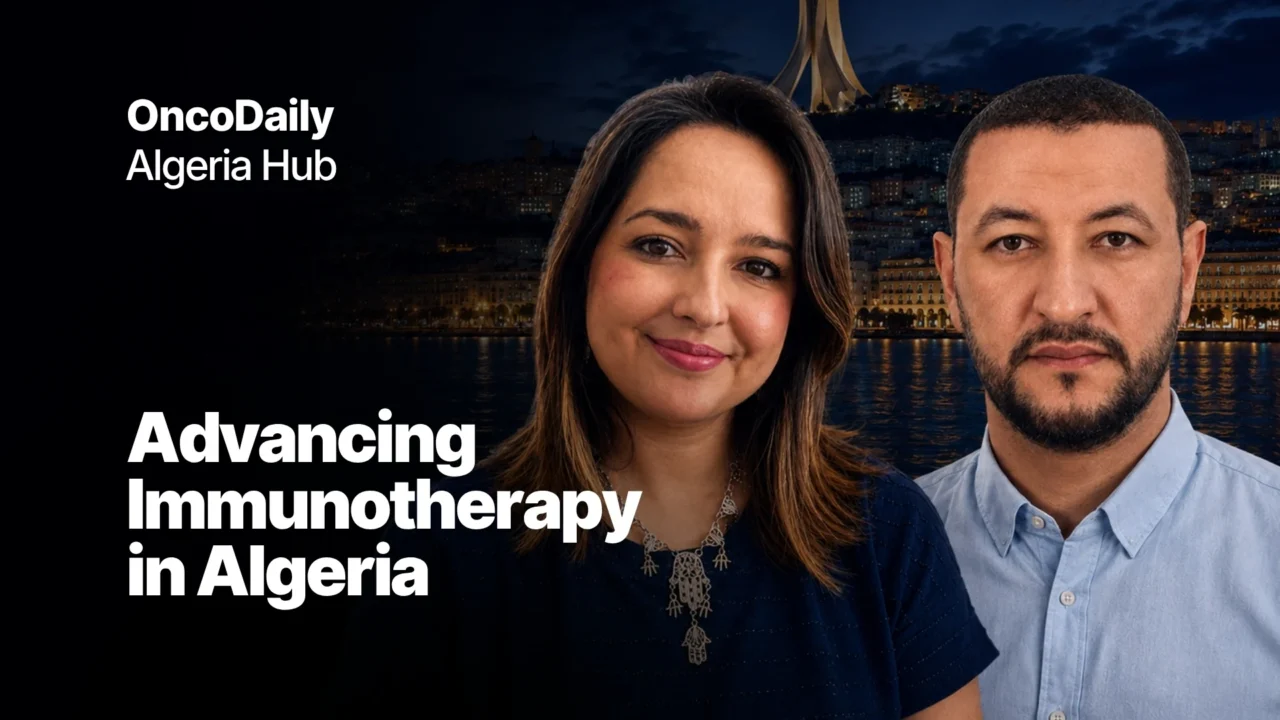
Written by Dr. Abderrahim Djellaoui and Dr. Imène Hadji,
OncoDaily Algeria Hub