





Cancer is an increasing public health challenge in Kenya. According to GLOBOCAN 2024, the country is expected to record 35,867 new cancer cases and 22,888 cancer-related deaths in 2024, with more than 76,165 people living with a cancer diagnosis within five years of diagnosis. Breast cancer remains the most frequently diagnosed cancer overall, followed by cervical cancer, which continues to place a significant burden on Kenyan women. Among women, cervical cancer is the second most commonly diagnosed cancer, with an estimated 4,294 new cases and 2,606 deaths annually. These sobering figures remind us that despite being one of the most preventable cancers, cervical cancer continues to claim far too many lives and largely because many women are diagnosed at advanced stages of the disease.
Fortunately, cervical cancer is also one of the few cancers that can be eliminated through a combination of vaccination, screening, early detection, and timely treatment. Guided by the World Health Organization (WHO) Global Strategy to Eliminate Cervical Cancer, Kenya has committed to achieving the 90-70-90 targets by 2030:
- 90% of girls fully vaccinated against HPV by age 15;
- 70% of women screened with a high-performance test by ages 35 and 45; and
- 90% of women diagnosed with cervical disease receiving appropriate treatment.
A major milestone in Kenya’s journey came with the adoption of the single-dose HPV vaccination schedule, following WHO recommendations. The Ministry of Health now provides one dose of the HPV vaccine to all 10-year-old girls through the National Immunization Programme. This policy simplifies vaccine delivery, reduces programme costs, minimizes missed opportunities, and is expected to improve vaccine uptake while maintaining strong protection against the HPV types responsible for the majority of cervical cancers.
Targeting 10-year-old girls is strategic. Vaccinating girls before exposure to the human papillomavirus provides the highest level of protection and offers Kenya the opportunity to protect an entire generation from a cancer that is almost entirely preventable.
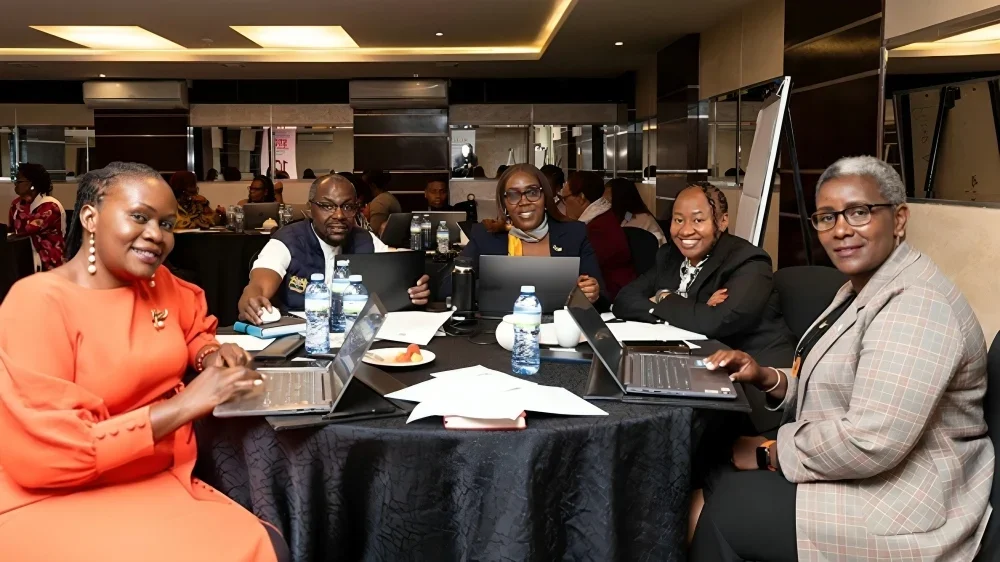
Phoebe Ongadi-KENC with National Vaccines and Immunization Program (NVIP) Leadership during a HPV vaccination and routine immunization meeting in Nairobi Kenya
However, vaccines alone cannot eliminate cervical cancer.
Success depends on strong partnerships. Governments provide policy leadership, financing, and vaccine procurement. Healthcare workers deliver quality immunization and screening services. Schools provide an effective platform for reaching eligible girls. Civil society organizations – spearheaded by leaders like Phoebe Ongadi, Kenya Hub Lead, create awareness, address misinformation, mobilize communities, and advocate for equitable access. Development partners strengthen technical capacity and resource mobilization, while survivors and community leaders inspire trust through lived experience.
Kenya’s progress demonstrates that early detection and cancer prevention gains cannot be achieved in isolation. The country’s transition to a single-dose HPV vaccine is not simply a change in immunization policy but it is a powerful example of what is possible when government, civil society, healthcare professionals, researchers, development partners, educators, faith leaders, the media, and communities work together toward a common goal.
As Kenya strives to meet the WHO cervical cancer elimination targets, collaboration must remain the driving force behind every intervention. Every vaccinated 10-year-old girl represents a future protected from cervical cancer. Every woman screened represents an opportunity to detect disease early and save a life. Every partnership formed brings Kenya one step closer to eliminating cervical cancer as a public health problem.
Early detection gains cannot be won alone. They are achieved through shared leadership, collective action, and an unwavering commitment to ensuring that every Kenyan has access to prevention, early diagnosis, quality treatment, and survivorship care.