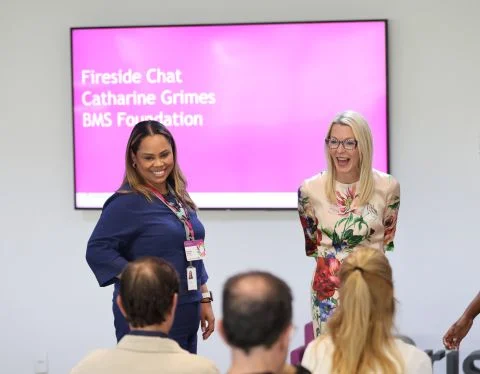
Catharine Grimes, President of the Bristol Myers Squibb Foundation, shared on LinkedIn:
“Lung Cancer Awareness Month is an important opportunity not only to raise awareness of the disease, but also to recognize the people who are working to change its trajectory. For me, it has also been an important time for me to reflect on what it takes to improve outcomes for people with lung cancer and the extraordinary commitment of our grantee partners who are working toward that goal every day.
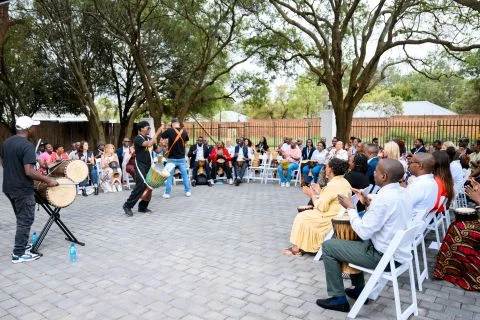
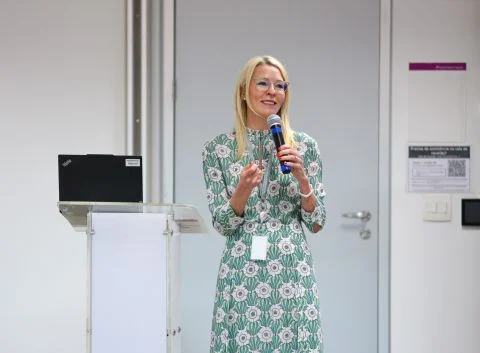
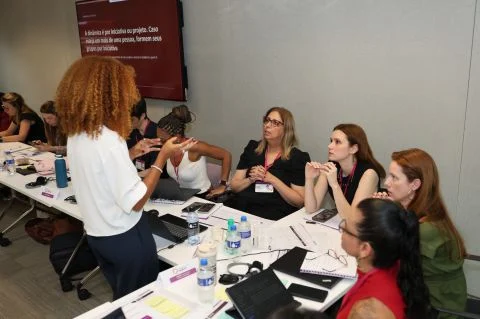
Over the past two weeks, I had the privilege of convening with many of them at Summits in Africa and Brazil. Different continents, different health systems, different local challenges. But the same thing happened in both rooms: grantees came together with differing perspectives and experiences, challenged each other’s thinking, and left with new ideas they did not arrive with.
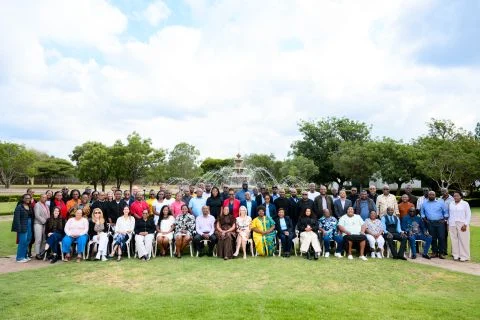
That matters, because no single program, funder or institution holds the whole answer.
This is also how the BMS Foundation approaches lung cancer. We work across Africa, Brazil, India, and the United States, pairing a global strategy with locally led implementation. The health systems are very different, but the approach transcends geographies: invest in local capacity, strengthen systems, generate evidence and share what we learn. What our partners learn about screening in Africa informs our work in Brazil and India, and the reverse is true too.
With only about 16% of lung cancer cases in Brazil diagnosed at an early stage (National Cancer Institute – INCA), there is an opportunity to strengthen the installed capacity of the SUS, starting with a primary health care network that works, and to train the teams to investigate lung cancer when other conditions are ruled out. Grantees explored how to build on existing infrastructure, and how to turn strong data into a story that clinicians, policymakers, funders and patients alike can act on.
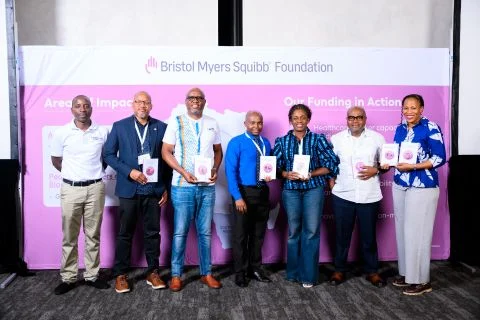
Since 2017, data from our Multinational Lung Cancer Program (MLCCP) across Africa show that early-stage diagnosis have increased from 8.7% to 19.5% of new cancer diagnoses across our grantee programs. Behind those numbers are more people being diagnosed when treatment has a better chance of success, health workers recognizing cancer earlier, and stronger referral pathways. This is what health systems strengthening looks like in practice.
The challenge we now face is scale: embedding what works into health systems so progress outlasts any single grant. Behind every one of these exchanges is a patient, someone diagnosed earlier, connected to care sooner and supported through treatment.
That is why collective experiences like this matter: when partners across geographies learn together, patients benefit.
Thank you to our grantee partners and to everyone across the field working to improve outcomes for people with lung cancer, and to Renatha S. in Brazil and Christable Semondile and lawrence mandikiana in Africa for leading this work for us.”
You can also read:
Lung Cancer Hope Month 2026: Celebrating Progress in Modern Oncology