Author: Sara Bojanić
Affiliation: Europa Donna Serbia – The Serbian Breast Cancer Forum
Role: National Delegate, Europa Donna – The European Breast Cancer Coalition
Every breast cancer diagnosis begins with uncertainty.
For many women, the greatest challenge is not only understanding the diagnosis itself, but also navigating an often complex healthcare system while processing fear, making life-changing decisions, and trying to distinguish reliable information from misinformation.
In Serbia, patient organizations had been hearing the same questions for years.
“Where do I go next?”
“Which specialist should I see?”
“What are my rights?”
“Why did someone else’s treatment pathway look completely different from mine?”
“Can I trust the information I found online?”
These were not isolated questions. They reflected systemic gaps in communication, health literacy, and patient navigation. Rather than assuming we understood these challenges, Europa Donna Serbia – The Serbian Breast Cancer Forum, decided to ask women directly.
Listening before building
We conducted a nationwide online survey involving 785 women living with breast cancer, exploring their experiences with healthcare communication throughout diagnosis and treatment, as well as the challenges they faced when returning to everyday life – including work, family responsibilities, and long-term survivorship.
The findings confirmed something that patient advocates had observed for years.
Women generally trusted their healthcare professionals, yet many still felt overwhelmed by fragmented information, inconsistent communication, and uncertainty about what should happen next.
Medical appointments are often short. Patients receive a large amount of complex information while experiencing one of the most stressful periods of their lives. Even excellent clinical communication cannot always compensate for the emotional burden of a cancer diagnosis.
As a result, many women turn to other sources of information, including the internet. Unfortunately, the internet has become both an extraordinary source of knowledge and a powerful driver of the infodemic.
Patients frequently encounter contradictory advice, outdated recommendations, commercial content disguised as medical guidance, and increasingly sophisticated AI-generated information of uncertain quality. Distinguishing trustworthy information from misinformation has become another challenge added to an already demanding cancer journey.
Our survey made one thing clear:
Patients did not simply need more information. They needed guidance.
Building a digital patient navigator
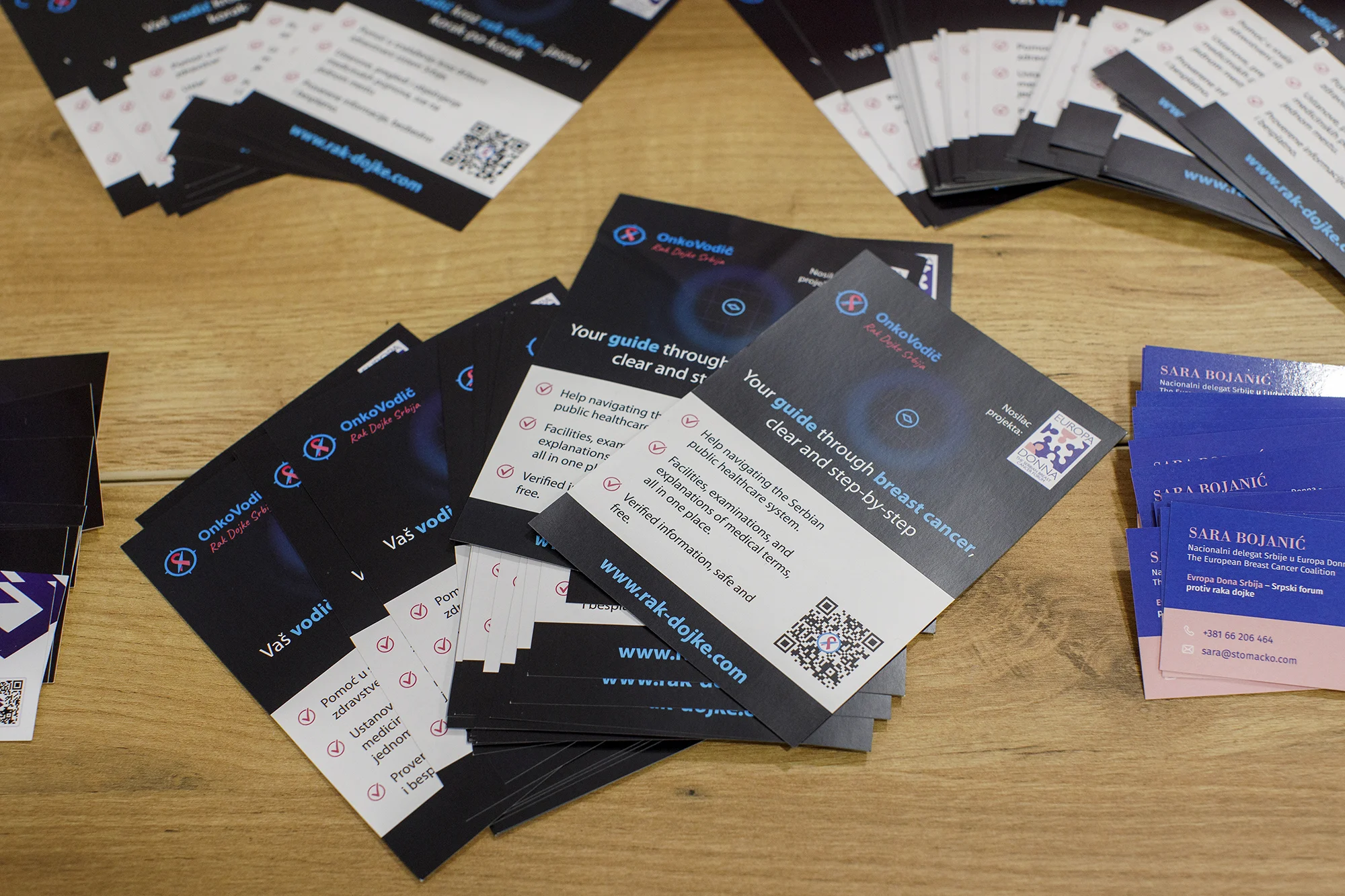
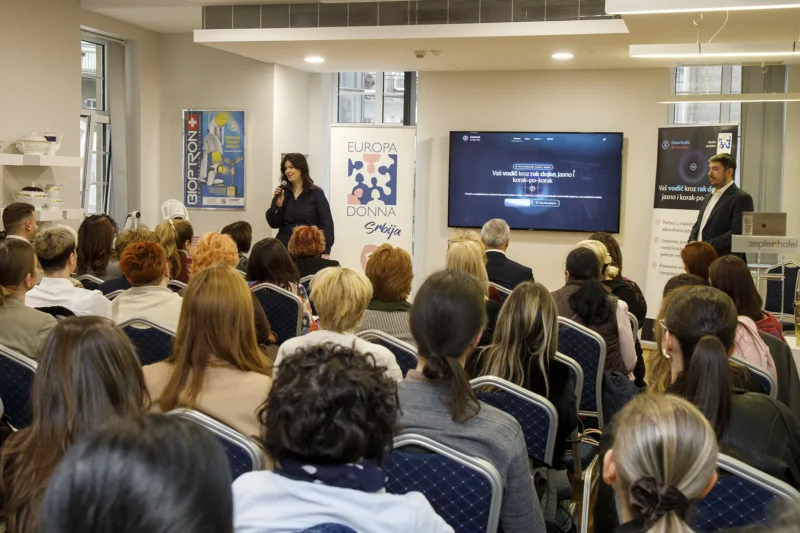
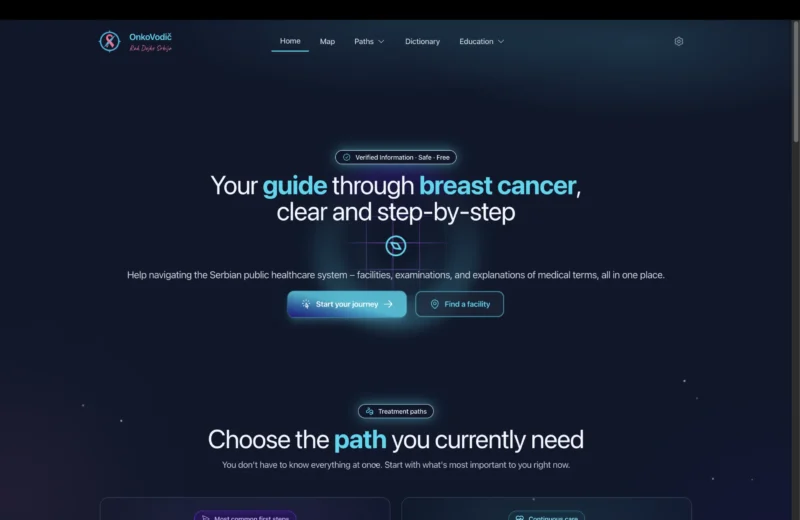
This insight became the foundation for OncoGuide – Breast Cancer Serbia, the first digital patient navigation platform dedicated to breast cancer in Serbia. Rather than functioning as another informational website, the platform was designed to accompany women throughout their entire patient journey.
Its purpose is simple: to answer the question, “What happens next?”
The platform maps the most likely pathway an early or metastatic breast cancer patient will experience – from the first suspicion of disease and diagnostic procedures, through treatment, rehabilitation, follow-up care, and life after cancer. Each section has been developed and medically reviewed by experts while remaining understandable for people without medical education.
This balance between scientific accuracy and accessible language was one of our fundamental principles. Health information should not become simpler by becoming less accurate. It should become clearer.
Supporting health literacy through practical information
One of the biggest barriers to health literacy is that healthcare systems themselves are often difficult to understand. Patients rarely struggle because they are unwilling to learn. They struggle because healthcare pathways are complex. To address this, the platform includes practical navigation tools rather than only educational content.
Women can learn which healthcare institutions provide breast cancer care at secondary and tertiary levels, understand the typical sequence of diagnostic and therapeutic procedures, and access explanations tailored to each stage of care.
The platform also explains patients’ legal rights during and after treatment, helping women better understand available support mechanisms within the Serbian healthcare system.
Because medical terminology can itself become a barrier, we developed an integrated dictionary that translates complex oncology terms into clear, patient-friendly language. The glossary is available throughout the platform and as a dedicated standalone resource, allowing users to understand unfamiliar concepts without leaving their reading experience.
Health literacy is not only about reading information. It is about understanding it well enough to make informed decisions.
Prevention starts long before diagnosis
While the platform primarily supports women diagnosed with breast cancer, prevention remains a central component. Dedicated sections encourage breast awareness, explain the importance of screening, and emphasize healthy lifestyle habits that contribute to reducing cancer risk.
Importantly, we also highlight the role of primary healthcare. General practitioners and gynecologists are often the first healthcare professionals women encounter when discussing breast health. Empowering primary care with accessible digital resources helps strengthen the earliest steps in the patient pathway and promotes earlier diagnosis.
Patient navigation begins long before oncology clinics.
The role of patient organizations
Clinical care is only one part of the cancer journey. Patient organizations often provide something equally valuable: experience, community, reassurance, and practical support.
For many women, speaking with someone who has already walked the same path reduces uncertainty in ways that medical literature cannot.
For this reason, OncoGuide also introduces users to available patient organizations, advocacy groups, psychosocial support services, and other resources that can help women throughout treatment and survivorship.
Healthcare professionals treat the disease. Communities help people live with it. Both are essential.
Artificial intelligence: opportunity and responsibility
As artificial intelligence rapidly becomes part of healthcare, patients are increasingly using AI-powered tools to interpret symptoms, understand diagnoses, summarize medical reports, and prepare questions for consultations. Healthcare professionals are also beginning to integrate AI into clinical workflows. Recognizing this reality, we plan to soon expand the platform with a dedicated section on the responsible use of artificial intelligence. Rather than encouraging or discouraging AI use, our goal is to promote digital health literacy.
Patients should understand what AI can do well and where its limitations begin. AI can help explain medical terminology, organize information, and support learning. It cannot replace clinical judgment, personalized medical advice, or the relationship between a patient and their healthcare team. Used responsibly, AI has the potential to strengthen communication rather than replace it.
Looking ahead
Digital health solutions are sometimes viewed primarily as technological innovations. We see them differently. Technology is valuable only when it solves real problems experienced by real people.
OncoGuide was not created because we wanted to build another website. It was created because hundreds of women told us they needed someone – or something – to help them understand where they were, where they were going, and what to expect next.
Patient navigation, health literacy, trusted information, and responsible digital innovation are no longer separate conversations. They are becoming essential components of modern cancer care. As healthcare systems continue to evolve, listening to patients must remain the starting point.
Sometimes the most innovative digital solution begins not with technology, but with a simple question:
“What do patients actually need?”
You can also read: Oral SERDs in Breast Cancer: Powerful Shift From Rescue to Platform Therapy