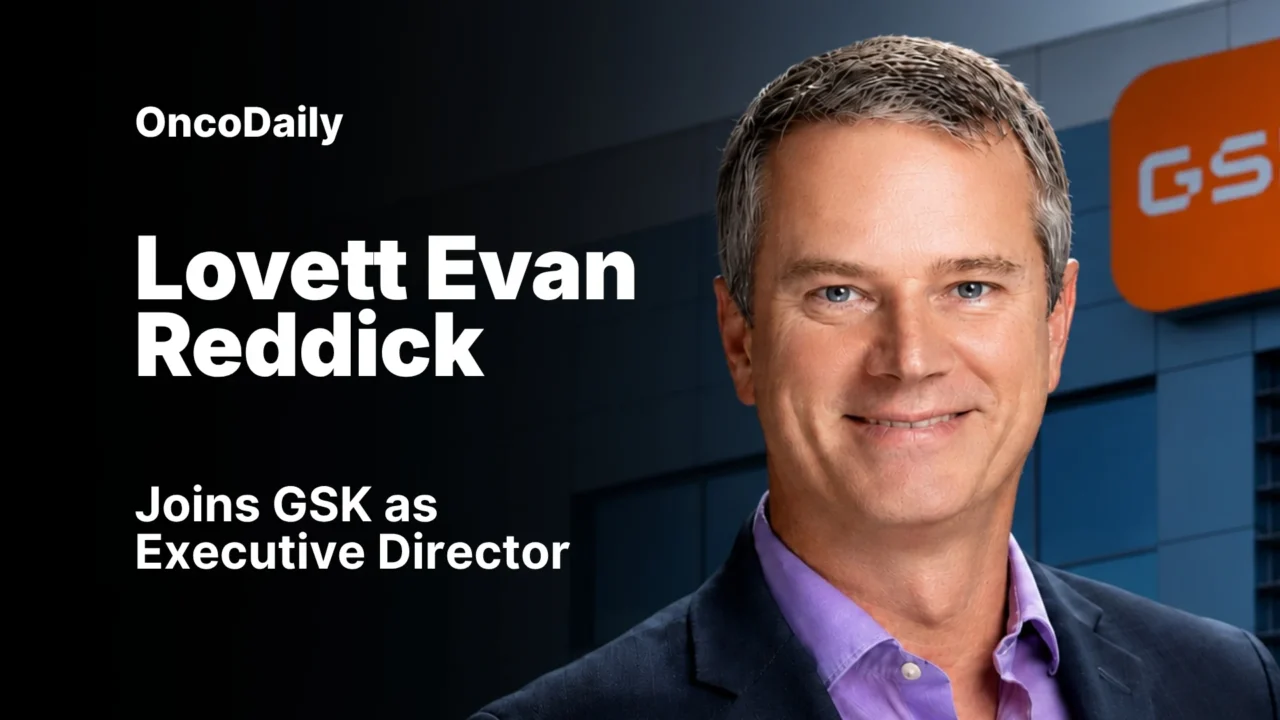
Lovett Evan Reddick, PhD, has joined GSK as Executive Director, Emerging Therapeutic Areas within US Medical Oncology, beginning a new chapter in a career spanning cancer research, medical affairs, pipeline strategy, and oncology product development.
In his new position, Dr. Reddick will support emerging oncology programs and help connect promising early-stage science with future clinical applications. His work will involve collaboration across Medical Affairs, research and development, commercial teams, market access, field medical organizations, external experts, and clinical trial investigators.
A New Chapter Built on Gratitude
Dr. Lovett Evan Reddick joins GSK following his tenure at Takeda, an experience he described with deep appreciation for the colleagues and teams with whom he worked.
Reflecting on the transition, he emphasized that his time at Takeda was defined not only by the work accomplished, but also by the people behind it. He expressed gratitude for the opportunity to work alongside colleagues committed to patients, scientific progress, and one another.
He leaves the organization with strong appreciation for its culture, its mission-driven teams, and the collective impact they sought to achieve.
When Oncology Becomes Personal
For Dr. Reddick, a career in oncology is rooted in a deeply personal experience.
His mother died from breast cancer, a loss that helped shape the direction and purpose of his professional life. While no scientific or medical achievement could reverse that loss, it established a lasting commitment to helping other patients and families gain something profoundly valuable: more time together.
That purpose has remained central throughout his career—more moments, more conversations, and more opportunities for patients to be with the people they love.
As he begins his new role, Dr. Reddick has reaffirmed his commitment to keeping patients and families at the center of oncology research, development, and medical strategy.
From Cancer Biology to Drug Development
Dr. Reddick brings a scientific foundation in biochemistry and biophysics, having earned a PhD in the field before developing a career at the intersection of cancer research and the pharmaceutical industry.
During his academic career, he received a Ruth L. Kirschstein National Research Service Award, commonly known as the NIH F32 Award, for research focused on identifying novel therapeutic targets in cancer.
His scientific work has been published in journals including Nature, Molecular Cell, Cell Reports, and the Journal of Biological Chemistry.
This background in fundamental cancer biology has informed his subsequent work in oncology medical affairs, where translating scientific discoveries into meaningful clinical strategies requires both scientific depth and an understanding of the needs of patients, healthcare professionals, and health systems.
Experience Across the Oncology Pipeline
Throughout his industry career, Dr. Reddick has led medical affairs strategies for global clinical-stage organizations and worked across multiple phases of oncology product development.
He has built and maintained relationships with leading oncology experts worldwide, supporting clinical development programs, brand initiatives, medical insight generation, and pipeline planning.
His experience includes the launch of immuno-oncology and targeted therapies across six indications, contributing to a total of more than 10 product launches. He has also been recognized at both country and global levels for entrepreneurship, leadership, collaboration, and cross-functional partnership.
This combination of scientific training, launch experience, and medical affairs leadership positions him to contribute to programs moving from early scientific promise toward potential clinical relevance.
Connecting Emerging Science With Clinical Possibility
Emerging therapeutic areas often sit at one of the most complex points in drug development. Scientific potential must be evaluated alongside clinical feasibility, unmet medical need, biomarker strategy, trial design, treatment access, and the realities of patient care.
Dr. Lovett Evan Reddick’s new role will require close coordination across functions that may approach the same program from different perspectives.
Medical Affairs can play an important role in connecting these perspectives by gathering insights from clinicians and investigators, identifying evidence gaps, supporting scientific exchange, and helping ensure that development strategies remain relevant to patients and the oncology community.
Dr. Reddick highlighted partnership as essential to this work, noting that progress will depend on cooperation among internal teams, field medical professionals, external experts, and trial investigators.
GSK’s Expanding Oncology Ambition
Oncology is one of GSK’s four core therapeutic areas. The company is expanding beyond its established focus on blood and gynecological cancers into lung, gastrointestinal, and prostate cancers, as well as other solid tumors.
GSK’s oncology research includes tumor-targeting technologies such as antibody-drug conjugates, next-generation small molecules, and T-cell engagers. The company is also drawing on its experience in human genetics and immune-system science while pursuing strategic partnerships intended to broaden its pipeline and reach additional patient populations.
In 2026, GSK described its oncology ambition as improving quality of life, maximizing survival, and changing the course of disease. Its portfolio and pipeline continue to explore additional tumor types and earlier lines of treatment.
Dr. Reddick’s appointment comes as the company continues this expansion and strengthens its work across emerging oncology programs.
Purpose, Partnership, and More Time
Beginning his next chapter at GSK, Dr. Reddick expressed both humility about the responsibility ahead and excitement about the opportunity to contribute.
His career reflects the connection between personal purpose and professional leadership: a scientist trained to understand the mechanisms of cancer, an industry leader experienced in bringing therapies through development and launch, and a son whose commitment to oncology was shaped by the loss of his mother.
As he takes on his new responsibilities, his guiding principle remains clear, advancing oncology through science and partnership while helping patients and families have more time together.
Written by Nare Hovhannisyan, MD
Stay informed with more articles like this on OncoDaily.