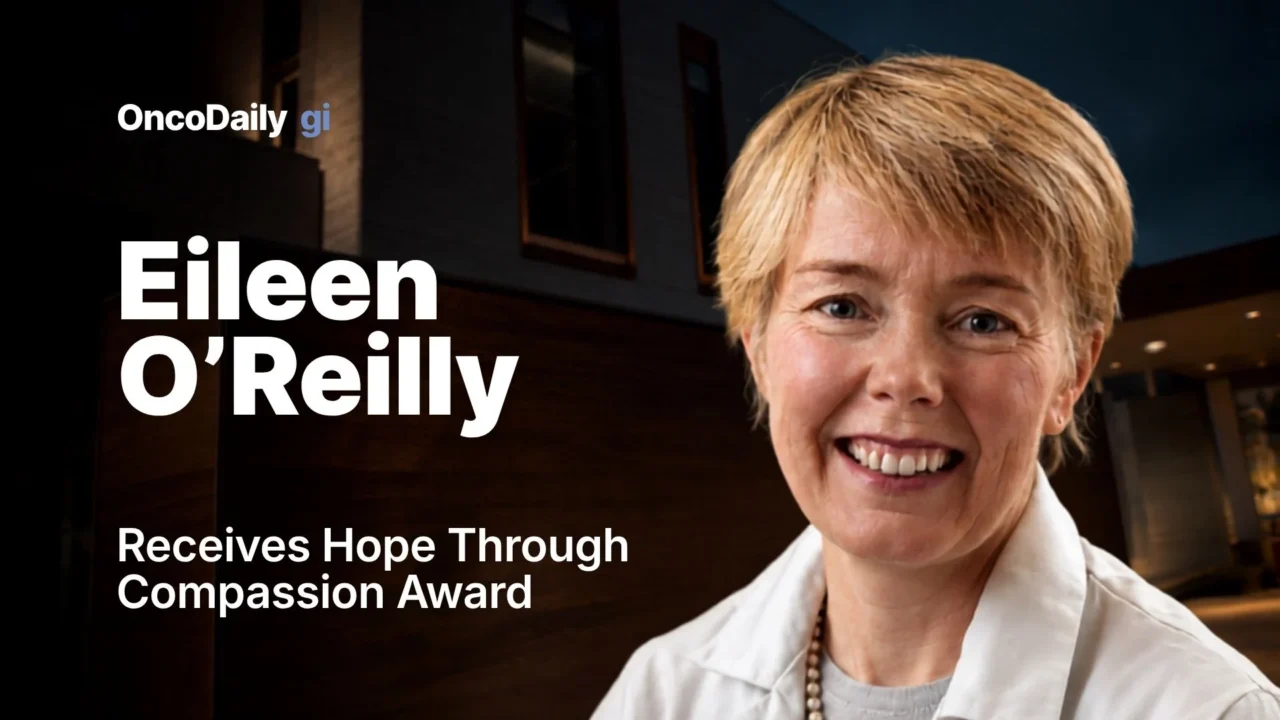
Memorial Sloan Kettering Cancer Center (MSK) has congratulated Eileen O’Reilly, MD, a gastrointestinal medical oncologist, on receiving the Hope Through Compassion Award from The Lustgarten Foundation.
The recognition honors Dr. O’Reilly’s longstanding commitment to patients with pancreatic cancer and her leadership in developing clinical research aimed at improving outcomes in one of oncology’s most challenging diseases.
A Career Shaped by an Unmet Need
Dr. O’Reilly’s focus on pancreatic cancer was not initially planned. After completing her training and joining the faculty, she was introduced to an area where there was a significant clinical need.
What drew her in was the science, as well as the opportunity to care for people facing a difficult diagnosis at a deeply vulnerable time in their lives.
“I think we’re extraordinarily privileged to look after people with a very challenging disease at a very difficult stage of their life that nobody could have expected,” she said.
Over the years, that responsibility has remained central to her approach to care.
Being Present Beyond Treatment
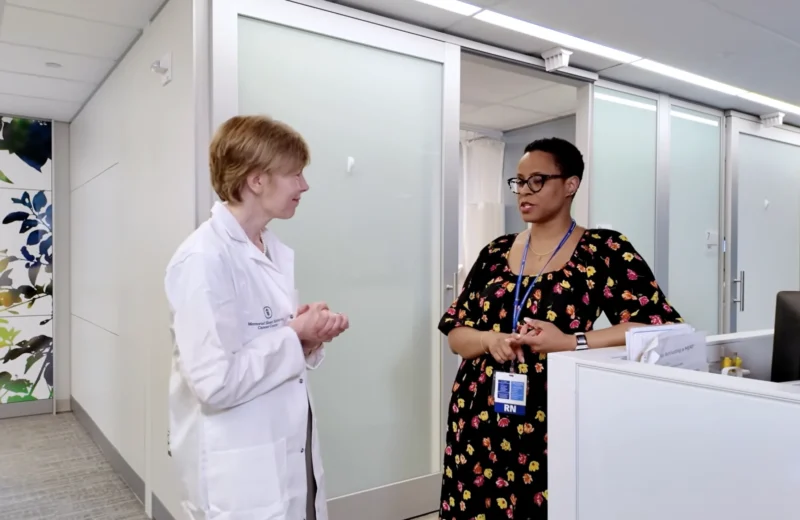
For Dr. O’Reilly, pancreatic cancer care is not limited to treatment decisions or trial enrollment. It also means supporting patients and families throughout the course of the disease.
She emphasized the importance of remaining present even when active treatment options become limited.
“We’re here no matter what, even when the days of treatment are probably past,” she said. “There’s always something we can do in terms of trying to help them, support them, guide them, help their family, provide resources.”
Her perspective reflects the long-term relationships that can develop in oncology. Dr. O’Reilly noted that she continues to care for some patients with pancreatic cancer whom she has known for nearly two decades.
A guiding question remains simple but powerful: how would one want to be treated if the situation involved oneself or a family member?
Clinical Trials as the Path Forward
Clinical research has been a defining part of Dr. O’Reilly’s work in pancreatic cancer. She described clinical trials as the mechanism through which progress becomes possible.
“Today’s standard was yesterday’s clinical trial,” she said.
For patients, participation in research may offer access to promising new strategies. For the field, each study helps build the evidence needed to improve future standards of care.
Dr. O’Reilly stressed that the hope is always that the person sitting in front of the clinician is the one who benefits most from the progress being pursued.
A Changing Era in Pancreatic Cancer
Pancreatic cancer remains a disease with substantial unmet need. However, Dr. O’Reilly expressed confidence that the landscape is beginning to shift.
She pointed to the growing scientific attention, the expanding focus on therapeutic development, and the possibility that emerging treatments could meaningfully change outcomes.
“I find hope in the fact that there’s enormous focus on this disease and there are therapeutics that are going to change this disease imminently,” she said. “This is the start.”
Dr. O’Reilly also noted that more people are living longer with pancreatic cancer, even when broad statistics may not fully capture the individual progress seen in clinical practice.
“We’re about to witness an era in the treatment of pancreas cancer and outcomes that’s going to be, I think, very meaningful,” she said. “And again, this is just the start.”
The Hope Through Compassion Award recognizes not only Dr. O’Reilly’s contributions to pancreatic cancer research, but also a patient-centered approach that places scientific progress and compassionate care side by side.
Written by Nare Hovhannisyan, MD
Find more exclusive oncology content on OncoDaily