



Estela Rodriguez, Associate Director of Community Outreach in Thoracic Oncology at the University of Miami’s Sylvester Comprehensive Cancer Center, shared on X:
“One of the most powerful moments of LALCA26.
Paulo, a Brazilian patient advocate with Exon 20 Group, a multistakeholder organization and caregiver, shared the heartbreaking lengths patients and families go through to access targeted therapies unavailable in LATAM.”
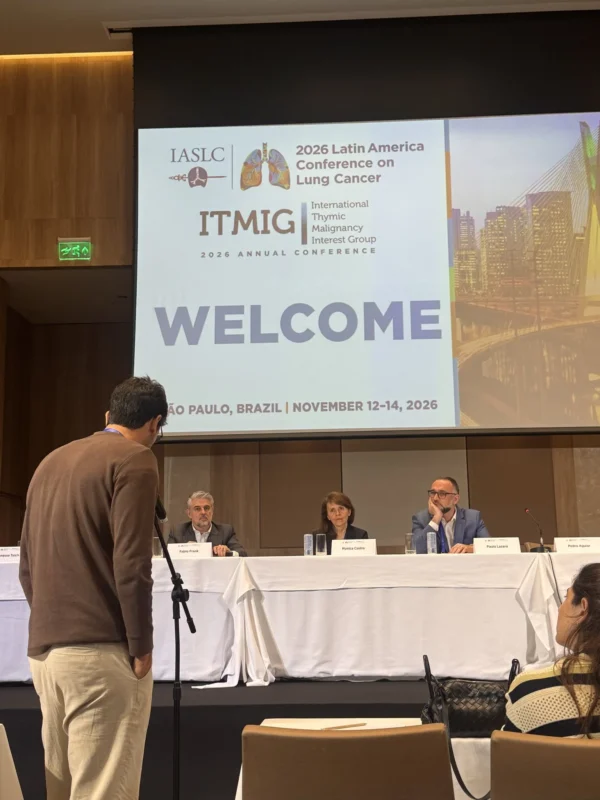
The 2026 Latin America Conference on Lung Cancer (LALCA26) is a premier international scientific gathering dedicated to advancing thoracic oncology care across Latin America.
Taking place from November 12 – 14, 2026, at the Grand Hyatt in São Paulo, Brazil, the event is organized by the International Association for the Study of Lung Cancer (IASLC).
Guided by the theme ‘Connecting Latin America to the Forefront of Cancer Treatment,’ the conference brings together medical oncologists, thoracic surgeons, radiation oncologists, pathologists, pulmonologists, and patient advocates to address both global breakthroughs and regional healthcare challenges:
- Regional Healthcare and Access. Sessions directly tackle disparities across Latin American health systems, focusing on expanding early lung cancer screening, increasing access to molecular biomarker testing, and improving the real-world availability of modern therapies.
- Novel Therapeutics. Experts present the latest clinical data on targeted therapies, immunotherapy, novel antibody-drug conjugates (ADCs), bispecific antibodies, and strategies to overcome treatment resistance in both non-small cell lung cancer (NSCLC) and small cell lung cancer (SCLC).
- Multidisciplinary Surgical and Clinical Decision-Making. Talks and tumor board discussions examine complex clinical scenarios – such as managing early multifocal disease, defining borderline Stage III cases, and coordinating surgery following neoadjuvant immunotherapy or targeted treatments.
- Thymic and Mediastinal Malignancies. Through the joint ITMIG track, attendees explore specialized research on rare mediastinal tumors, thymoma, and thymic carcinoma, drawing on global registry data and advanced surgical techniques.
- Advocacy and Equity. Dedicated programming highlights cancer control policies, patient advocacy, and gender equity within the oncology workforce.
You can also read: