






Jorge Reis-Filho, Chief Strategy Officer and Operating Partner at Foresite Labs and Venture Partner at Foresite Capital, shared on LinkedIn:
“Artificial intelligence is approaching its most important transition: from systems that retrieve, reason and execute within an existing evidence base to systems capable of expanding that evidence base through discovery. Since ‘Attention Is All You Need,’ chatbots made knowledge conversational, reasoning models learned to decompose complex problems and work through competing possibilities and agents added planning, memory and tool use, allowing AI to pursue goals and execute increasingly sophisticated workflows across digital environments.
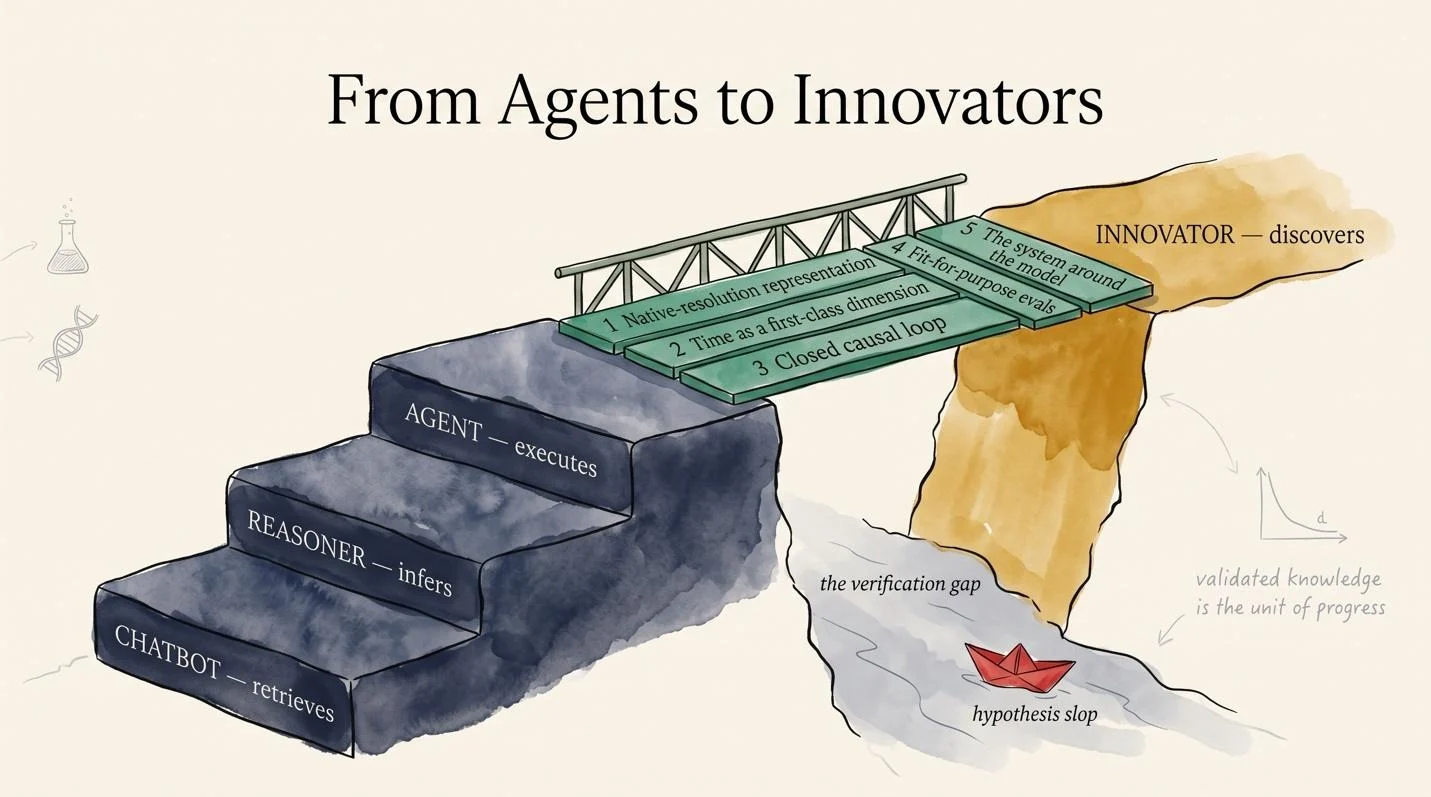
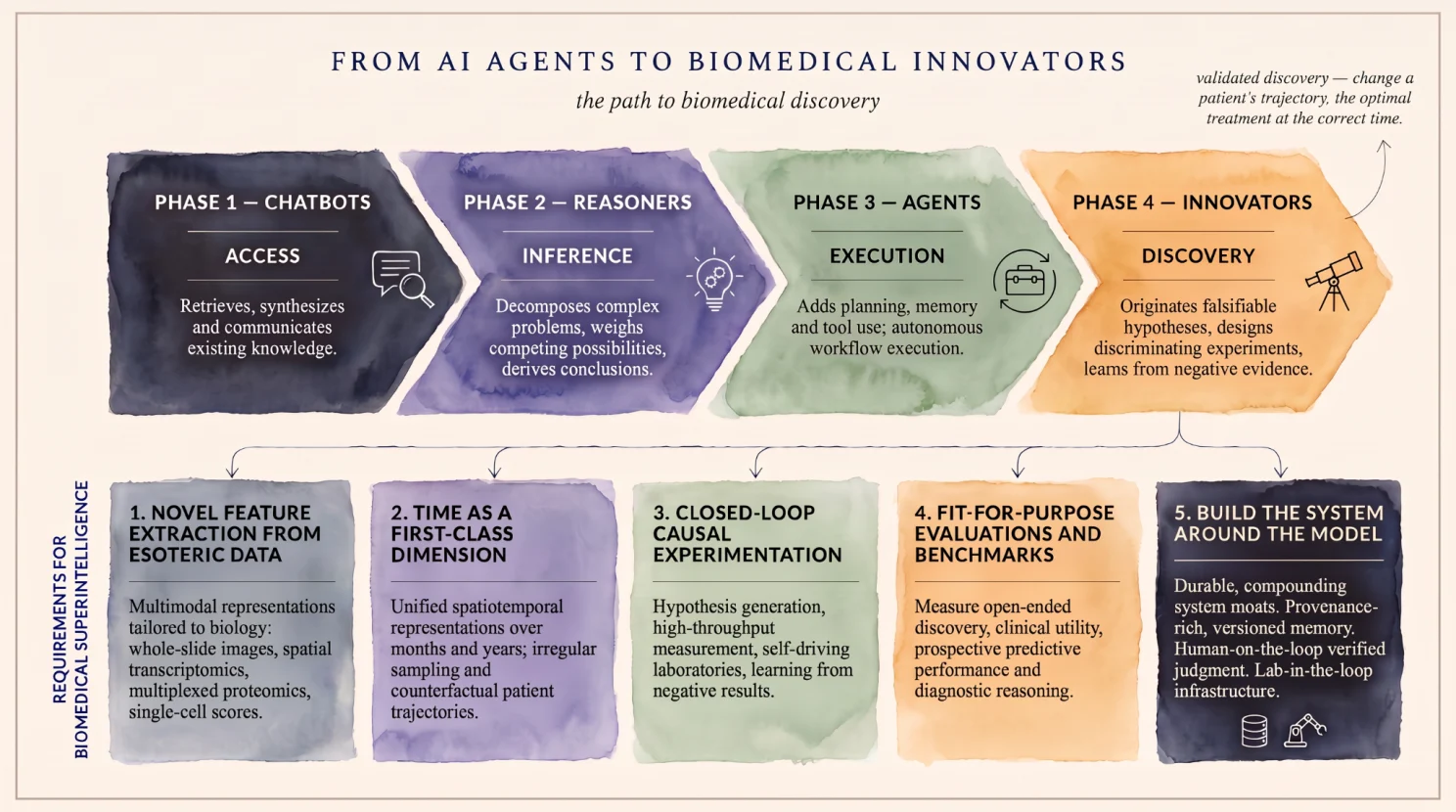
If self-supervised models unlocked the value of unstructured and unlabeled data, the recent advancements in AI are reshaping the meaning of cognition and reasoning. Each of the state changes we have experienced, from chatbots to reasoners and eventually to agents, has conferred a distinct capacity. Chatbots transformed access to knowledge by retrieving, synthesizing and communicating information at unprecedented scale. Reasoners extended this capability into multistep inference, integrating evidence and deriving conclusions that may not be explicit in any single source. Agents have moved AI further still, from an interface that responds to questions into an operator that can plan, coordinate specialized roles and act across platforms.
The next inflection point will be the emergence of AI innovators: systems capable of originating novel and falsifiable hypotheses, identifying the experiments most likely to distinguish among competing explanations, learning from negative evidence and generating knowledge that survives independent validation. This transition represents a fundamental change in epistemic role: agents operate on an existing evidence base, whereas innovators expand it by generating novel hypotheses and the evidence required to resolve questions for which the correct answer is not yet knowable, a capability known as open-endedness.
We recently asked two teams of AI agents to revisit 20 high-stakes biopharma decisions, using only the evidence available at each historical decision point. In some instances, the agents arrived at better decisions than those made at the time; in others, they reproduced the failure because the evidence required to make the correct choice did not yet exist. The models and framework fundamentally remained the same, yet their conclusions changed as the evidence base evolved. This exercise illustrated both the remarkable power and the present ceiling of agents. They can synthesize complex evidence, expose inconsistencies and improve decisions, yet analysis alone cannot generate the result of an experiment that nature has yet to run.
The next frontier is therefore clear: what representations, experimental systems and evidentiary standards will be required for discoveries to be made through AI, rather than simply enhanced by AI, and what will move us from AI agents to de facto AI innovators and ultimately into the terrain of biomedical superintelligence?
We use biomedical superintelligence as a form of domain-specific superintelligence and in an intentionally operational sense, referring to a system that generates novel biomedical knowledge that withstands empirical validation and translates this knowledge into better decisions for patients than the best-qualified and/or world-leading human experts can make when given access to the same information.
Why Software Engineering and Mathematics Moved First
Credible pockets of domain-bounded superhuman capability are already visible in software engineering, code and mathematics. An advanced version of Gemini Deep Think achieved gold-medal performance at the 2025 International Mathematical Olympiad, while AlphaEvolve has improved solutions to open mathematical problems and optimized algorithms deployed in Google’s computing infrastructure.
These domains moved first for structural reasons. Their objects can be represented in machine-legible form, candidate solutions can be evaluated rapidly and the evaluators themselves are often objective: code either compiles or fails, tests pass or fail, proofs can be checked and algorithms can be scored millions of times inside closed computational loops. Generalized, long-horizon software engineering remains to be fully solved; however, the more instructive observation is that when a domain provides adequate representations, rapid feedback and objective evaluators, AI can progress from producing plausible answers to discovering better solutions.
Biology has almost the opposite structure. Its state is only partially observed and, more often than not, imprecisely measured in terms of molecules, cells, tissues, organs and complete patient histories. The behavior of biological processes is dynamic, heterogeneous, historical and deeply context-dependent. Experiments may take weeks or years, cost millions of dollars and yield noisy or ambiguous results; an intervention changes the very system a model is attempting to predict, and at the clinical scale the most meaningful evaluator may be a patient outcome observed years later. Unlike software, a patient does not arrive with machine-readable source code or an inexpensive function that can be evaluated millions of times.
Biology, moreover, is not one domain in this respect. Protein design sits near the software end of the verification spectrum: structure prediction and binder design enjoy fast assays and 5 decades of curated crystallographic ground truth, which is precisely why scale-first approaches succeeded there first. The scaling law prevailed in the one corner of biology where the environment, the Protein Data Bank and its assay infrastructure, had already been built. Whole-organism and clinical biology, where the oracle is priced in years, still await theirs.
These structural differences explain why biomedical superintelligence will require more than increasingly capable transformer-based frontier models. Collectively, representations, feedback loops and evaluators that mathematics and software possess by default will need to be created, and five interlocking requirements constitute the sine qua non.
1. Represent Biology at Its Native Resolution
Before a model can reason about biology, it must be able to represent biological state at the resolution at which mechanism operates. Feature extraction converts a raw measurement into a representation that preserves the information relevant to a task, a process that is natural for language and code but remarkably more difficult for many of the data types that carry important biomedical information. Gigapixel pathology slides, spatial transcriptomic maps, multiplex imaging, single-cell perturbation data, longitudinal circulating tumor DNA, quantitative optical-density measurements and continuous physiological signals are highly specialized modalities with their own geometry, dynamic range, sources of noise, sampling biases and biological vocabulary.
Generic pretraining does not automatically extract the right features from these data. A pathology image encodes spatial relationships among cells, tissue compartments and the tumor microenvironment; genomics identifies molecular alterations; spatial omics connects molecular states to physical location; and clinical records describe interventions and outcomes through irregular, incomplete observations. Each modality provides a different view of the same biological system, and none, in isolation, is sufficient to represent its complete state.
Foundation models are beginning to make these data computable. For example, CONCH learned visual-language representations from pathology images and text, TITAN extended representation learning to whole-slide images aligned with pathology reports and visual-omics models have begun to connect histologic morphology with spatial gene expression, while KRONOS2 and VirTues extend foundation modeling to spatial proteomics. These advances are undoubtedly timely and highly relevant; however, their diligent deployment may enable the generation of biological insights and clinically useful features that previous approaches could not reach.
The distinction between classification and discovery is germane here. In work from one of our groups, a genomics-driven AI model was trained using bi-allelic CDH1 inactivation as an orthogonal ground truth for invasive lobular carcinoma. The model classified the disease with high accuracy, but the most informative observations emerged from cases predicted to harbor CDH1 inactivation that lacked the expected coding alterations. These apparent discordances were enriched for alternative mechanisms, including a deleterious fusion, non-coding alterations and promoter methylation. What one could have considered model error became a source of biological insight, demonstrating that an AI system trained against an orthogonal ground truth can yield information beyond the reproduction of an existing histologic label.
Quantitative Continuous Scoring provides a complementary example of clinical translation. QCS generates continuous, single-cell measurements of target expression within specific subcellular compartments, including a normalized membrane-to-cytoplasm ratio that visual inspection cannot reliably determine. In TROPION-Lung01, this feature predicted differential outcomes with datopotamab deruxtecan, and in 2025 the VENTANA TROP2 RxDx device incorporating QCS received FDA Breakthrough Device Designation, the first such designation for a computational pathology companion diagnostic. The relevant biomarker did not exist within the conventional visual scoring system; the computational representation made it measurable and clinically actionable.
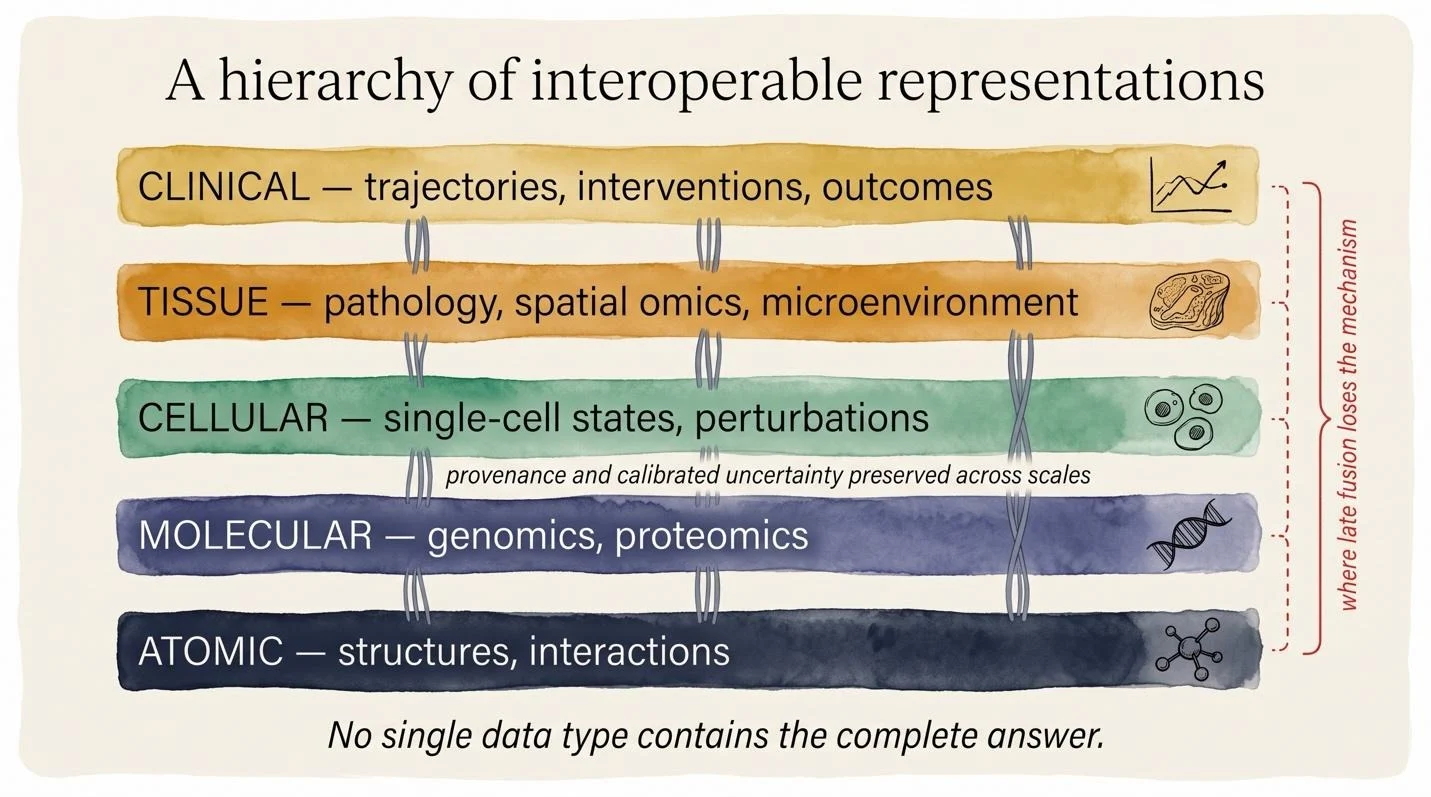
True multimodality will require considerably more than concatenating embeddings. The deeper requirement is a semantic layer that preserves the distinctive information in each modality, aligns observations collected at different resolutions and links mechanisms across biological scales. Response to an antibody-drug conjugate, for example, may depend on target abundance and spatial distribution, internalization biology, payload sensitivity, genomic context, immune composition, prior therapy and drug exposure over time. No single data type contains the complete answer, and a useful representation must connect molecular mechanism, cellular state, tissue architecture and the clinical phenotype while preserving provenance and calibrated uncertainty.
The objective is therefore a hierarchy of interoperable representations spanning the atomic, molecular, cellular, tissue and clinical scales. Without that substrate, even the strongest reasoner will be reasoning over an impoverished view of biology.
2. Make Time a First-Class Dimension
Medicine is temporal because disease unfolds over months and years, while treatment is a decision about a path rather than a prediction derived from a single moment. Much of biomedical AI still compresses a patient into a baseline scan, a diagnostic slide, an initial laboratory panel or a pretreatment molecular profile, despite the fact that tumors evolve under therapeutic pressure, immune states change, toxicities alter treatment, measurements arrive at irregular intervals and clinical practice itself shifts over time.
Temporal brittleness describes the failure of a model to preserve meaning and performance as chronology, sampling intervals, treatment sequences or care environments change. A model may predict recurrence accurately from a baseline specimen while remaining unable to update that estimate after surgery, adjuvant therapy, a new molecular residual disease result or an emerging toxicity. This limitation is fundamental because the clinically relevant object is rarely a static risk score; it is a patient’s evolving trajectory under a sequence of interventions.
Progress is becoming visible. Apollo provides an early proof of direction through a multimodal temporal foundation model trained on approximately 25 billion clinical records from 7.2 million patients across more than three decades and 28 modalities. This model learned unified virtual-patient representations and was evaluated on 322 prognosis and retrieval tasks spanning disease onset, progression, treatment response, adverse events and healthcare operations, establishing an important foundation for computable medicine.
The importance of temporal change is also apparent in longitudinal biomarker studies. In small-cell lung cancer, baseline circulating tumor DNA did not distinguish patients who would respond to platinum therapy, whereas a greater than twofold decline after one treatment cycle was observed in every responding patient and was associated with longer progression-free and overall survival. The trajectory carried information that the baseline measurement lacked, illustrating that the sequence and timing of observations can be more informative than any individual value.
Forecasting likely outcomes under historically observed care, however, remains different from estimating what would happen under alternative interventions. The missing object is the clinically reliable counterfactual patient trajectory: a calibrated distribution of plausible futures under treatment A, treatment B or no treatment, updated as new evidence arrives. For a patient after cancer surgery, the probability of recurrence is the starting point; the clinically relevant question, however, is how that probability changes with each potential adjuvant therapy, how a new molecular residual disease result updates the forecast and which intervention offers the best balance of benefit and toxicity for that patient at that moment. Time must therefore become the organizing axis on which disease and intervention are represented together.
3. Close the Causal Loop With Experimentation and Falsification: stop the AI Hypothesis Slop
Prediction can identify who is likely to experience an outcome, whereas causal discovery asks which intervention will change that outcome and why. A model trained on observational data may learn that a biomarker is associated with poor survival while remaining unable to determine whether the biomarker drives the disease, reflects another biological process or identifies a population treated differently. Correlation can be useful for ranking, but perturbation is required to establish which mechanisms are actionable.
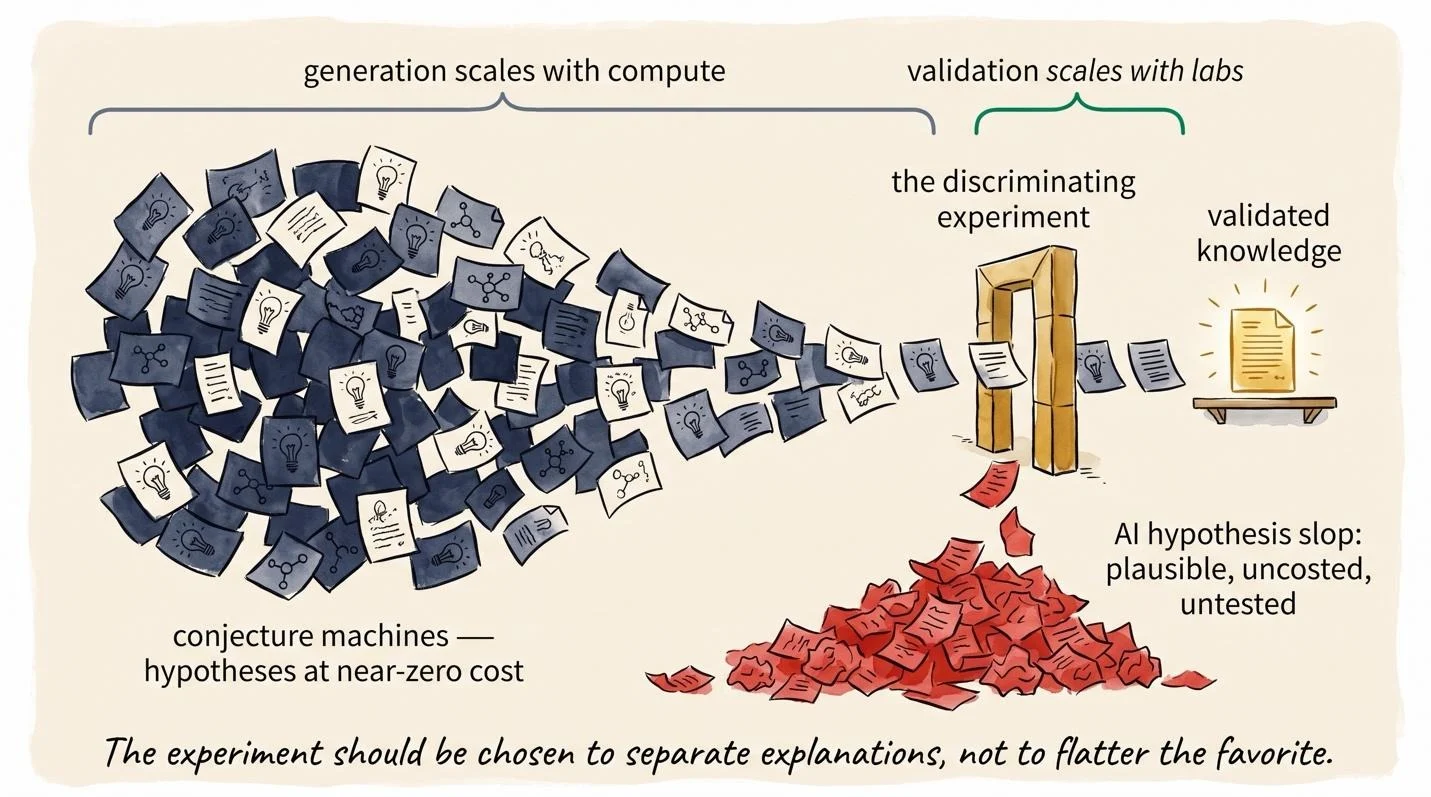
Biomedical innovators will therefore require models that propose interventions, predict their consequences and update their beliefs when observed results disagree. The relevant closed loop moves from hypothesis to discriminating experiment, from observation to falsification or support, and from the result to model revision. The experiment should be selected for its ability to separate competing explanations, rather than for its likelihood of confirming the preferred hypothesis, and the system should prespecify which outcome would refute its claim and which uncertainty the experiment is designed to resolve.
This requirement is particularly important as we enter an age of hypothesis abundance and experimental scarcity. Frontier models can generate plausible mechanisms, targets and biomarker strategies at extraordinary speed, making plausibility increasingly inexpensive while discriminating evidence remains costly. Negative and null results must therefore become model-native data with the same provenance and accessibility as positive findings; without them, autonomous systems will generate hypotheses faster than science can eliminate weak ones, creating the substrate for what we have called “AI hypothesis slop.”
Early versions of these loops already exist. The Virtual Lab used a team of AI scientist agents to construct a nanobody design pipeline, generate 92 candidates and identify functional binders through experimental validation. The SAMPLE self-driving laboratory connected an intelligent design agent to robotic experiments, allowing the system to learn from measured protein function and iteratively engineer more thermostable enzymes. These studies provide important proofs of principle, although they operate in bounded domains with comparatively clear readouts and rapid experimental cycles.
Extending this paradigm to disease biology will require human-relevant experimental systems, including patient-derived models, perturbational screens, organoids and organ-on-chip platforms, followed by prospective validation in the clinic. A causal world model ought to connect the molecular consequences of an intervention to changes in cellular state, tissue behavior and patient trajectory, while the system itself must exhibit the epistemic discipline to seek evidence capable of disproving its preferred explanation and to revise that explanation when nature disagrees.
4. Define Progress With Fit-for-Purpose Evaluations and Benchmarks
The fourth requirement is a shared intellectual obsession with fit-for-purpose evaluations and benchmarks, particularly because biomedicine is already confronting a benchmarking crisis. We would submit that the development of evaluations and benchmarks is, in essence, frontier AI research. Public leaderboards often reward performance on retrospective datasets whose labels, populations and data-generating processes bear little resemblance to the intended use. A model can achieve an impressive aggregate score while failing across institutions, under temporal shift, in underrepresented populations or at the precise decision boundary that matters clinically, and no single leaderboard can establish a capacity for open-ended discovery.
An evaluation is fit-for-purpose when its data, endpoint, comparator and tolerance for failure match the context in which the system will be used. A benchmark for literature synthesis should differ from one for biomarker discovery; a model that predicts prognosis may require a different evidentiary standard from that required for a predictive model; and an autonomous experimental system requires evaluation of the complete loop, including hypothesis quality, experiment selection, execution, interpretation and reproducibility.
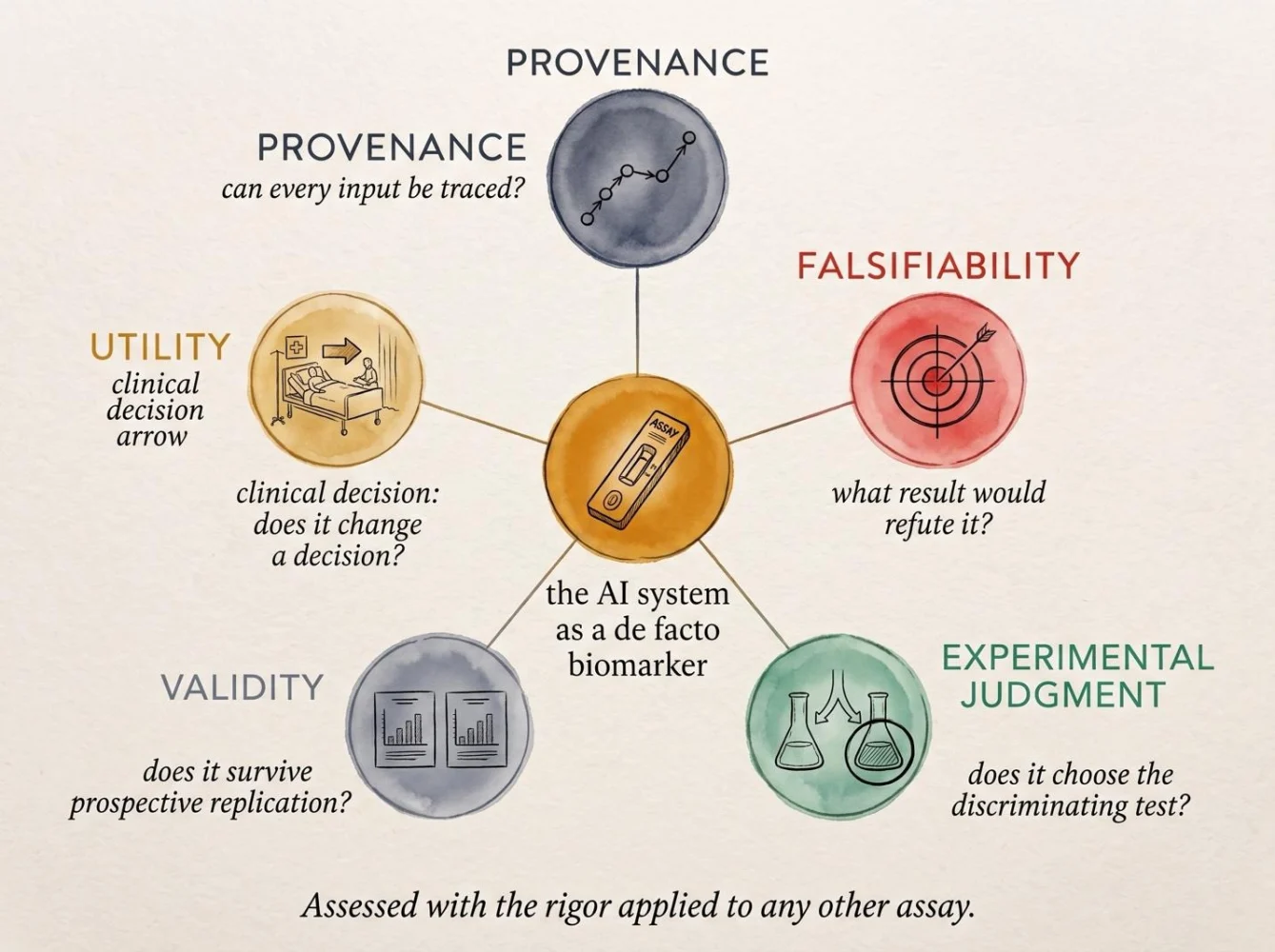
The same principle applies to AI-derived biomarkers. As we have argued previously, these systems are de facto biomarkers and should be assessed with the scientific rigor applied to any other assay, encompassing analytical validity, clinical validity and clinical utility within a clearly defined context of use. For an AI innovator, this requires evaluation across at least five dimensions:
- Provenance: Can the proposed insight be distinguished from retrieval, memorization or contamination, and can every relevant input and transformation be traced?
- Falsifiability: Does the system make a sufficiently precise prediction that a feasible experiment could disprove, and has the criterion for failure been defined in advance?
- Experimental judgment: Does it select the experiment with the greatest ability to distinguish among competing explanations, rather than the experiment most likely to support the favored one?
- Validity: Does the result survive prespecified prospective testing, calibrated uncertainty analysis, temporal and external validation and independent replication?
- Utility: Does the discovery change a mechanistic model, redirect an experimental program or improve a clinical decision in the intended context of use?
If one considers a predictive biomarker for treatment selection, retrospective discrimination is only the beginning: the model would need to distinguish treatment benefit from prognosis, operate with locked thresholds, maintain calibration across sites and populations, withstand preanalytical variation, perform on temporally held-out data and, ultimately, demonstrate clinical utility in a prospective setting.
The ESMO EBAI framework is an excellent starting point for establishing the robustness and utility of AI-based biomarkers. A benchmark should be considerably more than a leaderboard; it is a scientific specification of what progress means. Without fit-for-purpose evaluation, greater scale will produce more sophisticated-sounding output without establishing that the system has generated reliable knowledge. It should be noted, however, that these guidelines emphasize the fact that validation in sufficiently powered and fit-for-purpose datasets is essential, whilst mechanistic explainability, albeit highly desirable, is not mandatory in every setting.
5. Build the System Around the Model
Human innovators have never thrived on talent alone. The Howard Hughes Medical Institute funds people rather than projects, tolerates early failure and reviews on long horizons, and in a natural experiment its investigators produced breakthrough work at roughly twice the rate of equally accomplished, conventionally funded peers. Whilst the scientists did not differ, the system around them did, a lesson repeated from the MRC Laboratory of Molecular Biology to the Broad and Sanger institutes, and beyond biology by Bell Labs, which turned one corridor of theorists and engineers into the transistor, information theory and 10 Nobel prizes.
The same principle now applies to machine intelligence. The first four requirements describe what a biomedical innovator must represent, track, test and prove; the fifth is the environment in which it works. Even the best model, akin to the best investigator, performs at the level its system permits.
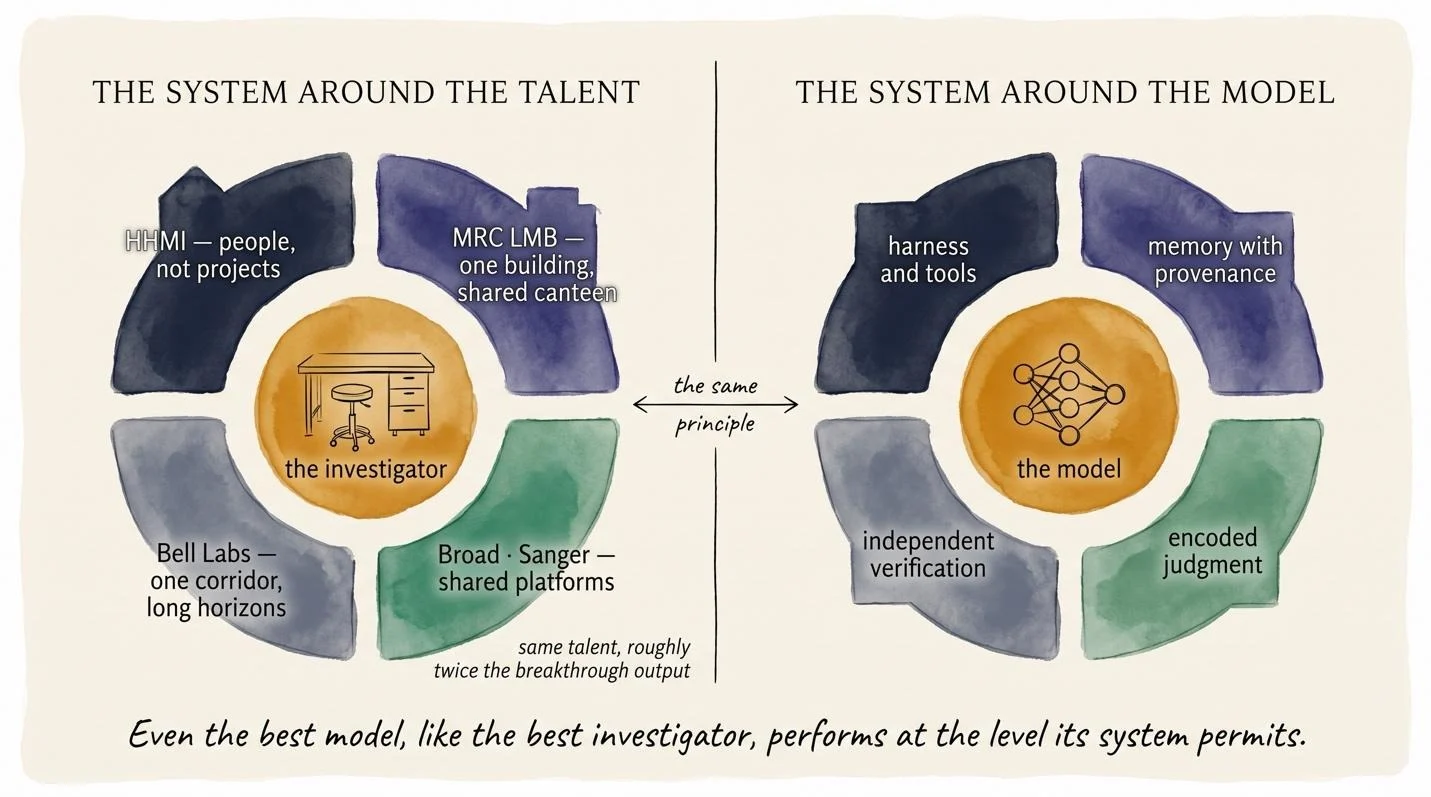
The environment carries measurable capability. When production agent systems are dissected, the agent loop itself turns out to be commodity code, and the capability lives in the machinery around it. That machinery is also where the scientific method survives execution or quietly dissolves. Context is a finite budget, and long-horizon systems compress their own history to stay within it; what a compression step discards first are exactly what science cannot afford to lose, the caveat, the exclusion criterion, the detection limit and the null result.
The design response is to treat the registered hypothesis, the constraint set and the stopping rule as uncompressible, and to parallelize the reading, the literature harvest and the retrieval of competing explanations, while keeping the writes, the hypothesis registry, the experiment selection and the belief update, single-threaded and auditable.
Memory deserves the same discipline: a vector store bolted onto an agent is a searchable log, not a memory, and for a discovery system memory need be versioned, attributed and retirable, because a system that silently learns between March and June cannot be reproduced in July.
Institutional judgment, the taste of a field for which mechanisms are plausible and which results are too clean to trust, needs be elicited rather than authored: even when experts write their principles down, different executors reproduce the same judgments only about 3 quarters of the time. The workable protocol collects inexpensive non-expert labels at scale and routes only the disagreements to the expert; in one published replication of expert judgment, that loop raised accuracy from 78.2% to 84.7% at more than 13-fold lower inference cost.
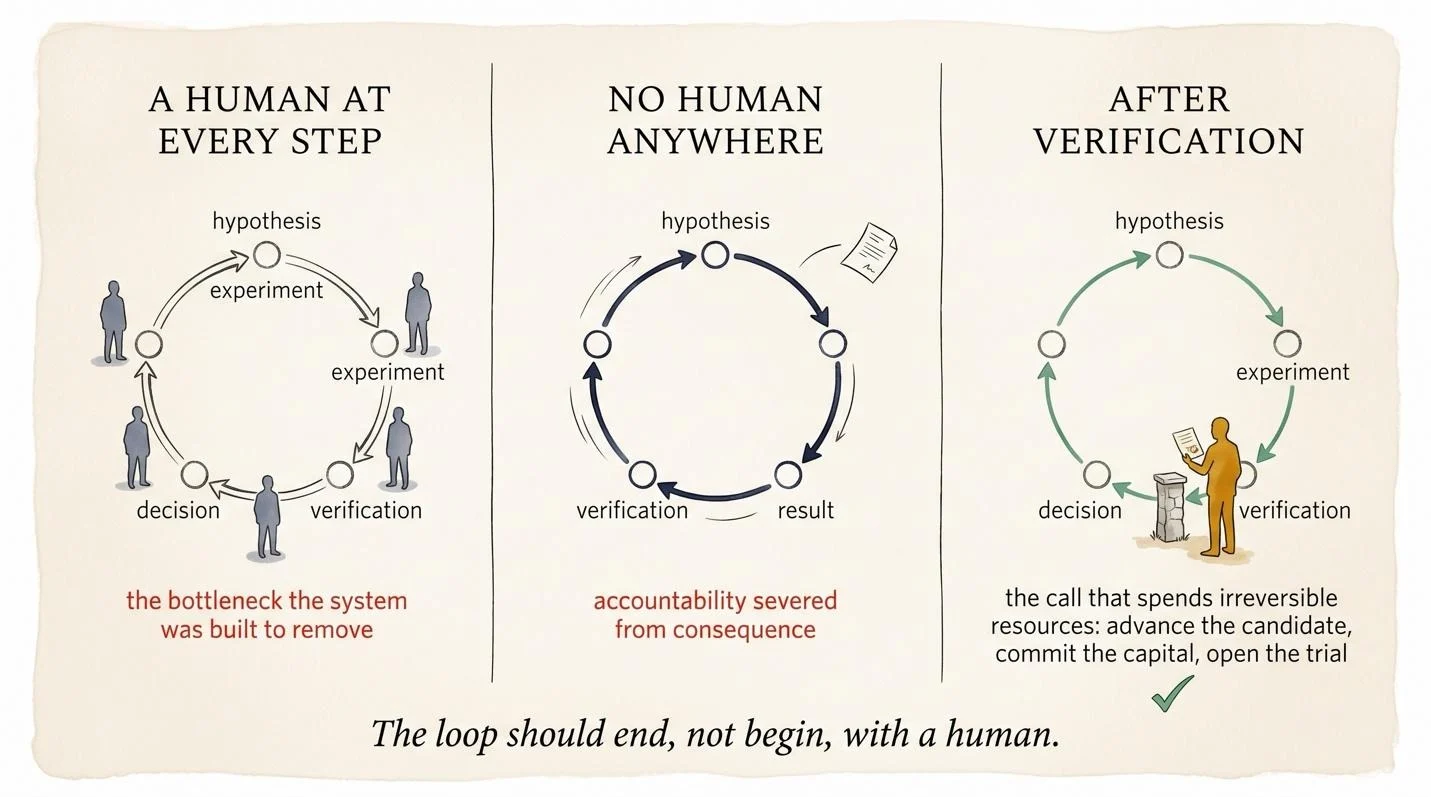
Verification must be architecturally independent, because agents cannot grade themselves; agent self-assessments provide no reliable evidence of completion, so a reviewer with clean context independently verifies. The loop should always end, but not start with a human, and the distinction deserves a name. Borrowing from the autonomy literature: a human in the loop approves every step and reproduces the bottleneck the system was built to remove, while a human out of the loop severs accountability from consequence.
What a biomedical innovator requires is a human on the loop: supervising the run rather than executing it, and entering at one deliberate point, after verification, to make the call that spends irreversible resources, advancing the candidate, committing the capital, opening the trial, on the strength of a verified record rather than the system’s self-report. That is where the 68% of production agents that today run at most 10 steps before a human intervenes are heading: from human in the loop to human on the loop.
What Would an AI-Made Biomedical Discovery Look Like?
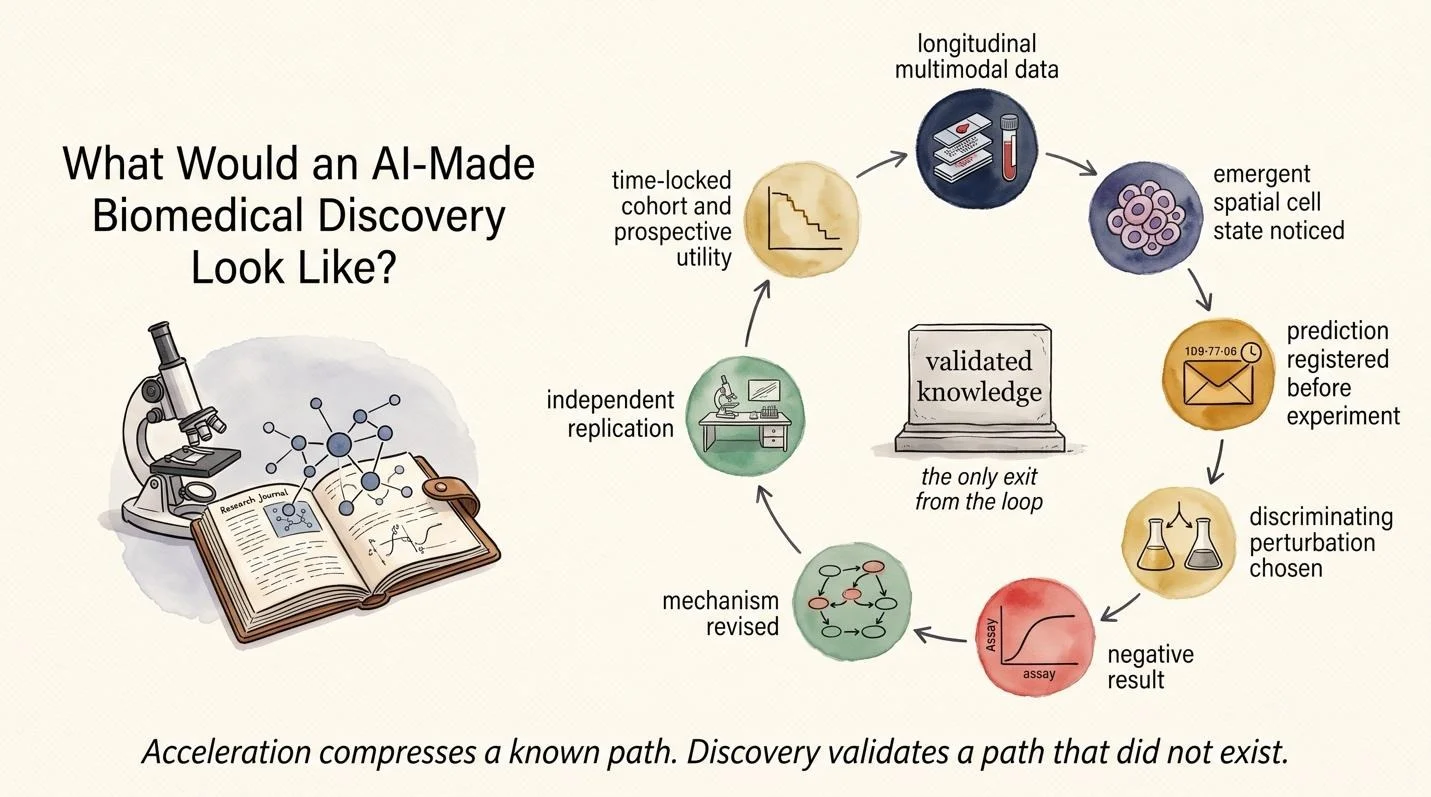
An AI-led discovery in oncology might begin with a system analyzing longitudinal samples collected before, during and after therapy. By integrating pathology, spatial omics, circulating tumor DNA, drug exposure and treatment history, the system could identify a previously unrecognized spatial cell state that emerges before clinical resistance and propose that a specific interaction between tumor and stromal cells drives the transition.
The system would register its prediction before experimentation and select perturbations designed to distinguish its proposed mechanism from plausible alternatives. If the initial experiment in patient-derived models produced a negative result, the model would update its explanation, propose a revised mechanism and identify a combination treatment predicted to prevent the resistant state. The finding would then need to be reproduced in an independent laboratory, while the associated biomarker would have to predict the same trajectory in a time-locked patient cohort and, ultimately, demonstrate utility in a prospective clinical context.
Only after completing that loop would the system have added a validated mechanism, intervention and biomarker to the body of knowledge. Retrieval would have contributed to the process, but the decisive evidence would have been generated through experimentation, falsification and independent validation. This is the distinction between acceleration, which compresses a path that is already known, and discovery, which creates and validates a path that did not previously exist.
Biomedical Superintelligence Is a Full-Stack Problem
Frontier models are necessary, yet insufficient on their own. Biomedical superintelligence may require a system that combines modality-specific foundation models, multiscale representations, temporal patient models, causal world models, experimental infrastructure and fit-for-purpose evaluations. Its basic unit of progress will be an experimentally validated, clinically meaningful change in knowledge. The outputs may need to carry both provenance and calibrated uncertainty, and the hypotheses generated will have to withstand the level of scrutiny applied to human-generated hypotheses.
For companies and institutions hoping to stay at the forefront, it is critically important to conceive where moats are created and compounded. Frontier models turn over on a cadence of months, and any capability that solely lives only in the weights of a SotA model vanishes fast. The system built around the models: the lab-in-the-loop infrastructure, the provenance-rich evidence base, the encoded judgment of a field, the evaluation harness, and the fit-for-purpose model selection and training, will become the durable moats that persist across model generations and appreciate with use.
The progression can be stated simply, although achieving it will be immensely demanding. Across general AI, we are moving from access to inference, from inference to execution and from execution to discovery; across biomedical AI, the corresponding progression is from representation to prediction, from prediction to action and from action to fundamentally novel insights that culminate in validated innovation. A chatbot can tell us what is known, a reasoner can determine what follows, an agent can execute what we ask and an innovator can reveal what nature has not yet told us, design the experiment that tests it and revise its beliefs when the experiment says no.
AI should not merely be used as a filter, given that filters can remove garbage but on their own cannot create gold. To deliver AI innovators and, consequently, biomedical superintelligence, the systems that emerge should expand the questions we are able to ask, the experiments we are able to conduct and the discoveries we are able to translate. Their ultimate measure will be the validated discoveries that change a patient’s trajectory by enabling the right diagnosis, the right biomarker and the optimal treatment at the correct time.
With the development of automated alignment researchers and the incredible progress towards recursive self-improvement, models and agents are increasingly capable and available. With the right roadmap, together with discipline and commitment, we are only at the beginning to realize the full potential of biomedical superintelligence.”
Other articles featuring Jorge Reis-Filho on OncoDaily.